

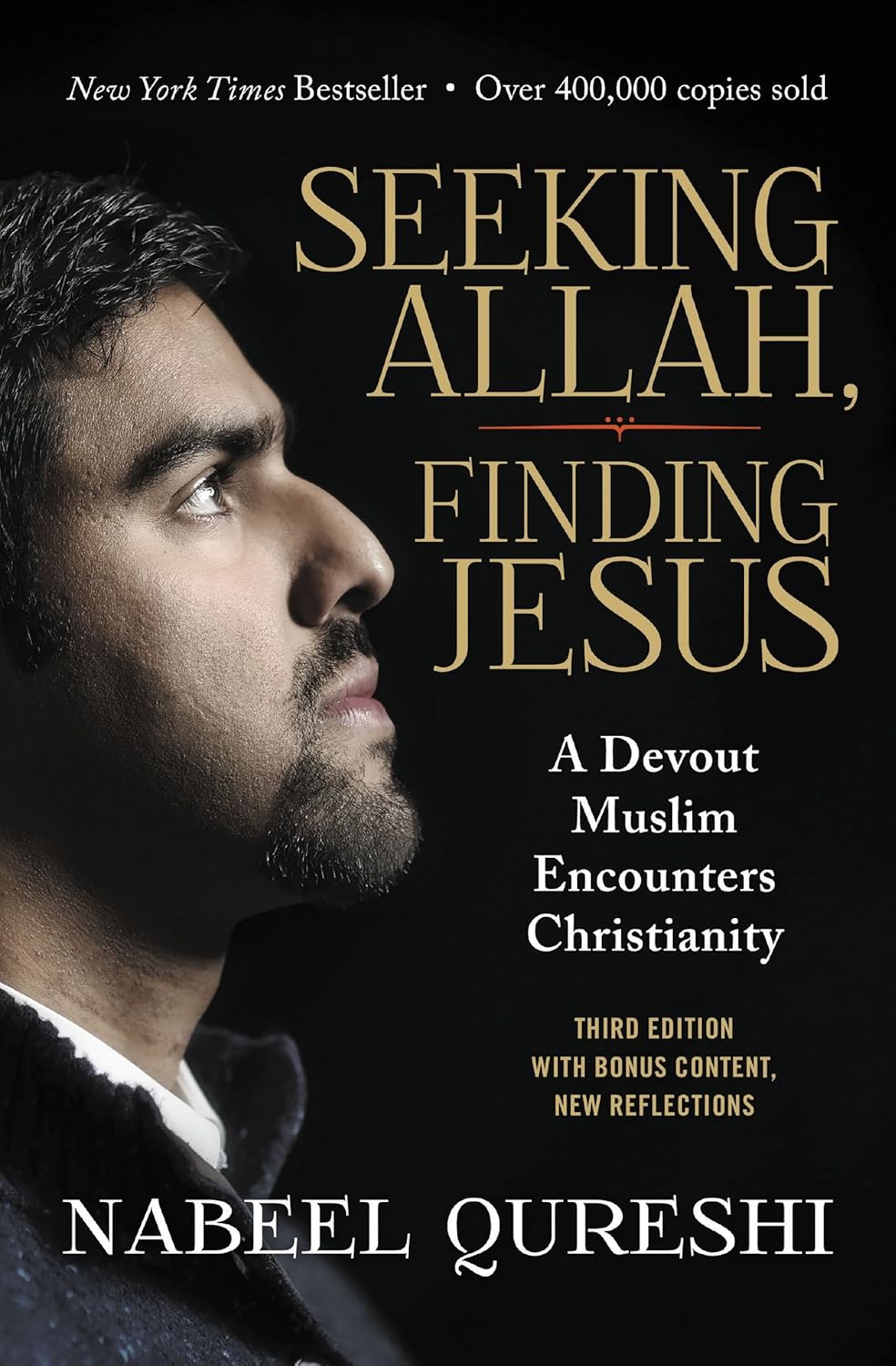
About Seeking Allah, Finding Jesus by Nabeel Qureshi: A Personal Journey Through Faith, Family, Questions, and Change
Seeking Allah, Finding Jesus by Nabeel Qureshi is a memoir about one man’s search for religious truth and the cost of changing his faith. Qureshi grew up in a loving, devout Muslim home. Islam shaped his prayers, family life, values, and view of God. He did not begin his journey by hating his childhood faith or wanting to leave it.
His path changed through a close friendship, years of study, difficult debates, private prayer, and questions he could no longer ignore. As he examined Christian claims about Jesus, he felt pulled between what he believed was true and the pain his choice could bring to the people he loved most.
The result is both a conversion story and an emotional family story. The book explains why Qureshi became a Christian, but its strongest pages also show why that decision felt so hard. Readers enter the mind of a person who believes that truth matters while knowing that belief can change every close relationship in his life.
When questions about faith feel too dangerous
Religious questions are rarely only about ideas. Faith can be tied to parents, childhood, culture, community, honour, and the hope of life after death. Asking whether a belief is true may therefore feel like asking whether a whole life is safe.
Many people hide these questions because they fear hurting their family or losing their place in a community. Others want to study religion but do not know how to begin without becoming angry or unfair. The subject can quickly turn into a fight in which nobody feels heard.
Qureshi offers one personal way through that fear. He shows his questions slowly, explains the relationships around them, and admits the pain behind each step. Readers may agree or disagree with his final beliefs, but they can see why honest spiritual searching requires both thought and courage.
What is Seeking Allah, Finding Jesus about?
The memoir follows Nabeel Qureshi from a devoted Muslim childhood to his decision to follow Christianity. He describes family practices, early religious learning, prayer, community life, and the love that made Islam feel inseparable from home. These memories give the later struggle its full emotional weight.
At university, his friendship with Christian student David Wood leads to years of discussion. The two friends examine religious history, scripture, the identity of Jesus, the resurrection, and questions about Islamic and Christian truth claims. Their debates are serious, yet friendship keeps the conversation personal.
As Qureshi becomes persuaded by Christian arguments, his heart does not change as quickly as his mind. He thinks about his parents and the sorrow his choice may cause. Dreams, prayer, study, and inner conflict become part of the final movement toward conversion. The book then reflects on what followed that decision.
A loving Muslim home comes first
One of the memoir’s important strengths is its picture of family affection. Qureshi does not introduce his Muslim home as a cold or empty place. He remembers care, discipline, prayer, shared customs, and a strong wish to honour God. His parents are central to his sense of identity.
This opening matters because it prevents the change of faith from feeling easy. Leaving a belief system also means risking trust with the people who taught him how to live. The reader understands that Qureshi is not choosing between a bad family and a good new life. He is making a decision that may wound people he deeply loves.
For non-Muslim readers, these chapters can offer a close view of one Muslim family’s daily faith. Still, it is one family and one Ahmadi Muslim background, not a complete picture of every Muslim culture or belief. That limit is important when reading the memoir fairly.
Friendship makes room for hard questions
The friendship between Qureshi and David gives the story much of its movement. Their talks are not quick online arguments between strangers. They study, challenge each other, return to old questions, and continue spending time together even when they strongly disagree.
This bond shows why trust matters in religious dialogue. A difficult question feels different when it comes from someone who knows your life and cares about your answer. The friends do not avoid disagreement, but the relationship gives them a reason to listen and keep talking.
Readers interested in interfaith conversation may find this part especially useful. The book suggests that facts alone may not open a heart. Patience, respect, time, and real friendship can make honest study possible. It also shows that changing another person’s mind should never make that person feel like a project.
The mind and heart move at different speeds
Qureshi describes a gap between accepting an argument and being ready to live by it. He may think a Christian claim has strong support, yet still feel unable to take the next step. His family, habits, prayers, and memories pull in another direction.
This conflict makes the memoir more than a list of religious arguments. It shows how belief lives inside the whole person. Logic matters, but so do love, fear, belonging, grief, and responsibility. A decision can look clear on paper while feeling almost impossible in real life.
Family love gives the decision its cost
The central question is not only whether Qureshi will accept Christianity. It is also how he will tell his parents and live with their hurt. He knows that his decision may feel like rejection, even when he still loves them.
This part of the story can be difficult to read because no choice removes all pain. Remaining silent would deny what he believes. Speaking openly could damage his closest bonds. Qureshi presents conversion as a personal conviction joined to loss rather than a simple victory.
That honesty may help readers understand people who change religion or question a family tradition. It does not tell every reader to make the same choice. It shows why such decisions should be discussed with care, safety, humility, and respect for the people affected.
Study, prayer, and dreams shape the journey
The memoir joins intellectual study with spiritual experience. Qureshi investigates religious texts and historical claims, but he also prays and describes dreams that he believes guided him. For him, the search involves both reason and a request for God to lead him.
Different readers will understand these dreams in different ways. Some may view them as spiritual signs. Others may read them as expressions of stress, hope, or the mind working through a deep conflict. The book presents Qureshi’s own meaning without requiring every reader to interpret the experiences in the same way.
This mix of evidence and experience makes the story valuable for discussion. It raises questions about how people know what is true, how private experience should be tested, and what role emotion can play in belief. These questions remain important beyond the author’s final conclusion.
Understand the book’s point of view
Seeking Allah, Finding Jesus is a memoir and a work of Christian apologetics. It is not a neutral textbook comparing Islam and Christianity from an equal distance. Qureshi writes after becoming a Christian and explains why he believes Christian claims are stronger.
That clear point of view is part of the book’s purpose, but readers should keep it in mind. Muslims may disagree with his reading of Islamic history, scripture, or theology. Christians from different traditions may also respond differently to some arguments or experiences.
The best way to read is with an open but careful mind. Notice what Qureshi experienced, check major claims through reliable sources, and listen to informed voices from more than one community. This approach respects the author’s story without treating one memoir as the final word on two large and diverse religions.
What the expanded edition adds
The expanded edition gives readers more context around the original memoir. It includes a revised foreword and introduction, plus a much longer epilogue about telling his friend and parents of his decision. These additions answer questions that many readers have after the main story ends.
An appendix addresses debate about Qureshi’s Ahmadi Muslim upbringing and whether other Muslims regard that movement as part of Islam. This background helps readers understand an important point of disagreement. The extra material makes the edition useful for personal reading, teaching, or group discussion.
What readers can gain from this memoir
The book can deepen understanding of how faith and family shape identity. It invites readers to see conversion from inside the struggle rather than as a simple change of label. That view can build patience toward people whose beliefs are changing.
Christian readers may use the memoir to learn about Qureshi’s approach to apologetics and friendship. Muslim readers may read it to understand a well-known Christian conversion account, while also noting where they disagree. Readers with no firm religious position can study how evidence, emotion, culture, and personal experience work together.
The memoir can also improve the quality of difficult conversations. It shows the value of long study, honest questions, and relationships that survive disagreement. Its greatest practical lesson may be that truth should be pursued without forgetting the human being across the table.
Who should read this book?
Choose this memoir if you are interested in Christianity, Islam, conversion, apologetics, spiritual biography, or interfaith dialogue. It suits adult readers and mature older teens who can approach religious disagreement with care.
Students, teachers, church groups, reading circles, and people studying world religions can use it as a discussion text. Families facing changes in belief may also recognise its questions about loyalty, honesty, and love, although the book cannot replace personal guidance or safe support.
Readers should expect the author’s Christian conclusion and criticism of beliefs he once held. Some Muslim readers may find parts painful or strongly disagree with them. It is best read as Qureshi’s testimony and argument, not as a voice for all former Muslims, all Ahmadis, all Muslims, or all Christians.
A premium copy for thoughtful reading
Bookish Wonderland offers a reader-friendly edition prepared for close reading and future reference.
- Premium eye-soothing cream paper gives each page a soft appearance.
- Crystal-clear printing keeps personal stories and detailed arguments readable.
- High-quality stitched and glue binding supports lasting use.
- A durable finish helps protect the copy at home or while travelling.
This copy is suitable for individual reading, study notes, a class, a faith group, a home library, or a thoughtful gift. The comfortable pages help readers slow down when a chapter raises a difficult emotional or theological question.
Easy ordering from Bookish Wonderland
When comparing the Book price in Bangladesh for Seeking Allah, Finding Jesus by Nabeel Qureshi, consider paper comfort, print clarity, binding strength, and delivery service along with cost. A book used for study and discussion should remain easy to read when revisited.
Cash on Delivery is available nationwide, with delivery inside and outside Dhaka. Fast or urgent delivery is available in Dhaka when the book is needed soon. Contact Bookish Wonderland through Facebook or Instagram for the current price, stock, edition, delivery time, or customization support.
Begin a brave and deeply personal search
This memoir begins in a loving home, grows through a demanding friendship, and moves toward a decision that changes every part of one life. Its questions are large, but its emotional centre is simple: what should a person do when truth and belonging seem to pull in different directions?
Read it for the story, examine its arguments carefully, and notice the people behind every belief. Whether you agree with Qureshi or not, his account can open a serious conversation about faith, evidence, family love, sacrifice, and the right way to disagree.
Order Seeking Allah, Finding Jesus by Nabeel Qureshi from Bookish Wonderland today. Bring home a moving spiritual memoir that asks readers to seek truth with courage while treating people of every faith with dignity and care.
If you require any customization or have any questions, please inbox us via FB or Insta.
| Primary Specification | |
| Author | Nabeel Qureshi |
| Narrator | Nabeel Qureshi, Michelle Qureshi, Mark Mittelberg, Lee Strobel |
| Editor | Matthew Van Zomeren and Ben Fetterley |
| Genre | Christian Nonfiction, Religious Memoir, Christian Apologetics, Biography |
| ISBN-13/ISSN | 978-0310092643 |
| ISBN-10 | 0310092647 |
| Publisher | Zondervan |
| Publishing Date | August 21, 2018 |
| Edition | 3rd |
| Language | English |
| Reading Age | 15+ |
| Format | Printed Book |
| Physical Specification & Quality | |
| Paper Quality | Premium eye-soothing cream paper |
| Binding Quality | High quality stitched and glue binding (for longevity) |
| Print Quality | Crystal-clear print |
| Pages | 384 pages |
| Country | USA |
| Logistics Information | |
| Weight | 404 gm |
| Length | 8.5 inches |
| Width | 5.6 inches |
| Height | 0.97 inch |