

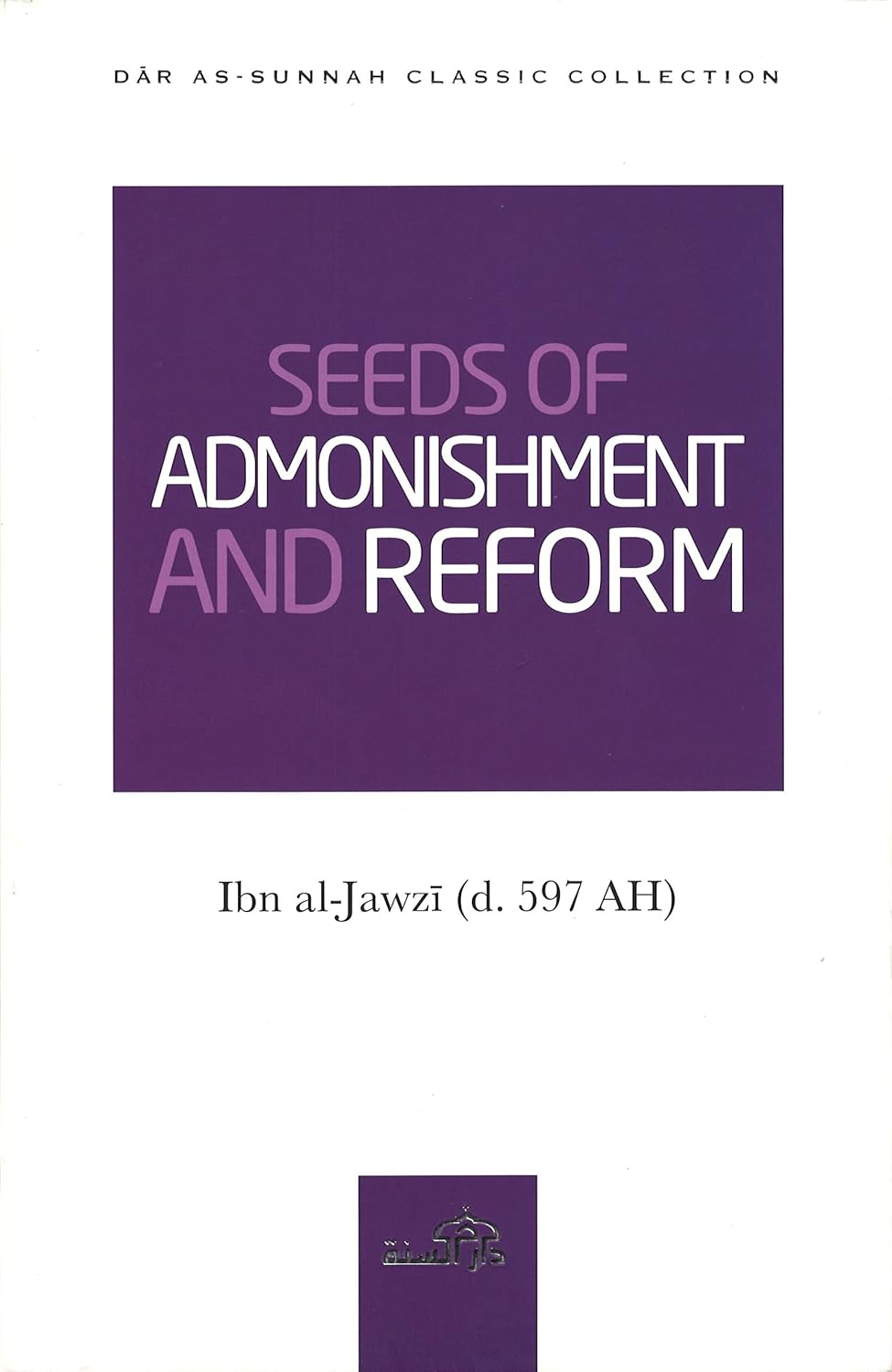
About Seeds of Admonishment and Reform by Ibn al-Jawzi and Ayman ibn Khalid: Timeless Islamic Counsel for a Softer Heart and Better Life
Seeds of Admonishment and Reform by Ibn al-Jawzi and Ayman ibn Khalid is an English collection of Islamic reminders made to wake the heart, guide the mind, and encourage better action. The original words come from Imam Ibn al-Jawzi, a Muslim scholar and preacher. Ayman ibn Khalid translated the work into English so readers can benefit from its advice.
The book is also linked with the Arabic title Kitab al-Lata’if fil-Wa’iz. Its short lessons speak about faith, repentance, worship, patience, death, the Hereafter, worldly distraction, and the need to return to Allah. Ibn al-Jawzi uses images and direct words. He does not let the reader stay comfortable with laziness, pride, delay, or empty hopes.
Yet the book is not built only on fear. It also reminds readers that the door of repentance is open, mercy is great, and change can begin now. A person may have wasted time, repeated a sin, or allowed the heart to grow hard. These pages call that person to stop, think, seek forgiveness, and take a step toward reform.
When the heart knows but does not act
Many people know what is right but still struggle to do it. They plan to pray with more care, leave a bad habit, read more Qur’an, control anger, or ask Allah for forgiveness. Then another day passes. Work, phones, entertainment, tiredness, and worry take over.
This gap between knowing and doing can make the heart feel heavy. A person may hear many talks and save many reminders without making a true change. Good advice becomes familiar, but it no longer feels close. The problem is not always a lack of information. Sometimes the heart needs a strong and honest wake-up call.
Ibn al-Jawzi offers that call. His counsel asks the reader to look at life without excuses. Time is moving. Death is certain. Deeds matter. However, the message is not to give up. It is to wake up while change is still possible and turn good thoughts into real actions.
What is Seeds of Admonishment and Reform about?
This book gathers short pieces of spiritual advice and moral reflection. Rather than following one long argument, it moves through reminders that can be read slowly. Each passage invites the reader to examine the heart, remember Allah, and see daily choices in the light of the Hereafter.
The counsel deals with common inner problems such as pride, heedlessness, love of comfort, attachment to the world, weak resolve, and delay in repentance. It also encourages hope, patience, humble worship, self-control, and sincere effort. These themes make the work personal even though its author lived many centuries ago.
Ibn al-Jawzi writes like a preacher speaking directly to someone who has forgotten an important truth. He may warn, question, compare, or paint a clear picture in the mind. A small image can turn an unseen spiritual danger into something the reader can feel. That style gives the book emotional power and makes many lines worth revisiting.
Meet the author and translator correctly
Imam Ibn al-Jawzi is the author of the original Arabic work. He was a major scholar, writer, and preacher from Baghdad who lived during the sixth century of the Islamic calendar. He became known for teaching, public preaching, history, biography, religious counsel, and many written works.
Ayman ibn Khalid is the English translator, not a second original author. His role is important because translation carries old Arabic counsel into language that present-day English readers can follow. The edition was published by Dar as-Sunnah Publishers and is commonly listed as a 224-page paperback.
Knowing these roles helps buyers understand what they are ordering: classical Islamic advice written by Ibn al-Jawzi and presented in English through Ayman ibn Khalid’s translation. It is a work of spiritual counsel, not a modern novel, academic textbook, or step-by-step legal manual.
Direct words that break through delay
Some books explain an idea from a calm distance. This book often speaks straight to the reader. It asks what has happened to the heart, why repentance is being delayed, and how long worldly hopes will be allowed to hide the end of life.
That direct tone can feel serious. It is meant to disturb careless comfort and move the reader toward action. The goal is not to create empty sadness. A warning has value when it helps someone leave harm, repair worship, return a right, control a desire, or begin a better habit.
Readers who enjoy gentle motivational writing should know that Ibn al-Jawzi can be firm. His urgency is part of the work. Read a small amount, pause, and ask what change the passage is calling for. This turns the book from words on a page into a tool for honest self-review.
Remember how quickly life moves
One of the book’s strongest ideas is that worldly life does not stay. Youth changes, health becomes weak, plans end, and every day removes part of a person’s remaining time. Remembering this is not meant to stop useful work or family care. It is meant to put them in their proper place.
When life feels endless, repentance can always be moved to tomorrow. Worship can be rushed, and small wrongs can seem harmless. Remembering death removes that false promise. It asks the reader to use today well because tomorrow is not owned by anyone.
This message can help a busy reader reset priorities. Earning, studying, resting, and caring for others still matter, but none of them should make the soul forget its Creator. The book encourages a life in which ordinary duties are joined with awareness, gratitude, and preparation for what comes after death.
Repentance begins with honest hope
Admonishment without hope can leave a person frozen. Ibn al-Jawzi’s counsel repeatedly points the sinful or careless heart back toward repentance. The reader is asked to admit the wrong, feel regret, seek Allah’s forgiveness, and make a sincere effort not to return to it.
This message is useful for someone who thinks change is too late. A bad past does not have to become a permanent identity. The next right choice may be small, but it can be the first seed of a different life. Prayer can be repaired. A harmful habit can be challenged. A debt or broken trust can begin to be addressed.
The book does not promise that reform will always feel easy. Desire, habit, and distraction may fight back. Its hope is active rather than lazy. Trust in mercy should lead to repentance, worship, and better conduct, not become another reason to delay.
Watch the hidden state of the heart
Good actions can be seen, but intention is hidden. A person may speak well while seeking praise, give advice while ignoring personal faults, or appear humble while feeling above others. Seeds of Admonishment and Reform asks readers to look beneath the outside form.
This inward focus makes the book useful for personal growth. It encourages self-accounting before judging everyone else. Instead of asking only, “What did I do?” the reader can ask, “Why did I do it, whom did I hope to please, and what did the action leave inside my heart?”
These questions can protect worship from becoming a show. They can also improve daily relationships. Pride affects apologies, envy affects friendship, anger affects speech, and greed affects fairness. Reforming the heart therefore has visible results in the home, school, workplace, and community.
Short readings with room to reflect
The book suits readers who cannot finish a long chapter every day. Its counsel can be taken in small portions. Read a passage after Fajr, before sleep, during a quiet break, or with family members at a suitable time. Then choose one idea to remember.
A notebook can make the reading more useful. Write the lesson in simple words, note the action it suggests, and return after a few days. A study circle can also read one selection and discuss it without rushing through many pages.
Slow reading is important because this is not a story driven by plot. The benefit comes from reflection and practice. One page that leads to sincere change may be more valuable than many pages read quickly and forgotten.
What makes this Islamic classic valuable
The work gives modern readers access to counsel from a famous classical scholar while keeping the lessons connected to daily spiritual struggles. Its short form supports regular reading, and its strong images help serious ideas remain in the mind.
Readers may gain a sharper awareness of time, a stronger wish to repent, and better questions for self-review. The book can help someone notice how comfort, pride, distraction, and false hope weaken good intentions. It also reminds the reader that reform is possible through sincere return and steady action.
Because the tone is devotional, the book works best as a companion to the Qur’an, authentic Sunnah, sound learning, and guidance from qualified teachers. It should inspire reflection, not replace careful study when a detailed question of belief or Islamic law needs a proper answer.
Who will benefit from reading it?
Choose this book if you enjoy classical Islamic spirituality, reminders about the heart, works on repentance, or short passages that support regular reflection. It can suit adults and mature older teens who are ready for serious teaching about sin, death, accountability, and the Hereafter.
Students of Islamic knowledge may use it beside more structured study. Busy readers can keep it near a prayer space and read a little at a time. Parents, teachers, and study-circle leaders may select suitable passages for discussion, while remembering that every reader’s level and needs are different.
It can also be a thoughtful gift for someone who wants to rebuild good habits or renew faith. The direct warnings may feel heavy for a person facing intense anxiety or religious fear. Such readers can move slowly, balance warning with teachings about Allah’s mercy, and seek help from a trusted, knowledgeable person when needed.
A comfortable copy for repeated reading
Bookish Wonderland offers a reader-friendly edition designed for reflection and regular return.
- Premium eye-soothing cream paper gives the pages a soft appearance.
- Crystal-clear printing keeps the English translation easy to follow.
- High-quality stitched and glue binding supports long book life.
- A durable finish helps protect the copy during study or travel.
These features make the copy suitable for personal reading, a home Islamic library, study notes, group discussion, or a meaningful gift. A book of reminders should remain comfortable when reopened across many months and stages of life.
Easy ordering from Bookish Wonderland
When comparing the Book price in Bangladesh for Seeds of Admonishment and Reform by Ibn al-Jawzi and Ayman ibn Khalid, consider translation, print clarity, paper comfort, binding strength, and delivery support along with cost.
Cash on Delivery is available nationwide, with delivery inside and outside Dhaka. Fast or urgent delivery is available in Dhaka when the book is needed soon. Contact Bookish Wonderland through Facebook or Instagram for the current price, stock, edition, delivery time, or customization support.
Plant one sincere seed of change today
The title carries a simple image: a seed may look small, but with care it can grow. One honest moment of repentance, one prayer guarded on time, one harmful habit resisted, or one apology offered can become the beginning of lasting reform.
Open this book when the heart feels sleepy, good plans keep moving to tomorrow, or worldly noise has become too loud. Let Ibn al-Jawzi’s direct counsel interrupt delay. Read with hope as well as fear, and turn reflection into one clear action.
Order Seeds of Admonishment and Reform by Ibn al-Jawzi, translated by Ayman ibn Khalid, from Bookish Wonderland today. Bring home a powerful collection of classical Islamic reminders that can help you value time, examine your heart, seek forgiveness, and move toward a more mindful life.
If you require any customization or have any questions, please inbox us via FB or Insta.
| Primary Specification | |
| Author | Ibn al-Jawzi, Ayman ibn Khalid |
| Translator | Ayman ibn Khalid |
| Genre | Islamic Studies, Religion, Spirituality, Self-Improvement |
| ISBN-13/ISSN | 978-1904336396 |
| ISBN-10 | 1904336396 |
| Publisher | Dar as-Sunnah Publishers |
| Publishing Date | January 1, 2013 |
| Edition | First Edition |
| Language | English |
| Reading Age | 16+ |
| Format | Printed Book |
| Physical Specification & Quality | |
| Paper Quality | Premium eye-soothing cream paper |
| Binding Quality | High quality stitched and glue binding (for longevity) |
| Print Quality | Crystal-clear print |
| Pages | 224 pages |
| Country | United Kingdom |
| Logistics Information | |
| Weight | 244 gm |
| Length | 8.5 inches |
| Width | 5.6 inches |
| Height | 0.5 inch |