

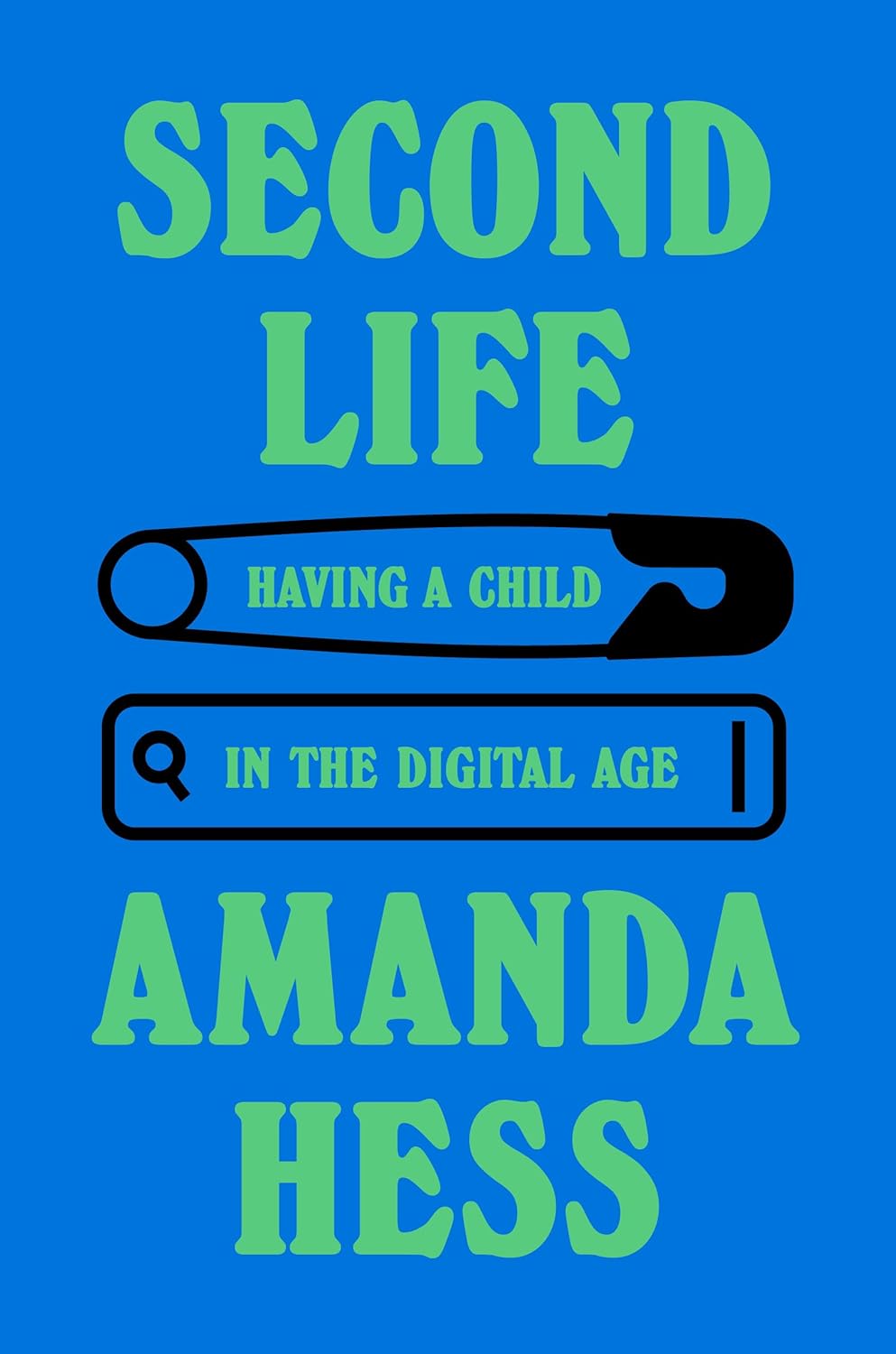
About Second Life: Having a Child in the Digital Age Book by Amanda Hess – A Powerful Memoir About Motherhood, Technology, and Raising Children in an Online World
What happens when you are about to become a parent and every question leads you to another Google search? One app tells you how your baby is growing. Another offers advice about pregnancy. Social media shows you happy families, perfect nurseries, and parents who seem to know exactly what they are doing.
But instead of making you feel prepared, all this information can leave you feeling more confused than ever.
Second Life: Having a Child in the Digital Age by Amanda Hess explores this strange relationship between modern parenting and the internet.
Amanda Hess, a culture critic for The New York Times, thought she understood how online platforms influence people's lives. But when she became pregnant with her first child, she found herself caught in the same digital world she had spent years studying.
In the summer of 2020, a routine ultrasound revealed an unexpected concern about her unborn baby. Looking for answers, Hess turned to her phone. What followed was a difficult journey through medical information, pregnancy apps, online communities, frightening predictions, and endless opinions about motherhood.
Her experience becomes the starting point for a much larger investigation into how technology shapes pregnancy, childbirth, and family life.
This is not a traditional parenting handbook filled with instructions about feeding schedules or sleep routines. It is a personal, carefully researched memoir that asks an important question: when technology promises to help parents understand everything, why can it sometimes make life feel even more uncertain?
When Pregnancy Turns Into an Endless Online Search
At first, Hess uses the internet in a familiar way. She looks for information, checks apps, and tries to understand the changes happening in her body.
But everything becomes more serious after the ultrasound reveals a possible problem with her baby.
Suddenly, every search feels important.
She wants to understand what the doctors have found, what it might mean, and how she can prepare for the future.
Instead of finding one clear answer, she discovers frightening possibilities, conflicting advice, and a world of information that is difficult to understand.
Her experience shows how quickly a helpful tool can become a source of worry during an uncertain time.
A Mother's Search for Answers Becomes a Personal Journey
Hess eventually learns that her son has Beckwith-Wiedemann syndrome, a rare condition associated with unusual growth and certain health risks.
She must understand the diagnosis, speak with medical professionals, and prepare for her baby's needs.
At the same time, she faces the emotional weight of becoming a mother under unexpected circumstances.
The book does not present her child as a problem to be solved. Instead, Hess explores the difference between frightening medical predictions and getting to know a real person.
Her journey gives the memoir a deeply personal centre.
Discover How Pregnancy Apps Shape Your Experience
Pregnancy and fertility apps promise to make complicated changes easier to understand.
They can track menstrual cycles, estimate pregnancy milestones, and offer information about a baby's development.
Hess examines how these tools become part of a parent's daily routine.
An app may begin as a useful calendar, but its role can grow as it offers reminders, advice, and product suggestions.
The book asks readers to notice when helpful information begins to influence how they think and feel.
It also explores how an app can turn a deeply personal experience into information that companies may use for commercial purposes.
Why Does the Internet Make Parenting Feel Like a Competition?
Open social media, and you may see parents sharing beautiful nurseries, healthy meals, educational toys, and happy family photographs.
These posts can be useful and entertaining.
However, they can also create the feeling that everyone else understands parenting better than you.
Hess investigates the online world surrounding pregnancy and motherhood, including the way digital platforms promote certain ideas about what a family should look like.
The book invites readers to consider how much of that picture comes from real experience and how much is shaped by advertising.
It is a familiar question for anyone who has compared their ordinary life with someone else's carefully selected photographs.
When Every Parenting Problem Becomes a Shopping Opportunity
Preparing for a baby often means buying new things.
But how do you know which products are truly necessary?
Hess explores a digital marketplace filled with advertisements aimed at expectant parents.
Her online activity leads her toward maternity products, supplements, and other goods presented as solutions to her changing needs.
The book examines how businesses can turn parental uncertainty into an opportunity to sell.
A worried customer may feel tempted to buy something simply because an advertisement promises peace of mind.
This is one of the memoir's most useful questions: are you buying something because it meets a real need, or because someone has made you afraid to go without it?
Medical Technology Can Help and Still Leave Questions
Modern medical tools can provide valuable information during pregnancy.
Ultrasound scans and genetic tests can help doctors identify certain conditions and prepare appropriate care.
Hess's own experience shows why access to medical information can matter.
At the same time, she discovers that a test result may raise questions it cannot fully answer.
Different medical opinions and uncertain predictions make her journey more complicated.
The book explores the difference between receiving information and knowing exactly what will happen.
It does not reject medical care. Instead, it examines the emotional and ethical questions that can arise when powerful tools offer knowledge without complete certainty.
Explore the Difficult Questions Behind Genetic Testing
What should parents know about a child before birth?
How should they understand a result that suggests a possible disability?
Can more information always lead to a better decision?
These questions become central to Hess's investigation.
She examines the development of prenatal testing and the expectations surrounding it.
The book also considers how society sometimes treats disability as something that must always be prevented rather than recognising the lives and experiences of disabled people.
Hess approaches these issues through her personal story and research.
Readers are invited to think about medical information, personal choice, and the value of human lives without expecting one simple answer.
Find Out What Happens Inside Online Parenting Communities
When someone faces an unfamiliar situation, finding others with similar experiences can feel important.
Hess explores online groups connected to rare medical conditions and parenting.
These communities can bring people together across long distances.
Members may share personal experiences, ask questions, and offer emotional support.
But online groups can also contain frightening stories, incomplete information, and advice that may not apply to everyone.
The book shows why these spaces can feel both comforting and overwhelming.
A stranger's experience may help someone feel understood, but it cannot replace care from qualified medical professionals who know the individual situation.
Understand Why Some Online Influencers Reject Medical Care
Another unusual part of the memoir examines the freebirth movement.
Hess encounters influencers who promote giving birth without medical assistance and question conventional pregnancy care.
She investigates their ideas while thinking about her own experiences with medical technology.
Her child's diagnosis makes the issue especially personal because medical information helped her prepare for his care.
The book explores why people may distrust institutions and how social media can spread ideas about pregnancy and birth.
It does not establish that unassisted birth is a safe choice. Pregnancy and childbirth can involve complications requiring trained medical care.
This section gives readers a way to examine how online communities can influence important health decisions.
Your Family's Digital Privacy Matters
Pregnancy trackers, online searches, and social media accounts can collect details about people's lives.
Hess examines how deeply personal information becomes part of the digital economy.
A parent's interests, fears, and online activities can influence the advertisements and content they encounter.
The book encourages readers to think carefully about the information they share and the businesses receiving it.
This subject extends beyond pregnancy. Anyone using health apps, online services, or social platforms may find these questions relevant.
The memoir explores the uneasy relationship between convenience, personal information, and the desire to feel understood.
When Pregnancy Becomes Online Entertainment
Gender reveal videos, family influencers, and hospital reality shows are among the digital subjects Hess explores.
These forms of entertainment can make private family experiences available to large audiences.
The author examines what happens when pregnancy and childbirth become content that attracts attention and commercial interest.
Who decides which parts of family life should be shared? What happens when a child's personal story becomes public before they can choose?
These questions become especially important in a world where photographs and personal information can spread quickly.
The book gives readers a reason to think about children's privacy and the lasting effects of online sharing.
A Memoir That Is About More Than Motherhood
Although pregnancy is at the centre of the story, this book is also about the way the internet changes how people understand themselves.
Hess examines the influence of advertising, social expectations, personal data, and constant access to information.
Her story asks whether technology is helping people make informed decisions or encouraging them to search endlessly for certainty.
These questions can interest readers who are not parents.
If you have ever searched for an answer online and ended up feeling more confused, you may recognise something familiar in her experience.
Meet Amanda Hess, the Writer Behind the Book
Amanda Hess is a critic at large for The New York Times, where she writes about internet culture and popular entertainment.
She has also worked for Slate, Good, and the Washington City Paper.
Her background as a cultural critic helps her connect personal experiences with wider questions about technology and society.
Second Life is her debut memoir, first published by Doubleday on May 6, 2025.
The Vintage paperback edition was published on May 5, 2026. Both publisher editions are listed at 272 pages, although the Bookish Wonderland edition may have different physical specifications.
Who Should Read Second Life?
This book is suitable for adult readers interested in motherhood, technology, memoirs, social media, and modern family life.
Expectant parents may connect with its questions about information and uncertainty. Parents may appreciate its examination of digital expectations, while students and researchers can explore its discussions of technology and culture.
It may also appeal to readers who enjoy nonfiction combining personal storytelling with investigative journalism.
The memoir addresses difficult pregnancy experiences, medical uncertainty, and disability-related concerns. Readers sensitive to these subjects should consider that before choosing it.
It is not a medical guide or a substitute for professional pregnancy advice.
A Premium Reading Experience From Bookish Wonderland
Bookish Wonderland offers this thought-provoking nonfiction title in a premium edition designed for comfort and regular reading.
-
Premium eye-soothing cream paper: Soft-coloured pages for comfortable reading sessions.
-
Crystal-clear printing: Sharp, clean text that makes every sentence easy to follow.
-
High-quality stitched and glue binding: Designed to keep the pages securely together and support long-term use with proper care.
Whether you enjoy contemporary memoirs or collect books about society and technology, this edition offers a comfortable way to explore Amanda Hess's work.
Check the Current Price and Order Across Bangladesh
To check the Book price in Bangladesh for Second Life: Having a Child in the Digital Age by Amanda Hess, visit the current product listing at Bookish Wonderland.
We provide nationwide delivery, including locations inside and outside Dhaka.
Cash on Delivery is available across Bangladesh, and customers in Dhaka can ask about the fast or urgent delivery option.
If you have questions about availability, edition details, customization, or delivery, contact us through Facebook or Instagram before placing your order.
Discover What Motherhood Looks Like Behind the Screen
Technology promises answers to almost everything, but parenthood is filled with moments that cannot be reduced to numbers, predictions, and online advice.
Amanda Hess explores that tension through an intimate personal experience and a wider investigation into modern digital life.
Her memoir brings together vulnerability, humour, thoughtful research, and difficult questions about how people prepare for the unknown.
Order Second Life: Having a Child in the Digital Age from Bookish Wonderland today and discover a story that may change the way you think about parenting, technology, and the world behind your screen.
If you require any customization or have any questions, please inbox us via FB or Insta.
| Primary Specification | |
| Author | Amanda Hess |
| Narrator | Amanda Hess |
| Editor | Betty Lew |
| Genre | Memoir, Parenting, Technology, Social Commentary |
| ISBN-13/ISSN | 978-0593470343 |
| ISBN-10 | 0593470346 |
| Publisher | Vintage |
| Publishing Date | May 5, 2026 |
| Language | English |
| Reading Age | 18+ |
| Format | Printed Book |
| Physical Specification & Quality | |
| Paper Quality | Premium eye-soothing cream paper |
| Binding Quality | High quality stitched and glue binding (for longevity) |
| Print Quality | Crystal-clear print |
| Pages | 272 pages |
| Country | USA |
| Logistics Information | |
| Weight | 294 gm |
| Length | 8.5 inches |
| Width | 5.6 inches |
| Height | 0.78 inch |