

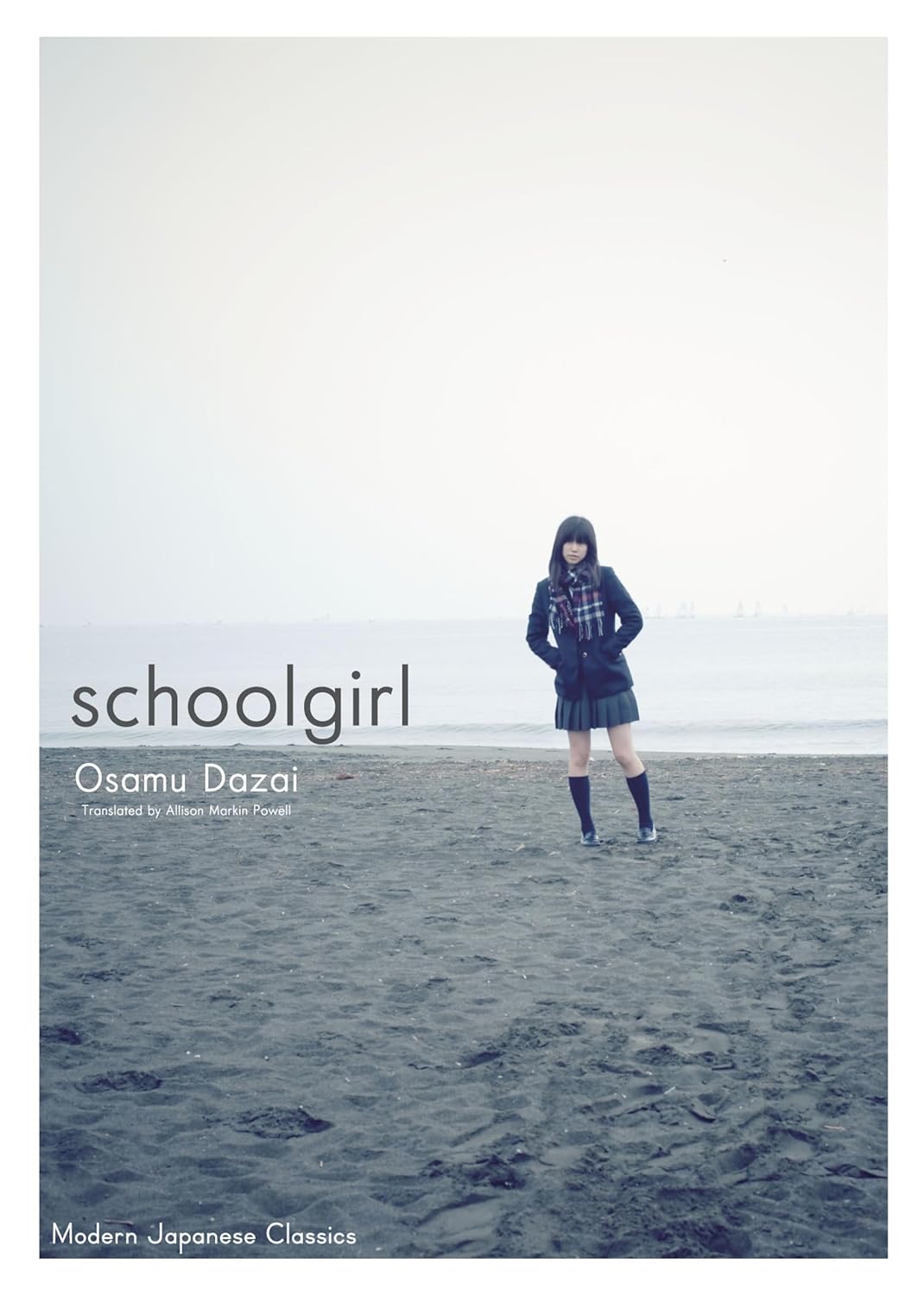
About Schoolgirl Book by Osamu Dazai: A Japanese Literary Classic About Growing Up, Grief, Loneliness, and Finding Your Own Identity
What if someone could hear every thought running through your mind for one entire day?
They would hear your private worries, your strange ideas, your happiest memories, and the things you would never say aloud. They might discover that the quiet person everyone sees is completely different from the person you are inside.
Schoolgirl by Osamu Dazai explores this hidden world through the thoughts of an unnamed teenage girl living in Japan.
The story begins when she wakes in the morning and ends as she prepares to sleep that night. During the day, she gets ready for school, spends time with classmates, thinks about her appearance, returns home, and interacts with her mother.
Nothing especially dramatic needs to happen for her mind to become a busy place.
She remembers her late father, questions the behaviour of people around her, worries about how others see her, and struggles with the confusing changes of growing up. Her thoughts shift quickly between happiness, sadness, anger, humour, and doubt.
Dazai takes readers inside these changing emotions, creating a story that feels remarkably personal.
Originally published in Japanese in 1939, this short literary work offers a close look at adolescence, grief, social expectations, and the difficult search for an individual identity.
Rather than following a complicated plot, the book invites you to experience the world through one young woman's eyes. It is particularly suitable for readers who enjoy Japanese literature, psychological fiction, and stories about the feelings people usually keep hidden.
One Ordinary Day, Hundreds of Hidden Feelings
The story follows the girl from morning until night.
She wakes up, gets dressed, leaves for school, returns home, and completes familiar daily tasks. These activities may sound simple, but every small event leads to another thought.
A passing stranger might make her feel uncomfortable. A memory might suddenly bring back sadness. A conversation may leave her wondering whether she has said the right thing.
Her thoughts are not always consistent.
She can feel confident one moment and embarrassed the next. Sometimes she appreciates the people around her; sometimes their behaviour annoys her.
These changes make the narrator feel like a real teenager rather than a character created to teach a simple lesson.
A Girl Who Is Still Learning Who She Is
The narrator is caught between childhood and adulthood.
She still enjoys daydreaming and imagining a different life, yet she has begun to notice how complicated the world can be.
She thinks about her looks, her behaviour, and the way others judge her.
Sometimes she wants to stand out. At other times, she wishes she could disappear into the crowd.
This conflict is an important part of the book.
Growing up is not simply about becoming older. It can also mean questioning things you once accepted and discovering that you do not always understand your own feelings.
Dazai captures these uncertain moments through the girl's private thoughts rather than long explanations.
Discover Why Her Father's Death Matters
The narrator's father has died, leaving her and her mother to continue their lives without him.
His absence affects her in ways she does not always understand.
A small memory or ordinary moment can remind her of him. Sometimes she thinks about his death directly; at other times, her sadness appears through unrelated thoughts.
This makes the book's treatment of grief feel personal.
The girl does not spend every moment crying. She still attends school, becomes annoyed, imagines different possibilities, and notices funny things.
Her sadness exists alongside the other parts of her daily life.
Readers who enjoy fiction about family loss may appreciate the way the story explores grief without turning every scene into a dramatic event.
A Complicated Relationship With Her Mother
The girl loves her mother, but their relationship is not always easy.
She wants attention and understanding, yet she sometimes feels irritated by her mother's words and behaviour.
She may behave politely while thinking something completely different.
These moments reveal how difficult it can be to express feelings within a family.
The narrator is not simply an obedient daughter or a rebellious teenager. She experiences affection, frustration, guilt, and concern.
Later in the day, ordinary household duties and interactions with her mother's guests reveal more of this tension.
The relationship gives the story warmth while showing how people can care deeply about one another without understanding every thought or feeling.
When School Feels Like a Place Full of Rules
School is supposed to help young people learn, develop skills, and prepare for adulthood.
For the narrator, it is also a place filled with social expectations.
She observes her classmates and teachers while privately questioning their behaviour.
Certain lessons bore her. Some social situations make her uncomfortable. Her mind wanders toward things that feel more interesting than the classroom.
She often keeps these thoughts to herself.
Readers can see the difference between the student everyone sees and the person she believes herself to be.
This creates gentle humour but also raises a serious question: how much of our behaviour comes from our own wishes, and how much comes from trying to satisfy other people?
The Pressure to Be a Good Girl
The narrator is aware that other people expect her to behave in certain ways.
She wants to appear polite and agreeable, even when she disagrees with what is happening around her.
Inside, however, she questions those expectations.
She notices moments when she says something she does not truly mean just to avoid upsetting someone.
This gap between public behaviour and private thought is one of the story's most important themes.
The book explores the pressure young women can face when they are expected to be pleasant, obedient, and easy to understand.
It also shows how difficult it can be to develop an individual identity while worrying about social approval.
A Story That Understands Self-Doubt
Have you ever looked in a mirror and noticed only the things you dislike about yourself?
The schoolgirl sometimes experiences this kind of self-doubt.
She thinks about her face, her glasses, and the way she appears to other people.
Small details can change how she feels about an entire day.
Her worries may seem ordinary, but they reveal something important about adolescence.
Young people can become highly aware of their appearance while still learning how to accept themselves.
Dazai does not give the narrator a sudden moment of perfect confidence.
Instead, he allows readers to experience her uncertainty.
This makes the story useful for exploring the difference between how someone sees themselves and how others may see them.
Discover the Beauty in Her Strange Daydreams
The narrator's mind is not filled with sadness alone.
She imagines different situations, notices unusual details, and sometimes turns ordinary experiences into little adventures.
On her way to school, she pictures herself somewhere far from her familiar surroundings.
These moments bring playfulness into the story.
They also show her desire to experience a world larger than the one she knows.
Her imagination offers a brief escape from routines and expectations.
Readers who enjoy character-focused fiction may appreciate how Dazai uses these small daydreams to reveal personality.
The girl becomes interesting not because she has an extraordinary adventure but because she experiences ordinary life in her own unusual way.
Laugh, Then Discover Something Sad Beneath the Humour
Osamu Dazai is often associated with dark and emotionally intense writing.
Schoolgirl contains melancholy, but its voice also has wit and playfulness.
The narrator sometimes makes sharp observations about herself and other people.
Her thoughts can become exaggerated or suddenly change direction, creating moments that feel surprisingly funny.
The humour does not remove the sadness.
Instead, both feelings exist together, just as they often do in ordinary life.
This mixture prevents the book from becoming a single, unchanging expression of despair.
Readers interested in Dazai's writing may discover a lighter and more playful side of his storytelling alongside his familiar themes of loneliness and alienation.
Experience the Story Through a Stream of Thoughts
The novella uses a style often called stream of consciousness.
Instead of explaining every event in a neat order, Dazai lets the narrator's thoughts move naturally from one subject to another.
She may notice something outside, remember her father, think about her appearance, and suddenly become interested in something else.
This approach brings readers close to her private world.
You learn what she feels without waiting for her to explain those feelings to another character.
The story is easy to follow at the level of individual sentences, but its changing thoughts may reward a slower reading pace.
A Window Into Japan Before World War II
The work first appeared in 1939, before Japan's entry into the Pacific War.
Its setting reflects a society where school, family duties, and public expectations shaped everyday life.
The narrator sometimes questions the lessons and attitudes she encounters.
Her private observations allow readers to consider the difference between accepted social ideas and an individual's personal beliefs.
The story is not a complete history of Japan.
It offers something smaller and more intimate: the thoughts of one fictional young woman living within the expectations of her time.
An Unusual Way to Meet Osamu Dazai
Many readers first discover Dazai through No Longer Human or The Setting Sun.
Schoolgirl offers another introduction.
Its narrator is a teenage girl rather than the troubled male characters associated with some of the author's other writing.
Yet the story explores familiar concerns about identity, loneliness, social behaviour, and the difficulty of understanding yourself.
The book also has a surprisingly playful voice.
You can begin with Schoolgirl without reading any of Dazai's other works.
It is a complete, independent story.
Who Should Read Schoolgirl?
This book is suitable for readers who enjoy Japanese classics, coming-of-age fiction, psychological stories, and character studies.
It may appeal to older teenagers and adults interested in identity, grief, family relationships, and social expectations.
Readers who enjoy action-heavy novels should know that the story follows one ordinary day rather than a series of major adventures.
Its emotional content includes grief, sadness, and harsh thoughts about the self.
The book is particularly rewarding for people who enjoy understanding a character through their inner voice.
Meet Osamu Dazai
Osamu Dazai was the pen name of Japanese writer Shūji Tsushima, who lived from 1909 to 1948.
He is known for fiction exploring alienation, identity, human behaviour, and difficult emotional experiences.
His works include No Longer Human, The Setting Sun, and Schoolgirl.
The original Japanese title of this story is Joseito.
The 1939 work helped establish Dazai's literary reputation and remains part of his widely read fiction.
Which English Edition Are You Buying?
Edition details are important because different books share this title.
One Peace Books published an English edition in 2011, translated by Allison Markin Powell. The publisher lists it at 100 pages, with ISBN 9781935548089.
Penguin Classics published a different edition in July 2026. Translated by Polly Barton, it contains six stories, including Schoolgirl, and runs to 160 pages.
These are not identical books. Customers should confirm the edition, translator, and contents before ordering.
Enjoy a Premium Edition From Bookish Wonderland
Bookish Wonderland offers this Japanese classic for readers who want a comfortable physical copy.
Our advertised book quality includes:
-
Premium eye-soothing cream paper for comfortable reading.
-
Crystal-clear printing for sharp, easy-to-read text.
-
High-quality stitched and glue binding designed for lasting use with proper care.
You can keep the book in your personal collection and return to its memorable passages whenever you want.
Book price in Bangladesh: Schoolgirl by Osamu Dazai
Check the current product listing at Bookish Wonderland for the available edition and price.
We offer nationwide delivery inside and outside Dhaka, with Cash on Delivery available across Bangladesh. Customers in Dhaka can also ask about fast or urgent delivery.
For availability, edition details, book customization, or other questions, contact Bookish Wonderland through Facebook or Instagram.
Discover the Thoughts of a Girl You Will Remember
One day. One unnamed girl. A mind filled with memories, questions, fears, and unexpected moments of joy.
Schoolgirl turns an ordinary day into an intimate exploration of growing up and trying to understand yourself.
If you enjoy thoughtful Japanese fiction and stories that reveal the feelings people rarely express aloud, this short classic offers a memorable reading experience.
Order Schoolgirl by Osamu Dazai from Bookish Wonderland today and discover the private world behind one young woman's everyday life.
If you require any customization or have any questions, please inbox us via FB or Insta.
| Primary Specification | |
| Author | Osamu Dazai |
| Narrator | Traci Kato Kiriyama |
| Genre | Literary Fiction, Coming-of-Age, Psychological Fiction, Japanese Classics |
| ISBN-13/ISSN | 978-1935548089 |
| ISBN-10 | 1935548085 |
| Publisher | One Peace Books |
| Publishing Date | October 15, 2011 |
| Language | English |
| Reading Age | 18+ |
| Format | Printed Book |
| Physical Specification & Quality | |
| Paper Quality | Premium eye-soothing cream paper |
| Binding Quality | High quality stitched and glue binding (for longevity) |
| Print Quality | Crystal-clear print |
| Pages | 104 pages |
| Country | Japan |
| Logistics Information | |
| Weight | 124 gm |
| Length | 8.5 inches |
| Width | 5.6 inches |
| Height | 0.3 inch |