

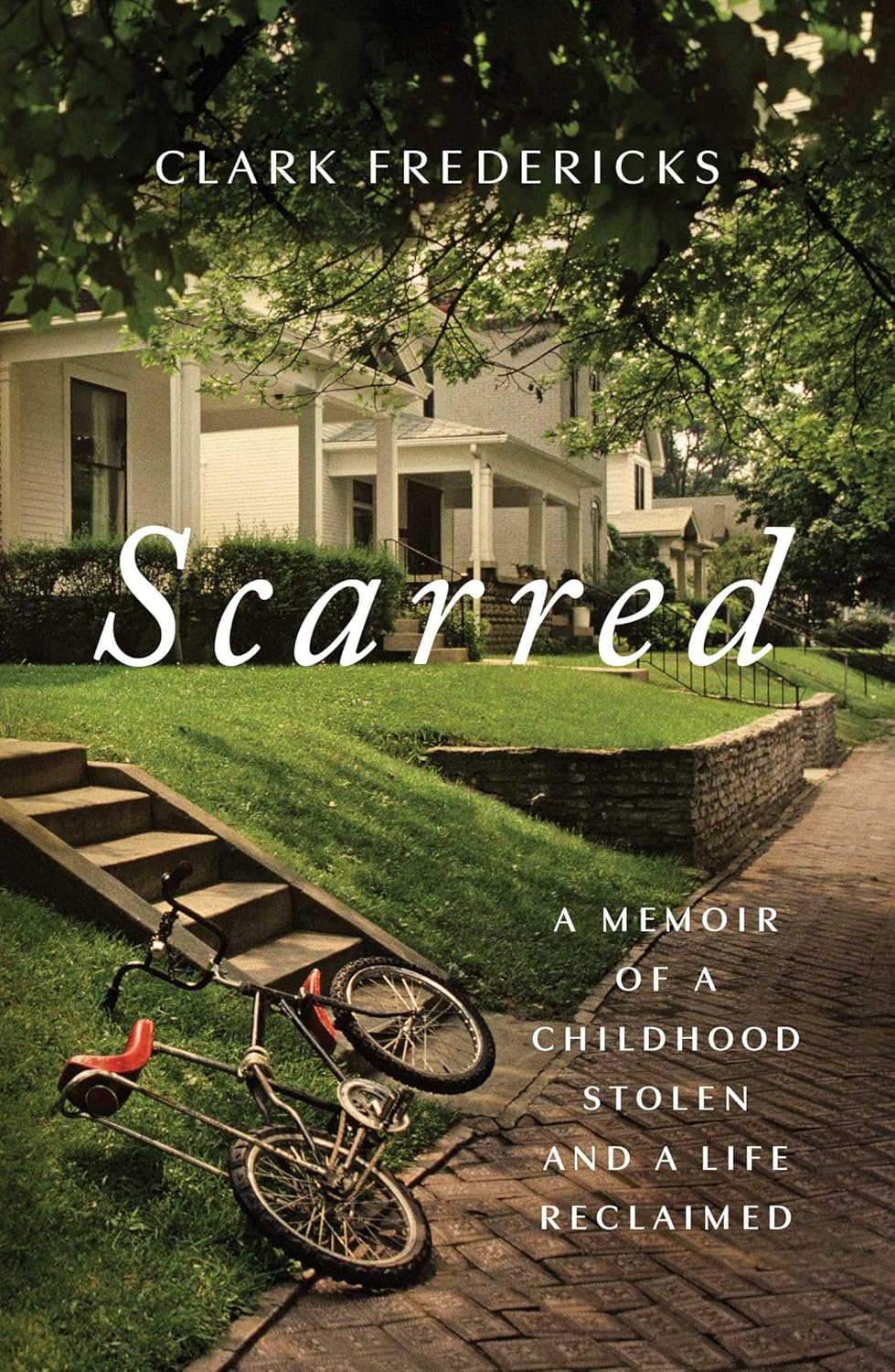
About Scarred: A Memoir of a Childhood Stolen and a Life Reclaimed by Clark Fredericks – A True Story of Abuse, Survival, Justice, and Finding a Way Forward
How does someone rebuild a life after being hurt by a person they were taught to trust? What happens when painful memories remain hidden for decades? And can someone find a new purpose after making a decision that changes everything?
Scarred: A Memoir of a Childhood Stolen and a Life Reclaimed by Clark Fredericks tells the true story of a man whose childhood was shattered by sexual abuse and whose life later became marked by addiction, violence, imprisonment, and a long search for recovery.
Growing up in rural New Jersey during the 1970s, Clark enjoyed fishing, exploring the woods, and spending time with friends. His childhood changed when Dennis Pegg, a respected local Boy Scout leader and law enforcement officer, sexually abused him.
Clark kept what happened a secret for years. As he grew older, he struggled with painful memories and turned to destructive behaviours in an attempt to escape them.
Decades later, he violently confronted Pegg and killed him. Clark went to prison, where another difficult part of his life began.
His memoir follows what happened before and after that confrontation, including his efforts to rebuild relationships and eventually speak publicly for survivors of childhood sexual abuse.
This is an adult memoir about serious harm and its consequences, not a revenge thriller. It explores the possibility of change without presenting violence as a solution to trauma.
A Childhood Filled With Nature and Freedom
The memoir begins by looking back at Clark's early years in northern New Jersey.
He remembers a world of woods, fishing spots, and outdoor adventures with friends. These ordinary childhood pleasures make the change in his life especially significant.
The setting also helps readers understand the close community in which he grew up. Families knew one another, and familiar adults were often treated as trustworthy.
Clark's early memories establish what childhood meant to him before the abuse began. They give readers a fuller picture of his life, rather than defining him only through what happened later.
The Betrayal of Someone Everyone Trusted
Dennis Pegg held positions that gave him respect within the community. He was involved with the Boy Scouts and worked in law enforcement.
Clark describes how this reputation allowed Pegg to appear dependable to children and their families.
The abuse was not committed by a mysterious stranger. It involved someone Clark had reason to trust.
This betrayal is central to the memoir. It shows how a respected public identity can hide harmful behaviour and why children need adults who take their concerns seriously.
The book asks readers to look beyond someone's job, reputation, or position when considering a child's safety.
Understanding How Trust Can Be Misused
Clark's account examines how Pegg developed access to him and used a relationship of trust to cause harm.
This process is often described as grooming.
The memoir shows why abuse cannot be understood simply by asking why a child did not leave or tell someone immediately.
Children may depend on adults for guidance, feel confused about what is happening, or fear the consequences of speaking.
The responsibility belongs to the person who commits the abuse.
By sharing his experience, Clark brings attention to warning signs and the importance of taking reports from children seriously.
Decades of Carrying a Secret
Clark did not immediately speak openly about the abuse.
As the years passed, he continued living with memories that affected his relationships and sense of self.
The memoir describes shame and silence as major parts of his experience.
He struggled to explain what had happened, even to people who cared about him.
This aspect of the story is especially important because survivors do not all disclose abuse at the same time.
Some speak soon afterward, while others wait many years or never tell anyone.
Clark's experience illustrates one person's reasons for remaining silent without suggesting that every survivor responds in the same way.
When Pain Affects Everyday Decisions
As Clark grew older, his difficulties extended into many areas of life.
The publisher describes his struggles with drugs, alcohol, gambling, and compulsive sexual behaviour.
Clark connects these problems to his efforts to escape painful memories.
The book follows the ways these behaviours affected his stability and relationships.
It does not present addiction as an inevitable outcome of childhood abuse. Different people respond to traumatic experiences differently.
Instead, readers see how several serious problems became connected within Clark's particular life.
His account encourages understanding while making clear that destructive behaviour can create further harm.
The Cost of Staying Silent
Secrets can affect relationships when someone feels unable to explain what they are experiencing.
Clark's memoir explores how his difficulties damaged connections with people around him.
His personal struggles did not remain separate from his work, friendships, and romantic life.
The story shows how problems can continue growing when they are not addressed.
It also illustrates why survivors may need safe opportunities to speak, receive support, and make decisions about their own lives.
There is no single correct timetable for disclosure or recovery.
The value of Clark's account lies in showing the particular path he experienced.
A Violent Confrontation Changes His Life
In 2012, Clark confronted Dennis Pegg and killed him.
The memoir describes the events leading up to that confrontation and the consequences that followed.
It is an important turning point, but it should not be understood as a successful method of dealing with abuse.
In a later interview, Clark said that killing Pegg did not heal him and that the violence created additional trauma.
His story therefore examines the difference between an act of revenge and the much longer work of rebuilding a life.
The book does not end with Pegg's death because Clark's difficulties and responsibilities did not end there.
Facing the Consequences of the Killing
Clark's actions led to criminal proceedings and imprisonment.
He pleaded guilty to passion/provocation manslaughter and received a five-year prison sentence.
This part of the memoir introduces another difficult reality: Clark was a survivor of serious childhood abuse, but he was also responsible for killing another person.
Both facts matter to understanding his story.
Readers follow his experiences within the criminal justice system and the ways imprisonment changed his life.
The memoir offers a personal account of those events rather than a complete legal analysis of the case.
The Difficult Work of Starting Again
Prison became another important part of Clark's story.
The memoir follows the years after his arrest, when he had to live with the consequences of his actions while confronting memories he had carried for decades.
His path was neither quick nor simple.
The book describes personal struggles, changing relationships, and efforts to understand himself differently.
Rather than suggesting that one dramatic event transformed his life overnight, Clark shows readers a longer process.
This gives the memoir a wider focus than the crime that first brought public attention to his story.
Discover the Importance of Love and Trust
The publisher identifies love and trust as important themes in Clark's account of rebuilding his life.
These ideas appear alongside his efforts to reconnect with people and move beyond the behaviours that had damaged his relationships.
The book explores what it means to accept support after years of secrecy.
Trust cannot always be restored immediately, especially when relationships have been affected by painful events.
Clark's experience shows one way that connection became important to him.
It does not suggest that every survivor needs to reconcile with particular people or follow the same path.
What Does Reclaiming a Life Really Mean?
The subtitle promises a story about a life reclaimed.
That does not mean the past disappears.
Clark continues to acknowledge the abuse, the killing, and the consequences of his actions.
What changes is how he chooses to live afterward.
He develops a public voice, speaks about his experiences, and works on issues affecting survivors.
The memoir presents recovery as an ongoing process rather than a perfect ending.
This makes its final chapters important. They show the work that followed imprisonment instead of treating the most dramatic moment as the conclusion.
Breaking the Silence Around Male Survivors
One of the book's important subjects is childhood sexual abuse experienced by boys.
Clark explains how shame and expectations surrounding masculinity affected his willingness to speak.
Readers may find this perspective valuable because public discussions of sexual abuse do not always give equal attention to male survivors.
His account challenges the assumption that someone's gender makes them immune to exploitation or its effects.
It also shows why survivors need to be heard without having their experiences dismissed.
The memoir focuses on Clark's life, but its subject raises questions about how families and communities respond to people who disclose abuse.
Turning Personal Experience Into Public Advocacy
After leaving prison, Clark became a speaker and advocate for survivors of childhood sexual abuse.
He has discussed his experiences in interviews and used his public platform to draw attention to barriers that can prevent survivors from seeking legal remedies.
His publisher credits his story and advocacy with helping inspire changes to laws that previously restricted when abuse survivors could bring civil claims.
This work forms part of the memoir's later chapters.
Readers see a different side of Clark: someone attempting to use his experiences to contribute to conversations about protection, accountability, and survivor rights.
Why the Book Discusses Legal Reform
Clark's advocacy is connected to New Jersey's rules governing civil claims involving childhood sexual abuse.
A law approved on May 13, 2019, expanded the time available for certain survivors to bring these claims.
Under the relevant provision, a person abused as a minor generally has until 37 years after reaching adulthood, or seven years after reasonably discovering the injury and its connection to the abuse, whichever is later. Other legal provisions and circumstances may apply.
The memoir connects Clark's personal experience to the wider debate surrounding these restrictions.
Readers interested in the legal issues should consult the actual legislation for precise information.
A Memoir That Does Not Offer Easy Answers
Scarred deals with situations that cannot be resolved through a simple lesson about forgiveness or positive thinking.
Its author experienced serious harm as a child, developed destructive behaviours, committed a killing, and spent years dealing with the consequences.
The book brings these different parts of his life together.
Readers are invited to understand his experiences without being asked to regard violence as justified or recovery as guaranteed.
This makes the memoir more complicated than a conventional motivational book.
Its central value lies in Clark's willingness to examine events that are painful, difficult, and morally serious.
A Story Told Through Personal Memories
The book is written as a memoir, meaning Clark recounts events from his own life.
Its chapters move through his childhood, later struggles, the killing, imprisonment, and life afterward.
Chapter titles such as The Scar, Addictions, Jailhouse Guru, and Remains of a Past give readers an idea of the subjects covered.
The account combines memories of important events with reflection on their consequences.
Because this is a personal narrative, readers experience events primarily through Clark's perspective rather than through an independent investigation of every person involved.
Is Scarred a True Story or a Novel?
Scarred is nonfiction.
Clark Fredericks writes about his own childhood, adult life, criminal case, imprisonment, and advocacy.
The publisher classifies it as a personal memoir and also places it in categories concerning abuse and sexual violence.
Although some events involve a crime and legal proceedings, this is not a fictional thriller or detective novel.
Readers looking for a true-life account of trauma and its long-term consequences will find that subject at the centre of the book.
Important Content Information Before Reading
This book is intended for mature readers.
It discusses childhood sexual abuse, grooming, addiction, suicidal thoughts, murder, imprisonment, and other disturbing experiences.
Some passages may be especially difficult for people with personal experience of abuse or violence.
The book is not suitable for young children or readers looking for a light, comforting story.
Anyone unsure about the subject matter should consider the content before purchasing.
Reading about another person's experiences can encourage reflection, but a memoir is not a substitute for professional mental health support or specialised survivor services.
Who Should Read Scarred?
This memoir may interest adult readers of true stories, autobiographies, survivor narratives, and books about personal transformation.
It is also relevant to people interested in the long-term effects of childhood abuse and the challenges of seeking accountability.
Readers studying social work, criminal justice, or advocacy may find its personal perspective useful.
The book may appeal to those who prefer nonfiction that explores difficult experiences rather than avoiding them.
However, anyone looking for a step-by-step recovery guide should understand that Clark is telling his own story, not offering a treatment programme.
Meet Clark Fredericks, the Author
Clark Fredericks is an American author, speaker, and advocate for survivors of childhood sexual abuse.
He has discussed his story through interviews and public appearances, including coverage by major American news organisations.
His work draws on his experience of childhood abuse, addiction, imprisonment, and rebuilding his life.
He also shares conversations about personal struggles and recovery through his Free Like Me platform.
Scarred is his published memoir, giving readers a detailed account of the experiences behind his public advocacy.
Discover the Publication and Edition Details
Atria Books published the hardcover edition of Scarred on July 29, 2025.
A trade paperback edition followed on July 14, 2026.
The publisher lists both editions at 272 pages, although physical details may differ between formats.
The hardcover ISBN-13 is 9781668018651, while the paperback ISBN-13 is 9781668018668.
An unabridged audiobook is also available, narrated by Clark Fredericks himself, with a runtime of six hours and 48 minutes.
Customers should confirm the available format before purchasing.
A Premium Edition From Bookish Wonderland
Bookish Wonderland offers a premium reading edition for customers who enjoy collecting meaningful nonfiction.
Our advertised edition features:
-
Premium eye-soothing cream paper: Soft-coloured pages designed for comfortable reading.
-
Crystal-clear printing: Sharp, clean text that makes the memoir easy to follow.
-
High-quality stitched and glue binding: Designed to keep the pages securely together through regular reading with proper care.
This physical edition is suitable for readers who want to keep the book in their personal collection.
You can also contact our team to confirm available formats or discuss customization before ordering.
Check the Current Book Price in Bangladesh
To check the Book price in Bangladesh for Scarred by Clark Fredericks, visit the current product listing at Bookish Wonderland.
The final amount may depend on the available edition, stock, and current offers.
We provide nationwide delivery to customers inside and outside Dhaka.
Cash on Delivery is available across Bangladesh, and customers in Dhaka can ask about our fast or urgent delivery option.
For questions about edition details, availability, customization, or delivery, contact Bookish Wonderland through Facebook or Instagram.
Read a True Story About Survival and the Life That Follows
Scarred begins with a childhood damaged by betrayal and follows the consequences across decades.
Clark Fredericks recounts difficult experiences without leaving out the harm caused by his own later actions.
His story continues through imprisonment, attempts to rebuild his life, and work on behalf of other survivors.
This is an emotionally demanding memoir for readers who want to understand a complicated personal journey.
Order Scarred: A Memoir of a Childhood Stolen and a Life Reclaimed by Clark Fredericks from Bookish Wonderland today and discover a deeply personal account of trauma, responsibility, and finding a way forward.
If you require any customization or have any questions, please inbox us via FB or Insta.
| Primary Specification | |
| Author | Clark Fredericks |
| Narrator | Clark Fredericks |
| Genre | Memoir, Biography, True Crime, Trauma and Recovery |
| ISBN-13/ISSN | 978-1668018668 |
| ISBN-10 | 1668018667 |
| Publisher | Atria Books |
| Publishing Date | July 14, 2026 |
| Language | English |
| Reading Age | 18+ |
| Format | Printed Book |
| Physical Specification & Quality | |
| Paper Quality | Premium eye-soothing cream paper |
| Binding Quality | High quality stitched and glue binding (for longevity) |
| Print Quality | Crystal-clear print |
| Pages | 272 pages |
| Country | USA |
| Logistics Information | |
| Weight | 294 gm |
| Length | 8.5 inches |
| Width | 5.6 inches |
| Height | 0.8 inch |