

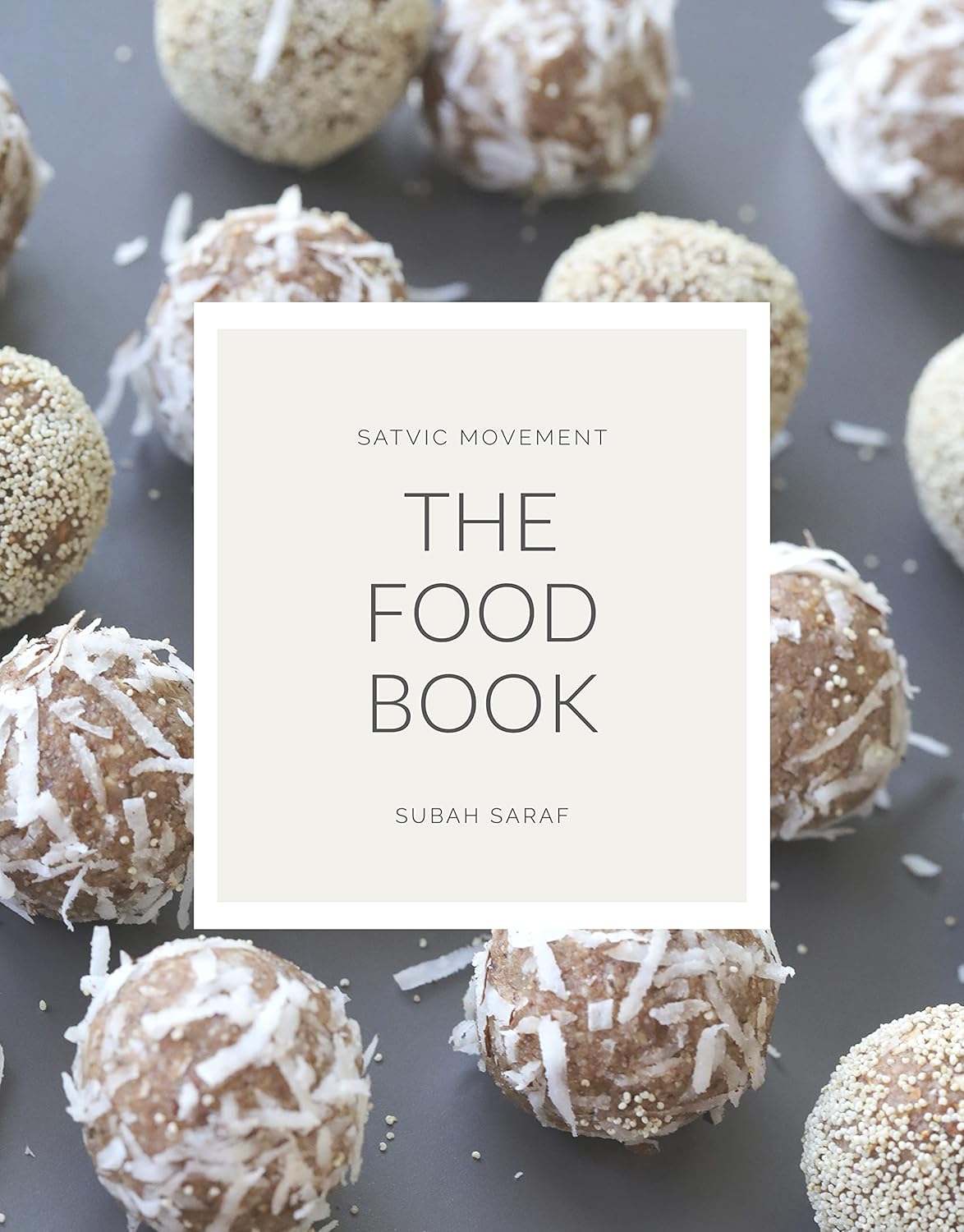
About Satvic Food Book by Subah Saraf: Plant-Based Recipes for a Fresh Kitchen
Satvic Food Book by Subah Saraf helps readers bring more fresh, simple, plant-based food into everyday life. It is both a recipe book and a basic kitchen guide. Instead of giving only a list of dishes, it explains the food ideas behind Satvic eating and shows how to use them at home.
The current official listing for Satvic Food Book 1 describes 55 recipes. These range from juices, fruit bowls, salads, and soups to familiar meals such as khichadi, chapati, sabzi, cheela, and grain bowls. The recipes focus on natural ingredients and avoid many highly processed items. The book also contains food rules, mindful eating ideas, help for setting up a Satvic kitchen, and meal-plan guidance.
When healthy cooking feels too difficult
Many people want to eat better but stop before they begin. Online advice can feel confusing. One person says to remove one food, while another says the opposite. Recipes may need costly ingredients, long cooking time, or tools that are not already in the kitchen. After a busy day, packaged food can feel easier.
This book offers one organised path. It gathers its food approach, kitchen tips, and recipes in one place, so readers do not have to search through many videos or posts during every meal. The dishes use familiar forms, including soups, salads, smoothies, chutneys, chapati, sabzi, and khichadi. That can make a new eating style easier to understand.
What does Satvic food mean?
The word Satvic comes from an Indian way of thinking about food and life. In this approach, food should be fresh, simple, and close to its natural form. The book gives priority to fruits, vegetables, grains, nuts, seeds, herbs, and other plant foods. It asks readers to reduce heavily processed products and refined ingredients.
Satvic cooking in this book is not only about the food on the plate. It also looks at how food is chosen, prepared, combined, and eaten. The wider idea is to make meals calm, clean, and mindful. This can help readers notice hunger, routine, taste, and the way different meals make them feel.
Some parts come from traditional ideas rather than modern medical rules. Readers can use the book as a practical food guide while still making personal choices. People with allergies, pregnancy, diabetes, kidney problems, eating disorders, or other medical needs should ask a qualified health professional before making a major diet change.
More than a collection of recipes
Many cookbooks begin with recipes and leave the reader to work out everything else. Satvic Food Book by Subah Saraf starts with the wider kitchen. It explains the food philosophy, introduces key principles, discusses food combining and mindful eating, and helps readers think about daily planning.
The kitchen section is especially helpful for someone changing an old routine. It covers useful ingredients, basic tools, sprouts, and nut milk. It also gives guidance about recipe preparation. When these basics are ready, cooking can become quicker because the reader knows what to buy and what to prepare early.
Meal-plan guidance helps connect separate dishes into a day. A juice or fruit bowl may work before breakfast, while a grain bowl or khichadi may form a fuller meal. A soup or salad may suit a lighter evening. Readers can adapt these ideas to appetite, local ingredients, family size, time, and professional health advice.
Fresh choices from morning to night
The recipes cover several parts of the day, which helps the book feel useful rather than decorative. Morning choices include fresh juices, coconut water, fruit bowls, smoothies, and simple drinks. Lunch ideas include Satvic chapati, sabzi, khichadi, daliya, cheela, moong bowls, quinoa bowls, and vegetable dishes.
The book also offers chutneys, salads, soups, and lighter meals. Examples found across editions include carrot raisin salad, Thai papaya salad, beetroot-based dishes, zucchini spaghetti, green chutney, date chutney, and coconut chutney. These choices show that plant-based food can have many colours, textures, and tastes.
You do not have to cook the book from first page to last. Choose a recipe that uses ingredients you know. Once it feels easy, try another. This step-by-step use can help a beginner learn without wasting food or feeling pushed to change the whole kitchen in one day.
Familiar food with a lighter approach
One reason the book may appeal to South Asian readers is its use of known meal forms. Chapati, sabzi, khichadi, cheela, chutney, and daliya already belong in many homes. The Satvic versions change the choice of ingredients and preparation, but the meal can still feel familiar.
The recipes generally avoid refined sugar, refined flour, refined oil, dairy products, and heavily processed food. Natural sweet ingredients, whole grains, vegetables, fruits, coconut, nuts, seeds, and mild seasonings take a larger role. This gives readers ideas for building taste without depending on packaged sauces or highly refined items.
Clear steps for a new cook
A healthy-looking dish can still fail if the recipe is hard to follow. This book is designed to make home preparation feel possible. The current official description says its recipes were created with simple steps and ingredients that are easy to source. Photos also help readers understand what a finished dish may look like.
Beginners can start by reading the kitchen guide before buying many items. This prevents the common mistake of filling a shelf with ingredients that are rarely used. Making a short plan for two or three recipes is often enough for the first week.
Experienced cooks can use the book differently. They may learn a new salad, try a dairy-free drink, or change the way they prepare a familiar meal. The value is not only in following every line. It is also in gaining fresh ideas that can be carried into normal home cooking.
A calmer way to plan meals
Daily food decisions can become tiring. Breakfast arrives, lunch must be packed, and dinner appears before anyone has made a plan. This often leads to repeated takeout or packaged snacks. A cookbook becomes more useful when it lowers that daily decision load.
Satvic Food Book brings drinks, main meals, sides, salads, and soups into one system. A reader can mark a few family favourites and build a simple weekly plan. Ingredients that appear in several dishes can be bought together, which may reduce forgotten items and food waste.
What this book can realistically offer
The book is promoted around healing and health, but no cookbook can promise to cure every illness. Food can be an important part of health, yet treatment depends on the person, condition, medicine, tests, and advice from qualified professionals. Readers should not stop prescribed medicine or replace medical care because of a recipe or meal plan.
What the book can offer is practical support for eating more fresh plant food and preparing more meals at home. It can help readers notice refined ingredients, plan ahead, learn basic recipes, and explore new ways to use fruits, vegetables, grains, nuts, and seeds.
Useful benefits beyond one meal
The first benefit is organisation. Food principles, kitchen setup, meal ideas, and recipes are kept together. This gives beginners a clear starting place and makes it easier to return when they forget a step.
The second benefit is variety. The book moves beyond plain salad and includes drinks, bowls, breads, vegetable dishes, soups, chutneys, and sweet choices. Readers can explore plant-based eating without repeating the same meal every day.
The third benefit is skill. Learning to make sprouts, nut milk, dressings, and simple full meals can reduce dependence on ready-made food. These skills remain useful after a recipe is finished. The fourth benefit is awareness. Readers may begin checking labels, planning shopping, and noticing how fresh ingredients can be combined in different ways.
Good ways to use this book
Keep it in the kitchen and choose three recipes for the week. Begin with one familiar meal, one quick drink, and one new salad or soup. Write a small shopping list and prepare only what you can use. This makes the first step simple and helps prevent waste.
Use the book for a weekend cooking session with family or friends. Each person can prepare one part of the meal. It can also support a personal thirty-day home-cooking goal, with one new recipe tried every few days instead of a sudden strict change.
The book can be a thoughtful gift for a new cook, a plant-based eater, a student setting up a kitchen, or someone who wants more homemade meals. It also suits readers interested in Indian wellness traditions. Anyone following a special medical diet should compare every recipe with professional advice before use.
Who is this food guide for?
Choose this book if you want simple plant-based recipes, less processed food, and a clearer kitchen routine. It can suit beginners because it explains more than cooking steps. It can also suit regular cooks who want new versions of Indian dishes and colourful ways to use fresh produce.
The book may not suit readers looking for meat, fish, eggs, dairy-heavy meals, or rich restaurant-style cooking. Its food rules are specific, and some readers may prefer to follow only the parts that work for them. That is reasonable. A useful cookbook should support daily life, not create fear or guilt around eating.
A practical copy for regular kitchen use
Bookish Wonderland offers a reader-friendly copy made for regular handling. Premium eye-soothing cream paper gives the pages a soft look, while crystal-clear print keeps ingredients and cooking steps easy to follow. High-quality stitched and glue binding supports longer use when the book is opened often. A durable finish helps it stay ready for the kitchen shelf, study table, or gift box.
Because cookbook pages are checked again and again, clear printing and firm binding matter. Keep the book away from water, oil, steam, and direct heat to protect it for longer.
Easy ordering from Bookish Wonderland
When comparing the Book price in Bangladesh for Satvic Food Book by Subah Saraf, consider how often you may use the recipes, kitchen guide, and meal ideas. A cookbook made for regular use should also have readable print, comfortable paper, and strong binding.
Cash on Delivery is available nationwide. Customers can order from inside or outside Dhaka, and fast or urgent delivery is available in Dhaka when the book is needed quickly. Contact Bookish Wonderland through Facebook or Instagram to confirm the current price, stock, delivery time, or customization needs.
Bring fresh ideas into your kitchen
A better kitchen routine does not have to begin with a perfect plan. It can begin with one fruit bowl, one warm khichadi, one fresh chutney, or one meal prepared with care. Satvic Food Book gives you a place to begin and enough variety to keep learning.
Open it when shopping feels confusing, when meals feel repeated, or when you want to prepare more food at home. Use the ideas that fit your needs, ask for medical help when needed, and let small practical changes grow at a safe pace.
Order Satvic Food Book by Subah Saraf from Bookish Wonderland today. Bring home a clear, colourful, and useful guide that can help turn fresh plant ingredients into simple meals for everyday life.
If you require any customization or have any questions, please inbox us via FB or Insta.
| Primary Specification | |
| Author | Subah Saraf |
| Genre | Cookbook, Health & Wellness, Nutrition, Plant-Based Cooking, Lifestyle Guide |
| ISBN-13/ISSN | 978-9354935084 |
| ISBN-10 | 9354935087 |
| Publisher | SATVIC MOVEMENT |
| Publishing Date | 1 January 2022 |
| Language | English |
| Reading Age | 13+ |
| Format | Printed Book |
| Physical Specification & Quality | |
| Paper Quality | Premium eye-soothing cream paper |
| Binding Quality | High quality stitched and glue binding (for longevity) |
| Print Quality | Crystal-clear print |
| Pages | 161 pages |
| Country | India |
| Logistics Information | |
| Weight | 184 gm |
| Length | 8.5 inches |
| Width | 5.6 inches |