Skip to product information
1 of 1

Bookish Wonderland

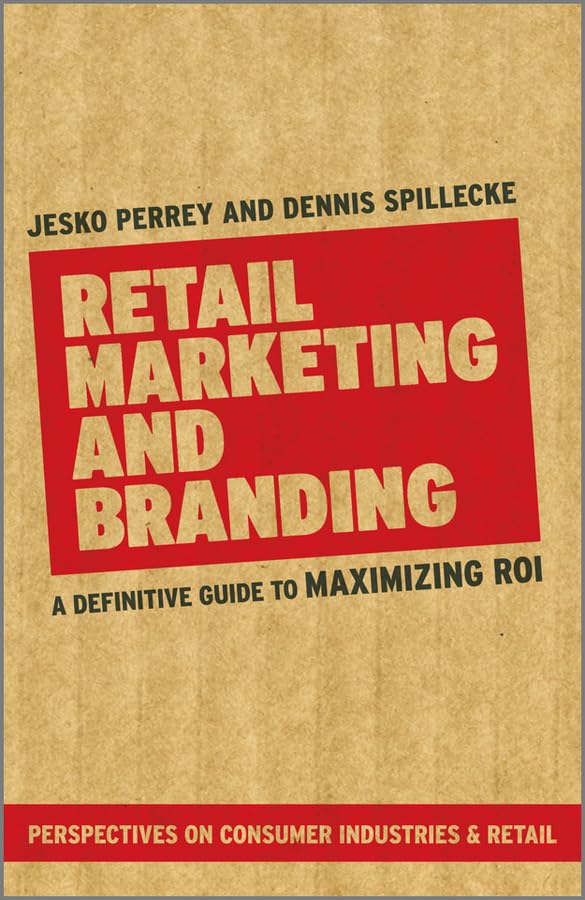
Retail Marketing and Branding: A Definitive Guide to Maximizing ROI by Jesko Perrey and Dennis Spillecke

Retail Marketing and Branding: A Definitive Guide to Maximizing ROI by Jesko Perrey and Dennis Spillecke

Regular price Tk 315.00 BDT
Regular price Sale price Tk 315.00 BDT
Sale Sold out
Book cover type
Quantity

Retail Marketing and Branding by Jesko Perrey and Dennis Spillecke explains how retailers can strengthen their brands while making smarter decisions about marketing spending. Drawing on frameworks and case studies, the book connects brand strategy with measurable financial results. It examines customer segmentation, store formats, private labels, and the challenge of creating a consistent experience across shopping channels. Readers learn how to select advertising media, set budgets, prioritize investments, and evaluate which marketing activities produce returns. The authors also address digital marketing, promotions, in-store communication, and efficient sourcing, showing how each contributes to business performance. Rather than relying on intuition alone, the guide encourages retailers to combine customer insight, data analysis, and creative judgment. Its examples illustrate how companies can respond to changing shopper expectations and competition. Designed for retail managers and marketing professionals, the book offers actionable methods for improving brand strength, allocating resources effectively, and supporting profitable growth. Read More

View full details

About Retail Marketing and Branding: A Definitive Guide to Maximizing ROI by Jesko Perrey and Dennis Spillecke – A Practical Guide to Stronger Retail Brands and Smarter Marketing Spend

Retail is simple to describe but hard to do well. A store needs the right products, the right price, a clear identity, useful promotions, strong customer service, and marketing that actually brings results. Retail Marketing and Branding: A Definitive Guide to Maximizing ROI by Jesko Perrey and Dennis Spillecke brings these parts together in one detailed business guide.

The book is written for people who want to understand how retail brands grow and how marketing money can be used more carefully. It looks at brand management, customer segmentation, store formats, private labels, media spending, promotions, digital marketing, point-of-sale activity, and marketing return on investment.

Instead of treating branding as only a logo or advertising campaign, the book looks at the full customer journey. It asks what shoppers notice, what makes them trust a retailer, how stores can build a clear position, and how managers can measure whether marketing activity is producing value.

Build a Retail Brand That Customers Can Understand

A strong retail brand needs to be clear in the customer's mind.

People should understand what the store stands for, what kind of value it offers, and why they should choose it instead of another retailer. That identity is created through many small experiences. Price, assortment, store design, service, communication, promotions, and digital channels all influence the way shoppers see a brand.

The book explains that brand management needs creativity, analysis, and careful execution. A good idea is not enough if the message changes from one channel to another. A beautiful campaign is also not enough if the store experience fails to match the promise.

This makes the book useful for managers who want branding to become part of daily business decisions rather than something handled only by an advertising team.

Learn Why Customer Segmentation Matters

Not every shopper wants the same thing.

One customer may care mainly about low prices. Another may want quality, convenience, service, or a special shopping experience. If a retailer tries to speak to everyone in exactly the same way, the message can become weak.

Retail Marketing and Branding discusses segmentation as a way to understand meaningful groups of customers. The goal is to identify differences that matter for business decisions and then create a stronger offer for the people a retailer wants to serve.

Good segmentation can influence product range, pricing, communication, loyalty activity, store format, and media choices. It can also help a retailer avoid spending money on messages that are too broad to be useful.

For students and new marketers, this section helps explain why customer knowledge sits at the center of effective retail strategy.

Turn Brand Strategy into the Real Store Experience

A brand promise must become something the customer can actually feel.

If a retailer says it is convenient, shopping should truly feel easy. If it promises premium quality, the product range, service, and environment should support that claim. If it competes on value, customers should understand where that value comes from.

The book examines retail formats as a combination of location, assortment, price, in-store experience, and service. These choices shape the customer's view of the business.

This is important because retail marketing does not stop when an advertisement ends. The store itself is a marketing channel. Shelves, signs, staff behavior, navigation, checkout, and product presentation can all strengthen or weaken the brand.

Use Private Labels as Part of the Brand

Retailers often sell both outside brands and their own private-label products.

The book explains that private labels can do more than offer a cheaper alternative. They can help a retailer create something competitors cannot copy directly, strengthen customer loyalty, and support a clearer market position.

Managing private labels requires decisions about quality, price, packaging, range, and how each product fits with the retailer's main identity.

Too many weak private labels can create confusion. A carefully designed portfolio can make the store easier to understand and give customers stronger reasons to return.

For anyone working in grocery, fashion, general merchandise, pharmacy, or other retail categories, these ideas can help connect product decisions with larger branding goals.

Make Marketing Money Work Harder

A large marketing budget does not automatically create a strong result.

One of the main purposes of the book is to show how retailers can improve marketing return on investment. That means asking what each activity is expected to achieve and whether the money spent is producing enough value.

The authors and contributors discuss budget sizing, budget priorities, media mix decisions, and ways to compare different communication options.

The aim is not simply to spend less. It is to spend more intelligently.

A retailer may discover that one channel reaches the right audience more efficiently, while another channel is better for a different objective. Measuring reach, cost, quality, sales impact, brand impact, and customer response can help managers make better choices.

Compare Media with More Discipline

Modern retail marketing uses many channels.

A brand may communicate through television, social media, search, email, apps, outdoor advertising, print, websites, stores, and loyalty programs. Each channel has different strengths, costs, and measurement problems.

The book presents approaches for comparing marketing vehicles on a more consistent basis. One example is the Reach-Cost-Quality framework, which looks at actual reach, cost, and the quality of that reach.

This kind of method encourages managers to move beyond habit. A channel should not receive money only because it was used last year or because competitors are using it.

The better question is whether it helps the retailer reach the right people and support the right business goal.

Treat the Point of Sale as a Powerful Marketing Channel

The store is where many buying decisions finally happen.

Retail Marketing and Branding gives serious attention to point-of-sale marketing. This can include visual merchandising, displays, signage, product placement, service, and the behavior of front-line employees.

These things matter because the customer experiences them directly. A strong advertisement may bring someone into a store, but the final decision can still be shaped by what happens at the shelf or during a conversation with staff.

Point-of-sale activity can also influence how shoppers remember the whole brand. A clear, helpful store experience can support trust. A confusing or poor experience can damage it.

The lesson is simple: retail marketing should connect communication with execution.

Understand Promotion Without Giving Away Value

Promotions can bring attention and increase short-term sales, but constant discounting can create problems.

If customers learn to wait for a sale, normal prices may begin to feel too high. Promotions can also reduce margin without creating lasting loyalty.

The book looks at promotion management as a business discipline rather than a simple decision to cut prices. Managers need to consider which products to promote, when to promote them, what customer behavior they want, and whether the activity creates profit as well as sales.

This helps readers think beyond the excitement of a temporary sales increase.

A good promotion should have a clear purpose. It should support the larger retail strategy rather than become a habit that slowly weakens the brand.

Connect Digital Marketing with the Whole Retail Business

Digital channels have changed how customers discover products, compare prices, read reviews, and move between online and physical stores.

The second edition includes revised material on digital evolution and digital marketing. This is important because digital activity should not sit separately from the rest of the retail business.

A customer may see an online advertisement, visit a website, compare products on a phone, enter a store, and later receive an email. From the customer's point of view, these are all parts of one relationship with the retailer.

The book encourages a more connected view of channels, data, communication, and customer experience.

Some examples naturally reflect the period when the edition was written, so readers should combine the principles with current platforms and technology. The strategic questions about customers, value, measurement, and consistency remain useful.

Use Data Without Forgetting Practical Judgment

Retailers collect large amounts of information, but data alone does not make a good decision.

Managers need to understand what a number measures, what it leaves out, and how it connects with customer behavior. The book combines analytical approaches with practical retail examples.

This balance matters because marketing decisions often include both measurable and less measurable effects. A campaign may support immediate sales, long-term brand strength, customer retention, or several goals at once.

The book encourages readers to use evidence while still thinking about the business context.

For analysts, managers, and students, this can help turn marketing metrics into questions that support real decisions instead of reports that look impressive but change nothing.

A Premium Edition for Study and Professional Use

Bookish Wonderland offers this title in a physical edition designed for readers who want a comfortable copy for study, reference, and repeated use.

  • Premium eye-soothing cream paper gives the pages a soft, warm tone for comfortable reading.
  • Crystal-clear printing keeps tables, explanations, and text sharp and easy to follow.
  • High-quality stitched and glue binding helps keep the pages secure during regular use and supports long-term durability.

These specifications describe the edition offered by Bookish Wonderland, not every edition sold by every publisher or bookseller.

Who Should Read This Book?

This book is a strong fit for retail marketers, brand managers, business owners, marketing students, consultants, category managers, media planners, and people responsible for marketing budgets.

It can also help entrepreneurs who want to understand why a retail brand needs more than advertising.

Readers should know that this is a detailed professional book. It is not written as a short beginner's motivation guide. Some frameworks and examples may take time to understand, especially for someone completely new to marketing.

If you want practical structure, case examples, and a deeper look at how retail branding connects with financial return, the detail becomes an advantage.

Check the Book Price in Bangladesh Before Ordering

If you are searching for the Book price in Bangladesh for Retail Marketing and Branding: A Definitive Guide to Maximizing ROI by Jesko Perrey and Dennis Spillecke, check the current amount shown on the Bookish Wonderland product page before ordering.

Bookish Wonderland delivers inside and outside Dhaka and offers Cash on Delivery across Bangladesh. Readers in Dhaka can also ask about fast or urgent delivery, depending on location and service availability.

If you need help with availability, customization, or delivery, contact Bookish Wonderland through Facebook or Instagram before placing your order.

Turn Retail Marketing into Better Business Decisions

Retail marketing is not only about making attractive advertisements. It is about understanding customers, building a clear brand, designing a strong store experience, choosing useful channels, managing promotions, and measuring whether money is creating value.

Retail Marketing and Branding brings these questions together in one professional guide.

Order Retail Marketing and Branding: A Definitive Guide to Maximizing ROI by Jesko Perrey and Dennis Spillecke from Bookish Wonderland if you want a detailed resource for understanding retail brand management and marketing ROI.

Use it as a study book, a workplace reference, or a source of ideas when planning your next retail marketing decision.

Use the book slowly, test each framework against your own retail situation, and keep notes on which ideas could improve your next marketing decision.

If you require any customization or have any questions, please inbox us via FB or Insta.

Primary Specification
AuthorJesko Perrey, Dennis Spillecke
GenreBusiness, Marketing, Retail Management, Branding
ISBN-13/ISSN‎ 978-1118489529
ISBN-101118489529
PublisherWiley
Publishing DateDecember 7, 2012
Edition2nd
LanguageEnglish
Reading Age18+
FormatPrinted Book
Physical Specification & Quality
Paper QualityPremium eye-soothing cream paper
Binding QualityHigh quality stitched and glue binding (for longevity)
Print QualityCrystal-clear print
Pages400 pages
CountryUK
Logistics Information
Weight425 gm
Length8.5 inches
Width5.6 inches
Height0.89 inch
What is Retail Marketing and Branding: A Definitive Guide to Maximizing ROI by Jesko Perrey and Dennis Spillecke about?

Retail Marketing and Branding is a practical business book about building stronger retail brands while making marketing spending more measurable and effective. Jesko Perrey and Dennis Spillecke bring together frameworks, case examples, and contributions from retail and marketing specialists to examine how retailers can attract customers, strengthen brand positioning, choose marketing channels, manage promotions, and improve return on marketing investment. The book covers both strategic questions, such as segmentation and retail brand development, and more analytical areas, including media-mix optimisation and marketing-mix modelling. It also looks at digital retail, customer data, point-of-sale marketing, private labels, and customer lifecycle management. Rather than treating branding and marketing analytics as separate subjects, the book shows how creative brand building and fact-based decision-making can support the same commercial goals.

Is Retail Marketing and Branding by Jesko Perrey and Dennis Spillecke part of a series, and how many books are in the series?

Retail Marketing and Branding: A Definitive Guide to Maximizing ROI is a standalone professional business book and is not part of an officially numbered series.

Who should read Retail Marketing and Branding, and is it suitable for beginners or students?

Retail Marketing and Branding is especially useful for retail managers, marketers, brand managers, category managers, consultants, MBA students, business students, and professionals responsible for marketing budgets. The book combines conceptual frameworks with analytical methods, so it is more detailed than a basic introduction to marketing. Beginners can still learn from its explanations of segmentation, brand management, retail formats, promotions, and customer value, but some chapters involving marketing-mix modelling, budget optimisation, and ROI measurement may require slower reading. University students studying marketing, retail management, consumer behaviour, or business strategy may find it useful as a reference book. For younger readers, around 18 years and above is a sensible general recommendation because the material is professional and analytical rather than because of mature content. Prior business knowledge is helpful but not essential.

What topics and chapters are covered in Retail Marketing and Branding?

The second edition is organised around the major decisions retailers face when building brands and allocating marketing budgets. Early chapters cover successful brand management, customer segmentation, retail brand excellence, development of retail formats, store-brand portfolios, and private-label branding. The marketing-performance section examines media-mix optimisation, marketing budget sizing, budget prioritisation, reach and cost, marketing-mix modelling, digital retail, point-of-sale marketing, local print advertising, promotions, traditional media, digital marketing, customer lifecycle management, and marketing sourcing. The book closes with broader perspectives on retail marketing. This wide scope makes it useful for readers who want more than a branding textbook or more than an advertising manual. It connects customer strategy, store experience, communication channels, analytics, and financial performance within one retail-focused framework.

How does Retail Marketing and Branding explain marketing ROI and marketing budget optimisation?

A major purpose of the book is helping retailers move away from allocating marketing budgets only through habit, intuition, or historical spending levels. It examines how evidence can be used to decide how much to spend, which channels deserve investment, and how budgets should be distributed between different activities. Topics include media-mix optimisation, budget sizing, budget prioritisation, reach-cost-quality analysis, and marketing-mix modelling. The underlying idea is that marketing effectiveness should be evaluated using measurable commercial outcomes rather than simply counting impressions or assuming that higher spending produces better results. For managers, this approach can help identify activities that create greater incremental value and areas where spending may be inefficient. The methods are particularly relevant to organisations managing several channels, customer segments, campaigns, or geographical markets.

Does Retail Marketing and Branding cover digital marketing, social media, and customer data?

Yes. The second edition gives substantial attention to digital retail and digital marketing. It discusses how digital technology affects the retail value chain and how retailers can connect digital strategy with the customer's decision journey. Topics include search marketing, online advertising, social media, targeting, digital capabilities, and coordination between different channels. The book also discusses data-driven customer lifecycle management, or CLM, including how retailers can use customer information to understand customer groups, estimate likely responses to campaigns, test marketing activities, and measure results. Because the second edition was published in 2013, specific technologies and platforms have evolved significantly since then. However, its broader ideas about customer journeys, data quality, testing, targeting, measurement, and connecting digital activity with business goals remain useful conceptual foundations.

What does Retail Marketing and Branding teach about private labels, store brands, and retail formats?
The book treats a retailer's brand as much more than its advertising. It explains that customers experience a retail brand through factors such as assortment, pricing, store environment, service, locations, and overall value proposition. Its chapters on retail formats examine how these elements can be combined into a coherent customer experience. The book also covers store-brand portfolio management and private-label branding, areas that are important for retailers selling products under their own names or exclusive brands. Rather than viewing private labels only as cheaper alternatives to manufacturer brands, the book examines how they can contribute to positioning, customer loyalty, differentiation, and profitability. This makes the title useful for supermarkets, department stores, specialist retailers, e-commerce businesses, and other organisations trying to build a recognisable retail identity instead of competing only on price.
Is Retail Marketing and Branding still relevant today, or is some of the information outdated?
Many of the book's core ideas remain relevant because retailers still need to define their brand, segment customers, manage promotions, choose media, measure marketing performance, and understand customer value. Concepts such as marketing-mix modelling, testing campaigns, data-driven customer management, private-label strategy, budget prioritisation, and integrating marketing channels continue to matter. However, the second edition was published in 2013, so readers should expect some examples, digital platforms, technologies, media practices, and market statistics to reflect that period. Areas such as artificial intelligence, retail media networks, modern attribution platforms, privacy regulations, influencer marketing, and today's social-commerce environment require newer supplementary resources. The book is therefore particularly valuable for established frameworks and analytical thinking, while current digital tactics should be checked against more recent industry material.
Is Retail Marketing and Branding available in a premium edition at Bookish Wonderland?

Bookish Wonderland offers Retail Marketing and Branding as part of its premium English book collection, with physical specifications designed for readers who want a comfortable reference copy for study and professional use. The store's books feature premium eye-soothing cream paper, crystal-clear printing, and high-quality stitched and glue binding. These qualities can be particularly useful for a substantial business title because readers may repeatedly return to chapters on segmentation, branding, marketing ROI, digital strategy, and customer management. The official Wiley second edition was published in 2013, with the hardcover carrying ISBN 9781118489529 and approximately 400 pages. Bookish Wonderland's term premium edition describes the physical quality it supplies rather than an officially named collector's edition from Wiley. Customers seeking a particular ISBN or edition should confirm the available version before ordering.

What are the paper and print quality of Retail Marketing and Branding from Bookish Wonderland?

Bookish Wonderland provides premium eye-soothing cream paper together with crystal-clear printing for its English book collection. The softer cream background is intended to make extended reading more comfortable than very bright white pages, while clean printing helps keep headings, body text, tables, diagrams, and business terminology clearly visible. These qualities are useful for Retail Marketing and Branding because the book contains analytical frameworks, case examples, figures, and detailed explanations that readers may need to examine carefully rather than skim. Students and professionals may also return frequently to specific chapters when preparing assignments, presentations, or marketing plans. Exact font size, exhibit reproduction, paper thickness, and layout can vary depending on the supplied edition, so customers who need particular physical specifications should confirm those details before completing their order.

How durable is the binding of Retail Marketing and Branding from Bookish Wonderland for long-term reference use?

Bookish Wonderland uses high-quality stitched and glue binding for its premium printed books. Stitching provides additional structural support to the page sections, while adhesive reinforces the spine and helps keep pages securely attached during repeated handling. This can be especially useful for Retail Marketing and Branding because it is more likely to be used as a reference book than read once and placed aside. Marketing students, business owners, and professionals may repeatedly revisit chapters on budget allocation, brand management, promotions, customer lifecycle management, and digital marketing. Long-term durability still depends on careful handling. Readers should avoid forcing the spine completely flat, folding pages excessively, or storing the book in damp conditions. Keeping it upright in a clean and dry environment can help preserve the binding and pages through regular professional or academic use.

Why should I buy Retail Marketing and Branding from Bookish Wonderland, and is Cash on Delivery available across Bangladesh?

Bookish Wonderland gives business students, marketers, entrepreneurs, and retail professionals across Bangladesh access to English business books such as Retail Marketing and Branding without requiring them to depend only on specialist physical bookstores. The store combines nationwide delivery with premium physical specifications including eye-soothing cream paper, crystal-clear printing, and durable stitched and glue binding. These features make the book suitable for university study, professional reference, business libraries, or personal learning. Delivery is available both inside and outside Dhaka, while Cash on Delivery is available across Bangladesh, allowing customers to pay when their order arrives. Customers in Dhaka can also request fast or urgent delivery when that option is available. Before placing an order, readers can confirm the exact edition, current stock, final price, delivery charge, and estimated arrival time with Bookish Wonderland.