

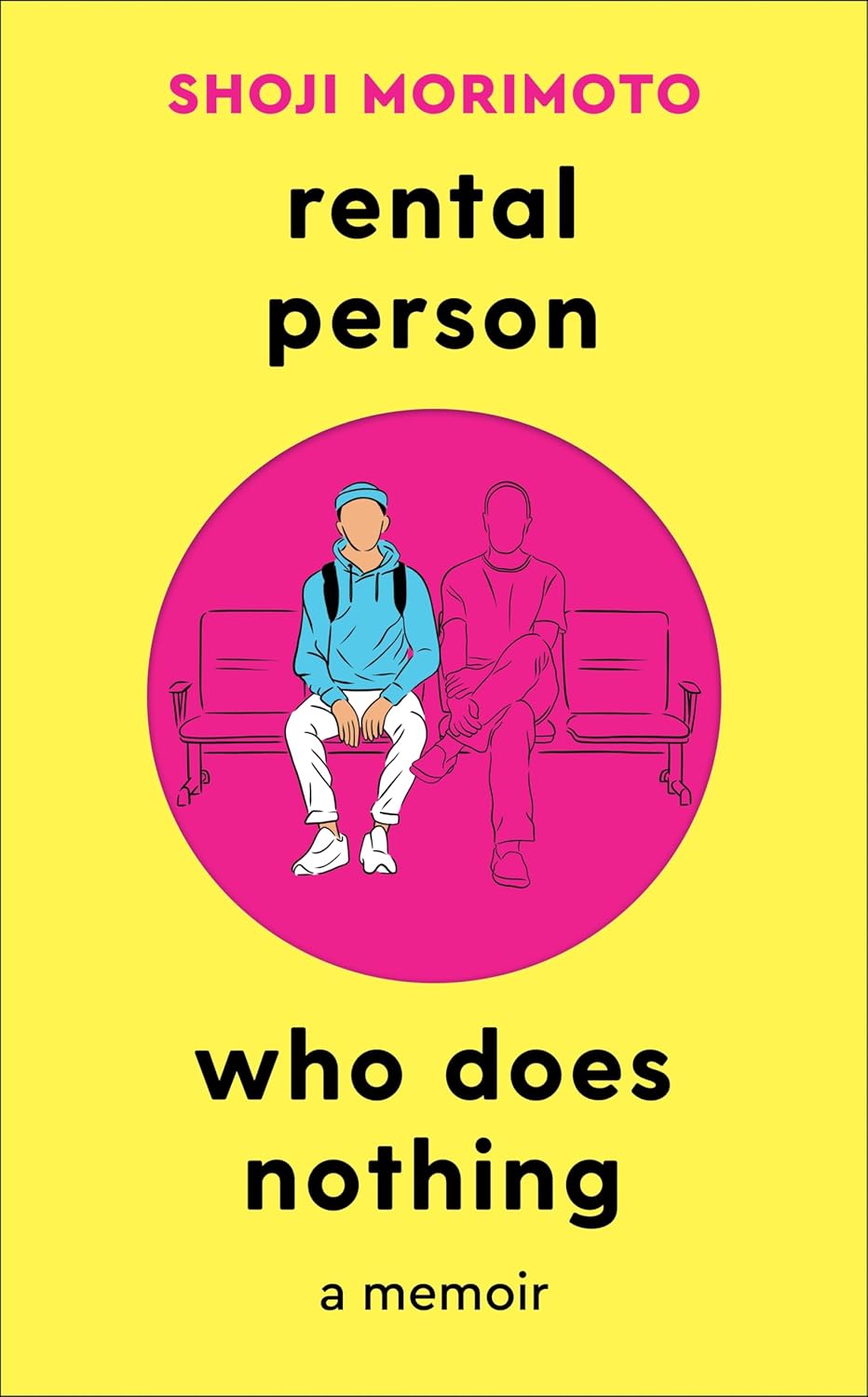
About Rental Person Who Does Nothing by Shoji Morimoto – A Quiet Memoir About Connection, Work, Loneliness, and Human Value
What if your job was simply to be there? Rental Person Who Does Nothing by Shoji Morimoto begins with an idea that sounds almost impossible. After being told by a former boss that he contributed very little at work, Morimoto started wondering whether a person could still have value even when they were not being useful in the usual way.
In 2018, he posted online that people could rent him for situations where they only wanted another person to be present. He would not give advice, clean a house, do skilled work, or solve a problem. He would simply show up, listen when needed, eat, walk, sit, wait, or offer a basic response.
The idea quickly attracted attention. People contacted him for many reasons. Some wanted company for a meal. Some needed someone beside them during a stressful moment. Others wanted a stranger who would listen without judging.
This memoir collects Morimoto's experiences and reflections on work, relationships, loneliness, usefulness, and the strange comfort another person's presence can bring.
A Job Built Around Doing Almost Nothing
Most jobs are defined by tasks. A worker is expected to produce something, fix something, sell something, or make a clear result happen.
Morimoto created a service that turns that idea around.
His role is not to become a friend, therapist, adviser, helper, or entertainer. He is there because another person wants someone nearby without the pressure that often comes with a normal relationship.
That difference is important. Friends may ask questions. Family members may worry. Coworkers may expect conversation. A stranger can sometimes feel easier because there is less history and fewer expectations.
Morimoto keeps his role simple. He tries not to take control of the situation. He usually lets the client decide what the time together will look like. His job is presence rather than performance.
This simple idea becomes the center of the book and leads to many unusual but deeply human encounters.
Why Would Anyone Rent a Person to Do Nothing?
At first, the service can sound funny. Why would someone need to rent another human being just to sit nearby?
The stories in the book give many answers.
Sometimes a person wants to go somewhere but feels awkward going alone. Someone may need company at a restaurant after a difficult life change. Another person may want a calm face at a train station before leaving on a long journey. Someone else may have a secret they want to say aloud but do not feel ready to tell friends or family.
In situations like these, the client is not really paying for a task. They are paying for a kind of social space.
Morimoto does not need to fix the feeling. He only needs to be present while the person goes through it.
That idea makes the book surprisingly emotional. The requests can seem small, but they often reveal how much people need simple, safe human contact.
A Stranger Can Sometimes Feel Easier Than a Friend
One of the most interesting ideas in the memoir is that closeness can create pressure.
People who love us often want to help. They may ask what happened, offer advice, suggest solutions, or remember what we said later. Usually that care is valuable. But there are moments when a person does not want a full conversation or a long explanation.
Morimoto's service offers something different. He is committed to remaining a stranger.
Because he does not expect the relationship to grow, clients can sometimes relax around him. They do not need to impress him or protect a long-term friendship. They can share a moment, finish the request, and move on.
The book does not suggest that strangers should replace friends or family. Instead, it shows that different kinds of human connection can meet different needs.
For readers interested in psychology, society, or modern loneliness, this idea gives the memoir much of its depth.
The Book Quietly Questions How We Measure a Person's Worth
Morimoto's service began after he was criticized for not contributing enough in a normal workplace.
That experience stayed with him.
Modern life often connects personal worth with productivity. People are asked what they do, how much they earn, how busy they are, and what they have achieved. Being useful becomes a way of proving that you deserve a place.
Rental Person Who Does Nothing asks a different question: can a person matter simply by existing?
Morimoto's clients repeatedly show that the answer can be yes. His value often comes from not trying to change the situation. He gives people company without turning every meeting into a project.
This does not mean work has no value. It means human value may be larger than work.
That message can feel refreshing for readers who are tired of constant pressure to optimize every hour, build a personal brand, or make every hobby productive.
Real Requests Make the Book Easy to Read
The memoir is built around real encounters rather than long academic arguments.
Morimoto describes requests that range from ordinary to strange. He has accompanied people to meals, sat with people during difficult moments, visited meaningful places, and simply waited beside someone who did not want to be alone.
These short episodes make the book easy to enter. You can read a few pages, stop, and return later without losing a complicated plot.
At the same time, the encounters slowly build a larger picture of contemporary life in Japan. Readers see people dealing with social pressure, loneliness, work, relationships, family expectations, and the difficulty of asking directly for what they need.
That balance keeps the book from becoming either too heavy or too shallow.
Doing Nothing Can Still Require Clear Boundaries
Morimoto's service sounds simple, but it depends on limits. He does not promise to become a friend, therapist, adviser, or skilled helper. He offers temporary presence.
Those boundaries help both people understand the request. The client knows Morimoto is not there to solve everything, and Morimoto does not have to pretend he has answers he cannot provide.
For readers who often feel responsible for fixing other people's problems, this idea is worth considering. Sometimes listening without taking control can be enough.
The Memoir Also Looks at Work in a Different Way
Morimoto's story naturally raises questions about jobs.
Why do people work? How much of identity should come from employment? Why is being busy often treated as a sign of importance? What happens when a person does not fit the usual model of ambition?
Morimoto does not write a formal business book, but his unusual service becomes a way to examine these questions.
He found a role by doing almost the opposite of what a normal employer had wanted from him. Instead of becoming more active, more competitive, or more impressive, he built a public identity around doing less.
That does not create a simple lesson that everyone should copy. Most people still need normal work, income, skills, and responsibilities. What the book offers is a challenge to the idea that one kind of productive life is right for everyone.
It Is Also a Book About Modern Loneliness
Many requests in the memoir make sense only when we understand how lonely ordinary life can become.
A city can be full of people while someone still feels alone. Social media can create constant contact without giving a person someone to sit beside during a difficult hour.
Morimoto's clients often want something very modest: another body in the room, another person at the table, someone to wave goodbye, someone who will listen and then leave.
These requests show that loneliness is not always solved by having many contacts. Sometimes people want connection without responsibility. Sometimes they need company for one specific moment.
The memoir does not offer a grand solution to loneliness. Instead, it shows many small ways people try to make difficult moments easier.
That quiet approach is one of the book's strongest qualities.
Japanese Social Life Gives the Story a Distinct Setting
The memoir is rooted in Japan, and its requests reflect work culture, urban life, and social expectations. Readers outside Japan may find some customs unfamiliar, but the feelings behind them are easy to recognize: loneliness, pressure, awkwardness, and the wish to be understood.
This makes the book culturally specific while still relatable. Readers interested in Japanese nonfiction or everyday social life may especially enjoy this part.
A Premium Edition for Comfortable Everyday Reading
Bookish Wonderland offers this title in a physical edition prepared for readers who enjoy an easy, comfortable reading experience.
- Premium eye-soothing cream paper gives the pages a soft, warm tone that feels pleasant during longer reading sessions.
- Crystal-clear printing keeps the words sharp and easy to follow.
- High-quality stitched and glue binding helps keep the pages secure through regular use and supports long-term durability.
These physical details describe the edition offered by Bookish Wonderland, not every edition sold by every publisher or store.
A printed copy works especially well for this memoir because the short sections make it easy to read during a break, before bed, on a commute, or over a quiet weekend.
Who Should Read Rental Person Who Does Nothing?
Choose this book if you enjoy memoirs, Japanese culture, unusual real-life stories, social psychology, simple philosophy, or books about work and human connection.
It may appeal to readers who feel tired of productivity culture or who often wonder why modern life can feel lonely even when people are constantly connected online.
The writing is accessible, and the chapters can be read in small pieces. You do not need special knowledge of Japan or psychology before starting.
This is not a traditional self-help book with a list of steps for changing your life. It is also not a business guide teaching you how to start the same service.
Its value comes from observation. Morimoto shows what happened when he offered a very strange service and lets readers think about what those requests reveal.
What books are in the Rental Person Who Does Nothing series by Shoji Morimoto?:
- Rental Person Who Does Nothing by Shoji Morimoto is a standalone memoir, not part of an official numbered series.
No additional series titles are listed because the English publisher presents this work as a standalone memoir.
Best Sellers Rank of This Book
- No specific bestseller-rank number was supplied for this product listing.
No changing marketplace rank has been guessed or added.
Check the Book Price in Bangladesh Before Ordering
If you are searching for the Book price in Bangladesh for Rental Person Who Does Nothing by Shoji Morimoto, check the current amount shown on the Bookish Wonderland product page before ordering. Prices and stock can change, so the live listing is the right place to confirm the latest amount.
Bookish Wonderland delivers inside and outside Dhaka and offers Cash on Delivery across Bangladesh. Readers in Dhaka can also ask about fast or urgent delivery, depending on location and service availability.
If you need help with availability, customization, or delivery, contact Bookish Wonderland through Facebook or Instagram before placing your order.
Discover How Much Can Happen When Someone Simply Shows Up
Rental Person Who Does Nothing begins with a strange idea and turns it into a warm look at ordinary human needs.
Shoji Morimoto does not promise wisdom, therapy, friendship, or solutions. He offers presence. Again and again, people find uses for that simple offer.
Through their requests, the memoir explores loneliness, work, pressure, relationships, and the question of whether people need to be productive to have value.
Order Rental Person Who Does Nothing by Shoji Morimoto from Bookish Wonderland if you want a gentle, unusual memoir filled with true stories and quiet ideas about modern life.
Read one request. Think about why it mattered. Then notice how often simply being there can mean more than doing something.
If you require any customization or have any questions, please inbox us via FB or Insta.
| Primary Specification | |
| Author | Shoji Morimoto |
| Translator | Don Knotting |
| Narrator | Kevin Shen |
| Genre | Memoir, Autobiography, Philosophy, Social Commentary |
| ISBN-13/ISSN | 978-1335017536 |
| ISBN-10 | 1335017534 |
| Publisher | Hanover Square Press |
| Publishing Date | January 9, 2024 |
| Edition | Original |
| Language | English |
| Reading Age | 18+ |
| Format | Printed Book |
| Physical Specification & Quality | |
| Paper Quality | Premium eye-soothing cream paper |
| Binding Quality | High quality stitched and glue binding (for longevity) |
| Print Quality | Crystal-clear print |
| Pages | 192 pages |
| Country | Japan |
| Logistics Information | |
| Weight | 212 gm |
| Length | 8.5 inches |
| Width | 5.6 inches |
| Height | 0.7 inch |