

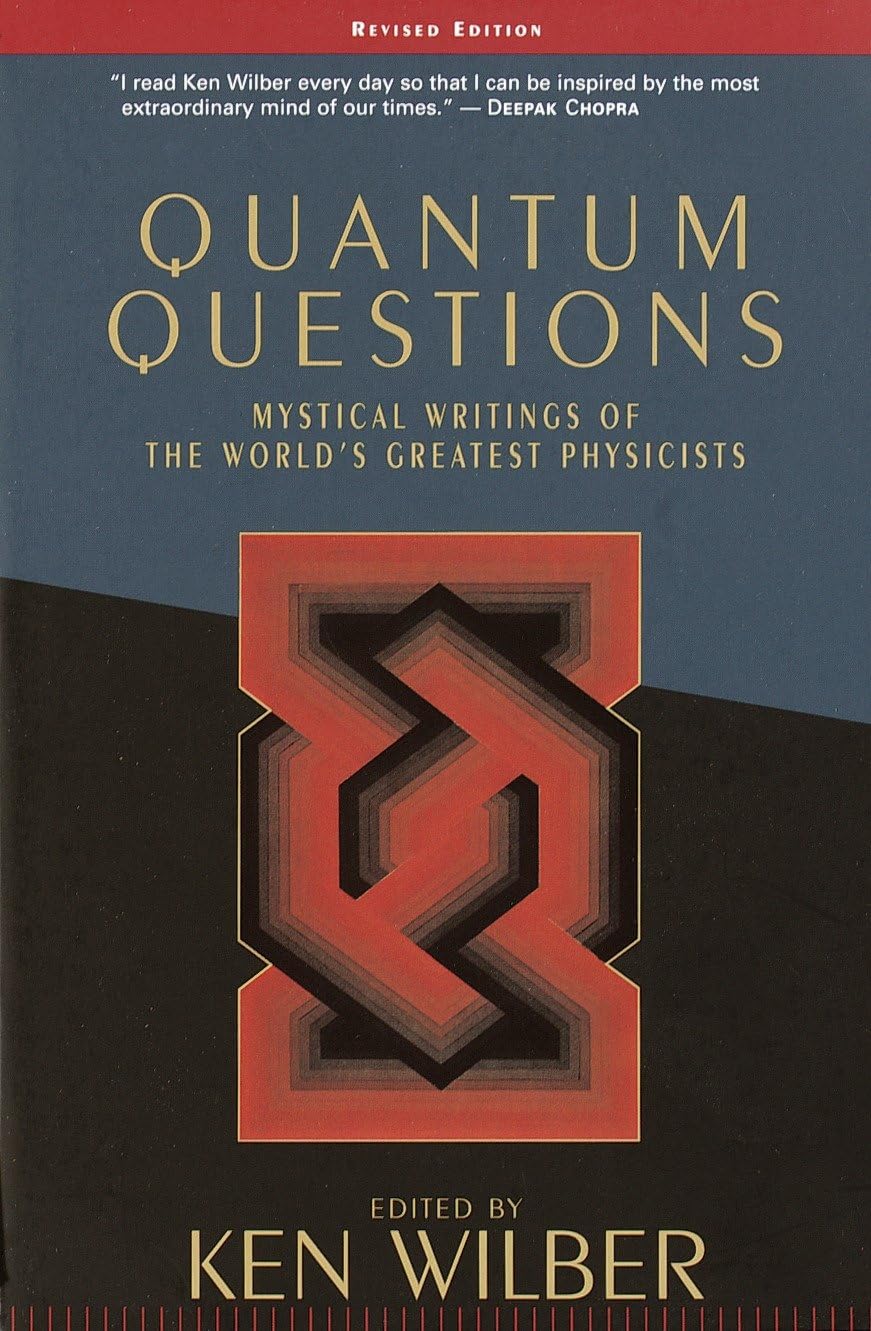
About Quantum Questions: Mystical Writings of the World's Greatest Physicists by Ken Wilber: Explore Science, Wonder, and Life
What do great scientists think about when they ask questions that numbers cannot settle? What makes the world feel full of wonder? And how do people who study nature think about their own place within it?
Quantum Questions invites you to sit with these questions. Edited by Ken Wilber, this collection brings together writings by famous physicists about life, knowledge, and spiritual thought. You meet the people behind the discoveries through words that reach beyond their work in science.
For readers who enjoy asking why, this is a book to open with curiosity. Bring your questions, take your time, and see which ideas stay with you after you close the cover.
What will you find inside?
This nonfiction collection explores the meeting place of physics, philosophy, and mysticism. Physics studies how the natural world works. Philosophy asks broad questions about life and knowledge. Mysticism concerns a person's sense of a deeper reality or spiritual truth.
The book lets you read reflections from scientists who thought about these subjects. Their writings raise questions about what we can know, what our minds can grasp, and where scientific study reaches its limits.
Ken Wilber brings these voices together as the editor. That means the collection includes writing by several thinkers, with his guidance and framing. You can compare their views while forming your own response.
What is real? How much can a person know? Can a description of the world capture the whole of our experience? Keep these questions in mind as you read. They offer a way into subjects that can feel far away at first. You may agree with one passage, question another, and find that a third gives words to something you have felt for years. Each response gives you something of your own to explore.
Meet the minds behind the pages
The contents include sections devoted to eight physicists:
- Werner Heisenberg
- Erwin Schrödinger
- Albert Einstein
- Louis de Broglie
- James Jeans
- Max Planck
- Wolfgang Pauli
- Arthur Eddington
Seeing these names together is part of the book's appeal. You may know a name from school yet have little sense of that person's wider thoughts.
Here, you have a reason to slow down and listen. Treat each voice as a new person to meet. Notice the words they choose, the questions they ask, and the ideas you want to discuss later. A famous name may draw you in; an unexpected thought may keep you reading.
When a short quote leaves you wanting more
A short quote can spark interest. It can also leave you asking what the writer meant. Who was speaking? What question were they trying to answer? What came before the line everyone shares?
A collection of selected writings gives you more room to read and think. You can spend time with a passage, look at the points around it, and decide what you understand.
That is a useful way to approach this book. Keep a small note beside you for questions. If a line sounds bold, pause and read it again. Your interest can become a thoughtful reading habit, one page at a time.
Keep wonder and clear thinking together
The book's appeal lies partly in its discussion of the reach and limits of science. It invites thought about how scientific knowledge relates to questions of meaning and inner life.
These are personal and philosophical reflections. A physicist's spiritual view should be read as that person's view; their scientific fame does not make every belief a proven fact.
This gives you a helpful way to read with both interest and care. Ask what kind of claim a passage makes. Is it an observation, a belief, or a question? You can enjoy a moving idea, remain unsure about it, and still find the reading worthwhile.
Do you need a science degree?
The publisher describes the selections as written in nontechnical language for readers with or without a science background. You can approach the book with an interest in ideas.
Still, some thoughts may take time. Words about the mind, truth, and reality can feel simple until you try to explain them. Give yourself space to pause.
Start with a few pages. Say the main point in your own words. If you cannot, reread a small part and try again. There is no race to the last page.
Choose this book for thoughtful reading about science and belief. For lessons in calculations or exam practice, look for a physics textbook.
Make big questions feel closer to daily life
You do not need to look far to find a reason to care about these themes. Think of a quiet evening when you wonder what gives your work meaning. Think of seeing the night sky and feeling both small and amazed.
Those moments can be a useful starting point for your reading. Ask yourself why a passage matters to you. Does it remind you of an old question? Does it offer a new way to describe a feeling?
You may finish a reading session with a clearer question. That can be a satisfying result: something worth carrying into a walk, a journal entry, or a talk with a friend.
Who may enjoy this book most?
Consider this collection if you enjoy science, spiritual writing, or books that invite careful thought. It may also appeal to readers curious about the private ideas of well known scientists.
Students can use it for reading beyond class. Teachers may find passages worth discussing. Readers who already enjoy Ken Wilber may welcome the chance to explore a collection he edited.
You do not have to share a single faith or settle on a single view before opening it. Your starting point can simply be curiosity.
If you enjoy books that leave you thinking during the rest of your day, give this one a place on your reading list.
Turn a few pages into a quiet reading break
Set aside a short, calm time to read. Put your phone away, choose one passage, and let yourself stay with it.
After reading, write one sentence about what caught your attention. Then add one question you would ask the writer if you could. This small step can help you remember the reading without turning it into homework.
On another day, return to your note. Do you still agree with your first response? Has a word or idea taken on a different meaning?
A book like this can suit readers who enjoy a slow pace. Let your own interest guide how much you read each time.
Bring something new to your next book chat
For a reading group, choose a short section that everyone can finish before meeting. Ask each person to bring one passage they found clear and one they found hard.
Useful questions include:
- What is the writer asking us to think about?
- Which part of the argument needs more support?
- What did you understand differently from someone else?
- What question would you like to explore next?
Keep room for different views. A friendly discussion can help you notice details you missed alone.
You can use the same approach with one friend over tea. Sometimes a thoughtful page is enough to start a long, lively conversation.
A gift for someone who keeps asking why
Choosing a book for a curious person can feel personal. You want something that respects their interests and gives them room to explore.
Quantum Questions may suit a friend who likes talking about the universe, a teacher who enjoys thoughtful reading, or a family member drawn to questions about life.
Add a note explaining why you chose it. Perhaps the two of you once discussed a similar question, or you remembered their interest in one of the featured scientists.
That small touch gives the gift a story of its own. It also offers a reason to speak again once they have started reading.
Enjoy a premium edition from Bookish Wonderland
A thoughtful book deserves a comfortable reading experience. Bookish Wonderland offers this title as a premium printed edition with features chosen for regular use:
- Premium eye-soothing cream paper gives the pages a soft, warm look.
- Crystal-clear print keeps the text sharp and easy to follow.
- High quality stitched and glue binding supports the book through repeated reading and helps it last longer.
These details matter when you like to pause, mark your place, and return to a passage later. They bring care to the physical book you hold.
Choose a copy that feels at home beside your reading chair, on your desk, or among the books you reach for often.
Help your copy stay in good shape
A few simple habits can help protect a book you want to keep. Use a bookmark to save your place. Turn pages gently, and let the spine open without forcing it flat.
Store the book in a dry place away from direct sunlight. Keep drinks at a safe distance during reading, especially if you enjoy tea beside your chair.
For notes, a separate notebook can be useful. It gives your questions space to grow and keeps your thoughts together.
Looking after a book takes little effort each day. It helps keep the next reading session as inviting as the first.
Build a shelf that reflects your curiosity
Your reading shelf can hold the questions you care about. A book about science may sit beside one about faith, history, or the human mind.
This collection can give you a starting point for choosing what to explore next. After reading, ask which subject made you most curious. Was it the meaning of a word, a person's way of thinking, or a question you had never considered?
Follow that interest at your own pace. There is no need to build a large collection at once.
Bookish Wonderland offers a large collection of premium, durable English books, helping you choose reading that fits your interests.
Book price in Bangladesh
For the current price of Quantum Questions by Ken Wilber, check the amount shown on this product page before placing your order.
When planning your purchase, include the delivery charge in your total. If you need help with the listed price, available copy, or delivery options, contact Bookish Wonderland on Facebook or Instagram.
Tell us the book's name so we can understand your question clearly. If you are ordering it as a gift, mention when you need it.
A quick check before ordering helps you make an informed choice and plan your purchase with confidence.
Delivery that fits where you live
Bookish Wonderland offers nationwide delivery across Bangladesh, including addresses inside and outside Dhaka. Cash on Delivery is available across the country.
For readers who need their book sooner, a fast or urgent delivery option is available in Dhaka. Contact us to check whether it can meet your address and timing.
Share your full delivery details carefully when ordering. A clear address and working phone number help the delivery process run smoothly.
Whether you are buying for yourself or sending a gift, checking the delivery arrangements first helps you know what to expect. You can then look forward to making time for your new book.
Make room for your next great question
Some books earn their place on your shelf because they make you want to think, talk, and read more. Quantum Questions offers an invitation to bring your curiosity to the page.
Choose your copy from Bookish Wonderland and set aside time for the questions that interest you. Order today, or message us on Facebook or Instagram if you need help before buying.
If you require any customization or have any questions, please inbox us via FB or Insta.
| Primary Specification | |
| Author | Ken Wilber |
| Genre | Nonfiction, Physics, Quantum Theory, Philosophy, Mysticism, Religion & Spirituality |
| ISBN-13/ISSN | 978-1570627682 |
| ISBN-10 | 1570627681 |
| Publisher | Shambhala |
| Publishing Date | April 10, 2001 |
| Language | English |
| Reading Age | 16+ years |
| Format | Printed book |
| Physical Specification & Quality | |
| Paper Quality | Premium eye-soothing cream paper |
| Binding Quality | High quality stitched and glue binding (for longevity) |
| Print Quality | Crystal-clear print |
| Pages | 240 pages |
| Country | USA |
| Logistics Information | |
| Weight | 261 gm |
| Length | 8.5 inches |
| Width | 5.6 inches |
| Height | 0.63 inch |