

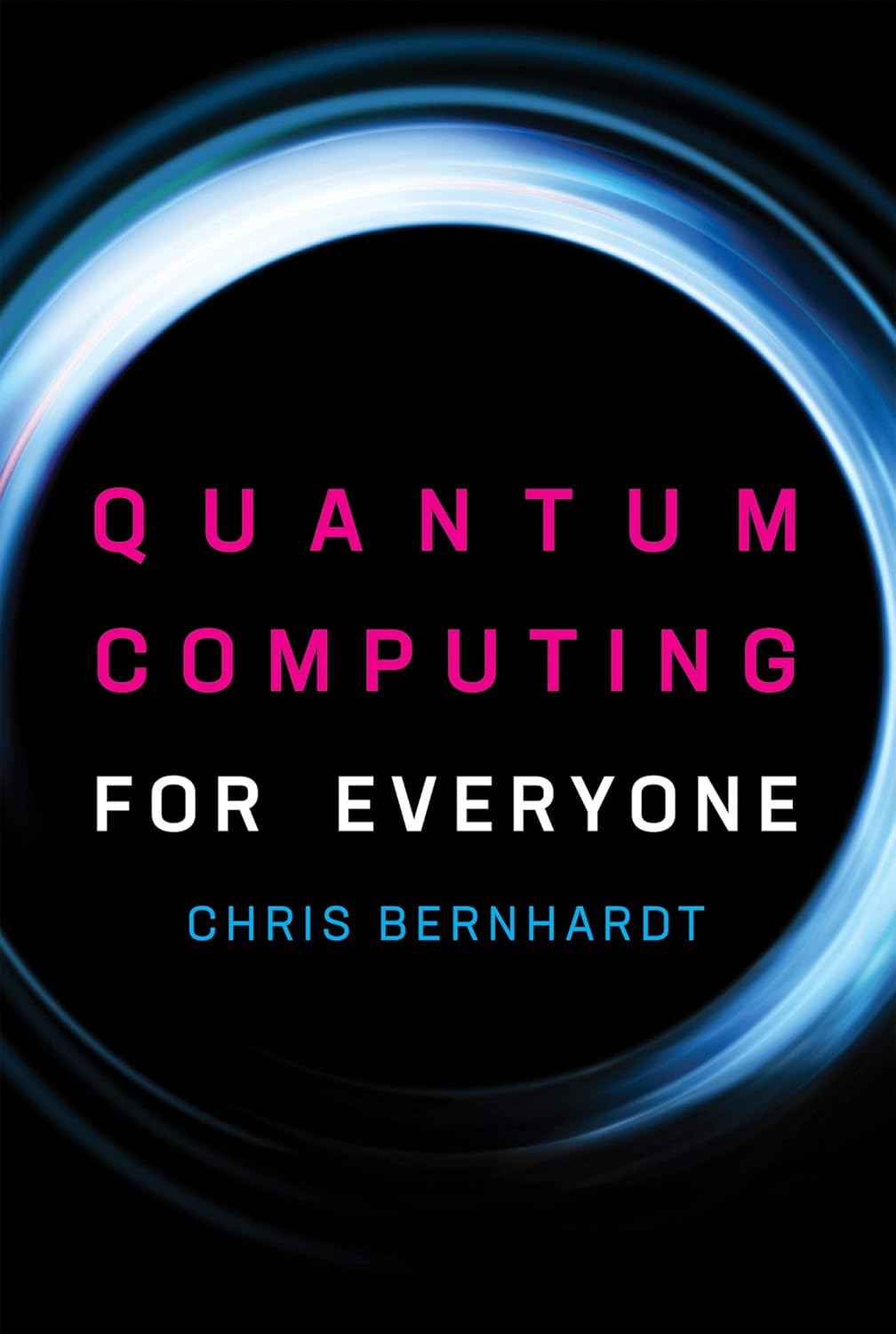
About Quantum Computing for Everyone by Chris Bernhardt: A Clear Start with Qubits, Computers, and Big Ideas
How can a computer use the strange rules of tiny particles to solve a problem? What makes a quantum computer different from the one on your desk? If these questions make you curious, Quantum Computing for Everyone by Chris Bernhardt gives you a place to begin.
This book brings together maths, physics, and computer science. It helps readers explore the ideas behind quantum computing through clear explanations and simple examples. You meet qubits, learn why measurement matters, and discover how quantum rules can change the way we handle information.
The pleasure comes from making sense of something that once seemed out of reach. A new word becomes a useful idea. An example starts to make sense. Soon, you have better questions to ask.
At Bookish Wonderland, this title is for readers who enjoy learning how things work. Open it with a curious mind, keep a notebook nearby, and give yourself time to follow the ideas.
Start Even If the Subject Feels New
Trying to learn a large subject from short posts can leave gaps. One page mentions a qubit. Another talks about a huge leap in speed. You may finish with more words to remember but little sense of how they fit together.
A book gives you space to stop, think, and return to an earlier point. You can follow an idea for longer than a short clip allows. That makes this a useful choice when you want to move beyond quick facts.
Bernhardt writes for readers who are new to quantum computing. His approach uses maths to make the ideas clear, with small examples that help explain what the numbers mean. You can take the subject one step at a time and spend longer on the parts that interest you.
How Much Maths Do You Need?
You should be comfortable with high school maths. That is the starting level described by the publisher. The title welcomes beginners to the subject, but readers should still expect numbers, symbols, and careful thought.
You do not need to arrive as a quantum expert. You do need to be willing to work through an example and read a tricky passage again. If your school maths feels rusty, a little practice alongside your reading may help.
Treat each calculation as a small task. Write down what you know, follow the next step, and check your answer. There is no prize for finishing fast. Understanding one page well can feel far better than rushing through ten pages and remembering very little.
Build from Bits to Qubits
A bit is a basic unit of ordinary computer information. Its value is either zero or one. A qubit is the basic unit used in quantum computing, and its possible states follow a wider set of rules.
The book covers familiar computer ideas such as bits, logic, and gates alongside quantum ideas. This gives you points of comparison as you learn. Words that first seem far apart begin to connect.
That connection is part of the appeal. You are exploring a new way to think about information while also looking more closely at the computing ideas you may already know.
Why Measuring a Qubit Matters
A qubit can be in a state called superposition. When it is measured in the usual zero and one basis, you get one of those two results. The state helps determine the chance of each result.
This detail matters because reading a quantum result is part of the science. You cannot simply open a box and read every possible answer at once.
Working through this idea gives the subject more shape. Instead of treating a qubit as a strange word, you can begin asking useful questions about its state, how it changes, and what a measurement tells you.
Explore Entanglement and Quantum Teleportation
Entanglement links quantum systems in a way that means they need to be described together. Looking at each part on its own cannot fully describe the whole.
Quantum teleportation uses shared entanglement, measurements, and an ordinary message to transfer a quantum state. The name sounds like a film, but the process concerns quantum information. It does not move a person across a room or send a message faster than light.
These are among the topics Bernhardt introduces. They invite you to pause and wonder, then look at the rules behind the surprise. For a curious reader, that mix of discovery and explanation is a strong reason to keep turning the pages.
Follow the Steps Behind a Calculation
A gate changes information according to a rule. A circuit brings operations together. An algorithm is a set of steps used to solve a problem. These words become easier to approach when you connect each one to its role.
Bernhardt discusses quantum gates and the speed of quantum algorithms. The useful question is which problems can benefit from quantum methods, and why. A quantum computer does not offer the same speed gain for every task.
Reading with that question in mind helps you see why the method matters. You can pay attention to the steps that produce a result, rather than only the size of a claim. This habit is useful whenever you want to understand how a technical answer was reached.
Discover Another Way to Think About Privacy
The book also introduces quantum cryptography, which connects quantum rules with secure communication. It gives the subject a link to a familiar need: sharing information while keeping unwanted readers out.
You do not have to work in computer security to find that question interesting. Think about the private messages people send each day. Learning why information can be measured, changed, or checked adds depth to a topic that often stays hidden behind an app screen.
Let this part of the book prompt further questions. What does it mean to protect a message? How could someone notice an unwanted measurement?
Meet the Teacher Behind the Book
Chris Bernhardt is a mathematician who taught at Fairfield University for more than thirty years. His work introduces ideas from maths and computing to readers outside those fields.
That teaching focus suits a book about a subject with many unfamiliar terms. The aim is to help readers follow the meaning behind them.
For your own reading, this offers a useful invitation: approach each page as a lesson you can revisit. Ask what has been defined, what has changed, and why the next step follows. Those small questions can make a difficult passage much easier to discuss.
Find Your Own Reason to Read
This book may suit you if you enjoy science, like solving problems, or want to understand more about computers. Your reason for picking it up can be simple curiosity.
- Students can use it for extra reading alongside a suitable course.
- People who write code can explore the ideas behind another model of computing.
- Teachers can choose topics to discuss with learners who have the needed maths.
- Science readers can spend time with questions that go beyond everyday experience.
- Independent learners can build a reading plan around a subject they have wanted to try.
Choose it for the kind of thinking you want to do. If you enjoy stopping to ask why, working through an example, and seeing separate ideas connect, there is plenty here to explore.
Make Each Reading Session Count
Set aside a short, quiet time for reading. Keep a pencil and paper close so you can write down new terms and try the maths yourself.
After a section, close the book and explain one idea in your own words. You might describe what a bit is, what a gate does, or why a measurement matters. If you get stuck, return to that passage with a clear question.
For a study group, choose one topic before you meet. Let each person explain a step or share something they found hard. A good discussion can begin with a small point that everyone sees differently.
You can also keep a question list. Leave room beside each question for an answer later. Watching that list change makes progress easier to notice and gives you a reason to return.
Give a Curious Reader Something to Explore
Looking for a gift for someone who likes maths, science, or computers? Consider what they enjoy doing with a book. This title suits someone willing to think through examples and spend time with new ideas.
It can be a thoughtful choice for a student starting to explore computing or an adult returning to a long held interest. Check their comfort with maths before choosing it.
Add a notebook and a short personal note if you want to make the gift more meaningful. You could write a question you hope they will enjoy exploring, then ask about their favourite discovery when they have started reading.
A Premium Edition for Your Reading Time
Bookish Wonderland offers this printed English book with the details that matter when you spend time studying a page:
- Premium eye-soothing cream paper: A soft page tone for a pleasant reading feel.
- Crystal-clear print: Sharp text that helps you read words, numbers, and symbols clearly.
- High quality stitched and glue binding: A firm construction designed to support repeated use and book longevity.
These features matter when your reading includes pauses, notes, and returns to earlier pages. You may want to keep a useful passage open beside your notebook or revisit a topic after a break.
A book you enjoy handling can become a welcome part of that routine. Give it a place near your study space, ready for the next question you want to explore.
Keep Your Copy Ready for Another Read
Use a bookmark to hold your place and keep the book away from water and damp shelves. Turn pages gently and avoid forcing the spine flat.
If you carry it in a bag, protect it from loose pens, food, and leaking bottles. Store your study notes separately so thick stacks of paper do not strain the cover.
Simple care helps keep a reading copy useful. This is especially helpful for a subject you may return to after learning something new elsewhere. A later reading can raise fresh questions about a passage you thought you knew.
Order from Bookish Wonderland in Bangladesh
Bookish Wonderland brings together a large collection of premium, durable English books for readers with different interests. This title gives science and computing readers another subject to explore at home.
Want to check the Book price in Bangladesh before you decide? Ask us for the current price of Quantum Computing for Everyone by Chris Bernhardt and the delivery charge for your address.
Nationwide delivery is available inside and outside Dhaka, with Cash on Delivery across Bangladesh. If you need a copy quickly, ask about the fast or urgent delivery option in Dhaka and confirm the available timing before ordering.
You can message us on Facebook or Instagram with questions about the book or your order. Share the title and your delivery area so we can help with the details you need.
Open the Book and Follow Your Curiosity
Think of the next time someone mentions quantum computing. What would you like to understand better? Start with that question, and let it guide your first reading session.
You can build knowledge slowly, one example and one useful question at a time. There is real pleasure in reaching a page that once seemed hard and finding that you can now follow it.
Order your copy from Bookish Wonderland today. Make room for a new subject, bring your curiosity, and enjoy discovering what lies behind those two words: quantum computing.
If you require any customization or have any questions, please inbox us via FB or Insta.
| Primary Specification | |
| Author | Chris Bernhardt |
| Narrator | Jeffrey Machado |
| Genre | Science, Technology, Computer Science, Quantum Computing, Physics |
| ISBN-13/ISSN | 978-0194776189 |
| ISBN-10 | 0194776182 |
| Publisher | The MIT Press |
| Publishing Date | September 8, 2020 |
| Language | English |
| Reading Age | 16+ years |
| Format | Printed book |
| Physical Specification & Quality | |
| Paper Quality | Premium eye-soothing cream paper |
| Binding Quality | High quality stitched and glue binding (for longevity) |
| Print Quality | Crystal-clear print |
| Pages | 216 pages |
| Country | United States |
| Logistics Information | |
| Weight | 231 gm |
| Length | 8.5 inches |
| Width | 5.6 inches |
| Height | 0.59 inch |