Skip to product information
1 of 1

Bookish Wonderland

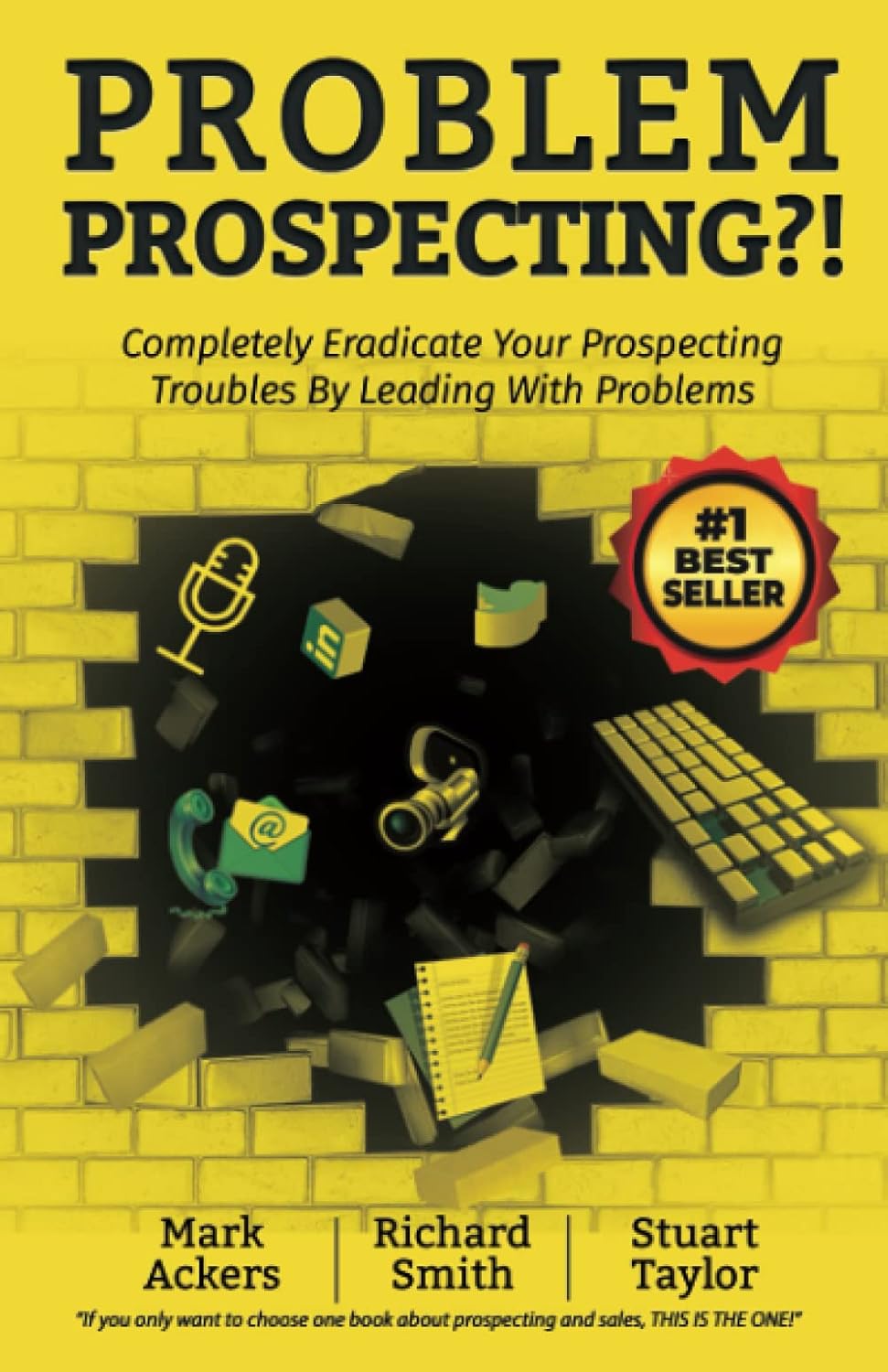
Problem Prospecting?! by Mark Ackers, Richard Smith & Stuart Taylor

Problem Prospecting?! by Mark Ackers, Richard Smith & Stuart Taylor

Regular price Tk 198.00 BDT
Regular price Sale price Tk 198.00 BDT
Sale Sold out
Book cover type
Quantity

Problem Prospecting?! by Mark Ackers, Richard Smith, and Stuart Taylor is a practical guide to finding new customers by starting with the problems they need to solve. Written for salespeople who dread cold calls, receive few email replies, or struggle to reach decision makers, it turns prospecting into a repeatable process. The authors draw on decades of frontline sales experience to explain how to identify suitable buyers, research their challenges, and develop messages that earn attention. They provide frameworks, scripts, examples, and step-by-step guidance for telephone outreach, email, social media, and video. Rather than leading with product features or generic pitches, readers learn to connect their offer to a prospect's specific needs and start useful conversations. The book also addresses confidence, consistency, and the everyday work of building a healthy sales pipeline. Its central message is simple: understand the buyer's problems first, then make every approach relevant and immediately actionable. Read More

View full details

About Problem Prospecting?! by Mark Ackers, Richard Smith & Stuart Taylor – A Practical Sales Guide to Better Cold Calls, Emails, and Customer Conversations

You have a list of possible customers. You know you need to contact them, but the phone feels heavy, your emails receive no replies, and another day ends without a useful meeting. Problem Prospecting?! by Mark Ackers, Richard Smith and Stuart Taylor was written for salespeople who know this feeling. Instead of telling you to work harder or send more messages, the authors encourage you to start with the problems your potential customers may actually care about.

The full subtitle is Completely Eradicate Your Prospecting Troubles By Leading With Problems. The book offers frameworks, scripts, examples, and practical guidance for cold calling, email outreach, and social selling. Its authors draw on more than thirty years of combined sales experience and the challenges they faced when learning prospecting without enough coaching.

This is a hands-on business book, not a promise that every call will lead to a sale. Its aim is to help you prepare relevant messages, begin better conversations, and build a healthier sales pipeline through repeatable practice.

Stop Staring at the Phone and Start with a Reason

Cold calling can feel frightening when you believe you must impress someone in the first few seconds. You may rehearse a long introduction, worry about rejection, and put off dialing until tomorrow. The authors recognize that nervous feeling. Their approach gives the call a clearer purpose: find out whether a business problem is worth discussing.

That change matters. You are not calling to read a list of product features to a stranger. You are trying to earn a brief conversation about something that may affect their work. If the problem is not relevant, you can learn that and move on respectfully.

The book provides practical material you can adapt instead of asking you to invent every opening from nothing. Reading a framework will not remove every fear, but preparation and repeated practice can make the next call feel more manageable.

Lead with a Customer Problem, Not Your Product

Imagine a sales message that begins with your company's history, awards, and impressive technology. The person receiving it may still wonder why any of that matters. A problem-led message starts somewhere else: with a difficulty the buyer may recognize.

Perhaps a team spends too long coaching new staff. Perhaps important customer conversations are hard to review. Perhaps a business is losing time because one part of its process is slow. These are examples to illustrate the method, not claims that every prospect faces the same problem.

Research Enough to Make Your Outreach Relevant

Good prospecting begins before the message is sent. You need to know whom you are contacting and why your offer could matter to them. A quick look at a company's work, a person's responsibilities, or a recent business change may help you form a sensible reason to reach out.

Research should improve relevance, not become an excuse to delay every call. Spending hours collecting facts is pointless if you never speak to anyone. Instead, identify a possible problem, check whether the person is likely to care about it, and prepare a brief question.

Do not pretend that research proves a company has a problem. A useful opening invites the buyer to confirm or correct your understanding. That makes the conversation more respectful and helps you avoid sounding as though you know their business better than they do.

Make Cold Calls Sound Like Conversations

A cold call gives you very little time to establish a reason for speaking. That can tempt you to rush through a fixed pitch. The book offers scripts and practical guides, but a script works best as support rather than a speech delivered without listening.

A clear opening can identify you, explain why you called, and introduce a possible business issue. Then give the other person room to respond. They may say the problem is real, explain that it is not important, or tell you that someone else handles it.

Each answer teaches you something. If you listen closely, you can decide whether to ask another question, suggest a next conversation, or end the call politely. The goal is not to trap someone into staying on the phone. It is to discover whether there is a genuine reason to continue.

Write Emails That Give People a Reason to Reply

Many sales emails fail to hold attention because they look identical. They begin with a long greeting, describe a product, include several links, and finish with a large request. The reader must work too hard to understand the point.

Problem Prospecting?! addresses emails that do not receive responses. Its problem-first approach encourages you to make the message easier to understand: focus on a relevant issue, explain why you are reaching out, and keep the next step simple.

An email does not need to include every feature or tell your company's entire story. It needs to make sense to a busy reader. Respect their time, avoid made-up familiarity, and do not promise results you cannot prove. Even a thoughtful message may receive no reply. The useful question is whether your outreach is becoming clearer and better targeted through practice.

Use Social Media with a Clear Purpose

Social platforms can help salespeople learn about companies and find potential customers, but collecting connections is not the same as building a pipeline. The authors include social media among the channels that sellers need to understand.

Look for useful context before contacting someone. Share knowledge when you have something real to offer. Make your message relevant to the person receiving it instead of sending the same pitch to every new connection.

A public comment, a helpful post, or a direct message can support a professional relationship, but none automatically creates interest. The person on the other side still needs a reason to care. Treat social outreach as another way to start a useful conversation, not as permission to send endless messages.

Build a Routine You Can Actually Repeat

A full sales pipeline rarely appears from one excellent morning. Prospecting usually requires steady work across several days and channels. The book is designed as an actionable pipeline generation playbook, which makes it suitable for building a regular working routine.

You might prepare a short list of relevant prospects, research their likely needs, make calls, send focused emails, record outcomes, and choose follow-up actions. The exact schedule will depend on your role, market, and customers.

Rejection Is Information, Not a Personal Verdict

Some people will not answer. Others will say no. A few may be busy or unhappy about being interrupted. Those reactions can feel personal, especially when your performance is measured by meetings and pipeline numbers.

A problem-led approach does not guarantee positive responses. What it can do is give you a more useful way to understand them. Was your possible problem relevant? Did you contact the right role? Did you ask for too much too early? Was this simply a poor time?

Learn from Real Examples, Not Just Sales Theory

The authors began sharing prospecting advice during the COVID-19 lockdown through online sales bootcamps. Their sessions used material from real selling, including call recordings, emails, role plays, and examples of outreach. They later turned that teaching into this book.

That origin explains the practical tone. The book was created to help sellers who are expected to produce results but may not have received clear coaching on how to reach new buyers.

Its frameworks and scripts are starting points to study and adapt. They are not magic words. A useful approach in one market may need changes for a different industry, language, product, or customer. Try the ideas, observe what happens, and keep what serves your buyers honestly.

Useful for Sales Managers as Well as New Reps

New sales development representatives may want help making their first calls. Account executives may need to create opportunities rather than wait for leads. Founders may have to contact customers without a large marketing team. Managers may want better material for coaching.

All of these readers can use the book differently. A beginner might practise one opening and one email. An experienced seller might review whether their messages focus too heavily on products. A manager could use a chapter to guide a team discussion or role-play session.

The authors' experience does not make every tactic universal. Teams should adapt ideas to their market, privacy rules, and sales process rather than copying every script word for word.

Turn Reading into an Exercise at Your Desk

This book works best when it changes what you do after closing it. Choose one part of your outreach that feels weak. Write down the buyer problem you believe is worth discussing. Draft a shorter message. Practise your opening aloud. Then test it in a suitable situation.

Record what happened without turning one result into a final judgment. Notice whether the person understood your reason for contacting them. Ask a colleague to review your language. Make one change before the next attempt.

You do not need to rebuild your entire sales method overnight. Small, thoughtful changes make the book easier to apply and help you develop your own clear voice.

A Premium Edition for Your Working Bookshelf

Bookish Wonderland offers this printed copy for readers who want to keep useful sales guidance close at hand. Its offered edition includes:

  • Premium eye-soothing cream paper with a soft page tone for comfortable reading.
  • Crystal-clear printing that makes the text and practical examples easy to follow.
  • High-quality stitched and glue binding designed to keep the pages secure through regular use.

These specifications describe Bookish Wonderland's offered edition, not every edition sold elsewhere. A physical copy makes it convenient to revisit a script, place a marker beside a useful idea, or bring a chapter into a coaching session.

Check the Book Price in Bangladesh Before Ordering

To find the Book price in Bangladesh for Problem Prospecting?! by Mark Ackers, Richard Smith and Stuart Taylor, check the amount shown on the Bookish Wonderland product page. The current listing is the right place to confirm price and stock before you order.

Bookish Wonderland delivers inside and outside Dhaka and offers Cash on Delivery nationwide. Customers in Dhaka may ask about fast or urgent delivery, depending on their address and service availability. For questions about the edition, availability, or customization, message the store through Facebook or Instagram.

Give Your Next Prospect a Better Reason to Listen

If you are tired of unanswered emails, nervous cold calls, and messages that sound like every other pitch, Problem Prospecting?! offers a practical place to review your approach. Its authors focus on the buyer's possible problem and provide material designed to help you prepare, practise, and begin more relevant conversations.

It cannot promise a meeting from every contact. It can give you ideas to test when your existing approach is not working. Read a section, choose a suitable prospect, write down a meaningful reason to reach out, and take the next step.

Order Problem Prospecting?! from Bookish Wonderland if you want a hands-on sales book you can return to while building your prospecting skills.

If you require any customization or have any questions, please inbox us via FB or Insta.

Primary Specification
AuthorMark Ackers, Richard Smith & Stuart Taylor
GenreBusiness, Sales, Marketing, Professional Development
ISBN-13/ISSN979-8565290905
ISBN-108565290905
Publisher‎ Independently published
Publishing DateNovember 29, 2020
LanguageEnglish
Reading Age18+
FormatPrinted Book
Physical Specification & Quality
Paper QualityPremium eye-soothing cream paper
Binding QualityHigh quality stitched and glue binding (for longevity)
Print QualityCrystal-clear print
Pages317 pages
CountryUK
Logistics Information
Weight337 gm
Length8.5 inches
Width5.6 inches
Height0.72 inch
What is Problem Prospecting?! by Mark Ackers, Richard Smith and Stuart Taylor about?

Problem Prospecting?! is a practical B2B sales book designed to help salespeople create more pipeline through better outbound prospecting. Instead of opening conversations with long explanations about a company or product, the authors encourage sellers to understand the problems their ideal customers are likely experiencing and lead outreach with those problems. The book covers cold calling, prospecting emails, LinkedIn and social selling, objection handling, messaging, scripts, talk tracks, and techniques for capturing a buyer's attention. It was written from the perspective of sales leaders who wanted to create the kind of practical prospecting guide they wished they had earlier in their careers. Rather than focusing mainly on sales theory, the book provides frameworks, examples, scripts, and how-to guidance that readers can adapt to their own market, product, and target customers.

Is Problem Prospecting?! part of a series, and how many books are in the series?

Problem Prospecting?! by Mark Ackers, Richard Smith and Stuart Taylor is a standalone sales book and is not part of an officially numbered book series.

What does “leading with problems” mean in Problem Prospecting?!?

Leading with problems means starting prospecting conversations with challenges that are relevant to the potential customer rather than immediately talking about your company's product, features, awards, or history. The approach asks salespeople to understand their ideal customer profile and identify the business problems people in that role commonly experience. A prospecting message can then begin with a credible hypothesis about those challenges and ask whether any are relevant to the buyer's situation. This makes the conversation customer-focused rather than seller-focused. The method does not mean pretending to know exactly what a prospect's problem is before speaking with them. Instead, the salesperson uses research and experience to form a reasonable hypothesis and then asks questions to confirm or reject it. This approach can make cold outreach feel more relevant and create a natural transition into discovery.

Does Problem Prospecting?! include cold calling scripts and help with call anxiety?

Yes. Cold calling is one of the central topics in Problem Prospecting?!, and the book was specifically written for salespeople who struggle with the pressure of picking up the phone and starting conversations with strangers. The authors provide practical talk tracks, frameworks, examples, and guidance for approaching calls more confidently. A major theme is that sellers should not rely on a generic elevator pitch filled with product language. Instead, they should quickly establish relevance by discussing problems commonly experienced by the type of buyer they are calling. The book also helps readers think about what to say when a conversation does not follow the expected script. This makes it particularly useful for SDRs, BDRs, account executives, recruiters, founders, and other professionals who need to generate conversations through outbound calls rather than waiting only for inbound leads.

Does Problem Prospecting?! teach cold email and how to get more responses?

Yes. Problem Prospecting?! addresses prospecting emails and the common frustration of sending large numbers of messages without receiving meaningful replies. Its broader philosophy is that an outbound email should earn attention by demonstrating relevance to the prospect rather than simply describing the seller's company or product. The authors encourage salespeople to think carefully about the buyer, likely business problems, message structure, and the reason the recipient should care enough to respond. Readers should not expect one universal email template guaranteed to work in every industry, because effective outreach depends on the target audience, offer, market, and problem being addressed. Instead, the value of the book lies in helping sellers build a repeatable way of thinking about messaging that can be adapted to different accounts and prospecting situations.

Does Problem Prospecting?! cover LinkedIn, social selling, and video prospecting?

Yes. Problem Prospecting?! goes beyond traditional phone-based prospecting and covers modern outbound channels including LinkedIn, social media, and video. The authors recognise that prospects can be approached through several channels and that successful pipeline generation does not have to depend on one method alone. LinkedIn can be used to research prospects, understand their roles and interests, build familiarity, and create opportunities for relevant conversations. Social engagement can also support phone and email outreach by making the salesperson less anonymous. Video prospecting offers another way to communicate in a more personal format when used selectively. The book's overall message is not that one channel is always superior, but that salespeople should learn how different channels can work together while keeping their message focused on the prospect's priorities rather than on themselves.

How does Problem Prospecting?! help with objections such as “not interested,” “send me an email,” or “we already have a supplier”?
Problem Prospecting?! encourages salespeople to treat resistance as something to understand rather than immediately entering “convince mode.” When a prospect says something such as “we already handle that internally” or “we already have a supplier,” the seller may be hearing a statement about the current situation rather than a final objection. Instead of automatically arguing against it, a more productive approach is to clarify what the prospect means and determine whether the problem the salesperson addresses still exists. The authors' problem-led philosophy makes objection handling more diagnostic: the aim is to understand the buyer's situation before presenting a response. This approach can help salespeople avoid sounding defensive or overly scripted. Readers should still adapt any talk track to their industry and prospect because objection handling works best when it sounds like a genuine conversation rather than a memorised rebuttal.
Who should read Problem Prospecting?!, and is it useful for new SDRs and experienced salespeople?
Problem Prospecting?! is especially relevant to SDRs, BDRs, account executives, recruiters, founders, business-development professionals, and anyone responsible for generating their own sales opportunities. New salespeople may benefit because the book explains prospecting activities that organisations sometimes expect employees to perform without giving them detailed training. Experienced sellers can use it to review their messaging, improve cold-call structure, test new outbound channels, or replace product-focused outreach with a more problem-centred approach. Sales leaders may also use the frameworks when coaching teams or creating a shared approach to pipeline generation. The authors themselves have said that companies have used the book during onboarding and team book clubs. It is therefore designed less as a general introduction to every part of sales and more as a focused practical resource for people who need to create conversations and meetings.
Is Problem Prospecting?! available in a premium edition at Bookish Wonderland?

Bookish Wonderland offers Problem Prospecting?! within its premium English book collection, with physical quality designed for readers who expect to use a sales book repeatedly rather than simply read it once. The store's supplied books feature premium eye-soothing cream paper, crystal-clear printing, and high-quality stitched and glue binding. These qualities can be useful for a practical playbook because readers may frequently return to scripts, frameworks, objection-handling ideas, and prospecting examples while preparing for real outreach. The independently published paperback edition from 2020 is listed at 317 pages with ISBN 9798565290905. Bookish Wonderland's term premium edition refers to the physical quality supplied by the store rather than an officially designated collector's edition from the authors. Customers who need a particular cover, ISBN, or format should confirm the available copy before ordering.

What are the paper and print quality of Problem Prospecting?! from Bookish Wonderland?

Bookish Wonderland provides its premium English books with eye-soothing cream paper and crystal-clear printing. The warmer cream page tone creates a softer-looking reading surface than bright white paper, while clean text reproduction helps keep scripts, examples, frameworks, and practical sales advice easy to follow. This combination is particularly useful for Problem Prospecting?! because many readers may use it as a working reference beside their laptop or phone while preparing prospect lists, emails, LinkedIn messages, or cold-call talk tracks. Clear printing can also make it easier to return quickly to a specific section during sales coaching or practice sessions. Exact font size, paper thickness, and page layout can depend on the supplied edition, so customers with specific requirements can confirm those physical details with Bookish Wonderland before purchasing.

How durable is the binding of Problem Prospecting?! from Bookish Wonderland for regular professional use?

Bookish Wonderland uses high-quality stitched and glue binding for its premium printed books. Stitching gives the page sections additional structural support, while adhesive helps reinforce the spine and keep pages securely attached during repeated handling. This can be especially valuable for Problem Prospecting?! because it is designed as an actionable sales playbook that readers may keep on their desk, revisit before prospecting sessions, and use during coaching or role-play practice. Mark Ackers has also described the book as something intended to be actively used rather than left untouched on a shelf. As with any physical book, longevity still depends on care. Avoid forcing the spine completely flat, repeatedly folding covers backward, or exposing the book to moisture. Proper handling can help preserve it as a long-term sales reference.

Why should I buy Problem Prospecting?! from Bookish Wonderland, and is Cash on Delivery available across Bangladesh?

Bookish Wonderland gives sales professionals, entrepreneurs, recruiters, students, and business readers across Bangladesh convenient access to practical English sales books such as Problem Prospecting?! by Mark Ackers, Richard Smith and Stuart Taylor. The store combines nationwide availability with premium eye-soothing cream paper, crystal-clear printing, and durable stitched and glue binding, making the book suitable for regular professional reference, sales training, or personal development. Delivery is available both inside and outside Dhaka, so customers from different districts can place an order without depending on a nearby specialist business bookstore. Cash on Delivery is available across Bangladesh, allowing customers to pay when their book arrives. Readers in Dhaka can also request fast or urgent delivery when available. Before completing an order, customers can confirm the current stock, supplied edition, final price, delivery charge, and estimated arrival time with Bookish Wonderland.