

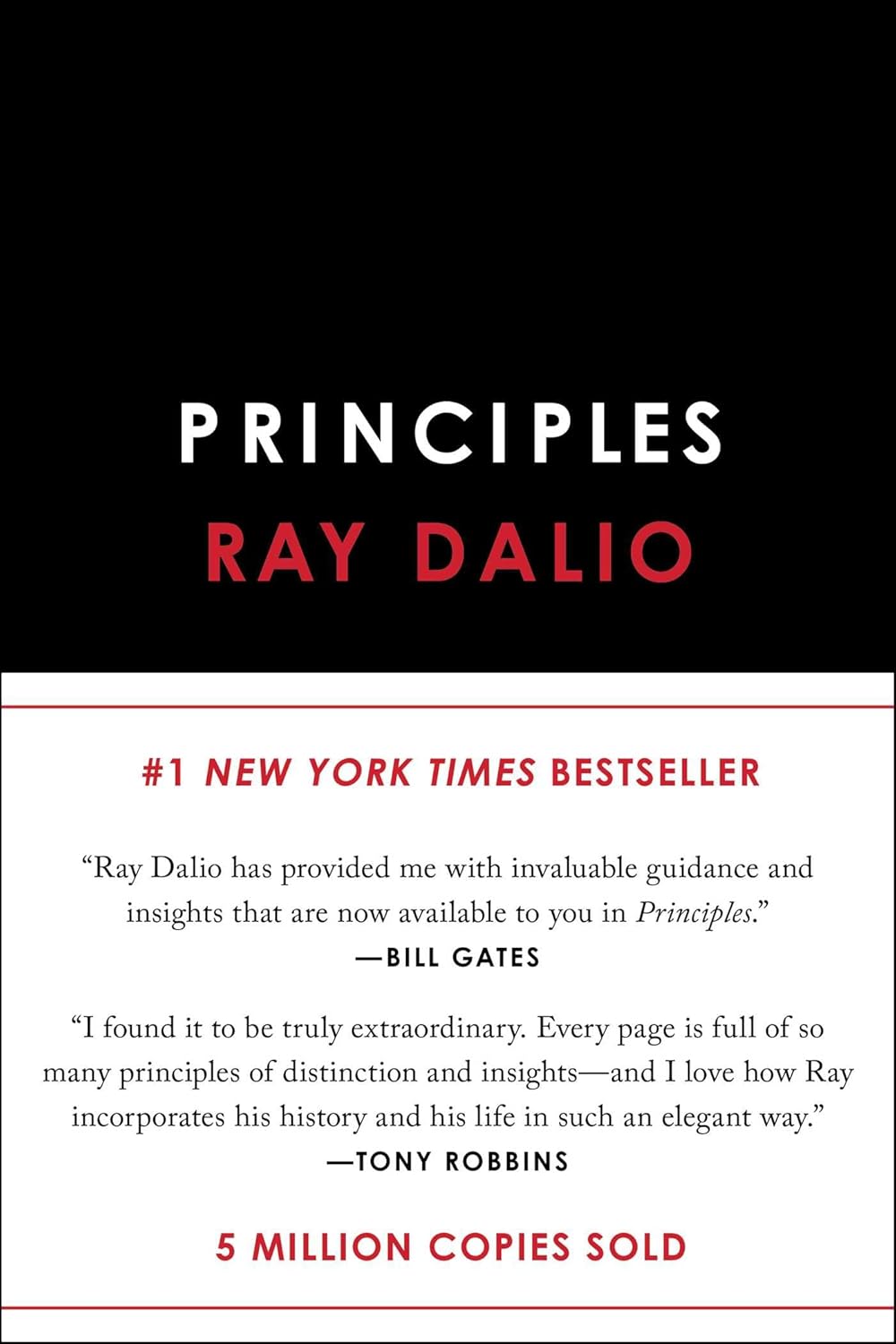
About Principles by Ray Dalio – A Practical Guide to Life, Work, Better Decisions, and Building Strong Teams
What would change if you stopped repeating the same mistakes and started writing down what they taught you? Principles by Ray Dalio explores that question through the author's experiences in life and business. Its full published title is Principles: Life and Work. Dalio shares how he developed personal rules for handling problems, making decisions, working with other people, and improving the way his investment firm operates.
This is part memoir and part practical guide. Dalio explains mistakes he made, the lessons he drew from them, and the methods he later used at Bridgewater Associates. He encourages readers to examine reality carefully, ask for honest feedback, and turn useful lessons into principles that can guide future choices.
You do not have to manage a large company to explore these ideas. A student deciding what to study, a shop owner organizing a team, or an employee handling difficult feedback may recognize the questions. This book offers Dalio's approach, not a universal formula. The real benefit comes from testing its ideas against your own circumstances and choosing what genuinely helps.
The Same Problem Keeps Returning for a Reason
Maybe you make a plan but never finish it. Perhaps your team discusses a problem every week without finding its cause. Or you accept a task even when there is not enough time to do it well. These situations can feel different, yet the underlying habit may be the same.
Dalio asks readers to notice repeating patterns rather than treat every problem as a completely new surprise. If something keeps going wrong, pause and examine the process behind it. A written principle can remind you what to do when the situation appears again.
For example, a student might decide to start assignments earlier after missing several deadlines. A manager might agree to clarify ownership before every new project.
Begin by Facing What Is Actually Happening
One of Dalio's central ideas is to embrace reality. A difficult situation does not improve because someone pretends it is easier than it is. Clear facts are more useful than a comforting story that hides important details.
Imagine a business has fewer orders than expected. Blaming bad luck immediately may hide problems with the product, delivery, price, or customer experience. The first step is to look at the information carefully and separate what is known from what is only a guess.
Dalio calls for radical truth and openness. His view is that direct information helps people recognize mistakes and make changes sooner. That does not mean every private detail belongs in public or that harsh words are helpful. In real workplaces, honesty needs respect, clear boundaries, and attention to privacy.
Make a Goal You Can Explain Clearly
It is hard to make progress when the destination keeps changing. Dalio's five-step process begins by choosing a clear goal. He then recommends identifying problems, finding their root causes, designing a plan, and following through.
A clear goal gives a decision a purpose. If you want to improve customer service, decide what improvement would look like. If you want more time to read, choose a routine you can actually maintain. General wishes are easier to forget than specific aims.
The next steps matter just as much. You may discover that the first problem you noticed is only a symptom. Instead of rushing toward the quickest fix, ask what created it. Then plan an action that addresses the cause and check whether it works.
Mistakes Can Become Useful Information
Dalio writes openly about painful failures during his career. He argues that reflecting on a mistake can turn discomfort into learning. His approach connects pain with reflection and progress, rather than treating embarrassment as a reason to hide.
This idea does not make every failure good or remove its consequences. People can lose time, money, confidence, or trust when something goes wrong. What matters is whether you examine the event accurately and change your behavior where possible.
A useful reflection might ask: What did I expect? What actually happened? Which assumption was wrong? What will I do differently next time? Write down the answers while the details are fresh. If other people were affected, listen to their experience too.
Learning is more convincing when it leads to a different action, not merely a promise to be careful.
Know Your Strengths Without Hiding Weaknesses
People have different skills. Someone may be excellent at research but struggle with deadlines. Another person may build relationships easily but dislike detailed financial work. Dalio argues that recognizing these differences helps people choose better roles and make stronger decisions.
You do not have to become perfect at everything. Sometimes improving a weak skill makes sense. In other cases, working with someone who has complementary strengths may be more effective.
The book encourages readers to ask for feedback and compare their self-image with actual results. Feedback can be uncomfortable, and not every opinion deserves equal weight. Look for specific evidence, useful examples, and comments from people who understand the work. You can take criticism seriously without accepting unfair treatment.
Why Dalio Wants Teams to Disagree Thoughtfully
A team can appear united when nobody challenges a weak idea. People may stay silent because a manager is confident, the meeting is rushed, or disagreement feels unsafe. Dalio argues that open discussion can reveal problems before they become expensive.
He calls his preferred system an idea meritocracy: people share independent views, examine disagreements, and try to choose a strong answer rather than simply follow the loudest speaker. His book describes how Bridgewater attempted to build that culture.
A productive disagreement has rules. Participants should address the issue, explain their reasoning, listen carefully, and know how a final decision will be made. The approach will not work well if staff fear punishment for speaking honestly or if leaders ignore the standards they set for others.
Listen to Experience, but Check the Evidence
Dalio describes believability-weighted decision-making, in which opinions receive different weight according to relevant experience and a person's ability to explain their reasoning. He argues that this can improve decisions when a team faces competing views.
Think of a technical problem. An experienced specialist may understand risks that a beginner has not yet met. Their input deserves serious attention. But experience alone does not make someone correct about every issue, and a new colleague may notice something important.
The useful takeaway is to ask who knows this subject, what their record shows, and whether their explanation makes sense. Agreeing on these standards before a dispute can reduce confusion. Smaller teams can apply the general question without copying all of Bridgewater's internal tools.
Turn Lessons into a Repeatable Working System
The book encourages readers to record principles instead of relying only on memory.
A shop owner might write down how damaged orders are handled. A manager might define how tasks are assigned and reviewed. A student might make a simple process for preparing before an exam. The goal is consistency where consistency helps.
Dalio also describes using data and computerized tools to support decision-making at Bridgewater. Readers should treat technology as assistance rather than automatic wisdom. A poor rule will not become reliable merely because a computer follows it quickly.
The Book Begins with a Personal Story
Principles is not just a list of management rules. Dalio first tells readers about his background, his early interest in markets, the founding of Bridgewater in 1975, and setbacks that influenced his thinking.
This part gives context to the later advice. You learn that the principles were not handed to him as finished truths. He says he developed them through experiments, errors, disagreements, and years of running a business.
Readers interested in entrepreneurship may enjoy seeing how the founder connects personal habits with company culture. His circumstances were unusual, however, so you should not assume every firm can recreate Bridgewater's methods or results.
Separate Life Principles from Work Principles
The structure helps readers find what they need. One major part explores personal goals, reality, problems, decisions, and self-awareness. Another looks at hiring, workplace culture, meaningful relationships, meetings, and systems for making choices.
You can follow the book from start to finish or revisit a section when you face a related issue. A new manager may focus on team discussions. A student may find more immediate value in goals and problem-solving. Someone changing careers may be interested in honest self-assessment.
This flexibility makes the book useful as a reference, although some ideas are detailed enough to require patient reading.
Who Is Ray Dalio?
Ray Dalio founded Bridgewater Associates in 1975 and developed the principles described here during his years building and managing the firm. The publisher presents the book as a collection of lessons drawn from his career, rather than an academic textbook about management.
Simon & Schuster lists the hardcover publication date as September 19, 2017, with 592 pages and ISBN 9781501124020. Other formats and printings may have different page counts. Check the details of the specific copy before ordering.
A Premium Edition That Is Comfortable to Revisit
Bookish Wonderland offers a physical copy intended for readers who want to keep this practical reference close at hand. The supplied features of its edition are:
- Premium eye-soothing cream paper with a soft, warm page tone.
- Crystal-clear printing that keeps the words sharp and readable.
- High-quality stitched and glue binding designed to hold pages securely through repeated use.
These specifications describe Bookish Wonderland's offered edition, not every publisher edition.
Who Might Get the Most from This Book?
Principles may interest entrepreneurs, managers, students, employees, and readers who enjoy books about habits, leadership, and thoughtful decisions. It can help someone who wants to examine mistakes instead of moving on without learning from them.
The book is long and sometimes detailed. It does not provide a guaranteed path to wealth or a management system suitable for every workplace. Some readers may find radical transparency appealing, while others may prefer more privacy and less formal feedback. Consider your responsibilities, relationships, and local working conditions before applying its methods.
Check the Book Price in Bangladesh Before Ordering
For the Book price in Bangladesh for Principles by Ray Dalio, check the current amount on the Bookish Wonderland product page. The live listing is the place to confirm availability and the price before you order.
Bookish Wonderland delivers inside and outside Dhaka and offers Cash on Delivery nationwide. Customers in Dhaka can ask about fast or urgent delivery, depending on location and service availability. If you have questions about customization or the offered edition, contact the store through Facebook or Instagram.
Make Your Next Decision More Deliberate
Principles brings together Dalio's experiences, personal rules, and approach to building teams. It asks readers to face facts, learn from mistakes, identify the causes of problems, and think carefully about whose advice to trust.
You do not need to copy every method. Read a section, decide which idea fits your situation, and test one change in daily life or work. A useful principle is one you understand well enough to apply and revise when needed.
Order Principles by Ray Dalio from Bookish Wonderland if you want a substantial guide to examine your habits, decisions, and approach to teamwork. Keep it nearby when the same problem appears again, and use what you learn to choose a better response.
If you require any customization or have any questions, please inbox us via FB or Insta.
| Primary Specification | |
| Author | Ray Dalio |
| Narrator | Ray Dalio, Jeremy Bobb |
| Editor | Rodrigo Corral Art & Design |
| Genre | Self-Help, Business, Management, Personal Development |
| ISBN-13/ISSN | 978-1501124020 |
| ISBN-10 | 1501124021 |
| Publisher | Avid Reader Press / Simon & Schuster |
| Publishing Date | September 19, 2017 |
| Edition | Illustrated |
| Language | English |
| Reading Age | 18+ |
| Format | Printed Book |
| Physical Specification & Quality | |
| Paper Quality | Premium eye-soothing cream paper |
| Binding Quality | High quality stitched and glue binding (for longevity) |
| Print Quality | Crystal-clear print |
| Pages | 592 pages |
| Country | USA |
| Logistics Information | |
| Weight | 614 gm |
| Length | 8.5 inches |
| Width | 5.6 inches |
| Height | 1.4 inch |