

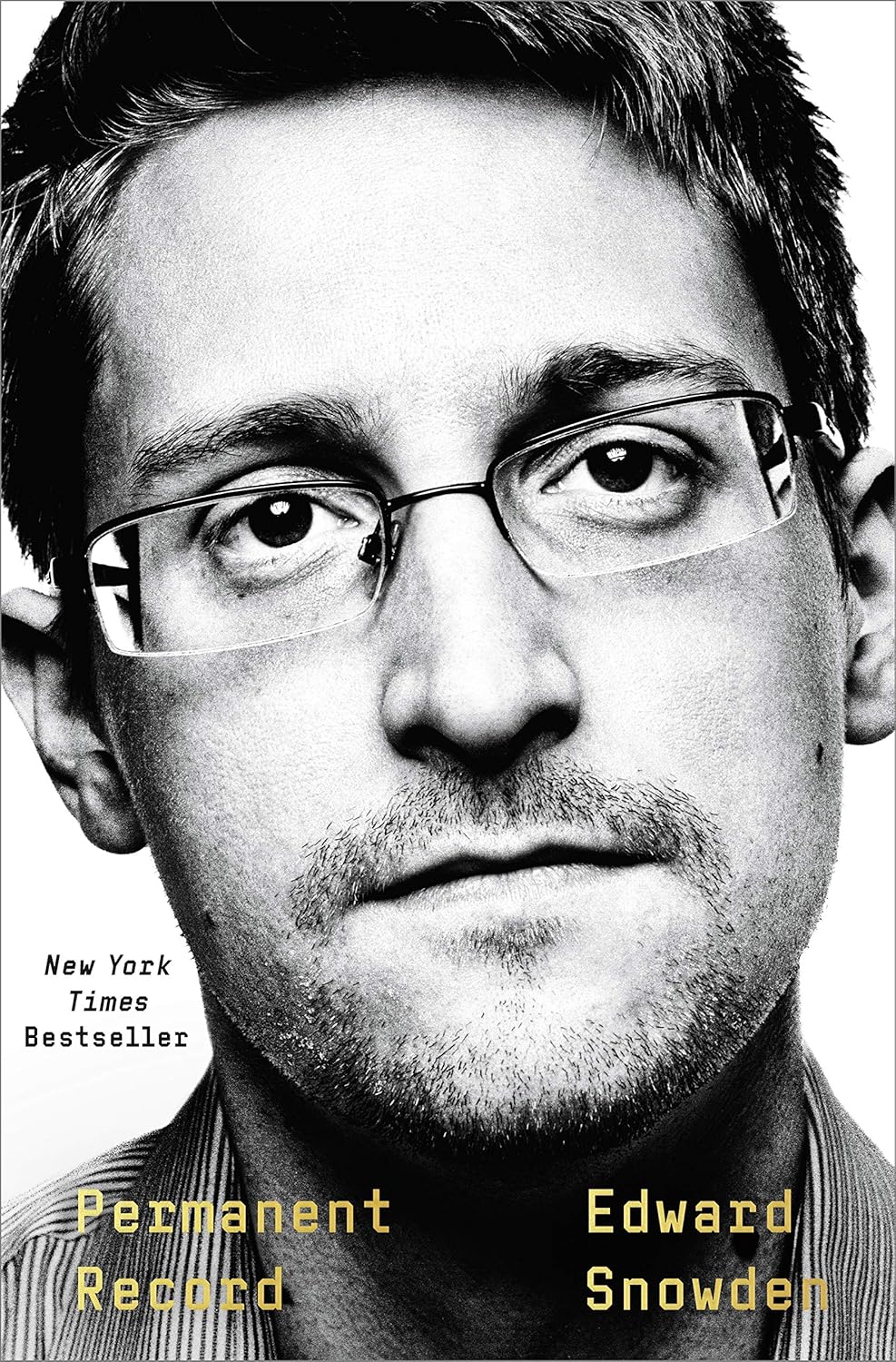
About Permanent Record by Edward Snowden—The True Story Behind the World’s Biggest Surveillance Debate
Every click, call, message, and search can leave a digital trace. Most people use the internet every day without knowing who may collect this information, how long it may be stored, or what power it can give to governments and companies. Permanent Record by Edward Snowden takes readers inside this hidden world through the life story of the man who brought secret mass-surveillance systems into public view.
This is not only a book about codes, computers, or intelligence agencies. It is a personal memoir about childhood, family, public service, belief, doubt, love, courage, and the cost of one life-changing decision. Snowden explains how a child who loved technology grew into a skilled intelligence worker for the CIA and NSA. He also describes how the systems he helped build caused him to question whether national security had crossed the line into an attack on personal privacy.
Meet the Person Behind the Famous Name
Edward Snowden became known around the world in 2013, but Permanent Record begins long before that moment. It introduces him as a child growing up near the centre of American government power. Members of his family worked in public service, and he learned to connect government work with duty and loyalty.
He also grew up during the early rise of the internet. Online life gave him a place to explore ideas, build skills, solve problems, and shape his identity. Computers were more than tools for him. They were systems that could be studied, tested, repaired, and understood.
These early chapters help readers see Snowden as a person before he became a headline. He writes about school, family life, illness, games, technology, and the strong beliefs he formed about freedom and the public good. The details make his later choices easier to follow, even if the reader does not accept his final decision.
From Computer Enthusiast to Intelligence Worker
After the attacks of September 11, 2001, Snowden wanted to serve his country. His path eventually led him into the American intelligence community, where his technical ability opened doors that formal education had not.
Snowden explains technical work in a way that general readers can follow. He does not expect everyone to be a computer expert. Instead, he uses simple examples to show how digital systems gather, move, copy, search, and store information.
At first, Snowden believes his skills are helping to defend his country. Over time, however, he begins to see a deep conflict between the ideals he values and the tools being created in secret. That conflict becomes the centre of the book.
When Data Collection Becomes a Question of Freedom
Technology can protect people, connect families, support learning, and make daily life easier. The same technology can also record a person’s location, contacts, interests, habits, and private conversations. Permanent Record asks what happens when this information is gathered on a huge scale without the clear knowledge of the public.
Snowden describes systems that could collect or search large amounts of digital communication. From his point of view, these tools went far beyond watching a small number of known threats. They created the power to observe ordinary people who had not been accused of a crime.
This discovery forces him to face a difficult problem. He has promised to protect secrets, but he also believes that government power should be limited by law and public consent. Keeping his job means staying silent. Speaking out means breaking rules, losing his career, and placing his freedom at risk.
The book does not make this choice feel easy. Snowden shows the fear, planning, and moral struggle behind it. Readers can examine his claims and decide how they judge his actions. That space for debate is one reason the memoir is valuable for students, professionals, and thoughtful general readers.
The Decision That Changed His Life
In 2013, Snowden shared classified documents with selected journalists. The reporting that followed revealed surveillance programs and started a global argument about privacy, security, secrecy, and government accountability.
Permanent Record explains why he chose journalists instead of releasing everything directly to the public. He wanted experienced reporters to study the documents, confirm their meaning, remove details that could create unnecessary harm, and decide what served the public interest.
The memoir describes the careful steps taken before the first reports appeared. Snowden knew that investigators would search for the source. He understood that his identity could be discovered and that he might never return to his old life.
His choice affected far more than his career. It changed his relationship, his family’s safety, his home, and his future. He left Hawaii, met journalists in Hong Kong, and later became stranded in Russia after the United States cancelled his passport. The man who had worked inside American intelligence now lived in exile.
A Memoir About Privacy in the Digital Age
Privacy can sound like a distant political topic until we connect it with ordinary life. Phones know where we travel. Online services know what we search for, watch, read, and buy. Messages may contain our closest relationships, private fears, work plans, and family photographs.
Permanent Record asks readers to think about who controls this information. Can a person be free if every action may be recorded? Should governments need clear legal permission before searching private data? How much secrecy is acceptable in the name of safety? Who watches the people and systems doing the watching?
This makes the memoir useful even for readers who do not follow politics closely. Privacy affects students, parents, workers, business owners, journalists, and anyone using a connected device. The book turns a large technical issue into a human question: what parts of our lives should remain ours?
More Than One Side of the Snowden Debate
Edward Snowden remains a controversial figure. Supporters describe him as a whistleblower who helped the public understand secret surveillance. Critics argue that he broke legal duties, exposed classified information, and placed national security work at risk.
Permanent Record presents Snowden’s own side of the story. It is not a neutral history written by an outside observer. This is important for readers to understand. The book explains how he remembers events, what he believed, and why he thought his actions were necessary.
Reading his account does not force anyone to agree with him. Instead, it gives readers primary material for forming a more informed opinion. They can compare his arguments with government statements, court records, journalism, and other books about surveillance.
This makes the memoir valuable for discussion. Two readers may finish the same chapter with different judgments. One may focus on privacy and public accountability. Another may focus on secrecy and national safety. The disagreement can lead to serious questions about law, duty, democracy, technology, and personal responsibility.
Clear Writing Without Heavy Technical Language
A book about intelligence networks and surveillance could easily become difficult. Snowden keeps much of the writing direct and personal. He explains the important technical ideas without filling every page with specialist terms.
Readers follow a life story rather than a computer manual. Family moments, school memories, work experiences, travel, relationships, and private doubts sit beside explanations of data and security. This balance helps the book remain readable while still teaching important ideas.
The story also builds tension. Readers may already know what Snowden did, but they may not know how he reached that point or what happened behind the public headlines. The memoir fills in those human details.
People interested in technology will find an inside view of systems and intelligence work. Readers interested in politics will find questions about state power and oversight. Memoir readers will find a story about identity, belief, sacrifice, and living with the results of a difficult choice.
What Readers Can Gain from This Book
Permanent Record offers knowledge and questions that continue beyond its final page. Readers may gain:
-
A clearer view of Edward Snowden’s childhood, career, beliefs, and motives.
-
A basic understanding of how digital surveillance can work at a large scale.
-
Greater awareness of the information created through everyday online activity.
-
A closer look at work connected with the CIA and NSA.
-
Insight into the personal cost of becoming a public whistleblower.
-
Strong questions about privacy, national security, law, and public consent.
-
Material for classroom, university, workplace, or book-club discussion.
-
A real-life story that reads with the tension of a modern political thriller.
-
A chance to examine a major world event through the account of its central figure.
-
Motivation to think more carefully about personal data and digital rights.
The greatest benefit is not a single answer. It is the habit of asking who holds information, how that information is used, and what limits should protect ordinary people.
Who Should Read Permanent Record?
This memoir is a strong choice for readers interested in technology, cybersecurity, intelligence agencies, politics, human rights, digital privacy, journalism, and modern history. It also suits readers who enjoy true stories about people facing high-risk moral choices.
Business owners and digital marketers may find the questions about data especially relevant. Online work often depends on collecting and studying user information. The memoir encourages professionals to think about consent, limits, security, and the trust of the people whose data they handle.
Book clubs can discuss whether Snowden had other choices, whether secrecy can protect democracy, and when a worker’s duty to the public may conflict with duty to an employer. Because opinions about Snowden differ, the book can create a lively and meaningful conversation.
A Premium Edition for Focused Reading
This Bookish Wonderland edition is designed for comfortable reading and long-term use. Premium eye-soothing cream paper gives the pages a softer appearance under normal light. Crystal-clear printing keeps every line sharp and easy to read. High-quality stitched and glue binding supports repeated reading and helps the pages remain secure.
The printed format is useful for readers who want to underline key ideas, add notes, compare chapters, or prepare questions for study and discussion. It also makes a thoughtful gift for students, technology professionals, journalists, researchers, and readers of political memoirs.
Why Order from Bookish Wonderland?
Bookish Wonderland offers a large collection of premium and durable English books with delivery across the country. If you are comparing the Permanent Record by Edward Snowden Book price in Bangladesh, consider the value of comfortable paper, clean printing, and binding made for regular use.
Cash on Delivery is available across Bangladesh. We deliver inside and outside Dhaka, and customers in Dhaka may ask about fast or urgent delivery. For availability, order help, or delivery information, contact Bookish Wonderland through Facebook or Instagram.
Read the Story and Decide for Yourself
Permanent Record does not ask only what Edward Snowden did. It asks why he did it, what he gave up, and what his actions mean for everyone living in a connected world. The memoir takes readers beyond short news reports and into the experiences, beliefs, and doubts behind a decision that changed the global privacy debate.
Order Permanent Record by Edward Snowden from Bookish Wonderland today. Read the account in his own words, question the power hidden inside digital systems, and form your own view of one of the most debated figures of the internet age. Nationwide delivery, Cash on Delivery, and fast or urgent delivery options in Dhaka make ordering simple.
If you require any customization or have any questions, please inbox us via FB or Insta.
| Primary Specification | |
| Author | Edward Snowden |
| Narrator | Holter Graham |
| Editor | Kelly S. Too |
| Genre | Memoir, Autobiography, Politics, Technology, Current Affairs |
| ISBN-13/ISSN | 978-1250772909 |
| ISBN-10 | 1250772907 |
| Publisher | Metropolitan Books |
| Publishing Date | September 1, 2020 |
| Language | English |
| Reading Age | 18+ |
| Format | Printed book |
| Physical Specification & Quality | |
| Paper Quality | Premium eye-soothing cream paper |
| Binding Quality | High quality stitched and glue binding (for longevity) |
| Print Quality | Crystal-clear print |
| Pages | 352 pages |
| Country | USA |
| Logistics Information | |
| Weight | 372 gm |
| Length | 8.5 inches |
| Width | 5.6 inches |
| Height | 0.88 inch |