

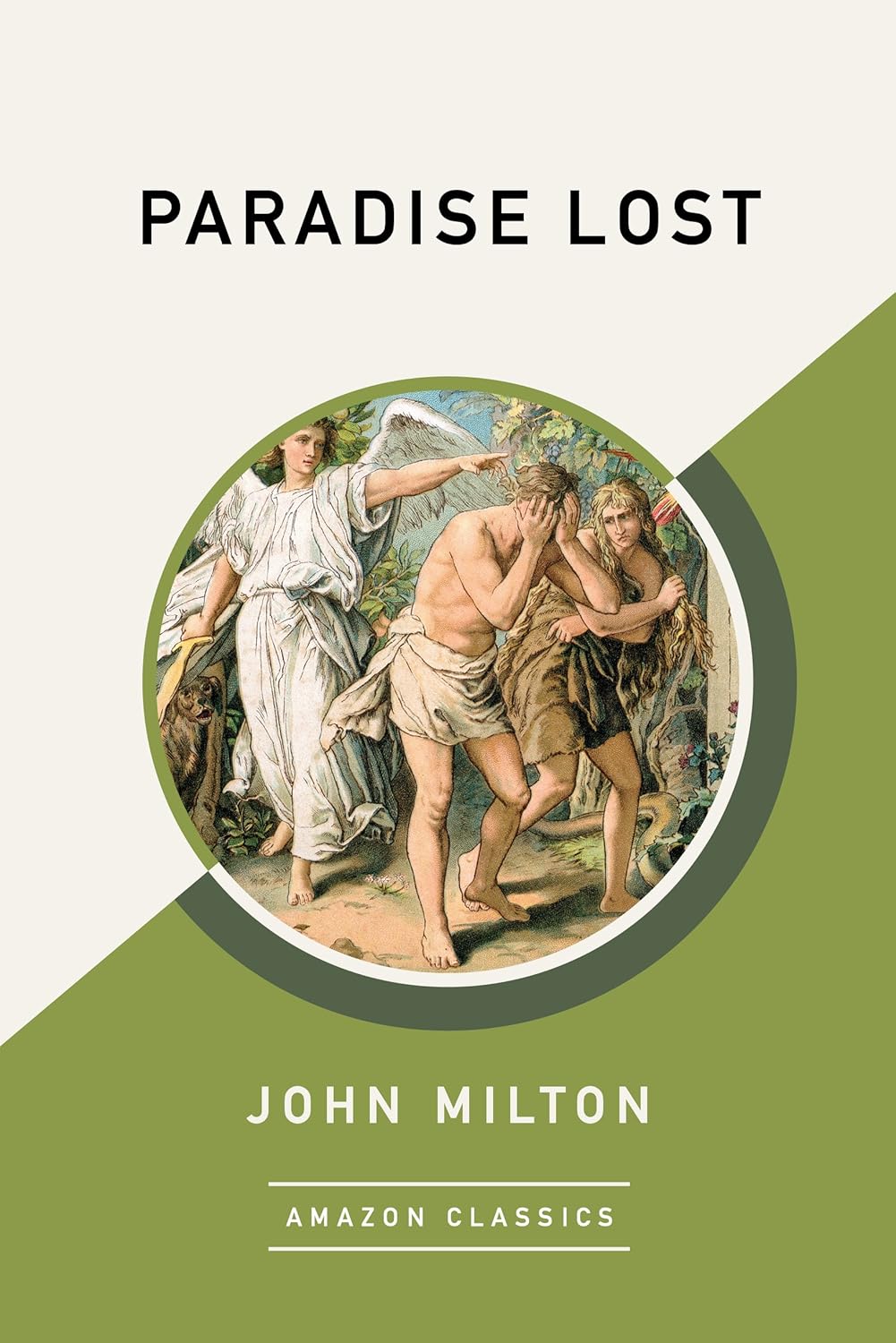
About Paradise Lost by John Milton – The Epic Story of Heaven, Temptation, and the Fall of Man
Some books tell a story. Paradise Lost by John Milton asks you to think about freedom, choice, pride, love, loss, good, evil, and what happens when one decision changes everything. First published in 1667 and revised into twelve books in 1674, this famous English epic poem retells the biblical story of the fall of Adam and Eve on a vast scale. Milton moves from Heaven to Hell, from the new world to the Garden of Eden, and from great battles to human moments of fear, hope, blame, regret, and love. It is a classic for readers who want more than a simple tale. It gives you a world to enter, ideas to question, and lines that can stay in your mind long after the last page.
A Classic That Turns a Familiar Story Into a Huge Epic
At the center of Paradise Lost is a story many readers already know: Adam and Eve live in Eden, Satan enters the garden, temptation appears, and humanity falls. Milton takes that simple outline and builds a much larger drama around it. He begins with the fallen angels after their defeat, then shows Satan choosing rebellion and revenge. He follows Satan across a dangerous universe toward Earth, where Adam and Eve live in peace. The poem then shows how temptation works, why choices matter, and how one act can bring pain into a world that had known innocence.
This is not written like a modern novel. It is an epic poem in blank verse, meaning the language has a poetic rhythm without regular end rhyme. Milton wanted the poem to have the scale and weight of the great epics of the ancient world. The result is a work that feels grand, serious, dramatic, and full of powerful images. Readers who enjoy mythology, religion, philosophy, classic literature, or deep character conflict can find a lot to explore here.
When You Want a Classic With More Than Just a Plot
Many readers want to read famous classics but worry that an old book may feel distant or hard to connect with. Paradise Lost can look demanding at first because its language comes from the seventeenth century and its ideas are large. Yet the main human problems inside it are easy to recognize. Pride can damage judgment. Anger can turn into revenge. Love can be mixed with fear. People can make choices even when they know the risk. They can blame others after making mistakes. They can also feel sorrow, accept loss, and move forward.
That is why Paradise Lost still attracts students, teachers, writers, poets, and serious readers. You do not have to agree with every idea in the poem to learn from it. The value comes from seeing how Milton builds arguments, characters, images, and moral questions. Instead of giving you only simple heroes and villains, the poem often makes you look closely at motive, speech, persuasion, responsibility, and consequence.
If you have wanted to understand why this work has remained important for centuries, reading the full poem is the best way to see its power for yourself.
Meet a Satan Who Is Dangerous Because He Can Speak
One of the most discussed parts of Paradise Lost is Milton’s Satan. He speaks with pride, anger, ambition, and great skill. He can make failure sound like courage and turn wounded pride into a reason for more rebellion. That makes him interesting to read, but also dangerous.
Milton shows how persuasive words can hide harmful aims. Satan may sound bold, yet his choices bring more loss to himself and others. For modern readers, this gives the poem another useful layer: strong words do not always mean a good cause, and confidence does not always mean wisdom.
Adam and Eve Feel Human, Not Distant
The emotional heart of the poem is Adam and Eve. Before the fall, they live in a beautiful world with work, rest, love, and freedom. They are not robots. They can talk, think, question, choose, and learn. That freedom is important because the poem treats moral choice as meaningful only when another choice is possible.
Milton gives Adam and Eve different strengths and weaknesses, and readers have debated their relationship for generations. Their conversations can be tender, serious, uneasy, and at times painful. When temptation enters their world, the poem becomes more intimate. The huge battle between Heaven and Hell finally reaches two people making choices in a garden.
After the fall, the change is immediate. Shame, anger, blame, and fear enter their relationship. Yet the story does not end with pure despair. They begin to face what they have done and what life will now require. This movement from innocence to error and then toward understanding gives the final part of the poem much of its emotional force.
A Journey Through Heaven, Hell, Chaos, and Eden
Paradise Lost is huge in setting. It opens in Hell after the rebel angels have fallen, then moves through councils, journeys, Heaven, Chaos, Earth, and Eden. Hell feels vast and terrible, while Eden is full of peace and life. These places are more than backgrounds; they help show what the characters are becoming inside.
Readers who enjoy fantasy, world-building, cosmic conflict, and fallen-angels stories may be surprised by how large and visual the poem feels.
Why the Twelve-Book Structure Matters
The version most widely read today follows the 1674 arrangement in twelve books. The first edition of 1667 had ten books, but Milton later revised and reorganized the poem. The twelve-book shape helped align the work more closely with the tradition of classical epic poetry.
Do not confuse these twelve books with twelve separate novels. They are sections of one complete poem. Each part moves the larger story forward. Some focus on Satan and the fallen angels. Some turn to Adam and Eve. Others explain past events, warnings, creation, war, or the future that humanity will face.
Reading the poem one book at a time can make it much easier. You do not need to rush. A few pages, a short note, and a pause to think can be more useful than trying to finish large sections quickly. This is the kind of classic that rewards slow reading.
What You Gain From Reading Paradise Lost
A good classic should give you more than a famous title on your shelf. Paradise Lost can help you grow as a reader because it asks for attention. Its long sentences, rich images, speeches, and references train you to follow complex ideas. Over time, the language becomes easier to hear and understand.
It can also improve the way you notice argument. Characters often try to convince one another. They use reason, emotion, pride, fear, hope, and desire. Watching those arguments unfold can help readers think more carefully about how persuasion works.
Students of English literature can use the poem to understand epic form, blank verse, allusion, characterization, symbolism, biblical retelling, and Renaissance literature. Writers can study its imagery, scale, voice, and dramatic speeches. General readers can simply enter one of the most influential imaginative works in English.
A Strong Choice for Students, Classic Readers, and Deep Thinkers
Paradise Lost works well for students of poetry, English literature, theology, literary history, and epic tradition. It also suits readers building a home library of classics.
Readers who like moral conflict can explore ideas about obedience, freedom, ambition, love, knowledge, and responsibility. Fans of mythic storytelling may enjoy its huge settings and supernatural action, while poetry readers can study Milton’s rhythm, imagery, and sentence structure. It can also make a meaningful gift for someone who enjoys classic literature.
A Reading Experience Made for Long Sessions
A long classic becomes easier to enjoy when the physical book is comfortable to use. The Bookish Wonderland edition is made for readers who want a practical printed copy for study, slow reading, highlighting, note-taking, and repeated use.
The pages use premium eye-soothing cream paper, which gives a softer reading surface than harsh bright-white paper. Crystal-clear printing keeps the text sharp and easy to follow. High-quality stitched and glue binding is designed for better longevity, so the book can handle regular reading and return trips to important passages.
These details matter with a work like Paradise Lost because many readers do not finish it in one sitting. You may read a section, close the book, return later, compare passages, or use it for class. A durable printed copy makes that process simpler and more comfortable.
Why Keep Paradise Lost on Your Shelf
Paradise Lost rewards rereading because different parts can stand out each time. One reading may pull you toward Satan’s speeches; another may make Adam and Eve feel more important. You may notice new links between freedom, responsibility, pride, blame, and persuasion.
A physical copy also makes it easy to mark lines, add notes, and return to key passages.
Paradise Lost by John Milton Price in Bangladesh
Readers comparing the Book price in Bangladesh market for Paradise Lost by John Milton often want a copy that balances affordability with a comfortable reading experience. At Bookish Wonderland, the focus is not only on getting the title into your hands but also on giving you a printed book made for regular reading, study, and shelf life. This makes it a practical option for students, classic-book collectors, teachers, and readers who want to explore Milton’s epic without treating it as a one-time read.
Check the current product price on the Bookish Wonderland listing, choose your preferred delivery option, and order when you are ready.
Easy to Order From Bookish Wonderland
Bookish Wonderland offers nationwide delivery across Bangladesh, including customers inside and outside Dhaka. Cash on Delivery is available, and readers in Dhaka can ask about fast or urgent delivery when available.
The store also carries an English book collection, making it easier to build your classic literature shelf from one place.
A Book That Still Gives Readers Something to Debate
Paradise Lost stays interesting even when you already know the ending. The deeper questions are how the fall happens and why the characters choose as they do. The poem explores pride, ambition, obedience, temptation, free will, love, knowledge, and consequence.
That makes it useful for class discussion and personal reading. You can study Satan’s speeches, Eve’s choices, Milton’s verse, ideas about freedom, or the poem’s use of biblical material. One book can open many paths.
If you want a book that is famous for a reason, Paradise Lost deserves a place on your reading list. It is not a quick modern story, and it does not need to be. Its value comes from its scale, language, questions, characters, and the way it turns a short biblical account into a vast human and cosmic drama.
Read it slowly. Let difficult lines settle. Mark passages that surprise you. Notice when a speech sounds convincing and ask why. Watch how pride changes into pain, how temptation becomes action, and how Adam and Eve face a future outside Eden.
Paradise Lost by John Milton can challenge you, but it can also reward you with a rich reading experience. Order your copy from Bookish Wonderland and start your journey through Heaven, Hell, Eden, freedom, temptation, loss, and hope.
If you require any customization or have any questions, please inbox us via FB or Insta.
| Primary Specification | |
| Author | John Milton |
| Editor | Alan Vermilye |
| Genre | Christian Fiction, Classic & Allegory, Fantasy, Literary Fiction, Religious Literature |
| ISBN-13/ISSN | 978-1948481526 |
| ISBN-10 | 1948481529 |
| Publisher | Brown Chair Books |
| Publishing Date | February 23, 2026 |
| Language | English |
| Reading Age | 18+ years |
| Format | Printed book |
| Physical Specification & Quality | |
| Paper Quality | Premium eye-soothing cream paper |
| Binding Quality | High quality stitched and glue binding (for longevity) |
| Print Quality | Crystal-clear print |
| Pages | 332 pages |
| Country | USA |
| Logistics Information | |
| Weight | 351 gm |
| Length | 8.5 inches |
| Width | 5.6 inches |
| Height | 0.83 inch |