

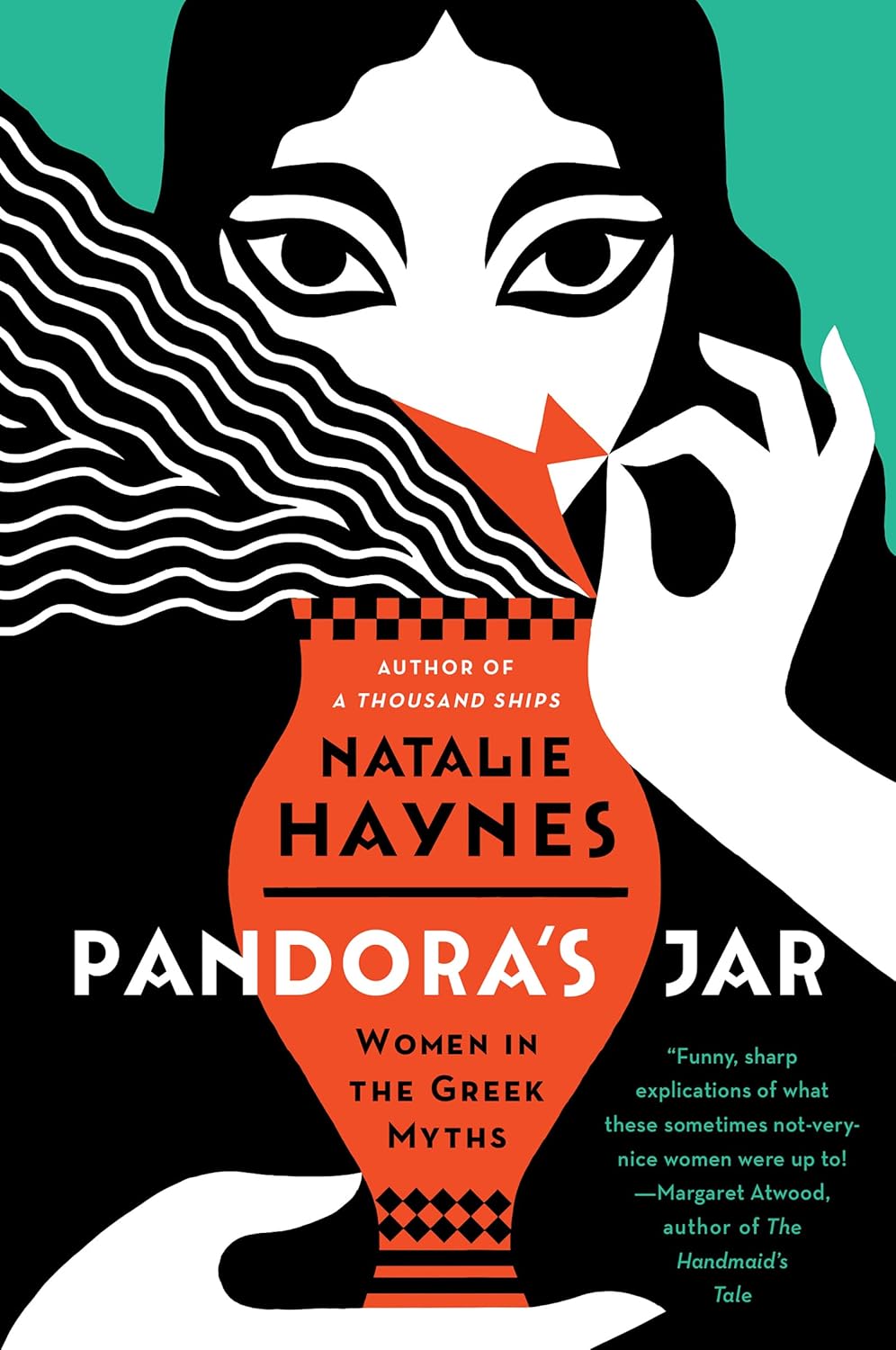
About Pandora's Jar: Women in the Greek Myths by Natalie Haynes – See the Women Behind the Legends
Greek myths are full of famous heroes, monsters, wars, gods, and impossible choices. But many of the women in these stories are remembered in a very simple way. Pandora is blamed for trouble. Medusa becomes a monster. Helen becomes the face that caused a war. Medea becomes a warning. Penelope becomes the patient wife. In Pandora's Jar: Women in the Greek Myths by Natalie Haynes, those easy labels are opened up and questioned. Haynes looks again at the old stories and asks what happens when we stop seeing these women only through the eyes of men. The result is a readable book about how myths change as people keep telling them.
Natalie Haynes is a classicist, writer, broadcaster, and storyteller who knows the ancient sources well. She takes readers back to Greek and Roman texts, but she does not make the book feel like a hard school lesson. She explains ideas with clear examples, sharp humor, and modern references. That makes this book a strong choice for readers who love mythology but want more than a simple retelling. It is also useful for readers who enjoy books about history, literature, women, culture, storytelling, and the way old ideas still shape modern life. Haynes's own description presents the book as an effort to put women at the center of myths that have often been told mainly through male heroes.
The myths you know may not be the whole story
Many readers first meet Greek myths through short school lessons, films, cartoons, novels, or simple summaries. Those versions can make every person look easy to understand. A hero is brave. A monster is evil. A queen is jealous. A woman who causes trouble is blamed. But myths were never one fixed story. Ancient writers often told different versions, and later writers, artists, translators, filmmakers, and teachers made new choices again.
That is the problem Pandora's Jar helps solve. Instead of asking you to forget the myths you know, Haynes asks you to look at them from another angle. She studies how women were described in ancient sources and how their images changed over time. The Guardian noted that the book looks at original sources while also showing how later retellings often made female characters smaller, stranger, or more one-dimensional.
This gives the reader something more useful than another collection of old tales. You begin to see how stories are built. You notice who gets to speak, who gets blamed, who is called a hero, and whose pain is treated as unimportant. That makes the book feel both ancient and modern at the same time.
Meet Pandora without the simple blame
The title itself gives you the first surprise. Most people know the phrase “Pandora's box,” but the older story involved a jar, not a small box. Haynes uses that detail as a doorway into a larger question: how much of what we think we know about myth comes from the earliest sources, and how much comes from later retellings?
Pandora is often remembered as the woman whose curiosity brought pain into the world. Haynes shows that the story is more complicated than that simple lesson. She examines how Pandora has been described, blamed, and used as a symbol over many centuries. This is not about turning every woman into a perfect hero. It is about giving each character enough space to be understood as more than one word.
That same method appears throughout the book. Haynes does not simply say that old stories were wrong and new stories are right. She looks at versions, language, art, literature, and culture. She asks why one version became famous while another was forgotten.
Medusa, Helen, Medea and other women get another look
One of the biggest pleasures of the book is meeting familiar names in less familiar ways. Medusa is more than a head with snakes. Helen is more than beauty. Medea is more than rage. Penelope is more than waiting. Clytemnestra, Jocasta, Eurydice, Phaedra, and other women are given room to become complicated people inside complicated stories.
Haynes also shows how much power there can be in the act of retelling. A story can change when the camera moves, when the narrator changes, or when a person who used to stand at the edge is moved to the center. That idea helps explain why Greek myth is still alive after thousands of years. New readers keep finding new questions inside the same stories.
For readers who already enjoy books such as Circe, The Song of Achilles, A Thousand Ships, or modern retellings of ancient myths, Pandora's Jar can add another layer to the experience. It helps you see where many of these modern stories come from and why different writers make different choices.
Serious ideas without a heavy reading style
A book about classical literature can sound difficult before you open it. Pandora's Jar is much friendlier than that. Haynes writes with knowledge, but also with wit. Contemporary reviews highlighted the book's mix of scholarship, humor, and cultural references.
That means you do not need to be a Classics student to follow the main ideas. If you know only a few famous names from Greek mythology, the book can still guide you. If you already know Homer, Euripides, Sophocles, or other ancient writers, you can enjoy the deeper discussion and source comparisons.
This balance is one of the book's strongest benefits. It can teach without feeling dry. It can challenge an old idea without turning every page into an argument. It can be funny without making the myths feel unimportant. You are invited to think, not simply told what to think.
A good choice for curious readers, students and myth lovers
Pandora's Jar works well for several kinds of readers. A mythology fan can use it to discover details that short retellings leave out. A literature student can use it to think about point of view, character, adaptation, and cultural memory. A reader interested in women in history and literature can explore how female characters have been praised, blamed, silenced, changed, or misunderstood. A book club can use it to start discussions about storytelling, power, gender, art, and the difference between an ancient source and a later popular version.
It is also a useful bridge between fiction and nonfiction. If you love Greek myth retellings but usually avoid academic books, this gives you a way into the sources without losing the pleasure of storytelling. If you mostly read history or essays, the mythic material adds drama and memorable characters.
Why the physical reading experience matters
A book like this invites slow reading, notes, rereading, and returning to earlier chapters. That is why the physical quality matters. Bookish Wonderland offers this printed book with premium eye-soothing cream paper, crystal-clear print, and high-quality stitched and glue binding made for longevity.
The cream-colored paper gives the page a softer look than bright white paper, which can make long reading sessions feel more comfortable. The clear printing helps names and paragraphs stay easy to read. The stitched and glue binding gives the book stronger support so it is suitable for readers who plan to keep it on the shelf, revisit sections, or use it for study.
These features are especially useful for a nonfiction title that you may want to mark with sticky notes or return to after reading another myth retelling. Instead of feeling like a disposable copy, it can become part of a long-term mythology or literature collection.
A premium edition for readers who want more than the story
At Bookish Wonderland, the focus is not only on selling a title. The aim is to give readers a comfortable printed edition that feels good to hold and keeps its shape through regular reading. This premium edition combines the content of Natalie Haynes's thoughtful myth study with practical reading quality.
You get premium eye-soothing cream paper, sharp and clean text, and strong stitched and glue binding. Those details help when you are reading a book filled with names, arguments, examples, and references that may make you turn backward and forward through the pages.
Learn to question the version everyone repeats
One of the most valuable things this book can give you is a new reading habit. After spending time with Haynes's approach, you may start asking better questions whenever you hear a famous story. Who told this version? When was it written? Who is speaking? Who is silent? What changed between the old source and the modern film, novel, painting, or school lesson?
That skill goes beyond mythology. It is useful whenever stories are passed through many people and many years. Pandora's Jar shows that the version we hear most often is not always the only version, and popularity does not make a retelling neutral.
Easy to order from Bookish Wonderland
If you are comparing the Book price in Bangladesh, Pandora's Jar: Women in the Greek Myths by Natalie Haynes is available from Bookish Wonderland with customer-friendly ordering and delivery options. You can order from inside or outside Dhaka, and nationwide delivery is available across the country.
Cash on Delivery is available across Bangladesh, so you can place an order without needing to pay online first. Readers in Dhaka can also ask about fast or urgent delivery when they need the book sooner. This is useful for gifts, study needs, book club plans, or anyone who simply does not want to wait long to start reading.
A book that can change how you see old stories
The strongest reason to read Pandora's Jar is simple: it makes familiar stories feel new without throwing away the old ones. Haynes returns to the sources, looks at the women who were often pushed aside, and gives readers a clearer view of how myth changes over time.
You may come for Medusa, Pandora, Helen, or Medea and leave thinking about storytelling itself. You may find that a woman you once saw as a villain becomes harder to judge. You may notice that a hero's victory looks different when the story is told by the person who paid the price. You may also discover just how funny, strange, violent, rich, and flexible Greek myth can be.
This makes the book a strong gift for mythology lovers, readers of literary nonfiction, students, teachers, and anyone who enjoys asking why famous stories became famous in the form we know today. It is also a natural next read for people who enjoy Natalie Haynes's fiction and want to see the classical knowledge behind her storytelling.
Bring these ancient voices to your shelf
Greek myths have survived because people keep telling them. Pandora's Jar asks us to pay closer attention to whose voices survive inside those stories and whose voices get lost along the way. Natalie Haynes gives those women more space, more context, and more complexity, while keeping the reading experience lively and approachable.
Order Pandora's Jar: Women in the Greek Myths by Natalie Haynes from Bookish Wonderland and add a thoughtful, conversation-starting mythology book to your collection. With premium cream paper, crystal-clear printing, durable stitched and glue binding, Cash on Delivery, nationwide delivery, and fast delivery options in Dhaka, it is ready for readers who want both strong content and a comfortable physical book.
If you require any customization or have any questions, please inbox us via FB or Insta.
| Primary Specification | |
| Author | Natalie Haynes |
| Translator | Ted Hughes |
| Narrator | Natalie Haynes |
| Genre | Literary Criticism, Greek Mythology, Classical Studies, Women & Mythology |
| ISBN-13/ISSN | 978-0063139466 |
| ISBN-10 | 0063139464 |
| Publisher | Harper Perennial |
| Publishing Date | March 29, 2022 |
| Language | English |
| Reading Age | 18+ years |
| Format | Printed book |
| Physical Specification & Quality | |
| Paper Quality | Premium eye-soothing cream paper |
| Binding Quality | High quality stitched and glue binding (for longevity) |
| Print Quality | Crystal-clear print |
| Pages | 320 pages |
| Country | United States |
| Logistics Information | |
| Weight | 343 gm |
| Length | 8.5 inches |
| Width | 5.6 inches |
| Height | 0.72 inch |