

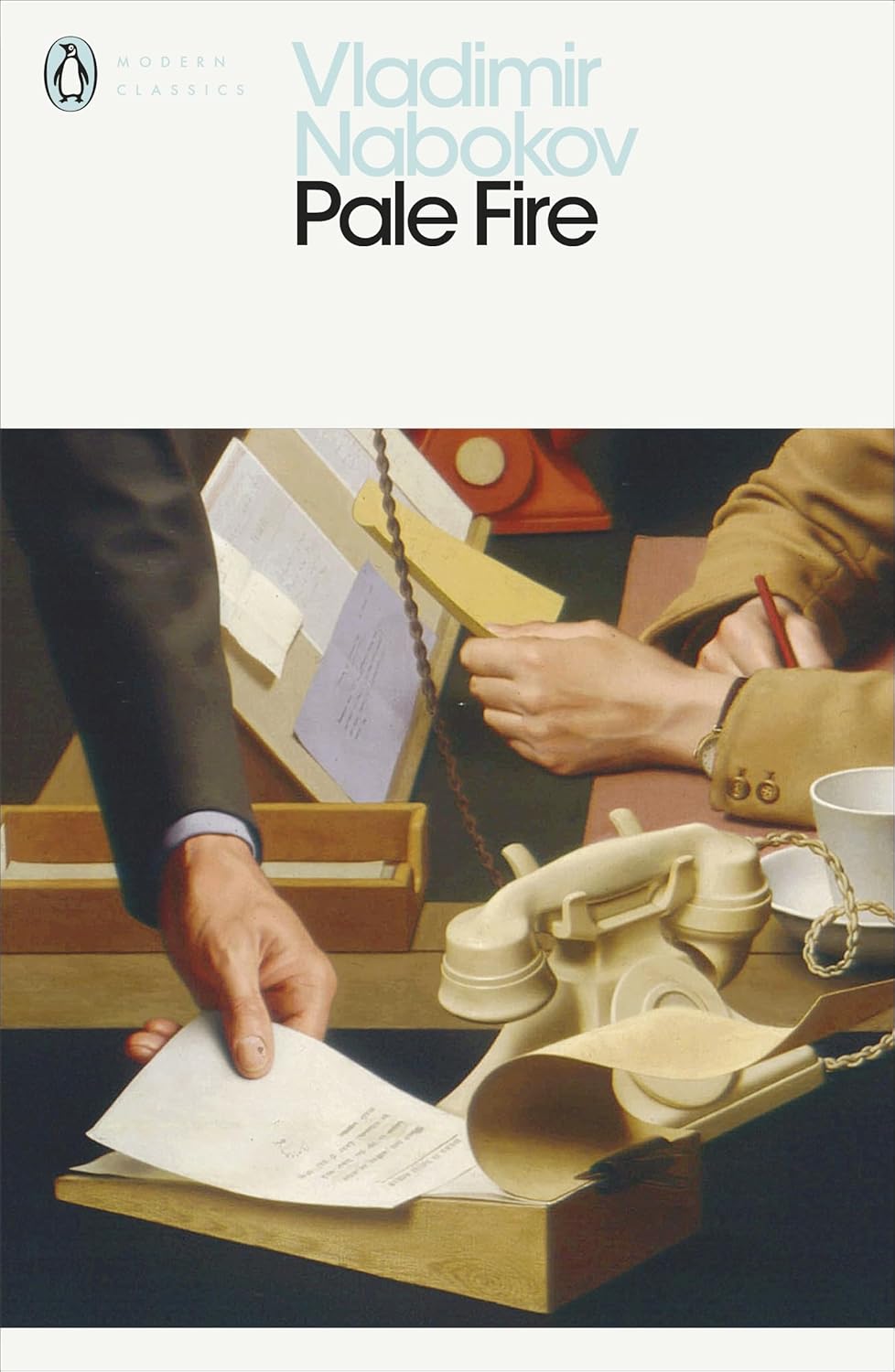
About Pale Fire by Vladimir Nabokov – A Clever Literary Puzzle That Changes as You Read
Pale Fire by Vladimir Nabokov is not a normal novel. It is a book that asks you to read, think, look back, and notice small clues. At the center is a 999-line poem called “Pale Fire,” written by the fictional poet John Shade. Around that poem is a foreword, a long set of notes, and an index written by Charles Kinbote, Shade’s neighbor and self-appointed editor. At first, Kinbote seems to be helping readers understand the poem. Very quickly, however, his notes move into his own strange story about the distant land of Zembla, a lost king, danger, escape, and an assassin. The more you read, the more you start to ask what is true, what is imagined, and who should be trusted.
Readers who enjoy books that reward close attention may find themselves returning to earlier pages again and again. Each return can reveal a new link, a hidden joke, or a clue that changes how another part of the book feels.
A Story That Makes You Part of the Mystery
Many novels tell you what happened in a straight line. Pale Fire does something different. It gives you pieces and lets you decide how they fit. John Shade’s poem reflects on life, death, family, memory, love, loss, and the hope that life may have a deeper pattern. Then Kinbote adds his commentary. Instead of staying focused on Shade’s words, he keeps pulling the book toward his own dramatic tale.
This creates the main pleasure of the novel. You are not only reading a story. You are also judging the storyteller.
Is Kinbote telling the truth? Is he changing facts to make himself important? Is his story about Zembla real inside the world of the novel, partly real, or only something he believes? Why does his commentary sometimes seem to say more about him than about Shade? These questions turn the act of reading into a game of attention.
For readers who feel bored by simple, predictable stories, this book offers a clear solution: it gives the mind something active to do. The story does not hand over every answer. It invites the reader to connect details, compare voices, and form a personal view. That makes the reading experience feel alive rather than passive.
Why Pale Fire Feels So Different
The first big difference is its shape. The novel looks like an edited academic book. You get a foreword, the poem itself, commentary notes, and an index. That sounds serious, but Nabokov uses this form with great humor. Kinbote often acts like a scholar, yet his notes can become personal, proud, strange, jealous, and wildly off topic.
The second difference is the voice. John Shade’s poem and Kinbote’s commentary do not sound the same. Shade can feel thoughtful, careful, and deeply human. Kinbote can feel dramatic and self-centered. The contrast creates tension even when the book is not showing action in a normal scene.
The third difference is the hidden design. Small names, repeated ideas, odd details, and cross-references can matter. A line that seems simple at first may feel different after you read another note later. Because of this, Pale Fire is a book many readers enjoy discussing after they finish. It gives people room to disagree, compare ideas, and find patterns.
A Powerful Mix of Humor, Sadness, and Suspense
Pale Fire is playful, but it is not only a joke. Under the clever structure are serious feelings. John Shade’s poem deals with painful parts of life and with questions that many people ask: What happens after death? Can loss have meaning? Is life random, or does it have a hidden order? Can art help us understand pain?
Kinbote’s sections add another mood. His voice can be funny because he takes himself so seriously. At the same time, his need to control the story can feel uneasy. The result is a book that can make readers smile and then suddenly feel sad or uncertain.
There is also suspense. The story of Zembla, the escaped king, and the approaching assassin gives the book movement and danger. But the deepest suspense comes from not knowing how much of Kinbote’s account should be believed. That uncertainty keeps the reader alert.
Who Should Read Pale Fire by Vladimir Nabokov?
This book is a strong choice for readers who enjoy literary fiction, classic novels, clever narration, unusual structure, dark humor, and stories that do not explain everything in a simple way. It may also appeal to students and readers who enjoy analyzing how a book is built.
If you like novels where the narrator may not be fully reliable, Pale Fire gives you a lot to explore. If you enjoy books with hidden links and layers, it rewards patient reading. If you enjoy poetry but also want a larger story around it, the book gives you both forms at once.
It is also a good pick for readers who want a classic that feels different from a normal old novel. Even though Pale Fire was first published in 1962, its playful form still feels unusual. It asks the reader to move between parts, follow references, and question the person guiding the story.
This is not the best choice for someone who wants a fast, simple plot with no need to look back. But for a reader who likes to think, notice, and discuss, it can become a memorable reading experience.
The Reading Experience: How to Enjoy the Book More
Pale Fire can seem confusing if you expect it to work like a standard novel. A better way is to accept that the confusion is part of the experience.
Start with the foreword, then read the poem, and then move into the commentary. When Kinbote points you to another note, you can follow that cross-reference if you want. Some readers prefer to read straight through first and return to the links later. Both methods can work.
Do not worry if you do not understand every clue on the first read. The book is designed to hold more than one possible meaning. You can enjoy the surface story first and think about deeper questions later.
It can also help to notice the difference between what Shade says and what Kinbote claims. Ask yourself whether Kinbote is explaining Shade or using Shade’s poem as a stage for his own story. That one question can make many parts easier to follow.
What Makes This Book Valuable for Your Shelf
Some books are read once and then forgotten. Pale Fire has strong reread value because its structure can change when you know more.
On a first read, you may focus on the strange format and the story of Zembla. On a second read, you may notice more about Shade’s life, Kinbote’s behavior, or the way one section reflects another. Later, you may return only to the poem, a favorite note, or a section that raised a question.
That makes the book useful for personal reading, literature study, book club discussion, and collection building. It is also a strong gift for readers who like challenging classics or experimental fiction.
For collectors of Vladimir Nabokov, Pale Fire is especially important because it shows his love of language, puzzles, layered narration, and unreliable voices in a very concentrated form.
A Premium Reading Copy from Bookish Wonderland
A complex book becomes easier to enjoy when the physical reading experience feels comfortable. Bookish Wonderland focuses on making long reading sessions smoother with a clean and durable printed copy.
The pages use premium eye-soothing cream paper, which gives a softer reading surface than bright white paper. The crystal-clear print helps letters stay sharp and easy to follow, which matters in a book where readers may move between the poem, notes, and index.
The binding uses high-quality stitched and glue construction for longevity. This helps the book stay strong through repeated opening, cross-checking, and rereading. That is useful for Pale Fire because many readers may move back and forth between sections instead of reading only from the first page to the last.
These features are made for readers who want a copy that feels good in the hand, reads clearly, and can stay on the shelf for years.
Good for Study, Discussion, and Deep Reading
Pale Fire works well for readers who enjoy talking about books after finishing them. It raises useful questions about who owns a story, whether an editor can change the meaning of a writer’s work, and how a narrator can control what readers believe.
Students of literature can use the book to think about metafiction, unreliable narration, parody, poetry inside fiction, and the relationship between writer, editor, and reader. General readers do not need to know these terms before starting. The ideas appear through the story itself.
Book clubs can also use Pale Fire because it naturally creates debate. One person may trust one clue while another person reads it differently. One reader may focus on grief, another on comedy, and another on identity. The book gives each person something to notice.
Pale Fire by Vladimir Nabokov Book Price in Bangladesh
For readers checking the Pale Fire by Vladimir Nabokov book price in Bangladesh, Bookish Wonderland offers a simple way to order a premium printed copy without making the buying process difficult. The goal is to give readers access to a durable English book with clear printing, comfortable paper, and reliable binding, while also making delivery easy across the country.
Customers can order from inside or outside Dhaka. Nationwide delivery makes the book available to readers in many areas, and cash on delivery is available for a convenient payment option. Fast or urgent delivery may also be available in Dhaka when quicker service is needed.
This makes the book a practical choice for students, collectors, gift buyers, and readers who want to add a respected modern classic to their personal library.
Make This Unusual Classic Your Next Read
Pale Fire by Vladimir Nabokov is the kind of book that keeps working in your mind after you close it. It is strange without being empty, clever without losing emotion, and funny without ignoring pain. Its poem, commentary, mystery, and hidden links create a reading experience that feels like opening a box and finding another box inside.
If you want a book that gives you more to think about than a simple beginning, middle, and end, this is a strong choice. Read it slowly, follow the clues, question the narrator, and enjoy the way the meaning changes as you move between parts.
Add Pale Fire to your shelf, read it at your own pace, and discover why readers still return to this unusual novel decades after its first publication.
Order your copy from Bookish Wonderland today and experience a classic that turns reading itself into part of the story.
If you require any customization or have any questions, please inbox us via FB or Insta.
| Primary Specification | |
| Author | Vladimir Nabokov |
| Narrator | Marc Vietor, Robert Blumenfeld |
| Genre | Absurdist Fiction, Literary Fiction, Classic Literature, Metafiction |
| ISBN-13/ISSN | 978-0679723424 |
| ISBN-10 | 0679723420 |
| Publisher | Knopf Doubleday Publishing Group |
| Publishing Date | April 23, 1989 |
| Language | English |
| Reading Age | 18+ years |
| Format | Printed book |
| Physical Specification & Quality | |
| Paper Quality | Premium eye-soothing cream paper |
| Binding Quality | High quality stitched and glue binding (for longevity) |
| Print Quality | Crystal-clear print |
| Pages | 224 pages |
| Country | United States |
| Logistics Information | |
| Weight | 245 gm |
| Length | 8.5 inches |
| Width | 5.6 inches |
| Height | 0.76 inch |