

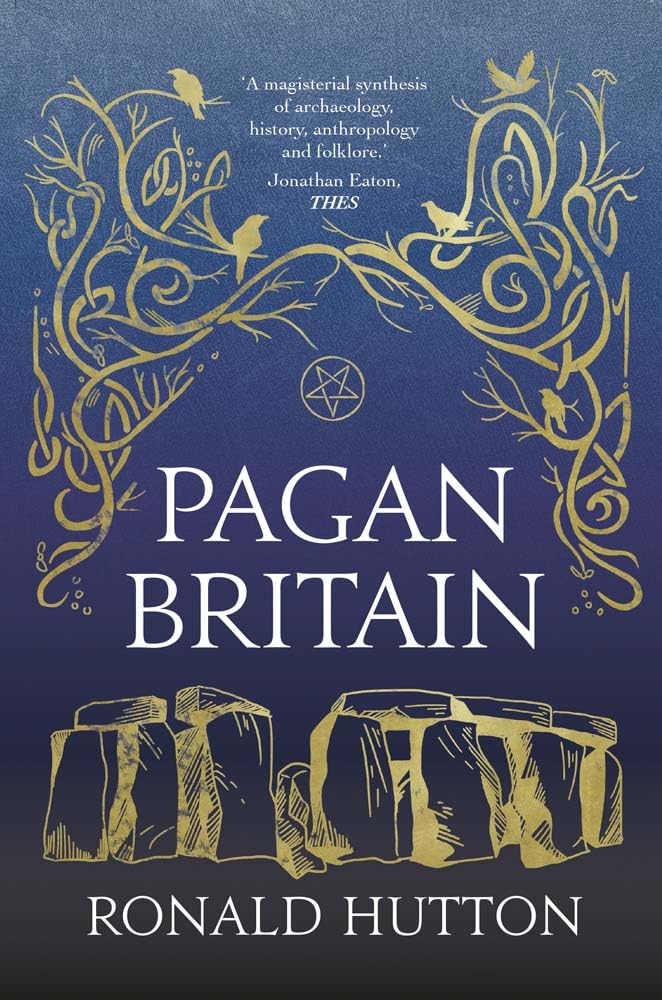
About Pagan Britain by Ronald Hutton: Explore the Lost Beliefs of Ancient Britain
Some books tell you what happened. Pagan Britain by Ronald Hutton asks a harder question: what did people in ancient Britain believe, fear, worship, and hope for before Christianity became the main religion? This wide-ranging history takes readers deep into Britain’s past and looks at the clues left behind in graves, monuments, sacred places, objects, art, and old written records. It moves from the earliest human communities through the Stone Age, Bronze Age, Iron Age, Roman period, and the arrival of Christianity. The result is not a book of easy myths. It is a careful journey through evidence, doubt, and discovery.
Ronald Hutton does not simply repeat popular stories about druids, Stonehenge, or forgotten gods. He shows where the evidence is strong, where scholars disagree, and where modern people may have added ideas that the past cannot prove. That makes the book useful for readers who want history without fantasy being presented as fact. It is also exciting because many questions stay open. You are invited to look at the evidence, think, and decide what may be possible.
For anyone interested in ancient Britain, pagan religion, archaeology, sacred landscapes, folklore, or the long story of human belief, this is a book that can keep you thinking long after the last page.
Step Into a Britain Before Churches and Written History
Imagine standing near Stonehenge before anyone could explain why it was built. Imagine seeing burial mounds, carved stones, strange objects placed in water, or sacred places used again and again by people who left no clear written guide to their beliefs. That is the world this book tries to understand.
The problem is simple: people often want clear answers about ancient religion, but ancient Britain rarely gives them. We may find a monument, a grave, an offering, or an image, but these things do not come with full instructions. A modern reader can easily accept a dramatic theory because it sounds good. Hutton offers a better way. He brings together archaeology, history, old texts, and changing academic ideas so readers can see what is known and what remains uncertain.
This approach makes Pagan Britain valuable. It does not remove the mystery. Instead, it makes the mystery more honest. You begin to see how hard it is to rebuild a lost world from small pieces, and that difficulty becomes part of the story.
A Long Journey Through Britain’s Pagan Past
The book follows a broad timeline, starting with very early human life and moving toward the period when Christianity spread across Britain. Along the way, Hutton explores how ideas about death, sacred space, ritual, nature, gods, ancestors, and supernatural power may have changed across thousands of years.
Readers encounter famous places such as Stonehenge and Avebury, but the book does not stop with famous landmarks. It also looks at lesser-known sites and the wider landscape around them. This helps the reader understand that ancient belief was not always tied to one temple or one named god. Hills, rivers, caves, burial places, coastlines, woods, and man-made monuments could all have carried meaning.
The Roman period brings a different kind of evidence. Inscriptions, temples, statues, and written names give historians more clues than earlier periods can provide. Yet even here, Hutton stays careful. Roman and local traditions mixed in complex ways, and the meaning of a god, symbol, or place could change from one community to another.
The book then considers the coming of Christianity and what happened to older traditions. Instead of treating history as a simple switch from “pagan” to “Christian,” Hutton shows a slower and more complicated change.
Why This Book Feels Different From a Simple History Guide
Many readers come to ancient Britain with strong pictures already in mind: druids in white robes, secret rituals at Stonehenge, powerful mother goddesses, nature worship, or unbroken traditions passed down for thousands of years. Some of these ideas are popular because they are vivid and easy to remember. The trouble is that vivid stories are not always supported by evidence.
Hutton’s strength is his patience. He asks what the evidence can truly show. When scholars disagree, he explains the debate instead of hiding it. This makes the book more demanding than a quick popular history, but it also makes it more rewarding.
You do not need to be an archaeologist to enjoy the central idea. The book teaches a simple habit: do not confuse what we want the past to be with what the evidence can prove. That lesson works far beyond ancient religion. It is useful for anyone who reads history, watches documentaries, or sees strong claims online.
Famous Places Become More Interesting When You Know the Questions
Stonehenge is one of the best-known ancient monuments in the world, but knowing its name is not the same as understanding it. Pagan Britain places such sites inside a much larger story. Why were monuments built? Who used them? Were they linked to burial, healing, ancestors, seasonal gatherings, political power, religion, or several purposes at once?
The book also visits places such as Avebury, Seahenge, Maiden Castle, and Anglesey. Each site opens a different window onto ancient life. Some places are huge and public. Others are quiet and difficult to read. Some contain human remains. Some contain objects placed in ways that appear deliberate. Some became important again centuries after they were first made.
This variety helps the reader avoid one easy mistake: believing there was a single “pagan religion” followed in the same way across all of Britain for thousands of years. Britain changed. People moved. Cultures mixed. New tools, new rulers, new trade links, and new ideas appeared. Belief changed with them.
A Good Choice for Readers Who Like Evidence and Mystery
Pagan Britain works best for curious readers who enjoy asking “How do we know that?” It is especially suitable for people interested in British history, ancient religion, archaeology, mythology, folklore, anthropology, sacred sites, and the history of ideas.
It can also appeal to readers of modern pagan studies because it helps separate modern beliefs from what can be shown about ancient practice. That does not make the subject less meaningful. It gives the subject a clearer historical base.
Students may find the book useful because it brings many periods and debates into one large study. General readers may enjoy the way it turns familiar names and places into open questions. Travelers who have visited Stonehenge, Avebury, old hill forts, burial mounds, or museum collections may also find that the book gives those places more depth.
This is not a light book for a five-minute read. It is a book to explore slowly, mark, return to, and discuss.
What You Gain From Reading It
The biggest benefit is perspective. After reading Pagan Britain, ancient Britain may no longer look like one dark, mysterious age. You begin to see many different societies, each with its own problems, customs, places, and ways of understanding the world.
You also learn how historians and archaeologists work with incomplete evidence. A grave may tell us something about death, but not everything about religion. A sacred-looking object may have had a practical use. A place used for ritual may also have served social or political needs. Hutton keeps showing how careful interpretation must be.
That can make you a sharper reader. You become more aware of the difference between fact, interpretation, and imagination. You may also notice how modern ideas can shape the way people talk about the ancient past.
The book gives another benefit: it makes familiar places feel new. Stonehenge, ancient burials, Roman temples, and old sacred landscapes become part of a changing human story rather than fixed museum pieces.
Made for Long, Comfortable Reading
At Bookish Wonderland, this title is offered for readers who want a strong physical book for serious reading. The pages use premium eye-soothing cream paper, which is gentle on the eyes during long reading sessions. Crystal-clear printing keeps the text sharp and easy to follow. High-quality stitched and glue binding is designed for better longevity, so the book can stay firm through repeated reading, study, note-taking, and shelf storage.
That matters for a book like Pagan Britain because it is the kind of title many readers may return to. You may want to reread a section before visiting a historic site, compare two periods, review a debate, or use the book as a reference beside another history title.
Readers who compare Book price in Bangladesh can also look at the full reading value: detailed historical content, a durable build, comfortable paper, and a title that can remain useful for years instead of being read once and forgotten.
When This Book Fits Your Reading Life
Choose Pagan Britain when you want more than a simple list of ancient gods or a quick story about druids. It is suited to slow weekend reading, history study, research, university reading, personal learning, and thoughtful discussion.
It is a strong pick before a trip to Britain’s prehistoric sites because it helps you understand why experts are careful about what they claim. It also works well for readers building a home library around history, archaeology, religion, mythology, or European culture.
If you enjoy documentaries but often wish they explained the evidence in more detail, this book can give you that deeper layer. If you enjoy mythology but want to know what belongs to ancient evidence and what was created later, it can help there too.
The book is also a useful gift for a serious history reader. It offers a subject that feels both distant and close: distant because the events are thousands of years old, but close because many of the monuments, landscapes, and questions are still with us.
Why Buy Pagan Britain From Bookish Wonderland
Bookish Wonderland is built for readers who want English books that are easy to order and made for regular use. You can order from anywhere in Bangladesh, with delivery available inside and outside Dhaka. Cash on Delivery is available nationwide, and readers in Dhaka can also ask about fast or urgent delivery options.
The value is not only in getting the title. It is in getting a reading copy that feels good in the hand and is made to last. Pagan Britain is a serious, information-rich book, so good paper, clear print, and strong binding make a real difference when you are reading many pages at a time.
It also fits well beside books on ancient history, archaeology, religion, myth, folklore, and British culture. If you are building a collection that helps you understand how people lived and thought before the modern world, this title adds a major piece to that shelf.
Bring Ancient Britain to Your Bookshelf
Open this book and you are not simply reading about old monuments. You are following thousands of years of human attempts to understand life, death, nature, community, power, and the unseen world.
Pagan Britain by Ronald Hutton is for readers who enjoy deep history and do not mind when the best answer is sometimes “we are not fully sure.” That honesty makes the discoveries more interesting, not less. Each chapter gives you more evidence, more context, and more reasons to look again at ideas you may have accepted too quickly.
Order Pagan Britain from Bookish Wonderland and add a thoughtful, research-led history of Britain’s pre-Christian world to your collection. With nationwide delivery, Cash on Delivery, and a durable reading edition, it is ready for study, quiet reading, discussion, or gifting.
If you require any customization or have any questions, please inbox us via FB or Insta.
| Primary Specification | |
| Author | Ronald Hutton |
| Genre | History, Religious History, British History, Archaeology |
| ISBN-13/ISSN | 978-0300268348 |
| ISBN-10 | 0300268343 |
| Publisher | Yale University Press |
| Publishing Date | October 25, 2022 |
| Language | English |
| Reading Age | 18+ years |
| Format | Printed book |
| Physical Specification & Quality | |
| Paper Quality | Premium eye-soothing cream paper |
| Binding Quality | High quality stitched and glue binding (for longevity) |
| Print Quality | Crystal-clear print |
| Pages | 496 pages |
| Country | United Kingdom |
| Logistics Information | |
| Weight | 511 gm |
| Length | 8.5 inches |
| Width | 5.6 inches |
| Height | 1.5 inch |