

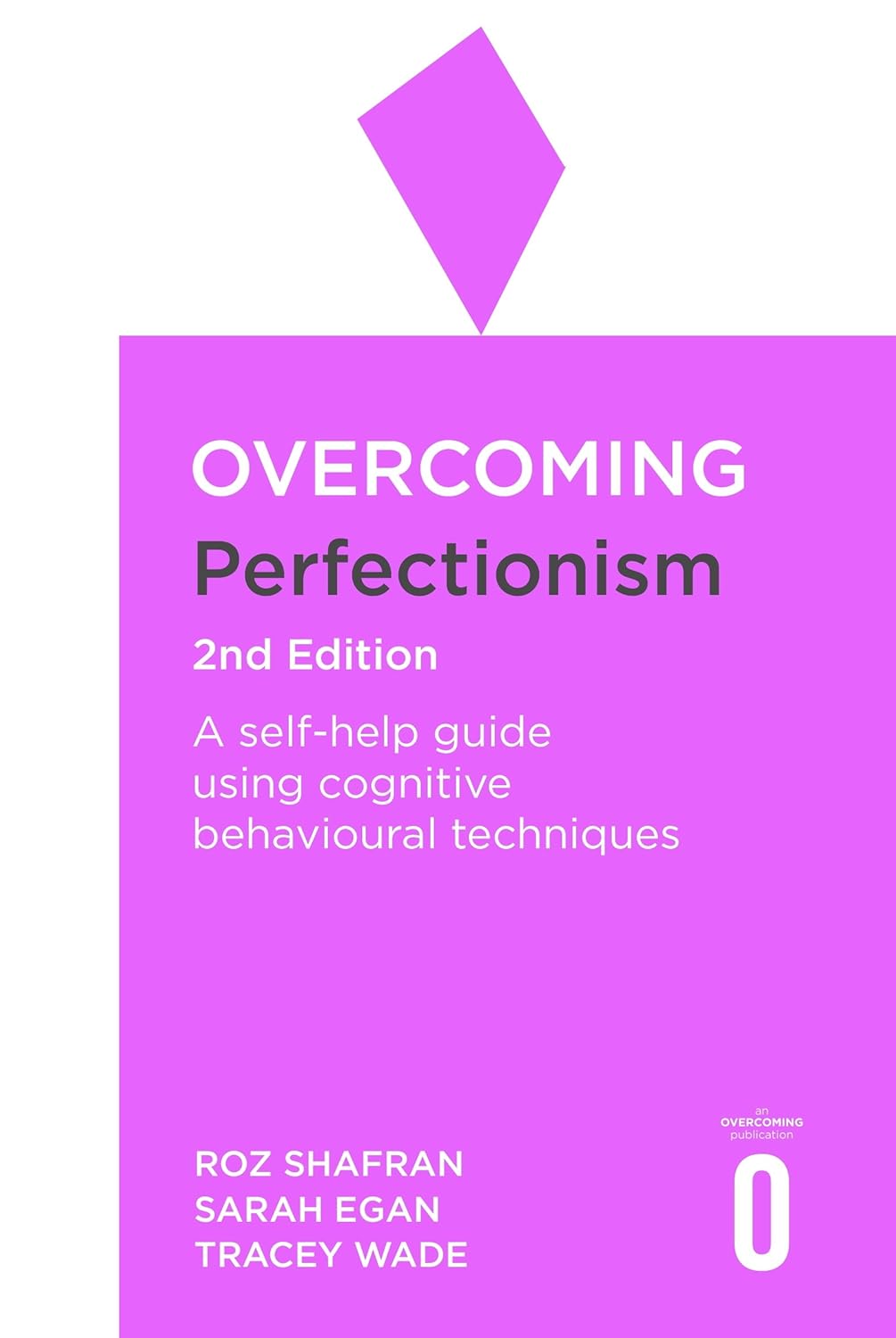
About Overcoming Perfectionism by Roz Shafran, Sarah Egan & Tracey Wade – A Practical CBT Self-Help Guide
Do you work hard, try to do everything right, and still feel that your work is never good enough? Overcoming Perfectionism by Roz Shafran, Sarah Egan & Tracey Wade is made for readers who feel tired from always chasing perfect results. The book explains how perfectionism can look helpful at first but can slowly become a heavy rule that controls study, work, home life, relationships, and self-worth. Instead of telling you to stop caring or stop trying, the authors show a more balanced way to think. You can still have goals, care about quality, and do your best without making every small mistake feel like failure. The guide uses cognitive behavioural therapy, or CBT, in a clear self-help format. It helps you notice the thoughts, habits, rules, and fears that keep perfectionism alive, then gives you practical ways to test new and healthier responses.
When “Doing Your Best” Starts to Feel Like “Never Enough”
Perfectionism is not simply about liking neat work or having high standards. The real problem starts when your value begins to depend on meeting very hard rules. You may finish a task and still only see what went wrong. You may spend too much time checking, fixing, planning, or worrying. You may delay starting because you fear doing the task badly. You may avoid something completely because you think you cannot do it perfectly. You may also feel guilty when you rest, compare yourself with others, or feel upset by small mistakes that most people would accept.
This book helps readers see that cycle. It explains how high standards can become a trap when they are too strict, too important, and too closely tied to self-worth. The book does not ask you to become careless. It shows how to keep useful goals while reducing the fear, pressure, and self-criticism that can come with unhealthy perfectionism. That difference is important. The aim is not “do less because nothing matters.” The aim is “do what matters without letting impossible rules control your life.”
A Step-by-Step Way to Understand Your Own Pattern
One reason this guide is useful is that it does not stay at the level of general advice. It asks you to look at your own pattern. What areas of life bring out the strongest need to be perfect? What rules do you follow? What happens when you think you may fail? What do you do next? Do you check again, work longer, avoid, delay, ask for reassurance, compare, or criticize yourself?
By watching these patterns, you can begin to see what keeps the problem going. The book uses self-monitoring, thought work, practical exercises, and behaviour-based tests to help you learn from real life. This makes the reading active. You are not only learning what perfectionism is. You are learning how it works in you.
That can be useful for students who rewrite the same work again and again, workers who cannot stop checking, creators who never feel ready to share, parents who feel they must do everything right, and anyone who feels that one mistake can cancel many good results.
Learn the Simple Logic of CBT
CBT looks at the link between thoughts, feelings, and actions. In simple words, what you think can change how you feel and what you do. What you do can then make the old thought feel even more true. Perfectionism can grow inside this loop.
For example, a person may think, “If this is not perfect, people will think I am bad at my job.” That thought may create fear. The fear may lead to hours of checking. The person may then think the checking saved them from failure, so they keep checking next time. The rule becomes stronger.
The book helps readers question these kinds of rules. It encourages you to test what actually happens when you change a habit. Can a task still be good if it is not perfect? Can another person still respect you if you make a small error? Can you finish something on time without checking it ten times? Can you rest without losing your value? These are simple questions, but they can change how a perfectionist sees daily life.
Practical Exercises Instead of Empty Motivation
Many self-help books tell readers to “believe in yourself” or “stop overthinking.” That may sound nice, but it is often too vague. Overcoming Perfectionism gives a more practical path. It includes ways to identify the problem, observe your behaviour, work with harsh thinking, try different actions, and prepare for old habits that may return later.
The exercises can help turn ideas into action. You may be asked to notice a prediction, test it, and compare the result with what you expected. You may examine a strict rule and create a more flexible version. You may look at the cost of constant checking or delaying. You may learn to judge your whole life by more than one area of achievement.
The value of this method is that you do not have to accept a new idea just because the book says it is true. You can test it in your own life. Small experiments can give you real proof that another way of working, studying, or living is possible.
Helpful for Procrastination, Overchecking, and Fear of Mistakes
Perfectionism can sometimes look like hard work, but it can also cause delay. If the first step must be perfect, starting can feel dangerous. If the final result must be perfect, finishing can feel even harder. This is why some perfectionists wait until the last moment, avoid difficult tasks, or keep changing work that was already good enough.
The book helps readers understand that procrastination is not always laziness. It can be linked to fear, strict standards, and self-judgment. By changing the rule behind the delay, it may become easier to start and finish.
The same idea applies to checking. Checking once can be useful. Checking again and again because you cannot trust yourself can take time and raise stress. The guide encourages readers to study these habits, understand what they are trying to prevent, and try safer, more balanced actions.
A Better Way to Deal With Self-Criticism
A perfectionist can be very hard on themselves. A small error may lead to thoughts such as, “I am useless,” “I should have known better,” or “Everyone else can do this.” Over time, this harsh voice can make every task feel like a test of worth.
Overcoming Perfectionism helps readers look at how self-evaluation works. Instead of judging the whole self from one result, the book supports a wider and more flexible view. A person can care about work without making work the only measure of value. A student can care about grades without believing one grade defines their future. A parent can make a mistake without becoming a bad parent. A creator can share work that is strong without waiting forever for it to feel flawless.
This change can make achievement feel more human. You can still improve. You can still learn. But mistakes become information, not proof that you are a failure.
Who May Find This Book Useful?
This guide may be useful for people who set very high standards and feel strong pressure when they cannot meet them. It may also help readers who often delay tasks, overprepare, overcheck, compare themselves with others, struggle to rest, or feel that success never feels good for long.
Students may use it to work on study pressure and fear of low marks. Professionals may use it to reduce endless checking and worry about performance. Writers, designers, artists, and business owners may find value in learning when work is ready to release instead of waiting for a perfect version that may never come. People who are very self-critical may also find the exercises useful because the book looks at the way personal value can become tied to achievement.
This is a self-help guide, not a promise of a quick cure. Readers dealing with severe distress or a mental health condition may also need support from a qualified professional. The book can still be a useful tool for learning, reflection, and structured practice.
A Premium Reading Copy From Bookish Wonderland
At Bookish Wonderland, this title is prepared for readers who want a comfortable physical reading experience. The book uses premium eye-soothing cream paper, which is easier on the eyes during longer reading sessions. The text is printed with crystal-clear print so the pages stay clean and easy to read. High-quality stitched and glue binding is used for better longevity, helping the book stay strong through repeated use.
These details matter for a self-help book because you may return to the same pages, underline ideas, add notes, or revisit exercises over time. A durable copy is more useful when the book becomes something you work with, not something you read once and forget.
Bookish Wonderland also offers a large collection of premium and durable English books, with delivery inside and outside Dhaka, nationwide delivery across Bangladesh, Cash on Delivery, and fast or urgent delivery options in Dhaka.
Why Buy This Book From Bookish Wonderland?
Buying a useful self-help book is not only about getting the title. It is also about getting a copy that feels good to read and lasts. Bookish Wonderland focuses on clear printing, comfortable paper, strong binding, and easy ordering. That makes this edition suitable for personal reading, study, gifting, or keeping in a long-term self-development collection.
If you are searching for Overcoming Perfectionism by Roz Shafran, Sarah Egan & Tracey Wade book price in Bangladesh, Bookish Wonderland gives you a simple way to order while also getting nationwide delivery and Cash on Delivery support.
For Dhaka readers who need the book quickly, a fast or urgent delivery option may be available. Readers outside Dhaka can also order through nationwide delivery. This makes the book easier to access whether you live in the capital or another part of the country.
What You Can Take Away From the Book
By the end of the guide, the main aim is not to make you stop caring about quality. It is to help you care in a healthier way. You can learn to notice perfectionist rules, understand what keeps them strong, test new behaviour, reduce unhelpful checking, work with procrastination, respond to mistakes with more balance, and protect yourself from falling back into the same old pattern.
The biggest idea is simple: your value is bigger than one result. A mistake does not erase your effort. A task does not need to be perfect to be useful. A goal can be important without becoming the only thing that matters.
That message can be powerful for anyone who has spent too long feeling that “good” is never good enough.
Make Progress Without Waiting to Be Perfect
If you want a practical book that helps you understand why perfectionism feels so hard to control, Overcoming Perfectionism by Roz Shafran, Sarah Egan & Tracey Wade is a strong place to start. It gives you a clear way to look at your thoughts, habits, fears, and rules, then invites you to test a more flexible way of living.
You do not need to become careless. You do not need to stop aiming high. You only need to learn when a high standard is helping you and when it is taking too much from you.
Keep it beside your desk or study space, return to the exercises when pressure rises, and use the ideas whenever perfect starts blocking real progress again.
Order your copy from Bookish Wonderland and start working toward progress that feels useful, balanced, and possible.
If you require any customization or have any questions, please inbox us via FB or Insta.
| Primary Specification | |
| Author | Roz Shafran, Sarah Egan, Tracey Wade |
| Narrator | Amy Lyddon, Steph Bower |
| Genre | Self-Help, Psychology, Cognitive Behavioural Therapy (CBT), Mental Health |
| ISBN-13/ISSN | 978-1472140562 |
| ISBN-10 | 1472140567 |
| Publisher | Robinson |
| Publishing Date | April 30, 2019 |
| Language | English |
| Reading Age | 18+ years |
| Format | Printed book |
| Physical Specification & Quality | |
| Paper Quality | Premium eye-soothing cream paper |
| Binding Quality | High quality stitched and glue binding (for longevity) |
| Print Quality | Crystal-clear print |
| Pages | 448 pages |
| Country | United Kingdom |
| Logistics Information | |
| Weight | 471 gm |
| Length | 5.6 inches |
| Width | 8.5 inches |
| Height | 1.13 inch |