

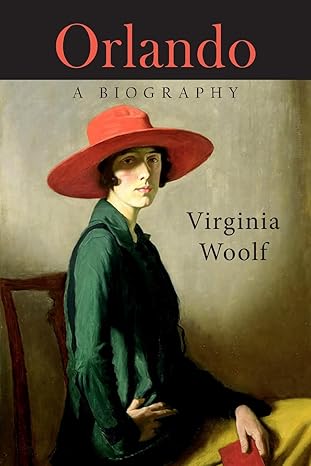
About Orlando by Virginia Woolf – A Classic Novel About Identity, Gender, Time, Writing, and Change
Orlando by Virginia Woolf follows a young English nobleman whose life stretches across several centuries.
At the beginning, Orlando is a teenage nobleman who wants to become a writer. He is admired at court, falls in love with a Russian princess named Sasha, and later experiences disappointment when she leaves. Years pass, but Orlando ages very slowly.
During a diplomatic post in Constantinople, Orlando falls into a long sleep and wakes as a woman. The change does not end the story or erase Orlando’s earlier identity. Instead, Woolf uses it to examine how gender changes the way society treats a person.
Orlando later returns to England, continues writing, forms new relationships, and lives through different literary and social periods until the year 1928.
Orlando Begins in Elizabethan England
The novel opens during the reign of Queen Elizabeth I.
Orlando is young, wealthy, and connected to the English aristocracy. He spends time at court, writes poetry, and imagines a future shaped by literature and adventure.
Queen Elizabeth notices him and gives him a place close to the royal household.
Woolf uses the historical setting loosely rather than building a strict historical novel.
Time moves quickly, famous figures appear, and the narrator often jokes about biography, history, and the way writers try to explain a life.
This playful approach is important because Orlando is written as a mock biography rather than a normal realistic life story.
Sasha Changes Orlando’s Early Life
During the Great Frost, Orlando meets Sasha, a Russian princess.
He becomes deeply attracted to her and imagines leaving England with her.
Their relationship is intense but unstable. Orlando idealizes Sasha and places many hopes on the relationship.
Sasha eventually leaves, and Orlando is left hurt and disappointed.
The relationship matters because it is one of the first times Orlando sees how unreliable desire, memory, and personal expectations can be.
Woolf also uses Sasha to show Orlando’s tendency to turn people into images inside his own mind.
Orlando Wants to Be a Writer
Writing remains one of the most consistent parts of Orlando’s identity.
Across centuries, changes in gender, travel, fashion, and relationships, Orlando continues working on a poem called The Oak Tree.
The poem becomes a connection between different stages of life.
Woolf uses Orlando’s writing to comment on literature, literary reputation, criticism, and the changing tastes of different periods.
The novel moves through several centuries of English literary culture, allowing Orlando to meet or observe writers from different eras.
These scenes often contain humor because Woolf treats famous literary traditions with both respect and irony.
Constantinople Marks a Major Turning Point
Orlando later becomes an ambassador in Constantinople.
The setting takes the story away from England and gives Orlando a new public role.
After a period of political unrest, Orlando falls into a deep sleep that lasts for several days.
When Orlando wakes, the body has changed from male to female.
The narrator presents this transformation directly and does not treat it as a medical puzzle that needs explanation.
Orlando remains Orlando.
Memory, personality, and the long personal history continue across the change.
This is one of the central ideas of the book and one reason Orlando remains widely discussed in studies of gender and identity.
Life as a Woman Changes Orlando’s Social Experience
After becoming a woman, Orlando begins to notice how strongly gender affects everyday life.
Clothes, laws, property, travel, relationships, and social expectations all start to feel different.
Woolf uses these changes to examine how much of gender is connected to social rules rather than only to the body.
Orlando remembers life as a man and can compare the freedoms and restrictions attached to both positions.
This gives the novel a flexible view of identity.
Orlando does not become a completely new person after the transformation. The change instead reveals how differently society can respond to the same individual.
Gender Remains Flexible Throughout the Novel
Orlando is often discussed as an important novel about gender fluidity.
After the central transformation, Orlando continues to move between qualities that other people label masculine or feminine.
Clothing becomes especially important.
Different outfits can change how strangers respond to Orlando and how Orlando behaves in public.
Woolf does not reduce identity to one fixed category.
The novel suggests that personality contains many parts and that gender can be influenced by clothing, law, social expectation, desire, and situation.
This is one reason modern readers continue to return to the book.
Its treatment of gender was unusual in 1928 and still creates discussion in literature, gender studies, and queer studies today.
The Novel Moves Across Centuries
Orlando lives for more than three hundred years while aging very little.
The story begins in the sixteenth century and ends in 1928, the year the novel was published.
This unusual timeline allows Woolf to move quickly through English history.
Fashion changes. Literature changes. Social rules change. Ideas about marriage, property, gender, and respectability change.
Orlando remains the central figure while the world around them keeps becoming different.
The long life also allows Woolf to joke about the way biographies try to turn a complicated person into a clean timeline.
Orlando’s life refuses to fit ordinary biography because centuries can pass while the character remains recognizably the same person.
The Narrator Makes Fun of Biography
The full title is Orlando: A Biography.
Woolf deliberately copies the style of traditional biography and then breaks its rules.
The narrator talks directly to the reader, complains about missing evidence, makes confident claims, and sometimes admits that parts of Orlando’s life cannot be fully explained.
This gives the book much of its humor.
Instead of pretending that a biographer can know everything about another person, Woolf shows how incomplete any life story can be.
Documents, memories, public records, and private feelings do not always match.
For students, this makes Orlando useful for studying narrative voice, metafiction, biography, and literary satire.
Vita Sackville-West Inspired the Book
Orlando was closely inspired by Vita Sackville-West, the writer and aristocrat who was an important person in Virginia Woolf’s life.
Woolf and Sackville-West had a close personal and romantic relationship.
Penguin describes Orlando as written for Sackville-West, and the book draws on parts of her family history, personality, writing career, and relationship with inherited property.
The novel also originally included photographs connected with Sackville-West and people around her.
Knowing this background can help readers understand why the book feels both playful and personal.
It works as fiction, satire, literary experiment, and a highly imaginative portrait of someone Woolf knew well.
Property and Inheritance Matter to Orlando
As Orlando moves through different periods, property becomes another way Woolf examines gender.
A male aristocrat and a female aristocrat do not always have the same legal rights.
After Orlando becomes a woman, questions appear around estates, titles, marriage, and ownership.
These details connect personal identity to law.
The novel shows that gender affects more than clothing or romance. It can influence what a person is allowed to own and how society recognizes their position.
This theme also connects with Vita Sackville-West, who could not inherit the family estate Knole because she was a woman.
Shelmerdine Becomes Orlando’s Partner
Later in the novel, Orlando meets Marmaduke Bonthrop Shelmerdine, usually called Shel.
Their relationship is built around mutual attraction and a shared sense that gender does not fit simple rules.
Each sees qualities in the other that challenge ordinary expectations about men and women.
Their relationship gives the later part of the book another way to explore identity and marriage.
Woolf keeps the tone light and unusual rather than turning the relationship into a conventional romantic ending.
The Oak Tree Connects Orlando’s Different Lives
Orlando works on The Oak Tree for centuries.
The poem changes as Orlando changes.
It survives disappointment, travel, literary criticism, gender transformation, relationships, and the movement from one historical period to another.
By the end of the novel, the poem is finally published.
This gives the writing project a strong place in the structure of the book.
It represents artistic persistence and the difficulty of creating something while literary fashion keeps changing.
1928 Brings the Story to Woolf’s Present
The novel ends on October 11, 1928.
By this point Orlando has lived through centuries of English life but has reached the same historical moment as Woolf and the book’s first readers.
Cars, modern shops, publishing, and twentieth-century life replace the older court and aristocratic worlds of the opening chapters.
The ending makes the long timeline feel immediate.
Orlando carries all earlier versions of the self into the present.
That idea fits the novel’s larger interest in memory and identity.
A person changes over time but still contains parts of earlier experience.
Who Will Enjoy Orlando?
Orlando is a good choice for readers interested in classic literature, modernism, gender, queer fiction, literary satire, historical fiction, and experimental novels.
It can also suit readers who want to try Virginia Woolf but prefer a more playful story than some of her other major novels.
Penguin describes Orlando as one of Woolf’s most popular and accessible works.
The book still uses literary references, long sentences, historical jokes, and unusual narration, so some readers may benefit from an edition with notes.
Students can use the novel for discussions of gender, biography, modernism, history, sexuality, authorship, property, and narrative voice.
Publication and Edition Details
Orlando was first published in 1928 by the Hogarth Press.
Modern editions vary widely in page count because introductions, notes, photographs, and other material differ.
A 2024 Vintage Classics paperback published by Penguin Random House is listed at 208 pages.
A 2024 Penguin Classics edition with a foreword by Andrea Lawlor, introduction and notes by Sandra M. Gilbert, and editing by Brenda Lyons is listed at 336 pages.
Book Quality at Bookish Wonderland
Bookish Wonderland offers this title with premium eye-soothing cream paper, crystal-clear printing, and high-quality stitched plus glue binding.
The cream paper provides a softer page tone for longer reading sessions. Clear printing helps with Woolf’s longer sentences, dialogue, and literary details. The stronger binding supports repeated study, rereading, and shelf storage.
The copy is suitable for personal reading, gifting, literature study, or adding to a classic fiction collection.
Why Order from Bookish Wonderland?
Bookish Wonderland delivers books across Bangladesh, including inside and outside Dhaka. Cash on Delivery is available nationwide.
Customers in Dhaka can also ask about fast or urgent delivery when available.
If you are checking Orlando by Virginia Woolf Book price in Bangladesh, it is useful to compare the physical quality of the copy along with the listed price.
Book customization is also available. For stock, customization, or delivery questions, you can contact Bookish Wonderland through Facebook or Instagram.
A Good Choice for Readers of Modern Classics
Orlando by Virginia Woolf gives readers a playful and unusual story that moves across centuries while following one central character.
The novel covers writing, gender, love, property, history, fashion, memory, and the way society changes around a person.
Orlando’s transformation and long life allow Woolf to compare different periods without using a normal historical structure.
The book works especially well for readers interested in modernist fiction, gender studies, queer literature, literary satire, and Virginia Woolf’s experiments with narrative form.
Order your copy from Bookish Wonderland for nationwide delivery, Cash on Delivery, premium cream paper, clear printing, and strong stitched plus glue binding.
If you require any customization or have any questions, please inbox us via FB or Insta
| Primary Specification | |
| Author | Virginia Woolf |
| Narrator | Clare Higgins |
| Genre | Modernist fiction, literary fiction, historical fantasy, satire |
| ISBN-13/ISSN | 978-0007558087 |
| ISBN-10 | 0007558082 |
| Publisher | William Collins |
| Publishing Date | December 16, 2025 |
| Language | English |
| Reading Age | 16+ |
| Format | Printed Book |
| Physical Specification & Quality | |
| Paper Quality | High quality stitched and glue binding (for longevity) |
| Binding Quality | High quality stitched and glue binding (for longevity) |
| Print Quality | Crystal-clear print |
| Pages | 272 pages |
| Country | UK |
| Logistics Information | |
| Weight | 295 gm |
| Length | 8.5 inches |
| Width | 5.6 inches |
| Height | 0.67 inch |