

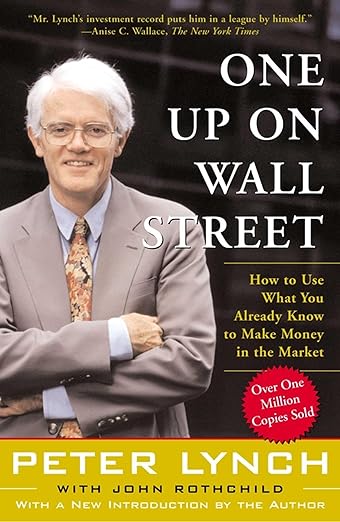
About One Up On Wall Street by Peter Lynch and John Rothchild: A Simple Guide to Finding and Understanding Stocks
You may know more about good businesses than you think. You see busy shops, use helpful apps, eat at popular places, and notice which products people buy again. But can these small things help you learn about the stock market? One Up On Wall Street by Peter Lynch and John Rothchild shows how everyday life can be a starting point for finding companies worth studying. It does not ask you to become a market expert overnight. Instead, it teaches you to notice a business, ask clear questions, and look at the facts before you risk your money.
Find a Clear Way Into the Stock Market
Many people want to learn about shares but feel lost when they see charts, numbers, and confident advice online. This book offers a different path: start with a company you can understand, and learn what makes that company work. Lynch explains his approach in plain language, with examples drawn from ordinary life. His goal is to show readers how to think about a business rather than follow every loud opinion. You do not need to know every market term before opening the first chapter.
What Is This Book Really About?
This is a nonfiction guide to stock investing, not a story about a quick way to get rich. Peter Lynch shares ideas from his work as a professional fund manager, while John Rothchild helps bring those ideas to readers. The main lesson is that a person outside Wall Street may spot an interesting business while shopping, working, or going about daily life. That first clue is useful, but it is only the beginning. The book moves from noticing companies to checking their finances, understanding their growth, and thinking about how long to hold an investment. The publisher describes the book as a guide to using familiar knowledge alongside careful research.
Stop Guessing and Start Asking Better Questions
A rising share price can look exciting. A falling price can feel scary. Neither one tells you everything about the company behind it. Lynch encourages readers to look past the daily noise and ask what the business sells, who buys it, how it earns money, and whether its finances are sound. These questions make investing less like chasing a rumor and more like learning about a real shop or factory. The book cannot remove risk or tell you which share will rise tomorrow. It can help you build a habit of checking facts before making a choice. That habit is valuable even if you decide not to buy any stock at all.
Look for Clues in Places You Already Know
Imagine that you notice a small shop is always busy. Its customers come back, and the company opens more branches. You might wonder whether the business is growing. Lynch asks readers to notice things like this, because people sometimes see changes in daily life before those changes become big market stories. A worker may understand an industry. A parent may notice a new product. A customer may spot a service that keeps getting better. Your own experience may help you find questions worth exploring. The important word is 'may.' A busy shop is not proof of a good investment. You still need to learn who owns it, what it earns, and what its shares cost.
A Good Product Is Not Always a Good Stock
This is one of the book's most useful warnings. You can love a restaurant and still lose money if you buy its shares at the wrong price. You can see a popular product without knowing that the company has large debts or weak profits. In the introduction to the updated edition, Lynch makes clear that liking a store or product should put a company on your research list, not send you straight to the buy button. He asks readers to study earnings, financial health, competitors, and plans for growth first. That makes the book more thoughtful than a simple message to 'buy what you know.' It shows how to turn a good clue into careful homework.
Learn Why Different Companies Need Different Checks
Not every business grows in the same way. Lynch groups stocks into six broad kinds: slow growers, steady large companies called stalwarts, fast growers, businesses whose results rise and fall with the economy called cyclicals, struggling firms trying to recover called turnarounds, and asset plays that may own things the market has missed. The groups give you a way to ask better questions. A young, growing company may need room to expand. A turnaround needs a real plan to survive. A cyclical business may look strong when its industry is doing well, even if harder days are ahead. The book helps you see why one simple rule cannot fit every company.
Understand the numbers Without Getting Lost
Numbers matter, but they become easier when you know what each one is trying to tell you. Lynch discusses earnings, which are the money a company keeps after its costs, and the price-to-earnings ratio, often called P/E, which compares a share's price with earnings per share. He also guides readers toward company reports and other facts that can support or weaken an investment idea. You do not have to remember every figure at once. Start by learning what a business earns and whether that can grow. Then ask if the price already expects too much good news. The aim is not to make every calculation feel simple. It is to help you understand why a number matters.
Discover What a Tenbagger Means
You may come across the word 'tenbagger' while reading about Peter Lynch. It means a stock that grows to ten times the price paid for it. Lynch uses the idea to explain why a few strong long-term investments can matter a great deal to a portfolio. The word sounds exciting, but it is not a promise that any company will grow tenfold. Finding such a result is difficult, and stocks can also lose value. The real lesson is to study the business behind a share and understand what would need to happen for its earnings to grow. You can enjoy the idea of spotting a promising company without treating investing as a game of easy wins.
Find Out What Could Go Wrong
Good investing books should help readers notice danger as well as opportunity. A company may borrow too much money. It may face stronger rivals. Its product may stop selling, or its growth may slow after its market becomes crowded. Lynch also warns that a fine business can still be a poor purchase if its shares cost far too much. His examples show why you need to ask what might make your idea fail. It is fine to feel excited about a company, but excitement cannot take the place of research. This lesson is useful for readers who have seen bold online claims and want a calmer way to decide what information deserves attention.
Why Peter Lynch's Experience Matters
Peter Lynch managed Fidelity's Magellan Fund from 1977 to 1990. In this book, he uses lessons from years spent studying businesses and making investment decisions. John Rothchild worked with him on the writing, helping turn professional experience into a book for everyday readers. You will meet stories about companies and choices, including some opportunities Lynch missed. That matters because learning is not just about hearing success stories. Seeing an experienced investor discuss missed chances can remind readers that nobody notices every good business or makes every call correctly. You can learn from his method without believing that his past results promise future results for anyone else.
Who Will Enjoy This Investing Guide?
This book can suit adults who are new to shares and want a clear view of how stock picking works. It may also interest business students, people who like learning how companies grow, and readers who already invest but want to examine their habits. If you run a small business, you may enjoy the way Lynch looks at customers, competition, and growth. If you are buying a gift for someone curious about money, it offers plenty to discuss. It is not a course on today's Bangladesh market, a list of current stocks to buy, or a promise of personal wealth. Think of it as a guide to research and long-term thinking.
Is the Book Still Worth Reading Today?
The original book came out in 1989. Simon & Schuster also lists a millennium edition published in 2000, with an introduction in which Lynch looks back at changes in the market, including the growth of internet companies. Those examples belong to their own time. Company names, prices, market rules, and technology have changed, so do not treat an old example as a present-day stock tip. The broader questions remain useful reading tools: What does the company do? Can it earn money? What might stop it growing? What price are buyers being asked to pay? Read it for an approach to studying businesses, and use current information for any real financial choice.
Comfortable Pages for Longer Reading Sessions
Bookish Wonderland offers this book with premium eye-soothing cream paper, crystal-clear printing, and high-quality stitched plus glue binding. The softer page colour is made for a comfortable look, and sharp text makes the words easy to follow. The binding is designed to support repeated reading and help the pages stay together with normal care. These are the features of the edition offered by Bookish Wonderland; another publisher's edition may have different materials. If you want to check the exact format or ask about customization before placing an order, contact the store. A useful reference book is one you can open again when you need it.
Ordering From Dhaka or Anywhere Else in the Country
Looking for One Up On Wall Street by Peter Lynch and John Rothchild online? Bookish Wonderland offers nationwide delivery across Bangladesh, including addresses inside and outside Dhaka. Cash on Delivery is available nationwide, so you can choose that payment option when ordering. Readers in Dhaka can also ask about the fast or urgent delivery option. Confirm the available service for your address if you need the book by a certain day. You can ask questions about stock, edition details, or book customization through Facebook or Instagram before you order. The aim is to help you choose a copy and a delivery option that suit your needs.
Check the Price Before You Place Your Order
To check the Book price in Bangladesh, see the product listing at Bookish Wonderland instead of trusting an old price shared elsewhere. Prices can change with the edition, stock, and store offers. The price shown at checkout is the one to review before paying. This page does not claim a discount or give a figure that has not been confirmed. If you are comparing copies, ask about the physical edition so you know what you will receive. A little care when buying your book fits well with the message inside it: look at the facts, understand what you are getting, and make an informed choice.
Get a Smarter Reading Habit in Your Bookshelf
If the stock market feels like a place where only experts know what to do, this book offers another way to begin. It teaches you to notice businesses, turn interest into research, and ask what the numbers say. It also reminds you that risk does not disappear because a company looks popular or an investor has a strong record. Buy the book for the ideas, the questions, and the chance to build your own understanding. Order your copy from Bookish Wonderland, choose nationwide delivery or Cash on Delivery if you prefer, and contact the store on Facebook or Instagram if you need help. Start with one chapter and one company you understand. Let careful learning lead the way.
Series and bestseller information: The publisher does not identify this title as part of a numbered series. No specific bestseller rankings were supplied, so no series list or rankings have been invented.
If you require any customization or have any questions, please inbox us via FB or Insta.
| Primary Specification | |
| Author | Peter Lynch, John Rothchild |
| Editor | Elina Nudelman |
| Genre | Business, Finance, Investing, Personal Finance |
| ISBN-13/ISSN | 978-0743200400 |
| ISBN-10 | 0743200403 |
| Publisher | Simon & Schuster |
| Publishing Date | April 3, 2000 |
| Edition | 2nd |
| Language | English |
| Reading Age | 18+ |
| Format | Printed Book |
| Physical Specification & Quality | |
| Paper Quality | Premium eye-soothing cream paper |
| Binding Quality | High quality stitched and glue binding (for longevity) |
| Print Quality | Crystal-clear print |
| Pages | 304 pages |
| Country | USA |
| Logistics Information | |
| Weight | 356 gm |
| Length | 8.5 inches |
| Width | 5.6 inches |
| Height | 0.9 inch |