

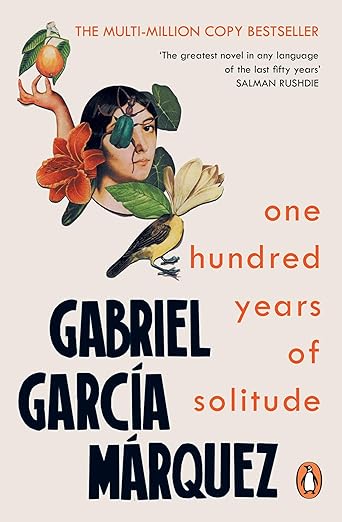
About One Hundred Years of Solitude by Gabriel Garcia Marquez — Enter Macondo and Follow a Family Through Love, War, Memory, and Magic
Some families carry stories for a few years. The Buendía family carries them for generations. One Hundred Years of Solitude by Gabriel Garcia Marquez takes readers to Macondo, a town founded by José Arcadio Buendía and Úrsula Iguarán, and follows their family as children, grandchildren, and later generations repeat old dreams, mistakes, loves, fears, and hopes. The novel moves through private family life and large public events, but it never feels like a normal history book. Ghosts can return, impossible things can happen, and extraordinary events may be described as calmly as breakfast. That blend of the everyday and the unbelievable is one reason the novel is so closely linked with magical realism.
Begin in Macondo, a Town That Feels Both Real and Impossible
Macondo begins as an isolated settlement surrounded by a world that still feels new to its founders. José Arcadio Buendía is curious, restless, and fascinated by discoveries brought by visiting gypsies. From these two people grows a large family whose history becomes closely tied to the history of Macondo itself. As the town changes, new technologies arrive, outsiders enter, businesses grow, political conflicts reach the community, and old ways of life begin to disappear. Yet Macondo never becomes an ordinary place. Strange weather, ghosts, unusual beauty, impossible events, and moments that seem almost like dreams exist beside births, marriages, money problems, family arguments, and work. The result is a setting that feels alive enough to become a character of its own.
Follow the Buendía Family Across Seven Generations
One reason readers sometimes find the novel challenging is also one of the reasons it becomes so memorable: the Buendía family grows large, and several characters share the names José Arcadio and Aureliano. Those repeated names are not simply there to confuse the reader. They help show how personality, desire, loneliness, and family patterns can appear again in later generations. Some characters become adventurous and impulsive. Others are quiet, thoughtful, obsessive, or drawn toward solitude. As the years pass, love affairs, marriages, births, deaths, separations, and reunions connect one generation to the next. You do not need to memorize every person immediately. The bigger pleasure comes from noticing how the same names return with different lives and how the family seems to move forward while still circling around old problems.
Magical Realism Makes the Impossible Feel Natural
In many novels, a ghost would stop everything. In One Hundred Years of Solitude, extraordinary events often enter the story without changing the calm tone of the narration. A character may rise into the sky, a dead person may return, or unusual natural events may transform daily life, yet the story continues as if wonder and reality have always belonged together. This is one of the clearest examples of magical realism, a style strongly associated with García Márquez. The magic is not used only to create fantasy. It can make emotion, memory, history, grief, and belief feel visible. Something impossible may express a truth about how a person or community experiences the world. Instead, it asks you to accept Macondo on its own terms and let the impossible sit beside the ordinary.
Love, Desire, and Loneliness Keep Returning in New Forms
Despite its large scale, the novel is deeply interested in private feelings. Members of the Buendía family fall in love, desire people they should not, become jealous, lose partners, wait for affection, and sometimes choose isolation even when other people are near. One character may be physically alone, while another can be surrounded by family and still feel unreachable. The novel does not offer a simple lesson saying that love always fixes loneliness. Some relationships bring comfort, while others create pain or repeat harmful patterns. This makes the family feel complicated rather than ideal. Readers can watch how people inherit more than names or property; they can also inherit habits, stories, expectations, and ways of hiding from the people closest to them.
War and Politics Enter the Family Story Without Taking It Over
As Macondo grows, political conflict reaches the town and changes the lives of the Buendías. Colonel Aureliano Buendía becomes deeply involved in civil wars, moving from private family life into military and political struggle. Through his story and the changes around Macondo, the novel explores war, power, violence, idealism, disappointment, and the distance between political promises and what ordinary people experience. García Márquez drew on Colombian history and the broader history of Latin America, but the novel is still fiction rather than a textbook. Readers do not need detailed knowledge of Colombian politics before beginning. The book shows that history is not something happening far away from families. Political decisions, wars, companies, and social changes eventually reach kitchens, bedrooms, streets, and friendships.
Memory Is One of the Novel's Greatest Mysteries
The people of Macondo remember, forget, retell, and sometimes misunderstand their own past. At one point, a strange plague threatens memory itself, turning forgetting into something almost physical. Elsewhere, events that should never be forgotten become easier for later people to deny or ignore. This creates one of the novel's most powerful ideas: a community can lose its past not only because time passes, but because people stop naming what happened. Family memory works in a similar way. Stories are repeated, secrets remain hidden, and younger generations live inside consequences they do not always understand. This makes One Hundred Years of Solitude especially rewarding to reread. That matters. Details that seem small early in the story can gain new meaning later. The novel asks readers to pay attention to who remembers, who forgets, and who controls the story of the past.
Do Not Worry If the Repeated Names Feel Confusing at First
Many first-time readers hear that One Hundred Years of Solitude is difficult because so many characters have similar names. That concern is understandable, but it should not stop you from reading. José Arcadios and Aurelianos appear again and again because repetition is built into the design of the story. Instead of treating every name like information for an exam, focus on the generation you are currently reading and the person's main relationships. Use the family tree if your edition provides one, place a small note beside important names, or simply read a little more slowly than you would read a fast thriller. After some time, the pattern starts to make more sense. The repeated names also help create the feeling that the family is trapped inside cycles it cannot easily escape. What first looks like a reading problem gradually becomes part of the novel's central idea about history repeating itself.
A Rich Choice for Readers Who Want More Than a Simple Plot
This book is a strong choice for readers who enjoy literary fiction, family sagas, magical realism, historical themes, complicated characters, and stories that reward patient reading. It can also work well for university students, literature learners, book clubs, and readers who want to explore major Latin American fiction. However, it is not written like a simple adventure with one hero and one clear goal from beginning to end. The focus moves between many characters and across many years. There are mature themes, including violence, war, death, sexuality, infidelity, incestuous relationships, and difficult family experiences, so it is better suited to mature teenage and adult readers than young children. If you enjoy novels where atmosphere, symbolism, family history, and big ideas matter as much as plot twists, this can become a deeply memorable read. Give yourself time to enter Macondo rather than rushing through it.
A Premium Copy Made for Long, Immersive Reading
Bookish Wonderland offers One Hundred Years of Solitude with premium eye-soothing cream paper, crystal-clear printing, and high-quality stitched and glue binding designed for regular reading and long-term shelf use. A novel with many generations, repeated names, and detailed scenes is easier to enjoy when the page feels comfortable and the text remains sharp. The cream-toned paper gives the eyes a softer background during longer reading sessions, while clear printing helps names and paragraphs stay easy to follow. Strong binding is useful for a book that readers may return to, especially when checking an earlier chapter, family connection, or memorable scene. These physical qualities describe the Bookish Wonderland copy rather than every edition available from other sellers. English editions can also differ in cover, pagination, and design, so contact the store if you need to confirm the exact version currently available before ordering.
Check the Book Price in Bangladesh Before Ordering
When comparing the Book price in Bangladesh for One Hundred Years of Solitude by Gabriel Garcia Marquez, check the current amount shown on the Bookish Wonderland product page. A fixed price is not included here because stock, printing format, cover design, and store offers can change. If you are buying the novel for a literature course, a book club, a personal classic collection, or a gift, it is also worth confirming the available edition before checkout. Some English editions use Gregory Rabassa's well-known translation, while page counts and cover designs can vary by publisher. If the exact edition matters to you, message Bookish Wonderland before ordering. You can also ask about stock or book customization so you know what copy is available and whether your requested option can be provided.
Order This Modern Classic from Anywhere in Bangladesh
Bookish Wonderland provides nationwide delivery across Bangladesh, including addresses inside and outside Dhaka. Cash on Delivery is available across the country, giving readers a simple payment option when ordering online. If you live in Dhaka and need the book sooner for a class, reading challenge, gift, or book-club meeting, ask about the fast or urgent delivery option and confirm whether it is available for your location. Ordering online can save you from searching through several physical shops for a particular English classic. Before placing a time-sensitive order, check current stock and delivery information with the store. Bookish Wonderland also carries a large collection of premium and durable English books, making it easier to continue exploring literary fiction after you finish this novel.
Enter Macondo and Let the Buendía Family Stay With You
One Hundred Years of Solitude by Gabriel Garcia Marquez is not memorable because it gives readers a simple world. It is memorable because Macondo feels full of life, contradiction, beauty, grief, humor, violence, longing, wonder, and mistakes that refuse to disappear. Across seven generations, the Buendía family builds, loves, fights, remembers, forgets, and repeats patterns that seem to pull the past into the present. The magical events make the world feel larger, while the family's private emotions keep the story human. If you want a novel that can entertain you while also giving you ideas to think about long after the final page, this is a powerful addition to your shelf. Check the latest price and availability at Bookish Wonderland, choose the delivery option for your address, and contact the store through Facebook or Instagram if you need edition details or customization.
If you require any customization or have any questions, please inbox us via FB or Insta.
| Primary Specification | |
| Author | Gabriel Garcia Marquez |
| Translator | Gregory Rabassa |
| Editor | Elliott Beard |
| Genre | Magical Realism, Literary Fiction, Family Saga, Historical Fiction. |
| ISBN-13/ISSN | 978-0060883287 |
| ISBN-10 | 0060883287 |
| Publisher | Harper Perennial Modern Classics |
| Publishing Date | February 21, 2006 |
| Language | English |
| Reading Age | 15+ |
| Format | Printed Book |
| Physical Specification & Quality | |
| Paper Quality | Premium eye-soothing cream paper |
| Binding Quality | High quality stitched and glue binding (for longevity) |
| Print Quality | Crystal-clear print |
| Pages | 417 pages |
| Country | Colombia |
| Logistics Information | |
| Weight | 437 gm |
| Length | 8.5 inches |
| Width | 5.6 inches |
| Height | 0.93 inch |