

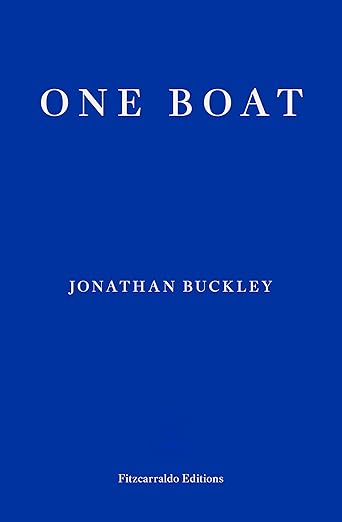
About One Boat by Jonathan Buckley – A Quiet, Thoughtful Novel About Grief, Memory, Choice and the Stories We Tell Ourselves
One Boat by Jonathan Buckley is a short literary novel about grief, memory, identity, and the ways people try to understand their lives. Teresa returns to a small town on the Greek coast after her father's death. It is the same place she visited nine years earlier after losing her mother. She hopes the town will give her space to think, but returning brings back memories, unfinished questions, and people she once met.
Among them is John, a man trying to live with the violent death of his nephew. Teresa also reconnects with Petros, an unusual mechanic; Niko, a diving instructor; and Xanthe, a waitress. Their conversations move through regret, desire, guilt, time, and the question of whether people are truly free to choose who they become.
This is not a loud thriller or fast adventure. It is a thoughtful novel for readers who enjoy quiet tension, careful observation, and uncertainty.
A return to the same place does not mean returning to the same life
Teresa comes back to the Greek town because it once gave her somewhere to go when grief was too heavy. Nine years earlier, she had arrived after the death of her mother. Now her father is gone, and the town becomes important again.
But people change, and places can feel different when we return to them.
The streets, cafés, water, and familiar faces may still be there, yet Teresa is no longer the same woman. Her memories of the first visit also do not sit still. Some details seem clear. Others become uncertain. The past keeps entering the present, and the reader slowly sees that Teresa is not only revisiting a place. She is revisiting versions of herself.
That idea gives One Boat much of its emotional power. Many readers know what it feels like to return somewhere connected with an earlier time. A room, road, town, or song can suddenly bring back memories that seemed quiet for years.
Buckley turns that common experience into the shape of the novel.
Grief is present without becoming simple
One Boat begins with loss, but it does not treat grief as one clear feeling.
Teresa has lost both parents at different points in her life. Each death sends her toward the same coastal town, yet the experience is not repeated in exactly the same way. Grief changes because the person grieving has changed.
The novel gives space to sadness, distance, memory, guilt, thought, and the odd moments when daily life continues even after something important has ended. Teresa sits in cafés, walks through town, watches people, listens to stories, and thinks. Nothing has to stop simply because she is hurting.
This makes the book feel true to the way grief often works. People may carry pain while still noticing the weather, drinking coffee, talking with strangers, or thinking about unrelated things.
Readers who prefer emotional fiction without forced speeches may appreciate this approach. The feeling is often quiet, but it remains close to the surface.
Memory can feel certain even when it is not
A major strength of the novel is the way it handles memory.
Teresa thinks back to her first visit, but remembering does not always mean understanding. A memory may feel complete while still missing a detail. A person may recall the same event differently years later. New information can also change the meaning of something that once seemed simple.
The book moves between Teresa's present trip and memories of the earlier one. This creates a layered reading experience. The past does not appear only to explain the present. It sometimes makes the present more complicated.
John is especially important in this process. Teresa remembers meeting him during her first stay. He was trying to understand the violent death of his nephew, and the story around that death becomes one of the novel's sources of mystery and uncertainty.
The reader is encouraged to pay attention, but not because there is one easy puzzle waiting to be solved. The deeper question is how people build stories from incomplete knowledge.
A Greek coastal town becomes a place for thought
The setting is one of the pleasures of One Boat.
The town sits on the Greek coast, with cafés, streets, a harbour, sea views, and people whose daily lives continue around Teresa. Buckley does not turn the setting into a simple holiday picture. It is beautiful, but it is also ordinary and lived in.
Teresa watches people carefully. She notices movement, conversations, habits, buildings, the water, and changes in the light. The town gives her something outside herself to observe while she works through questions inside herself.
That balance makes the setting feel useful rather than decorative.
Readers who enjoy travel fiction or novels set in Greece may like the atmosphere, but the book is less about tourism than about attention. Teresa is not racing from famous sight to famous sight. She is staying still enough to notice the small structure of everyday life.
This slower pace supports the book's interest in memory, identity, and thought.
The people Teresa meets make the questions larger
One Boat is focused on Teresa, but the people around her keep opening new ways of thinking.
Petros, Niko, Xanthe, John, and others have their own stories, desires, regrets, and versions of events. Their conversations may seem casual, yet they add to the novel's deeper questions.
How much do we really know about another person? How much of a life can be understood from one story? Why do people tell certain details and hide others? Can two people hear the same story and take away different meanings?
These questions are important because One Boat is interested in how stories shape identity.
People often explain themselves through stories. They say what happened, why they acted, what they wanted, and what they regret. But a story is always a selection. Something is included, and something is left out.
Buckley uses these conversations to create uncertainty without making the novel confusing for the sake of it. The gaps are part of the meaning.
Free will, guilt and responsibility sit under the surface
The publisher describes One Boat as a novel concerned with identity, free will, guilt, and responsibility, and these ideas run through Teresa's reflections and the stories she hears.
If someone causes harm, how much responsibility belongs to them? If choices are shaped by fear, family, history, chance, or pressure, are they still fully free? Can guilt remain even when a person believes they had little choice?
The book does not turn these questions into a formal debate. They appear through people and events.
That makes the philosophy easier to enter. Readers do not need to study ethics before starting the book. The ideas grow naturally from human situations.
This is one reason the novel may work well for readers who enjoy literary fiction that asks questions without giving simple answers. Instead of closing every door, Buckley often leaves one open.
The result can stay in your mind after the final page because you may continue deciding what you think.
Why readers who enjoy quiet thoughtful literary fiction may connect with it
One Boat is not built around constant twists or dramatic action. Its tension comes from thought, uncertainty, memory, and small changes in understanding.
Some of its strongest qualities include:
- A calm Greek coastal setting.
- A woman returning to a place linked with earlier grief.
- Two periods of Teresa's life placed beside each other.
- Questions about whether remembering is the same as understanding.
- Conversations shaped by longing, regret, and uncertainty.
- A quiet mystery connected with past violence.
- Themes of identity, guilt, responsibility, free will, and human connection.
- A compact length and reflective style.
- A structure that can reward rereading.
The novel was longlisted for the 2025 Booker Prize, adding interest for readers who follow contemporary literary fiction.
A Booker-longlisted novel that stays compact
One Boat was published by Fitzcarraldo Editions on 13 March 2025 and runs to 168 pages in the publisher's paperback edition. It was longlisted for the 2025 Booker Prize.
Its short length may appeal to readers who want serious literary fiction without a long commitment. Buckley keeps the story concentrated around Teresa, the town, her memories, and the people she meets.
It can work well for a weekend reading plan or book-club discussion. Because the novel leaves some things uncertain, readers may disagree about motives, memories, responsibility, and what certain events mean. That disagreement is part of the experience.
Who should read One Boat?
This book is best suited to readers who like literary fiction, philosophical novels, quiet mysteries, stories about grief, and books where memory shapes the structure.
It may especially appeal to readers who enjoy character studies more than plot-heavy stories. Teresa spends time observing and thinking, so the reader is invited to notice with her.
People who like novels set in Greece may also enjoy the coastal atmosphere, while readers interested in questions about identity and choice may find the book especially rewarding.
Book clubs can use it to discuss grief, free will, personal responsibility, memory, storytelling, and the difference between what happened and what someone believes happened.
It is also a strong choice for readers who prefer shorter books but still want depth.
If you need nonstop action on every page, the pace may feel too quiet. But if you enjoy a novel that asks you to pay attention and think, One Boat offers a rich reading experience in a small space.
A premium reading copy from Bookish Wonderland
A reflective novel works best when the physical reading experience is comfortable. Bookish Wonderland offers a reader-friendly copy with premium eye-soothing cream paper, crystal-clear print, and high-quality stitched plus glue binding for better longevity.
The soft cream paper helps make long reading sessions more comfortable, while the clean print keeps the text clear. The durable binding is designed for regular reading and long-term collection.
For readers comparing the Book price in Bangladesh for One Boat by Jonathan Buckley, Bookish Wonderland provides a convenient local option for ordering this Booker-longlisted literary novel.
Nationwide delivery is available across Bangladesh, including delivery inside and outside Dhaka. Cash on delivery is available, and fast or urgent delivery options may also be available in Dhaka.
A thoughtful choice for readers who enjoy questions more than easy answers
One Boat does not tell the reader exactly what to think about every person or event. It gives you scenes, conversations, memories, and possibilities, asking you to sit with uncertainty as Teresa does.
The novel is interested in the stories people tell about themselves and in what those stories cannot fully explain. A person can describe a life and still remain partly unknown. A memory can be vivid and incomplete. A decision can feel free while also being shaped by outside forces.
These ideas give the book weight without requiring a huge plot.
Follow Teresa back to the coast
One Boat by Jonathan Buckley is a quiet novel with wide emotional and philosophical reach. Through Teresa's return to a Greek coastal town, it explores grief, memory, guilt, identity, choice, and the stories people use to understand themselves.
The novel does not rush. Small conversations and remembered moments gather meaning over time. Its 168-page length makes it approachable, while its themes give readers plenty to think about after finishing.
Order One Boat by Jonathan Buckley from Bookish Wonderland and discover a Booker-longlisted novel that turns one return journey into a thoughtful study of memory, loss, responsibility, human connection, and difficult human choices.
If you require any customization or have any questions, please inbox us via FB or Insta.
| Primary Specification | |
| Author | Jonathan Buckley |
| Narrator | Caroline Ford |
| Genre | Literary Fiction, Contemporary Fiction |
| ISBN-13/ISSN | 978-1804271766 |
| ISBN-10 | 1804271764 |
| Publisher | Fitzcarraldo Editions |
| Publishing Date | September 16, 2025 |
| Language | English |
| Reading Age | 18+ |
| Format | Printed book |
| Physical Specification & Quality | |
| Paper Quality | Premium eye-soothing cream paper |
| Binding Quality | High quality stitched and glue binding (for longevity) |
| Print Quality | Crystal-clear print |
| Pages | 168 pages |
| Country | UK |
| Logistics Information | |
| Weight | 188 gm |
| Length | 8.5 inches |
| Width | 5.6 inches |
| Height | 0.37 inch |