Skip to product information
1 of 1

Bookish Wonderland

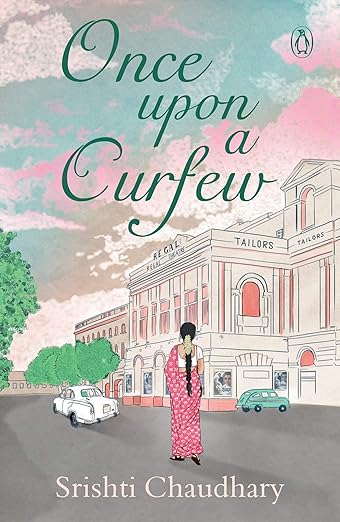
Once Upon a Curfew by Srishti Chaudhary

Once Upon a Curfew by Srishti Chaudhary

Regular price Tk 247.00 BDT
Regular price Sale price Tk 247.00 BDT
Sale Sold out
Book cover type
Quantity

Once Upon a Curfew by Srishti Chaudhary is a historical romance set in Delhi during the turbulent 1970s. Indu inherits her grandmother’s flat and dreams of transforming it into a library for women. Although her family expects her to eventually marry her fiancé Rajat, who is studying in London, her plans bring her into contact with Rana, a witty young lawyer who helps establish the library. Their friendship gradually develops into something deeper. When India’s Emergency is declared, political restrictions and personal dangers begin reshaping their lives. With Rana facing trouble and Rajat returning to India, Indu must confront difficult choices involving love, independence, family expectations, and the future she wants for herself. Read More

View full details

About Once Upon a Curfew by Srishti Chaudhary – A Moving Historical Romance About Love, Freedom, Family and Choosing Your Own Life

Once Upon a Curfew by Srishti Chaudhary is a historical romance set in India during the 1970s. The story follows Indu, a young woman who inherits a flat from her grandmother and dreams of turning it into a library for women. Her family sees the project as a harmless way to keep her busy until she marries Rajat, her fiancé, who is studying in London. Indu, however, begins to see the library as something much more important. It becomes a place where she can think about her own future and what kind of life she truly wants.

Then she meets Rana, a young lawyer with wit, warmth, and a very different energy from the safe plan already made for her. He helps with the library, shares conversations and Rajesh Khanna movies with her, and slowly becomes important in her life. When the Emergency is declared, their world changes. Rana gets into trouble, Rajat returns, and Indu must make difficult choices about love, duty, independence, and the future she wants to build.

A young woman who wants more than the life planned for her

Indu begins the novel in a position many readers can understand. People around her believe they know what will make her happy.

She has a fiancé. Marriage is expected. Her family assumes the next part of her life is already decided.

The flat left by her grandmother gives Indu a small opening. She wants to turn it into a library for women. On the surface, it looks like a simple project. For Indu, it becomes a way to create something of her own.

A library can be a quiet place, but it can also be powerful. It gives people access to ideas, stories, education, and different ways of seeing the world.

As Indu works on the space, she starts asking questions about herself. Does she want the future everyone expects? Is security enough if she does not feel free? Can love survive when it comes with a life she did not choose?

The library becomes a symbol of choice

The women’s library is one of the most important ideas in the book.

Indu could have treated the inherited flat only as property. Instead, she chooses to create a place for women to read and gather. That choice shows her desire to do something useful and meaningful.

The library also gives her a space outside the normal expectations of home and marriage.

Books allow people to meet lives different from their own. A reader can discover new ideas without leaving the room. For Indu, building a library becomes connected with the larger question of what women are allowed to want.

This makes the setting more than decoration. The library reflects Indu's changing mind.

Readers who love books may especially connect with this part of the story. The novel understands that a reading space can become a place of independence, friendship, imagination, and hope.

Rana changes the rhythm of Indu's life

Rana enters the story as a young lawyer with quick humor and a warm personality.

He helps Indu build the library, but his importance grows through time spent together. Their connection develops through conversation, shared work, playful banter, and the Rajesh Khanna films they watch.

This makes the romance feel more personal than a sudden attraction.

Indu is able to see Rana in ordinary moments. He listens, jokes, helps, and challenges the shape of the life she thought she would have.

Rana also represents a less predictable path. Rajat is connected with the future her family already understands. Rana is connected with a future that feels open and uncertain.

That difference creates emotional tension without turning the story into only a simple love triangle.

Indu's feelings for Rana force her to ask whether love should fit a plan or whether it should help a person understand themselves more clearly.

Rajat represents familiarity, duty and an expected future

Rajat is Indu's fiancé and is studying in London when the story begins.

Because he is away, their relationship is shaped partly by distance and by the expectations already built around their future marriage.

When Rajat decides to return to India and settle down, Indu can no longer avoid the choice before her.

The novel does not need one man to be completely good and the other completely bad for the conflict to work. The more interesting question is what each relationship represents for Indu.

Rajat is connected with a future that has already been planned. Rana opens another possibility. Indu must decide not only who she cares for, but what kind of life allows her to feel honest with herself.

This gives the romance a coming-of-age quality even though the story is also historical.

The Emergency changes personal choices into harder choices

The official publisher synopsis places the story around 1974 and then the declaration of the Emergency.

For Indu, this political change is not only background information. It begins to affect the people around her and makes private decisions harder.

Rana finds himself in trouble. Rajat returns. The sense of freedom around Indu's new project becomes more uncertain.

The novel uses this changing environment to increase pressure on the characters. Love, work, family expectations, and public events begin to overlap.

For readers, this makes the book different from a romance that could happen in any time or place. The setting matters because the characters cannot separate their personal lives from the wider world around them.

The historical context also gives the story tension even when the main focus remains Indu's emotional journey.

Love is important, but independence matters just as much

A major strength of Once Upon a Curfew is that Indu's life is not presented as valuable only because two men care about her.

Her desire to build the library matters. Her opinions matter. Her future matters.

The romantic conflict becomes meaningful because it helps her see how much of her life has been chosen by other people.

A relationship can feel safe and still be wrong for someone. A more exciting relationship can feel right while also carrying risk. The novel lets Indu face those mixed feelings.

Readers who enjoy stories about women choosing their own path may connect strongly with this part of the book.

The question becomes larger than romance: what does it mean to make a decision because you truly want it?

Rajesh Khanna films add warmth and period flavor

The shared love of Rajesh Khanna movies helps make Indu and Rana's relationship feel connected to the cultural world of the 1970s.

Instead of only talking about serious things, they spend time enjoying films and each other's company.

These moments add lightness to a story that later faces more pressure.

They also help create a stronger sense of period. Popular cinema can tell us what people dreamed about, laughed at, and talked about. The film references make the setting feel lived in rather than built only from dates and political events.

For readers who enjoy Indian cinema, these details may add extra charm.

What makes Once Upon a Curfew worth reading

The novel combines romance, history, family expectations, books, cinema, and personal growth in one accessible story.

Its strongest features include:

  • A heroine who wants to create a women’s library and shape her own future.
  • A 1970s Indian setting that gives the romance a clear historical identity.
  • A relationship that grows through conversation, shared work, and films.
  • A love triangle connected with deeper questions about freedom and duty.
  • Family pressure that makes Indu's choices feel real and difficult.
  • Historical events that affect the characters' private lives.
  • Themes of independence, education, love, courage, and self-respect.
  • Warm references to Rajesh Khanna and popular cinema.
  • Simple, readable storytelling suited to readers of historical and romantic fiction.
  • A 304-page length that makes it approachable without feeling too short.

The book works best for readers who want a love story with a social and historical setting rather than romance alone.

Who should read Once Upon a Curfew?

This book is a good choice for readers who enjoy Indian historical fiction, romance, women-centered stories, family drama, and books about personal freedom.

It may especially appeal to readers who like heroines trying to balance love with their own ambitions.

Readers interested in the 1970s, Indian popular culture, libraries, and stories about changing social expectations may also find something to enjoy.

The book can work well for a weekend read, a book-club discussion, or as a lighter entry point into historical fiction.

Because the language is accessible and the emotional questions are easy to follow, readers do not need deep knowledge of Indian history before starting.

A premium reading copy from Bookish Wonderland

A warm historical romance is easier to enjoy when the physical copy feels comfortable in your hands.

Bookish Wonderland offers a reader-friendly copy with premium eye-soothing cream paper, crystal-clear print, and high-quality stitched plus glue binding for better longevity. The cream paper supports comfortable reading, while the clear print keeps every line easy to follow. The strong binding is designed for regular reading and long-term collection.

For readers comparing the Book price in Bangladesh for Once Upon a Curfew by Srishti Chaudhary, Bookish Wonderland offers a convenient local option for ordering this Indian historical romance.

Nationwide delivery is available across Bangladesh, including inside and outside Dhaka. Cash on delivery is available, and fast or urgent delivery options may also be available in Dhaka.

Published by Ebury Press for readers who enjoy romance with history

Penguin Random House India lists Once Upon a Curfew under the Ebury Press imprint. The book was published in April 2019 and is listed at 304 pages.

That length gives the novel enough room to build Indu's relationships, the women's library, and the historical atmosphere without becoming an extremely long read.

The story is easy to approach as romance, but the historical setting gives it more layers.

Readers can enjoy the emotional pull between Indu, Rana, and Rajat while also thinking about the limits placed on women and the importance of being able to choose one's own future.

A story about choosing a life instead of simply accepting one

Once Upon a Curfew by Srishti Chaudhary begins with a future that appears settled.

Indu is engaged. Her family expects marriage. Rajat is studying abroad. The flat she inherits seems like a small side project until she turns it into a women’s library.

Then Rana enters her life, and the future stops looking simple.

The novel becomes a story about what happens when love, family duty, personal ambition, and history all pull in different directions.

Indu must decide whether she will follow the path already prepared for her or listen to the part of herself that wants something different.

If you enjoy historical romance with Indian settings, strong female growth, books and libraries, family conflict, and a love story shaped by larger events, this title is a strong choice.

Order Once Upon a Curfew by Srishti Chaudhary from Bookish Wonderland and enjoy a heartfelt novel about love, books, difficult choices, and the courage to decide what kind of life should truly be yours.

If you require any customization or have any questions, please inbox us via FB or Insta.

Primary Specification
AuthorSrishti Chaudhary
NarratorSwasti Sharma
GenreHistorical Fiction, Romance
ISBN-13/ISSN978-0143445968
ISBN-100143445960
PublisherEbury Press
Publishing DateApril 19, 2019
LanguageEnglish
Reading Age18+
FormatPrinted book
Physical Specification & Quality
Paper QualityPremium eye-soothing cream paper
Binding QualityHigh quality stitched and glue binding (for longevity)
Print QualityCrystal-clear print
Pages304 pages
CountryIndia
Logistics Information
Weight324 gm
Length8.5 inches
Width5.6 inches
Height0.8 inch
What is Once Upon a Curfew by Srishti Chaudhary about?

Once Upon a Curfew is a historical romance set in Delhi during the politically turbulent 1970s. The story begins in 1974 with Indu, a young woman who inherits a flat from her grandmother and decides to transform it into a library for women. Her family largely assumes the project will keep her occupied until she marries her fiancé, Rajat, who is studying in London. Indu’s plans become more complicated when she meets Rana, a witty young lawyer who helps her establish the library. Their friendship gradually develops into romantic attraction through conversations, playful arguments, and their shared enjoyment of Rajesh Khanna films. When the Emergency is declared in India, the political environment begins affecting their personal lives, and Rana finds himself in trouble. Indu must eventually confront not only whom she wants to love but also what kind of independent life she wants to build for herself.

How many books are in the Once Upon a Curfew series by Srishti Chaudhary, and what are they?

There are no books in a series for Once Upon a Curfew by Srishti Chaudhary. It is a standalone novel.

What genre is Once Upon a Curfew by Srishti Chaudhary?

Once Upon a Curfew is primarily historical fiction, romance, Indian fiction, and women-centered contemporary historical fiction. Penguin categorizes the book as fiction, while Goodreads readers most frequently shelve it under romance, historical fiction, Indian literature, and fiction. The novel combines a personal love story with a recognizable historical setting, allowing romantic relationships and family expectations to unfold alongside political change. It also contains elements of coming-of-age fiction because Indu gradually has to decide whether she will simply accept the future others expect for her or define her own priorities. The women’s library, family expectations surrounding marriage, 1970s courtship customs, and Indu’s growing relationship with Rana give the book a social dimension beyond romance. Readers who enjoy Indian historical fiction with emotional relationships, family dynamics, nostalgia, and accessible prose are likely to find its genre blend particularly appealing.

Is Once Upon a Curfew mainly a romance or a political novel about the Emergency?

It is primarily a romantic and character-driven novel set against a major political event, rather than a comprehensive historical study of the Emergency. The relationship among Indu, Rana, and Rajat remains central, while the Emergency increasingly affects their freedom, choices, safety, and future. Reviews describe the book as a blend of politics and romance, and some readers particularly appreciate the unusual decision to place a love story within this historical period. Other readers feel the political background could have been explored in greater depth. That difference in reader response is useful for prospective buyers: someone expecting an exhaustive political history may find the coverage comparatively light, while someone looking for an accessible historical romance shaped by real political circumstances may find the balance more satisfying. The author herself has described the Emergency setting as serious and research-intensive.

What historical period is Once Upon a Curfew set in, and how important is the Emergency to the story?

The story begins in 1974 and moves into the period of India’s Emergency, which lasted from June 1975 to March 1977. The Emergency was declared under Prime Minister Indira Gandhi and involved major restrictions on political activity and civil liberties, including press censorship and arrests of political opponents and activists. In Once Upon a Curfew, this historical background moves from the edges of Indu’s everyday life into something that directly affects the characters, particularly when Rana encounters political danger. The novel also evokes everyday 1970s life through letters, cinema, courtship expectations, clothing, family structures, and popular culture. Srishti Chaudhary has explained that she researched the period through family stories, conversations, films, and other sources because she herself did not experience the decade. The result is historical fiction rather than a documentary account of the Emergency.

Is there a love triangle in Once Upon a Curfew, and what kind of romance should readers expect?

Yes. A central emotional conflict involves Indu, her fiancé Rajat, and Rana, the young lawyer who helps her establish the women’s library. Indu is already engaged to Rajat, who is studying in London, when she begins spending more time with Rana. Their relationship develops gradually through conversation, shared work, teasing, cinema outings, and small gestures rather than through an immediately intense romance. Srishti Chaudhary has written about researching how love and courtship might realistically have operated in 1970s India, when letters, family approval, marriage expectations, and stricter social conventions shaped relationships very differently from modern dating culture. Reader reviews frequently characterize the romance as old-fashioned, slow-building, and relatively clean rather than explicit. The triangle also serves a larger purpose: Indu is not simply choosing between two men but between different versions of the future others expect her to live.

Why is Indu’s women’s library important in Once Upon a Curfew?
The library represents much more than a business or hobby for Indu. After inheriting her grandmother’s flat, she wants to transform the space into a library for women, giving women greater access to books, education, conversation, and an environment of their own. Her family initially treats the project partly as something that will keep her occupied before marriage, but Indu sees it as meaningful work and an expression of independence. The library therefore becomes closely connected with the novel’s themes of women’s choices, education, autonomy, social expectations, and personal ambition. It also creates the circumstances through which Indu and Rana spend significant time together. Reader reactions differ on how successfully the novel develops the library’s social mission, with some praising the women-centered idea and others questioning how inclusive the fictional library ultimately becomes. That debate itself has become one of the more interesting aspects of reader discussion around the novel.
Is Once Upon a Curfew an easy and engaging read, and who is it best suited for?
Most readers describe Once Upon a Curfew as an accessible rather than academically dense historical novel. The paperback is listed at 304 pages, and its romance, family drama, library storyline, Bollywood references, and relatively direct prose make the historical setting approachable. Reader reactions to pacing vary: some reviews describe it as engaging, light, and quick despite the serious political backdrop, while others feel certain character developments or the ending could have been explored more fully. It is particularly suitable for readers interested in Indian historical fiction, women-centered stories, vintage romance, family expectations, 1970s Delhi, Rajesh Khanna-era Bollywood nostalgia, and novels where political events affect ordinary personal lives. Readers looking specifically for a detailed academic explanation of the Emergency should use historical nonfiction alongside the novel, because Once Upon a Curfew remains fundamentally a work of fiction centered on Indu’s emotional and personal journey.
Is Once Upon a Curfew a premium edition at Bookish Wonderland?

Yes. Bookish Wonderland offers Once Upon a Curfew as a premium edition prepared for readers who value comfortable reading, neat physical presentation, and durability. The novel includes extended conversations, romantic scenes, family interactions, and historical passages, so sharp and consistent text reproduction helps maintain an enjoyable reading flow throughout the book. The physical quality also makes the copy suitable for readers who collect Indian English fiction, historical romance, women-centered literature, or books connected with important periods of South Asian history. It can also work well as a gift for readers who enjoy nostalgic Indian settings and character-driven romance. Rather than focusing only on the story, Bookish Wonderland emphasizes a polished physical reading experience through quality pages, clean printing, and sturdy construction, helping the book remain attractive and functional after the first reading.

What is the paper and print quality of Once Upon a Curfew from Bookish Wonderland?

The Bookish Wonderland edition features premium eye-soothing cream paper paired with crystal-clear printing. The softer cream-colored page tone provides gentler contrast than harsh, bright-white paper and can make longer reading sessions more comfortable, particularly during evening reading. Sharp text reproduction keeps dialogue, chapter text, names, and historical references clean and easy to follow as the novel moves between romance, family relationships, the library project, and the changing political environment. Good print clarity is particularly useful in a character-focused novel because much of the emotional development occurs through conversations and smaller interactions rather than large action sequences. The paper is also chosen to provide a smoother physical reading experience and a more refined overall presentation. This combination makes the copy suitable for both casual readers and people building a permanent collection of Indian English fiction.

How durable is the binding of Once Upon a Curfew from Bookish Wonderland?

Once Upon a Curfew comes with high-quality stitched and glue binding designed for longevity. The stitching provides additional structural support, while adhesive helps keep the pages firmly secured during regular opening, carrying, lending, and rereading. A strong binding is particularly valuable for readers who frequently carry books between home, university, work, cafés, or travel, where repeated handling can quickly weaken cheaply manufactured copies. It also allows readers to revisit favorite romantic scenes, historical passages, or sections involving Indu’s library without placing excessive stress on the spine. Combined with premium cream paper and clear printing, this construction makes the book appropriate for everyday reading as well as long-term storage in a personal library. Readers who like sharing books with friends or maintaining a collection of Indian historical fiction can therefore expect a copy designed with repeated use in mind.

Why should I buy Once Upon a Curfew by Srishti Chaudhary from Bookish Wonderland in Bangladesh?

Bookish Wonderland provides a convenient way to buy Once Upon a Curfew by Srishti Chaudhary and other premium English books in Bangladesh while receiving a physical copy designed for comfortable and durable reading. This edition combines premium eye-soothing cream paper, crystal-clear printing, and high-quality stitched and glue binding, making it suitable for romance readers, historical-fiction enthusiasts, students, and collectors of Indian English literature. Cash on Delivery is available across Bangladesh, allowing customers to pay when their order arrives. Nationwide delivery is available both inside and outside Dhaka, while readers in Dhaka can also request fast or urgent delivery when available. Bookish Wonderland maintains a large collection of premium and durable English books across romance, historical fiction, classics, contemporary fiction, nonfiction, business, psychology, and many other categories, helping readers throughout Bangladesh build a varied English-language personal library.