

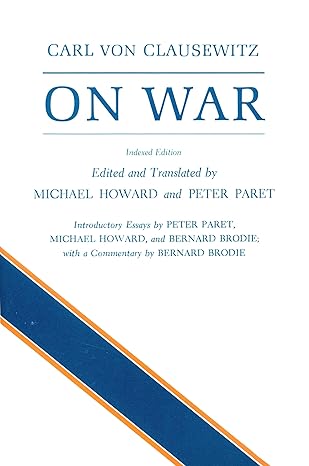
About On War by Gen. Carl von Clausewitz: Why Battles Are Won, Lost, and Fought
Why do armies keep fighting when a plan has already gone wrong? Why can a smaller force resist a stronger one? And why does winning a battle sometimes fail to bring an end to a war?
On War by Gen. Carl von Clausewitz asks readers to look beyond the battlefield. It explores what leaders hope to achieve, what stands in their way, and what happens when fear, chance, and human error enter the picture. Clausewitz was a Prussian general who lived through the Napoleonic Wars. He used that experience to write about war as something people plan, carry out, and struggle to control.
This is a book for readers who want to understand the thinking behind military decisions. It is also a book about the limits of any plan. A commander can study the ground and gather information, yet still face surprises when action begins. Clausewitz gives readers a way to think through those surprises rather than treating every battle as a simple test of strength.
The Question Behind Every Battle
A map can show where an army intends to go. It cannot show every delay, mistake, fear, or change of mind that will shape the journey. That gap between a neat plan and a difficult reality runs through On War.
Clausewitz asks readers to consider the purpose of a conflict before judging a military move. An attack may look bold, but what is it meant to achieve? A retreat may look like failure, but could it protect an army for a more important task? A victory may be impressive, but does it help reach the goal that led to the war?
These questions make the book more than an account of old campaigns. They give you a way to read military history with greater care. Instead of asking only who won, you begin asking what each side wanted, what choices it had, and whether its actions served its aims.
A Book About Plans Meeting Real Life
It is easy to imagine a perfect plan when everything stays still. Clausewitz knew that war does not stay still. Orders take time to travel. People get tired. Supplies may arrive late. The ground may be harder to cross than expected. An opponent can act in a way no one predicted.
He used the idea of friction to explain how many small problems can make a seemingly simple action difficult. It is one of the most useful ideas in the book because it brings strategy down to human scale. A plan must work through real people, real distances, and real limits.
That idea can change how you read a battle. You may see that a leader faced more than a choice between a good plan and a bad one. The leader had to act with limited knowledge while events kept moving. On War helps you understand why sound judgment matters when certainty is impossible.
What Does Clausewitz Mean by Strategy?
In On War, strategy is about using battles to serve the wider purpose of a war. Clausewitz asks readers to connect what happens in the field with the reason a conflict began. A commander must think about both the immediate fight and the larger result it is meant to produce.
That connection matters because a battle can be won at a cost that harms the wider effort. It also means an army may have good reason to avoid a fight, hold a position, or wait for a better moment. Clausewitz does not offer one move that works in every case. He examines how choices depend on the goal, the opponent, and the situation.
If you have ever found military history crowded with dates and troop movements, this book gives those details a clearer purpose. It asks why a decision was made and what it was expected to change. That makes it especially rewarding to read alongside accounts of historical campaigns.
Why Politics Matters in On War
One of Clausewitz’s central ideas is that war is connected to political aims. Leaders do not choose military action in a vacuum. They have goals, and those goals should shape what they ask an army to do.
This is an important part of the book for readers who want to understand more than tactics. It raises a hard question: if the political aim is limited, should the military effort be limited too? It also asks what happens when the fighting grows beyond the purpose that first guided it.
Clausewitz wrote about states and armies in his own time, so readers should approach his examples with that setting in mind. Even so, the link he draws between aims and actions remains a useful question to carry into a history book or a discussion of conflict: What is this fighting meant to achieve?
The Role of Chance and Human Judgment
No one in On War gets to see every part of a conflict at once. Leaders must make choices without knowing exactly what the other side will do. They may receive reports that are late, incomplete, or wrong. Even when their information is strong, chance can change the result.
Clausewitz pays close attention to the person making decisions in these conditions. Knowledge matters, but so do calm thinking, courage, and the ability to respond when events take an unexpected turn. He treats war as a human activity, shaped by the judgment and limits of the people involved.
For a reader, this gives the book a lasting pull. You are invited to think with the people facing a difficult choice. What would you do with the information they had? What would you risk? When would you change course? Those questions can stay with you long after you finish a chapter.
Is On War Easy to Read?
On War is a demanding book, especially if you are new to military history or political thought. Clausewitz develops ideas carefully, returns to them, and tests them against different situations. Some passages reward a slow second reading.
You do not need to understand every idea on the first page to get value from it. Start with a question that interests you: why plans fail, why defence can be strong, or how a battle serves a wider aim. Read a section, pause, and ask how its idea might help explain a real event. Short reading sessions may work better than rushing through many pages at once.
The book was left unfinished when Clausewitz died, and English editions can differ in translation and contents. If a particular translation, introduction, or complete eight-book text matters to you, check the details of the copy before ordering. The value of reading it comes from engaging with its ideas, not from trying to finish it quickly.
What Will You Find Inside?
Clausewitz examines war from several angles. He considers its nature and theory, then turns to matters such as combat, military forces, defence, attack, and the planning of a war. These subjects are connected, but each gives you a different question to take away.
You may be most interested in how an army fights. You may instead want to understand why holding ground can be powerful, or how leaders decide whether a campaign has done enough. The book gives you room to follow the ideas that matter most to you and return to the others later.
It also encourages readers to question easy explanations. A battle does not happen by itself. It is shaped by earlier choices, available resources, the aims of each side, and the problems people meet while trying to act. On War helps make those links visible.
Who Should Read This Book?
Choose On War if you enjoy military history and want to look more closely at the decisions behind the events. It can give you a stronger way to think about campaigns than a list of battles and results alone.
It is also a useful choice for students of history, politics, and international relations. Clausewitz asks how force relates to a wider goal, a question that can help readers examine both historical events and the arguments people make about them.
Readers interested in leadership may find plenty to consider here too. The book shows how hard it can be to make a decision when information is incomplete and the cost of a mistake is high. Its setting is war, but its account of pressure and judgment can prompt thoughtful discussion well beyond a military classroom.
If you want a quick story with a clear beginning and ending, this may call for a different kind of reading. Pick it up when you are ready to pause, question an idea, and think through what it means.
A Reading Experience Made for Careful Study
A book you plan to read slowly should feel comfortable to return to. Bookish Wonderland offers this printed copy with premium eye-soothing cream paper and crystal-clear print, so the text is pleasant to follow during longer reading sessions. Clear pages matter when you want to stop at a passage, consider it, and find it again later.
The high-quality stitched and glue binding is designed for longevity. That makes this a practical choice if you expect to revisit chapters, use the book during study, or keep it in your collection for years. A work filled with questions deserves a copy you can keep close and open often.
The feel of the book supports the way many people read Clausewitz: a little at a time, with space to think. You might read one section on your own, discuss an idea with a friend, or return to a marked page after learning about a campaign. This is a book that invites more than one visit.
A Thoughtful Gift for a Curious Reader
On War can make a meaningful gift for someone who is drawn to history and asks why events happened. It suits a reader who enjoys looking at decisions from more than one side and is willing to work through a challenging idea.
It can also start a conversation. Two readers may agree on what happened in a battle but disagree about whether it served the larger aim. Clausewitz gives them questions to explore together: What did the leaders want? What could they know at the time? What did the result make possible?
For a student, it can be a book to study over a term rather than finish in a weekend. For an experienced history reader, it can offer a fresh reason to revisit familiar campaigns. Its appeal lies in the way it changes the questions you bring to what you read next.
Order On War from Bookish Wonderland
If you have been looking for a book that explains why war is so difficult to plan and control, On War is a strong place to begin. It asks you to look past the result of a battle and consider its purpose, its costs, and the choices people made along the way.
For readers comparing book prices in Bangladesh, Bookish Wonderland offers a premium printed reading experience and a large collection of durable English books. Cash on Delivery is available, with delivery inside and outside Dhaka and nationwide service across Bangladesh. If you need your order sooner in Dhaka, ask about the fast or urgent delivery option.
If you require any customization or have any questions, please inbox us via FB or Insta.
| Primary Specification | |
| Author | Gen. Carl von Clausewitz |
| Genre | Military strategy; political theory |
| ISBN-13/ISSN | 978-1453732144 |
| ISBN-10 | 1453732144 |
| Publisher | CreateSpace Independent Publishing Platform |
| Publishing Date | July 30, 2010 |
| Language | English |
| Reading Age | 16+ years |
| Format | Printed book |
| Physical Specification & Quality | |
| Paper Quality | Premium eye-soothing cream paper |
| Binding Quality | High quality stitched and glue binding (for longevity) |
| Print Quality | Crystal-clear print |
| Pages | 150 pages |
| Country | USA |
| Logistics Information | |
| Weight | 169 gm |
| Length | 8.5 inches |
| Width | 5.6 inches |
| Height | 0.34 inch |