

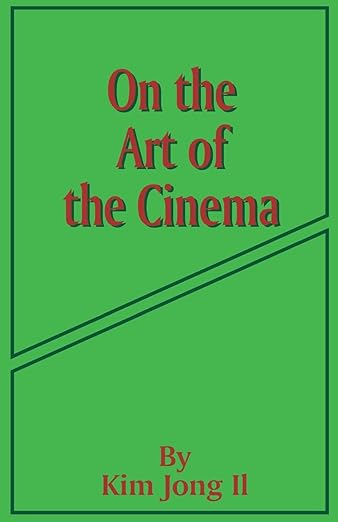
About On the Art of the Cinema by Kim Jong-il: A Look at Film, Stories, and Ideas
Why does one film stay in your mind while another fades as soon as it ends? A story matters, but so do the people who tell it, the way actors move, the images the camera shows, and the sounds you hear. On the Art of the Cinema by Kim Jong-il brings these parts of filmmaking together in one unusual and thought-provoking book.
This is a work of film theory from North Korea, first made public in 1973. Kim Jong-il sets out his views on what films should say and how filmmakers should make them. He writes about stories, directing, acting, camera work, sets, costumes, and music. His ideas are closely tied to North Korea’s political beliefs, which makes the book valuable to read with a questioning mind. It offers a direct look at how one powerful figure thought art could shape what people see and believe.
See how a film comes together
Watching a film is easy. Seeing all the choices behind it takes practice. Why does a character speak at one moment and stay quiet at another? Why does the camera show a face, a street, or an empty room? Why does music enter a scene just as the feeling changes?
This book gives readers a way to think about those choices. Kim Jong-il treats a film as the work of many people, each with a part to play. The writer builds the story. The director guides the work. Actors give characters a face and voice. Camera, design, and music help turn the plan into something an audience can see and hear.
If you enjoy asking how was that made?, this book gives you plenty to examine. You can read a section, watch a film scene, and return to the page with new questions. Even when you disagree with its advice, you may notice details you once passed over.
A view of cinema you may not find elsewhere
Many books on film teach camera settings, script formats, or ways to work in today’s film industry. On the Art of the Cinema has a different purpose. It explains Kim Jong-il’s ideas about what a film should be and what it should do for society.
That makes it a useful book for readers interested in more than film technique. It can help you study the link between art and power. It can also show you how North Korean cultural ideas were put into words for filmmakers. The book is best read as both a statement about cinema and a historical document.
You do not need to accept its claims to learn from reading it. In fact, some of the strongest questions come from testing them. Who gets to decide what makes a story good? Can a film serve a political goal and still feel true to its characters? What happens when artists are told that every part of their work must support one central idea? These questions can stay with you long after you close the book.
From the first idea to the final scene
One of the book’s key ideas is the “seed,” a central idea that guides a work. Kim Jong-il argues that the writer must find this core before building the rest of the story. Characters, events, and scenes should then grow from it.
Think of a film you know well. Can you say what idea holds it together? Do its scenes help that idea grow, or do some feel out of place? Reading about the seed gives you a simple way to ask sharper questions about a story’s shape. It may also interest writers who are trying to work out what their own story is really about.
The book then looks beyond the page. A script cannot become a film on its own. Directors must make choices, actors must bring people to life, and each image must show something useful. By moving across these parts of production, the book lets you see filmmaking as a connected process. It asks the reader to think about how one choice can change the meaning of another.
Characters are more than names in a script
A film can have a strong idea and still leave its audience cold if its people do not feel worth watching. That is why the book’s attention to character and acting matters. It explores the work needed to make a character clear on screen, from the written role to the actor’s speech and movement.
For a film student, these passages can prompt close viewing. Watch an actor’s face when someone else is talking. Notice when a small action tells you more than a long speech. Think about how a director helps the audience understand a person before a major event takes place.
For a reader who simply loves movies, this can make the next film more engaging. You may find yourself watching the whole scene instead of waiting for the next plot turn. You may see how much work goes into making a character seem natural.
The camera and the world around it
Stories do not live only in words. A room can tell you how a character lives. Clothes can place a scene in a certain time. A close view can make a small change in someone’s face feel huge. A wide view can show how one person fits into a larger world.
On the Art of the Cinema discusses these visual parts of filmmaking, including camera work and the design of what appears on screen. That gives readers another reason to take their time with the book. A chapter about images may send you back to a favourite scene to look at its background. A point about costumes may make you wonder what a character’s clothes say before the character speaks.
These are useful habits for anyone learning to read a film closely. They help turn a casual watch into an active one. You can still enjoy the story, but you may also begin to see the work that helps the story reach you.
Listen to what the film is doing
Sound is easy to miss because it often works so well that you do not think about it. Music can lift a quiet scene. It can signal danger before you see it. It can also feel too strong and tell you what to feel before the characters have earned that feeling.
Kim Jong-il gives music and scenes their own attention. As you read, you can ask whether the sound in a film adds meaning or merely fills silence. Try watching a scene once with its sound and then thinking about what would change without the music. It is a small exercise that can reveal a great deal.
This is one reason the book rewards readers who like to pause and reflect. It does not ask you to learn only one part of filmmaking. It opens questions about the whole experience of watching a film.
Read it with a curious and critical mind
This book carries a clear political outlook. Its view of cinema is bound to its view of society and the role art should play in it. Readers looking for a neutral guide to filmmaking should know that before they begin.
For many readers, that is exactly what makes the work worth studying. It gives you a source to examine for yourself. You can see how its arguments are built, where its advice about craft may be useful, and where its political demands shape that advice. You can compare its ideas with films you have watched and with other books about art.
A careful reading does not require easy agreement or quick dismissal. It asks you to pay attention. Which points explain a real part of filmmaking? Which claims leave too little room for an artist’s own choices? Where does a practical suggestion turn into an instruction about what the audience should believe? The book gives students and independent readers material for a serious discussion.
Who might enjoy this book?
On the Art of the Cinema may appeal to film students, researchers, writers, and readers of political history. It is also a distinctive pick for someone who collects books about world cinema or wants to look beyond familiar English-language film guides.
If you are learning to make films, read it alongside other views of directing and storytelling. Its chapters can help you form questions for your own work, even when you choose a different answer. If you study history or politics, read it as a record of ideas about culture and influence. If you love films, use it to look more closely at what happens between the opening scene and the final frame.
You can also read it with a friend or study group. Pick one topic, such as character, music, or the purpose of art. Read the relevant section, watch a film, and discuss what the book helps you see. A text with such a strong point of view can lead to a lively exchange when each person brings their own examples.
A printed book for slow reading
Some books are made to be read straight through in a day. This one invites a slower pace. You may want to mark a passage, think about a film you know, and return to the same page later. A printed copy makes that kind of reading easy.
Bookish Wonderland offers this title for readers in Bangladesh who want a physical book they can keep, revisit, and use for study. The premium eye-soothing cream paper is comfortable for longer reading sessions, while crystal-clear print helps keep the text easy to follow. High-quality stitched and glue binding is intended to support repeated reading over time.
Those details are useful for a book you may open again when a new question comes up. You might first read it for its account of film craft, then return months later for a project on political art. Keeping the book close gives you room to change your mind as you learn more.
Finding this book in Bangladesh
Searching for On the Art of the Cinema by Kim Jong-il price in Bangladesh may be the first step, but it also helps to know whether the book suits what you want to read. Choose it if you want a close look at one influential North Korean view of filmmaking, with room to study both its practical ideas and its political aims.
At Bookish Wonderland, you can order a printed copy with nationwide delivery across Bangladesh. Delivery is available inside and outside Dhaka, and Cash on Delivery is available. If you are in Dhaka and need the book soon, ask about the fast or urgent delivery option when placing your order.
Bookish Wonderland’s collection includes a wide range of premium, durable English books. That makes it a place to look for this title alongside other reading on film, history, and ideas. If you have a question about your copy or delivery, contact the store before you order so you can choose with confidence.
Is it part of a series?
On the Art of the Cinema is presented here as a standalone work. No numbered series books were supplied for this product, so there is no series reading order to follow. You can start with this book without buying an earlier volume.
Take a closer look at the films you watch
The next time a scene stays in your mind, you may want to know why. Was it the story’s main idea? The actor’s expression? The camera, the set, or the music? On the Art of the Cinema gives you a way to explore those questions while showing you a strikingly different view of what films are for.
Order On the Art of the Cinema by Kim Jong-il from Bookish Wonderland if you want a book that makes you watch more closely, think more deeply, and ask who shapes the stories we see.
If you require any customization or have any questions, please inbox us via FB or Insta.
| Primary Specification | |
| Author | Kim Jong Il |
| Genre | Film theory; political theory |
| ISBN-13/ISSN | 978-0898756135 |
| ISBN-10 | 0898756138 |
| Publisher | University Press of the Pacific |
| Publishing Date | October 1, 2001 |
| Language | English |
| Reading Age | 16+ years |
| Format | Printed book |
| Physical Specification & Quality | |
| Paper Quality | Premium eye-soothing cream paper |
| Binding Quality | High quality stitched and glue binding (for longevity) |
| Print Quality | Crystal-clear print |
| Pages | 344 pages |
| Country | USA |
| Logistics Information | |
| Weight | 363 gm |
| Length | 8.5 inches |
| Width | 5.6 inches |
| Height | 0.85 inch |