

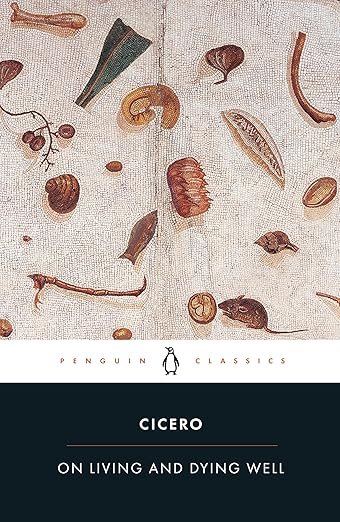
About On Living and Dying Well by Marcus Tullius Cicero – Ancient Wisdom for a Better Life
Some books tell you a story. On Living and Dying Well by Marcus Tullius Cicero asks you to look at your own life. It brings together Cicero’s thoughts on friendship, duty, fear, death, religion, fate, wisdom, and the choices that shape a good human life. Although these ideas were written more than two thousand years ago, many of the questions still feel close to modern life. What makes a life worth living? How should we face death? What do we owe to other people? Can friendship make us stronger? How much of life is controlled by fate, and how much depends on our own decisions?
This is not a book only for students of ancient Rome. Cicero writes as a public man who knew success, conflict, loss, pressure, friendship, and uncertainty. His philosophy feels practical because he asks how ideas can help a person live with courage, balance, purpose, and dignity today.
Why This Book Still Matters
Modern life gives us many tools, but it does not remove old human problems. People still worry about losing loved ones. They still fear failure, illness, age, and death. They still need trustworthy friends. They still struggle with duty, ambition, pressure, and hard choices. Cicero speaks to these basic parts of life.
On Living and Dying Well gives readers a way to think about such problems without turning them into quick rules or simple slogans. Cicero looks at different views, asks questions, compares ideas, and tries to find a practical path. That makes the book useful for readers who want more than short motivational advice. It gives a deeper way to think while staying connected to real human experience.
For a reader who feels that daily life is too fast, this book can slow the mind down. It invites you to ask what really matters. Money, praise, power, comfort, friendship, duty, fear, and death all look different when they are examined carefully. The book does not promise an easy life. Instead, it helps the reader think about how to meet life with a stronger mind.
When Big Questions Feel Hard to Answer
Many people want to live well, but they do not always know what “well” means. A person can work hard, earn money, gain respect, and still feel unsure about the purpose of life. Another person may love family and friends but feel afraid of loss. Someone else may want to do the right thing but feel confused when duty and personal interest pull in different directions.
This is the kind of problem Cicero takes seriously. He does not treat philosophy as something separate from ordinary life. He connects it with fear, friendship, responsibility, public life, personal conduct, and death. The value of the book is not that it gives one short answer to everything. Its value is that it gives readers a framework for thinking.
If you often ask whether you are using your time well, whether fear is controlling your choices, or what makes a friendship truly good, this book gives you ideas to work with. It can help turn vague worries into clear questions and make careful reflection easier.
A Clear Way Into Cicero’s Philosophy
On Living and Dying Well is a selected collection rather than one long argument from beginning to end. It brings together important parts of Cicero’s philosophical writing so readers can explore several major themes in one volume.
One section looks at the idea of the highest good and what human beings should aim for. Another deals directly with the fear of death. Other selections examine the divine order of the universe, wisdom, fate, oppression, friendship, and moral duty. This wide range makes the book useful as an introduction to Cicero because it shows how his thought connects personal life with society, nature, responsibility, and mortality.
The section on friendship is especially easy to connect with everyday life. Cicero treats friendship as more than company or entertainment. He looks at trust, character, loyalty, and the moral value of having good people close to us. The section on duty asks what we owe to ourselves and to others. The discussion of death asks whether fear of dying should control the way we live.
Together, these parts create a larger picture: a good life is not built from one thing. It involves judgment, relationships, courage, responsibility, and a proper view of what we can and cannot control.
Ideas You Can Carry Into Daily Life
One of the strongest reasons to read Cicero is that many of his questions can be used in normal life. You do not need to become a scholar to benefit from them.
When you face a difficult choice, the book encourages you to think about duty instead of only comfort. When you judge a friendship, it pushes you to think about character and trust. When fear becomes too strong, Cicero asks whether fear itself may be worse than the thing feared. When life feels short, he reminds the reader that the value of life is connected to how it is lived, not only to how long it lasts.
This kind of reading can be useful for students, professionals, leaders, parents, teachers, and anyone going through change. It can also be a good companion for readers who enjoy Stoicism, classical philosophy, ethics, or Roman history. Cicero often compares ideas and uses reason to test them, which gives the book a broad and thoughtful feel.
You may agree with him in one chapter and question him in another. That is part of the value. A good philosophy book does not only tell you what to think. It helps you become better at thinking.
A Premium Reading Copy from Bookish Wonderland
A thoughtful book becomes easier to enjoy when the physical copy is made for comfortable reading. Bookish Wonderland offers this title for readers who want a durable printed book that feels good in the hand and remains useful for repeated study.
The pages use premium eye-soothing cream paper, which is easier on the eyes during longer reading sessions. The print is crystal clear, helping each line stay sharp and readable. The book uses high-quality stitched and glue binding for better longevity, so it can handle regular reading, note-taking, and repeated use with more confidence.
These details matter for a philosophy book because this is the kind of title readers may return to many times. You may read it once for the main ideas, then come back later to the parts on friendship, death, or duty. A strong physical copy supports that kind of long-term reading.
Bookish Wonderland also carries a large collection of premium and durable English books, making it easier for readers to build a personal library around philosophy, classics, literature, history, and other serious subjects.
Key Features Readers Will Value
-
A major collection of philosophical writing by Marcus Tullius Cicero, one of ancient Rome’s most influential thinkers.
-
Explores the good life, friendship, moral duty, death, religion, fate, wisdom, and human responsibility.
-
Suitable for readers who are new to Cicero as well as those already interested in classical philosophy.
-
Encourages slow, thoughtful reading instead of quick surface-level advice.
-
Useful for personal reflection, academic reading, book clubs, and philosophy discussions.
-
Premium eye-soothing cream paper for a comfortable reading experience.
-
Crystal-clear print for easy reading and clean text.
-
High-quality stitched and glue binding designed for better longevity.
-
Printed format that is easy to mark, revisit, and keep in a personal library.
-
Available from Bookish Wonderland with delivery options for readers across the country.
What You May Gain From Reading It
The biggest benefit of On Living and Dying Well is not a single lesson. It is a better set of questions.
You may begin to think more carefully about what makes a friendship worth protecting. You may notice the difference between what you fear and what is actually harmful. You may think about whether duty sometimes matters more than comfort. You may also become more aware of how important it is to use time with purpose.
The book gives historical perspective too. Ancient Romans lived in a very different world, yet they also faced death, religious questions, friendship, ambition, public pressure, loss, and moral conflict. Cicero can make the distance between ancient and modern life feel smaller. It reminds us that people have asked how to live wisely for centuries.
Who Should Read This Book?
This book is a strong choice for readers who enjoy philosophy but want ideas connected to real life. It also suits readers interested in Roman history, ethics, political thought, classical literature, or the roots of Western philosophy.
Students can use it as an entry point into Cicero. Teachers can use passages for discussion. Professionals may value the sections on duty, judgment, and public responsibility. Readers who enjoy Seneca, Epictetus, or Marcus Aurelius may also like comparing Cicero’s approach with Stoic ideas.
It is also a thoughtful gift for someone who enjoys books that can be read more than once.
A Book for Quiet Reading, Study, and Reflection
You can read On Living and Dying Well in several ways. Read it from beginning to end if you want a broad picture of Cicero’s thought. Read one topic at a time if you are most interested in friendship, death, duty, or fate. Use it alongside a notebook if you want to record your own answers to the questions it raises.
It can fit into a morning reading habit, a university reading list, a weekend study session, or a personal philosophy project. It can also work well beside other classical books so you can compare how different thinkers answer similar questions.
For readers comparing the Book price in Bangladesh, On Living and Dying Well by Marcus Tullius Cicero is available from Bookish Wonderland, offering a simple way to add this classic work to an English book collection with reading comfort and durability.
Why Buy It from Bookish Wonderland?
Buying a classic is not only about getting the text. It is also about getting a copy you can comfortably read, keep, and return to. Bookish Wonderland focuses on durable English books with clear print, cream paper, and strong binding, making this title suitable for study, note-taking, and long-term reading.
Nationwide delivery is available across Bangladesh, both inside and outside Dhaka. Cash on Delivery is available across the country, and readers in Dhaka can also ask about fast or urgent delivery when needed.
For students, collectors, teachers, and general readers, ordering is simple for study, personal reading, gifting, or building a home library.
Read an Ancient Voice That Still Speaks to Modern Life
On Living and Dying Well by Marcus Tullius Cicero is for readers who want more than entertainment. It is a book about how to face life with thought, how to value friendship, how to understand duty, and how to look at death without letting fear rule everything.
Its power comes from the fact that the questions are old but never outdated. Every generation must decide what a good life means. Every person must deal with change, fear, relationships, responsibility, and the limits of time. Cicero gives readers a serious but accessible place to begin thinking about those things.
If you want a book that can stay useful after the final page, this is a strong choice. Order On Living and Dying Well by Marcus Tullius Cicero from Bookish Wonderland and add a lasting work of classical philosophy to your reading list today.
If you require any customization or have any questions, please inbox us via FB or Insta.
| Primary Specification | |
| Author | Marcus Tullius Cicero |
| Translator | Thomas Habinek |
| Narrator | John Hastings |
| Editor | Thomas Habinek |
| Genre | Philosophy, History, Classical Roman Literature |
| ISBN-13/ISSN | 978-0140455564 |
| ISBN-10 | 0140455566 |
| Publisher | Penguin Classics |
| Publishing Date | November 27, 2012 |
| Language | English |
| Reading Age | 18+ years |
| Format | Printed book |
| Physical Specification & Quality | |
| Paper Quality | Premium eye-soothing cream paper |
| Binding Quality | High quality stitched and glue binding (for longevity) |
| Print Quality | Crystal-clear print |
| Pages | 240 pages |
| Country | United Kingdom |
| Logistics Information | |
| Weight | 261 gm |
| Length | 8.5 inches |
| Width | 5.6 inches |
| Height | 7.5 inches |