

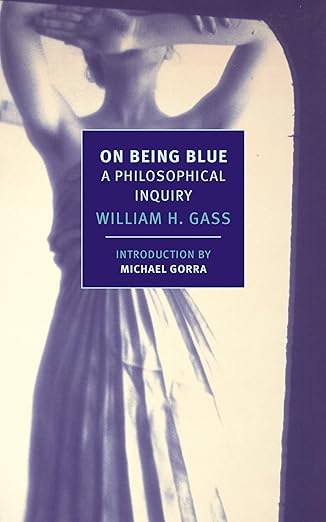
About On Being Blue: A Philosophical Inquiry by William H. Gass — Language, Color, and Feeling
Some books tell a story. Some books teach a lesson. On Being Blue: A Philosophical Inquiry by William H. Gass does something different. It takes one simple word—blue—and opens it until it becomes a door into language, feeling, memory, desire, sadness, beauty, and the strange way words shape the way we see the world. Ideas become expansive. It asks the reader to slow down, notice words, and think about how much meaning can live inside something as simple as a color.
A Small Book with a Very Big Idea
The starting point sounds simple: what does blue mean? Yet the answer quickly becomes much larger. Blue can be a color. It can suggest sadness. It can feel calm, cold, deep, clean, distant, romantic, or even rude depending on the phrase around it. Gass uses these many meanings to show how language gathers layers over time.
That is what makes On Being Blue interesting. The book is not only about color. It is about how people attach feelings and ideas to words. A word may look simple in a dictionary, but inside real life it can carry memory, culture, sound, touch, mood, and desire. Gass follows these links with curiosity and wit.
The book can feel like listening to a very clever person think out loud. One idea leads to another. A sentence may begin with a color and end with a thought about love, sex, art, sadness, or writing. The path is not always straight, but that is part of the experience. The book invites you to wander with the author rather than rush toward one final answer.
When Ordinary Words Start to Feel Flat
Many readers love books but sometimes feel that normal nonfiction is too dry. A textbook may explain an idea clearly, yet leave little room for beauty. A self-help book may give direct steps, but not much mystery. A normal essay may make one point and stop.
On Being Blue offers another kind of reading. It shows what can happen when thought and style work together. Gass does not simply tell you what blue means. He shows how meaning grows through examples, sound, rhythm, jokes, associations, and changes in tone. The reader is not only receiving information. The reader is watching language work.
For people who want to become better readers or writers, this can be useful. The book shows how much attention can be given to one word. It reminds us that strong writing is not only about having an idea. It is also about choosing the right words, placing them carefully, and hearing how a sentence moves.
What This Philosophical Inquiry Is Really About
The title may make the book sound formal, but its subject is very human. Gass is interested in the meeting point between words and life. He asks, in his own indirect way, whether language can truly capture what we feel and see.
That question appears again and again. A color exists in the world, but we also carry ideas about that color in the mind. Sadness is a feeling, but we often describe it through words and images. Desire is private, yet people try to express it through speech and writing. Literature sits between these worlds. It uses words to create something the reader can feel.
This is why the book matters beyond the color blue. Blue is the thread that holds the inquiry together, but the deeper subject is language itself. Gass is interested in how words can be beautiful, limited, playful, misleading, sensual, exact, and strange at the same time. Readers who enjoy thinking about why certain sentences stay in the mind may find a great deal to explore here.
A Book for Readers Who Notice the Sound of a Sentence
Some people read mainly for plot. Others read for ideas. Some read because they love the sound and shape of language. On Being Blue is especially suited to the third group, while still offering plenty for the first two kinds of readers to think about.
Gass pays close attention to rhythm. He likes lists, repeated sounds, surprising word choices, and long chains of association. His style can feel rich and dense, yet it is also playful. He does not treat philosophy as something that must always sound cold or technical.
This makes the book useful for writers, literature students, essay lovers, poets, editors, and anyone interested in prose style. You can read it for its ideas, but you can also read it sentence by sentence to study how language creates mood. It is the kind of book that may give more on a second reading because small details become easier to notice once you know the general direction.
A Reading Experience That Rewards Patience
This is not a book that needs to be rushed. It is short enough to finish quickly, but many readers may enjoy it more when they take their time. A page can contain several ideas, images, jokes, and turns of phrase. Reading slowly gives those details room to work.
If you normally read fast, this book can offer a different habit. You can pause after a paragraph. You can reread a sentence. You can ask why a word was chosen. You can notice how one idea changes when it is placed beside another.
That slower style of reading can make the book feel more personal. Instead of racing toward a final answer, you begin to notice your own thoughts about color, sadness, beauty, language, and memory. The book becomes a conversation between Gass and the reader.
What Makes This Edition Good for a Personal Library
At Bookish Wonderland, this printed edition is prepared for readers who want a comfortable physical reading experience. The crystal-clear print keeps the text easy to follow. Premium eye-soothing cream paper gives the pages a softer look that is pleasant during long reading sessions. High-quality stitched and glue binding is used for longevity, helping the book stay strong through repeated reading.
These details matter for a book like On Being Blue because it is the kind of text many readers may return to. You may underline a line, mark a page, or revisit a section later. A durable printed copy makes that kind of close reading easier and more enjoyable.
The design is meant for readers who want a dependable book rather than a disposable copy. It can sit comfortably in a home library, study shelf, university reading collection, or personal writing space.
What You May Gain from Reading It
One clear benefit is a stronger awareness of language. After spending time with Gass, ordinary words can begin to feel less ordinary. You may notice that words carry tone, history, mood, sound, and hidden links.
A second benefit is a deeper appreciation of literary style. The book demonstrates how an essay can be both intellectual and artistic. It does not separate thought from beauty. The writing itself becomes part of the argument.
A third benefit is creative inspiration. Writers often struggle with how to make a simple subject feel rich. Gass shows one possible answer: look closer. Stay with the subject longer. Follow its links. Notice what other people ignore.
A fourth benefit is reflection. The book may make you think about how you describe feelings, how color affects mood, or how language changes the way you understand experience. These are not lessons with one correct answer. They are questions that can stay with you.
Who Should Read On Being Blue?
This book is a strong choice for readers of essays, philosophy, literary criticism, creative nonfiction, and experimental prose. It may also suit students studying English, literature, writing, aesthetics, language, or modern American thought.
Writers can read it as a lesson in style. Teachers can use it to start discussion about language and meaning. Philosophy readers can enjoy its questions about the link between words and reality. Poetry readers may like its attention to sound and image. Curious general readers can enjoy the surprise of seeing one simple color become a whole field of thought.
A Good Choice for Study, Quiet Reading, and Gifting
On Being Blue works well in several settings. It can be read as a short personal study of language. It can be used beside a literature course. It can be kept near a writing desk for inspiration. It can also make a thoughtful gift for a person who loves essays, philosophy, language, or unusual books.
On Being Blue: A Philosophical Inquiry by William H. Gass Price and Buying Information
Readers checking the Book price in Bangladesh for On Being Blue: A Philosophical Inquiry by William H. Gass can order from Bookish Wonderland for convenient local service. Nationwide delivery is available across Bangladesh, including both inside and outside Dhaka. Cash on Delivery is available, and customers in Dhaka can also ask about fast or urgent delivery options.
Bookish Wonderland focuses on a large collection of premium and durable English books. This makes the store useful for readers who want literary essays, philosophy, classics, fiction, and other English titles in one place.
Why Buy This Book from Bookish Wonderland?
Choosing Bookish Wonderland gives you more than access to the title. You get a reading copy prepared with durability and comfort in mind, plus local delivery support.
The premium cream paper is soft on the eyes. The crystal-clear print helps the words stay sharp and readable. The stitched and glue binding supports repeated use. These details are especially useful for a book that invites slow reading, rereading, underlining, and close study.
You can also order from anywhere in the country with Cash on Delivery available. Readers in Dhaka can ask for faster delivery when needed. Whether you are buying for study, a personal library, or a gift, the aim is to make the ordering process simple.
A Book That Can Change the Way You Notice Words
The real pleasure of On Being Blue is not that it gives one final meaning for blue. It does the opposite. It shows how one word can open into many meanings.
After reading it, you may look at common words differently. You may notice how a color changes when placed beside a feeling. You may notice how a sentence gains power through sound. You may think more carefully about the words you choose when you write or speak.
That is a large result from a small book. Gass turns attention itself into the subject. He asks the reader to look harder, listen more closely, and enjoy the strange life of words.
If you like books that make you think without feeling like a classroom lecture, this is a strong choice. It is thoughtful, unusual, playful, and full of language that rewards attention.
Get Your Copy Today
Add On Being Blue: A Philosophical Inquiry by William H. Gass to your reading list if you enjoy books about language, literature, philosophy, feeling, and the art of writing. Order from Bookish Wonderland and enjoy a premium printed copy with clear text, comfortable cream paper, durable binding, nationwide delivery, and Cash on Delivery.
Read it slowly. Mark the lines that stay with you. Return to them later. This is a book made for readers who believe that even one simple word can hold a whole world.
If you require any customization or have any questions, please inbox us via FB or Insta.
| Primary Specification | |
| Author | William H. Gass |
| Genre | Philosophy, Essays, Literary Criticism |
| ISBN-13/ISSN | 978-1590177181 |
| ISBN-10 | 1590177185 |
| Publisher | NYRB Classics |
| Publishing Date | March 11, 2014 |
| Language | English |
| Reading Age | 16+ years |
| Format | Printed book |
| Physical Specification & Quality | |
| Paper Quality | Premium eye-soothing cream paper |
| Binding Quality | High quality stitched and glue binding (for longevity) |
| Print Quality | Crystal-clear print |
| Pages | 112 pages |
| Country | USA |
| Logistics Information | |
| Weight | 130 gm |
| Length | 8.5 inches |
| Width | 5.6 inches |
| Height | 0.35 inch |