

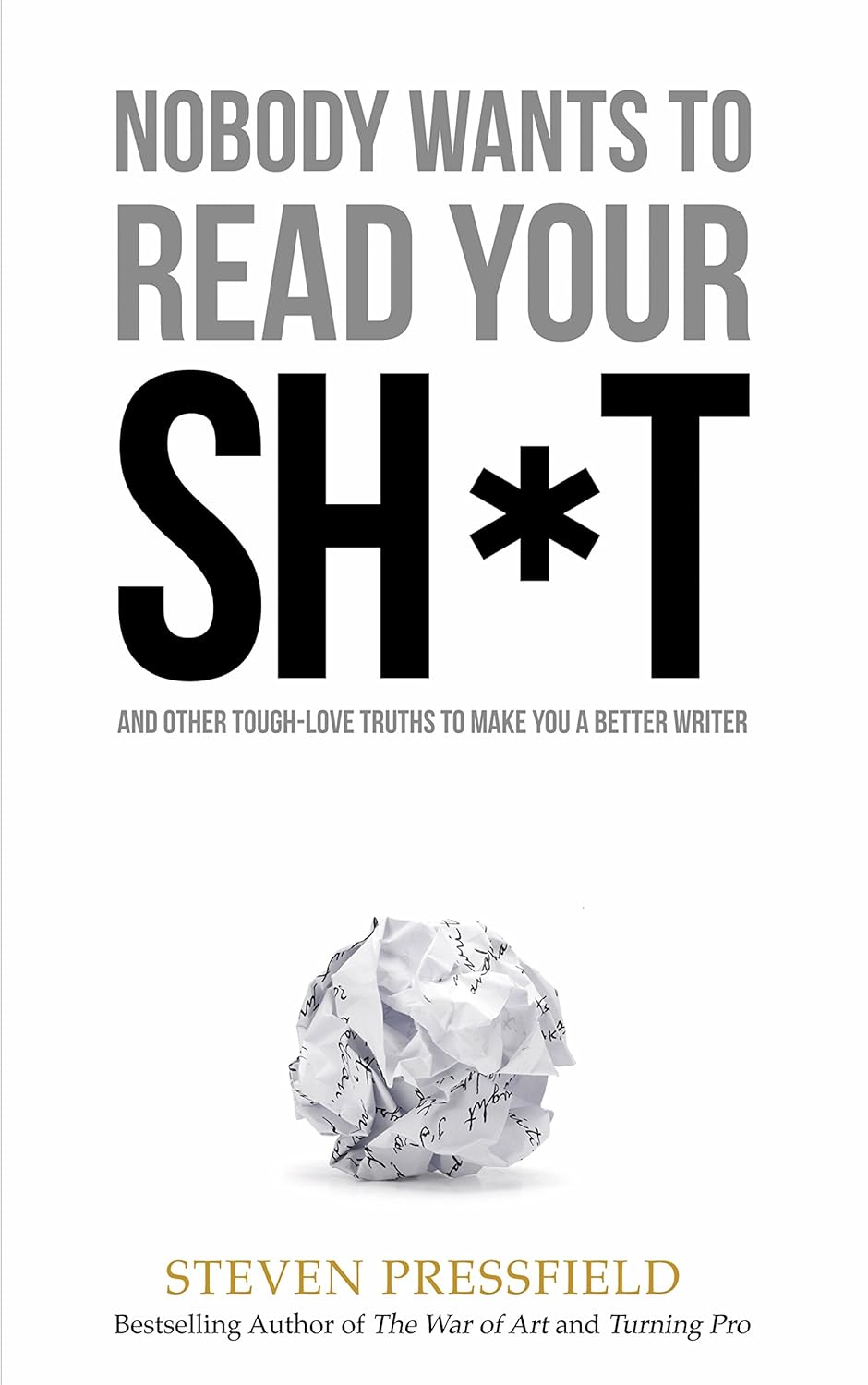
About Nobody Wants to Read Your Sh*t by Steven Pressfield: Learn to Write Words People Want to Read
You spend hours on a page. You choose each word with care. Then someone reads the first line and moves on. That can hurt, whether you are writing a story, a school essay, a sales post, or your first book. What went wrong? Your idea may be good, but the reader still needs a reason to stay.
Nobody Wants to Read Your Sh*t by Steven Pressfield starts with this hard truth and turns it into a useful lesson. People have busy lives. Your words must give them something worth their time. That may be a clear answer, a fresh idea, a strong feeling, or a story they want to finish.
At Bookish Wonderland, this book is for readers who want to think more clearly about the words they share. It invites you to look beyond what you want to say and ask what someone else wants to read.
Why the Title Sounds So Harsh
The title is bold, but its point is useful. A reader does not owe you attention simply because you worked hard. You have to earn that attention through the writing itself.
Pressfield explains that this way of thinking grew from his work in advertising. When people can ignore a message, the writer must make that message worth noticing. That lesson reaches beyond ads to other kinds of writing.
Think of the title as a firm push to care about your reader. It asks you to stop, look at your page, and check whether the words offer enough value. The goal is better work and a stronger reason for someone to keep reading.
What You Will Find Inside
This nonfiction writing book draws on Pressfield’s experience in advertising, screenwriting, fiction, narrative nonfiction, and self-help. He shares lessons from working across these fields and considers how writers can hold an audience’s interest.
The book connects writing with storytelling and the reader’s experience. Its appeal lies in asking a simple question with wide use: how can you make someone care about what comes next?
You can approach it as a guide to thinking about your craft. Read for ideas, reflect on your own work, and decide where those ideas fit. A writing guide becomes more useful when you bring a real piece of writing to the page beside it.
When Good Ideas Fail to Connect
Sometimes you know your subject well, yet your writing feels hard to follow. You may begin too far from the main point. You may share facts without showing why they matter. You may add so much detail that the best idea gets lost.
This book’s focus on the reader offers a helpful starting point. Before you write more, think about who will read the piece and what they need from it.
For example, a customer looking at a bag may want to know whether a laptop fits inside. A long story about your shop may leave that question unanswered. Putting the useful answer first gives the customer a clearer path through the page. That is a practical way to apply a reader’s point of view.
Give Your First Lines a Clear Job
Your opening is a chance to show readers why the page matters. You can use that chance to raise a question, name a real problem, or introduce a situation that feels worth exploring.
Try this while reading: take the start of something you wrote last week. Ask a friend to read only the first few lines. Then ask what they expect the piece to give them.
Their answer may show a gap between your aim and their experience. You can use that gap to revise the opening. This simple activity gives you a way to turn reading into practice, using your own work and a real reader’s response.
Make Your Ideas Easier to Follow
Clear writing gives each part a purpose. One line leads to the next. A useful detail arrives when the reader needs it. A point gets enough space to make sense before the page moves on.
As you read, keep a short piece of your own writing nearby. Look for places where the order feels confusing. Could a key fact come earlier? Could one long paragraph become two shorter ones?
These are suggested ways to practise while using the book. Small changes can help you see your work with fresh eyes. You do not need a whole new project to begin. An email, a caption, or a single page can give you enough material.
A Useful Read for New Writers
Starting to write can feel strange. You may have plenty of ideas but little sense of how to shape them for someone else. You may also worry that every first draft should sound polished.
Use this book as a reason to become curious about your choices. Notice what you put first, what you explain, and what you leave out. Ask which parts serve the reader and which parts need more work.
For a new writer, that habit can be valuable. It gives you specific things to try when a page feels weak. Progress then becomes a matter of making choices, testing them, and learning from the result.
For Content Creators and Small Business Owners
If you write for a business, you often have limited space to explain something useful. A product page, a social post, or a short video script must make sense to people who may know little about your work.
The reader’s point of view can help you choose what to include. What question brings someone to this page? What might confuse them? What information would help them take the next step?
A practical use is to review one piece of business content after each reading session. Choose one clear goal for the edit. You might explain a benefit, remove a vague claim, or make the next step easier to understand. Keep the changes honest and useful.
For Story Writers Who Want Readers to Care
A story gives you room to build a world, but every detail still asks for the reader’s time. When revising your own story, consider what makes each scene worth following.
Try asking simple questions. What does the main person want here? What stands in the way? What changes by the end of the scene? These questions are optional practice prompts you can use alongside your reading.
You can also note where you feel curious in the books you enjoy. What made you turn the page? Looking closely at your own reading habits can help you understand the experience you hope to create for others.
For Students With Something to Explain
Students write to share ideas, answer questions, and show what they understand. A reader may struggle when the main point is buried under long phrases or facts that lack a clear connection.
If you are a college or university student, you could use this book alongside your normal writing practice. Choose a paragraph from an assignment and ask whether each sentence helps explain your answer.
Keep your course rules and required sources in place. Then work on clarity, order, and the reader’s likely questions. This makes the book a possible addition to your learning routine, especially when you want to become more aware of how your writing comes across.
Turn Reading Time Into Writing Time
You do not need a day to work with a writing book. A small, regular reading slot can fit around classes, office hours, family duties, or running a shop.
Read a manageable amount, then pause. Write down one idea you want to explore in your own words. Pick a short piece of writing and try one change based on your reflection.
Save the earlier version so you can compare the two. Which version feels clearer? Which one gets to the point more smoothly? What still needs work?
This routine keeps your attention on use. Over time, your notes can become a personal record of the choices you tried and what you learned from them.
Is This the Right Book for You?
Choose this book if you want direct talk about writing and the challenge of holding attention. It may suit you if you enjoy learning from a working writer’s experience and are willing to question your own drafts.
The blunt title also gives a clue to its tone. This is a book for readers comfortable with strong language. The simple wording on this product page does not make the book a children’s reading guide.
Consider your goal before you buy. If your main need is spelling practice or detailed grammar lessons, check whether a dedicated language workbook would serve that task better. This book focuses on writing that gives readers a reason to care.
A Premium Copy for Your Reading Desk
Bookish Wonderland offers a premium printed copy for readers who value a pleasant reading experience. Premium here describes the physical qualities offered by our store.
The book uses premium eye-soothing cream paper, giving the pages a soft look for your reading sessions. Crystal-clear print keeps the words sharp and easy to follow.
High quality stitched and glue binding supports the pages and helps the book stand up to repeated use. These features make it a thoughtful choice for a book you may return to while working on new writing.
Keep it beside your notebook or at your desk, ready for the next time you want to pause, read, and rethink a draft.
Help Your Book Stay in Good Shape
A writing guide may spend time in a bag, on a desk, and beside many cups of tea. A few simple care habits help protect your copy through regular reading.
Use a bookmark to save your place. Keep the pages dry, turn them gently, and avoid forcing the spine flat. Store the book away from damp walls and places where water can spill.
If you carry it with other items, use a sleeve or a separate part of your bag. Good care works alongside the binding to help keep your reading copy in useful shape for longer.
Order From Bookish Wonderland With Ease
Bookish Wonderland brings together a large collection of premium, durable English books for readers with different interests. You can explore books for learning, work, and personal reading while choosing something that suits your current goals.
We offer nationwide delivery across Bangladesh, including addresses inside and outside Dhaka. Cash on Delivery is available across the country. A fast or urgent delivery option is also available in Dhaka; contact us to check arrangements for your address.
For Book price in Bangladesh, check the current price shown on this product page. If you need help with your order or have a question about the copy, message Bookish Wonderland on Facebook or Instagram before placing your order.
Give Your Next Draft a Better Start
Think about the page you have been putting off, the post that feels flat, or the story you want someone to finish. Bring that piece of writing with you when you open this book.
Nobody Wants to Read Your Sh*t by Steven Pressfield offers a direct invitation to take the reader’s time seriously. What you do with that idea starts at your own desk.
Order your premium copy from Bookish Wonderland today, choose your next small writing task, and give yourself time to read, practise, and revise.
If you require any customization or have any questions, please inbox us via FB or Insta.
| Primary Specification | |
| Author | Steven Pressfield |
| Narrator | Steven Pressfield |
| Editor | Shawn Coyne |
| Genre | Writing, Nonfiction, Creativity, Self-Help, Business, Communication |
| ISBN-13/ISSN | 978-1936891498 |
| ISBN-10 | 1936891492 |
| Publisher | Black irish Entertainment LLC |
| Publishing Date | April 25, 2016 |
| Language | English |
| Reading Age | 18+ years |
| Format | Printed book |
| Physical Specification & Quality | |
| Paper Quality | Premium eye-soothing cream paper |
| Binding Quality | High-quality stitched and glue binding (for longevity) |
| Print Quality | Crystal-clear print |
| Pages | 189 pages |
| Country | United States |
| Logistics Information | |
| Weight | 203 gm |
| Length | 8.5 inches |
| Width | 5.6 inches |
| Height | 0.48 inch |