

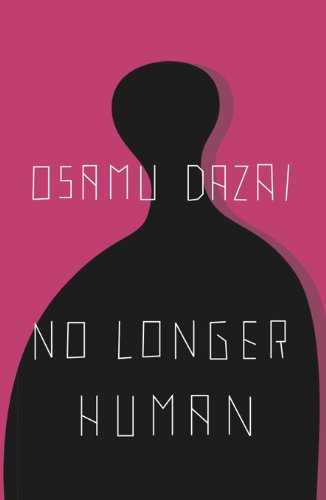
About No Longer Human by Osamu Dazai – A Dark Japanese Classic About Alienation, Identity, Shame, and the Search to Belong
No Longer Human by Osamu Dazai is a personal literary novel about a man who feels unable to understand other people or live comfortably among them. The story follows Yozo Oba, who grows up believing that he is different from everyone around him. He studies how people behave, hides his fear behind jokes, and becomes a clown so others will laugh instead of looking too closely at him.
As Yozo gets older, that mask becomes harder to maintain. He moves through school, friendships, romance, alcohol, destructive choices, and repeated attempts to escape his own life. He wants connection, yet he is frightened by it. He wants to be accepted, yet he does not believe he deserves acceptance. His notebooks become a painful record of someone who feels that he has failed at the basic task of being human.
First published in Japan in 1948, No Longer Human became one of Osamu Dazai’s most famous works. The novel is often described as semi-autobiographical because several parts of Yozo’s life echo experiences from Dazai’s own life. Its themes of loneliness, social performance, shame, addiction, and identity still connect strongly with modern readers.
When fitting in feels like acting every day
One of the strongest ideas in No Longer Human is the feeling that everyone else understands a set of rules that Yozo never learned. He watches people eat, work, speak, laugh, and build relationships, but ordinary human behavior seems mysterious to him.
Instead of showing this fear openly, he performs.
As a child, Yozo discovers that making people laugh can protect him. If he becomes funny, silly, or entertaining, no one will notice how afraid and disconnected he feels. Humor becomes a mask. The more successful the mask becomes, the harder it is for anyone to know the person underneath.
This part of the novel feels surprisingly modern. Many readers understand the pressure to act cheerful, confident, productive, or normal even when their inner life feels very different. Dazai takes that familiar idea to an extreme and asks what happens when a person no longer knows where the performance ends and the real self begins.
Yozo is difficult to like, but easy to understand
No Longer Human does not give readers a perfect hero. Yozo lies, avoids responsibility, hurts people, depends on others, and repeatedly makes choices that make his life worse. At times, readers may feel sympathy for him. At other times, they may feel frustrated or angry.
Dazai does not ask the reader to excuse everything Yozo does. Instead, he places us inside Yozo’s thinking and lets us see the fear beneath many of his actions. He is terrified of people, judgment, exposure, and rejection. Rather than face those fears honestly, he often escapes through performance, alcohol, unhealthy relationships, or self-destruction.
This makes the novel psychologically rich. Yozo can be both victim and cause of harm. He can be vulnerable and selfish at the same time. He can want love while behaving in ways that make love difficult to sustain.
For readers who enjoy morally complicated characters, this creates a far deeper experience than a simple story about a good person facing bad circumstances.
Three notebooks make the story feel like a private confession
Much of No Longer Human is structured through notebooks written by Yozo. This gives the novel the feeling of reading something private that was never meant for strangers.
The notebooks move through different stages of his life, from childhood into adulthood. Because Yozo is telling his own story, everything reaches the reader through his memory and judgment. He decides which events matter, how other people should be described, and what his own actions mean.
That creates an important question: can we trust him completely?
Yozo is honest about many ugly parts of himself, yet he is also deeply trapped inside his own view of the world. He may misunderstand other people. He may see rejection where another person sees concern. He may describe himself as beyond saving even when someone else might describe him differently.
This makes the book useful for readers who enjoy unreliable narrators and psychological fiction. The story is not only about what happened. It is also about how one damaged person explains what happened to himself.
A novel about shame as much as sadness
People often describe No Longer Human as a depressing novel, but sadness is only one part of it. Shame may be even more important.
Yozo does not simply feel unhappy. He often feels embarrassed to exist. He believes his thoughts, fears, desires, and failures make him unworthy of normal human life.
That kind of shame changes how he sees everything.
A mistake becomes proof that he is defective. A failed relationship becomes evidence that he cannot connect. A moment of weakness becomes part of a larger story he tells himself about being less human than everyone else.
Dazai shows how dangerous this pattern can become. When someone believes every failure proves that they are fundamentally bad, growth becomes difficult. Instead of saying, “I did something wrong,” the person starts saying, “I am wrong.”
The novel does not offer easy therapy language or a simple solution. It simply shows the emotional cost of living inside that belief for too long.
Social class and changing Japan shape Yozo’s world
Yozo comes from a wealthy provincial family, and his background affects the way he moves through society. He grows up with privilege, but privilege does not protect him from fear or isolation.
The novel also sits within a period of major change in Japan. Traditional family expectations and social structures were being challenged by modern ideas and changing cultural life. Yozo feels caught between worlds. He belongs to a respected family, yet he cannot comfortably perform the role expected of him.
This historical setting gives the novel another layer. Yozo’s alienation is deeply personal, but it also appears inside a society that is changing around him.
Readers interested in Japanese literature can therefore approach the book in two ways: as an intimate psychological confession and as a work shaped by the cultural tensions of early twentieth-century Japan.
Why modern readers still connect with it
No Longer Human was published in 1948, but its central fears remain familiar. People still worry about fitting in. They still hide pain behind humor. They still compare their private selves with the public versions of other people. They still wonder whether everyone else understands life better than they do.
This may explain why the novel remains widely read by younger generations.
The story can feel especially strong for readers who have experienced loneliness, social anxiety, identity confusion, or the sense of performing a version of themselves for others. That does not mean every reader will identify with Yozo’s actions. The book goes into much darker territory, including addiction, abusive situations, and suicidal behavior.
Its value comes from how directly it explores alienation without making it pretty.
This is a dark book, not a comfort read
Readers should know before buying that No Longer Human contains heavy themes. The story includes depression, alcohol and drug abuse, sexual exploitation, suicide attempts, toxic relationships, and intense self-hatred.
These subjects are central to the novel, not brief background details.
Because of this, the book is better suited to mature readers who are comfortable with emotionally difficult material. Someone looking for an uplifting story or a quick motivational message may find it overwhelming.
However, readers who appreciate dark literary fiction often value the book precisely because it refuses to soften Yozo’s experience. Dazai writes with an uncomfortable closeness that makes the character’s inner world feel immediate.
The novel is short, but emotionally it can feel much larger than its page count.
A strong choice for students of Japanese and world literature
No Longer Human can be useful for students studying Japanese literature, modern classics, psychological fiction, existential themes, unreliable narration, or autobiographical elements in fiction.
The book raises many discussion questions. Is Yozo truly incapable of understanding others, or does fear stop him from trying? Is his clowning a survival skill or a form of dishonesty? How much responsibility should he take for the people he hurts? Does his self-hatred make him more honest, or does it distort the truth?
Students can also compare the novel with Dazai’s life, but it is important not to treat Yozo and Dazai as exactly the same person. The novel uses autobiographical material while remaining fiction.
For book clubs, these questions can create a strong discussion because different readers often react to Yozo in very different ways.
A premium physical copy for careful reading
Bookish Wonderland prepares this copy for readers who want a comfortable physical edition of this modern classic. Premium eye-soothing cream paper gives the pages a softer tone, while crystal-clear printing keeps the text sharp and easy to follow.
The book also uses high-quality stitched and glue binding for better page support and longevity. This is useful for a title readers may underline, annotate, reread, or keep as part of a Japanese literature collection.
These physical details are presented here once so the product page stays clear without repeating the same specifications in every section.
Why order No Longer Human from Bookish Wonderland
Bookish Wonderland makes English books easier to order across Bangladesh. Nationwide delivery is available inside and outside Dhaka, and Cash on Delivery is available across the country.
Customers in Dhaka can also ask about fast or urgent delivery when available. This can help when the book is needed for a class, gift, reading plan, literature discussion, or personal collection.
When comparing the Book price in Bangladesh for No Longer Human by Osamu Dazai, consider the complete physical reading experience as well as the listed price. Comfortable cream paper, clear printing, durable binding, flexible payment, and convenient delivery can all add value to a classic you may want to keep for years.
Read a classic that looks directly at the fear of not belonging
No Longer Human by Osamu Dazai is not an easy book because it does not offer an easy version of its narrator.
Yozo wants connection but fears people. He wants acceptance but expects rejection. He uses humor to hide his real emotions, then becomes trapped inside the mask he created. His life slowly turns into a record of shame, dependence, failed relationships, addiction, and the belief that he has lost his place among other human beings.
Yet the novel remains powerful because readers can recognize smaller versions of the same fear: pretending to be fine, wondering how others seem so certain, or hiding parts of ourselves because we think they will not be accepted.
If you enjoy Japanese classics, psychological fiction, existential themes, complex narrators, and books that stay in your mind after the final page, No Longer Human is a major work worth experiencing.
Order No Longer Human by Osamu Dazai from Bookish Wonderland for a premium physical reading copy with cream paper, crystal-clear print, strong stitched and glue binding, nationwide delivery, and Cash on Delivery.
New Directions also confirms that its standard Donald Keene paperback edition is 192 pages and that the book remains a major exploration of individual alienation from society.
If you require any customization or have any questions, please inbox us via FB or Insta.
| Primary Specification | |
| Author | Osamu Dazai |
| Translator | Donald Keene |
| Narrator | David Shih |
| Genre | Literary Fiction, Psychological Fiction, Semi-Autobiographical Fiction, Existential Fiction |
| ISBN-13/ISSN | 978-0811204811 |
| ISBN-10 | 0811204812 |
| Publisher | New Directions |
| Publishing Date | January 17, 1973 |
| Edition | 8th |
| Language | English |
| Reading Age | 16+ years |
| Format | Printed book |
| Physical Specification & Quality | |
| Paper Quality | Premium eye-soothing cream paper |
| Binding Quality | High quality stitched and glue binding (for longevity) |
| Print Quality | Crystal-clear print |
| Pages | 177 pages |
| Country | Japan |
| Logistics Information | |
| Weight | 183g |
| Length | 8.5 inches |
| Width | 5.6 inches |
| Height | 0.5 inches |