

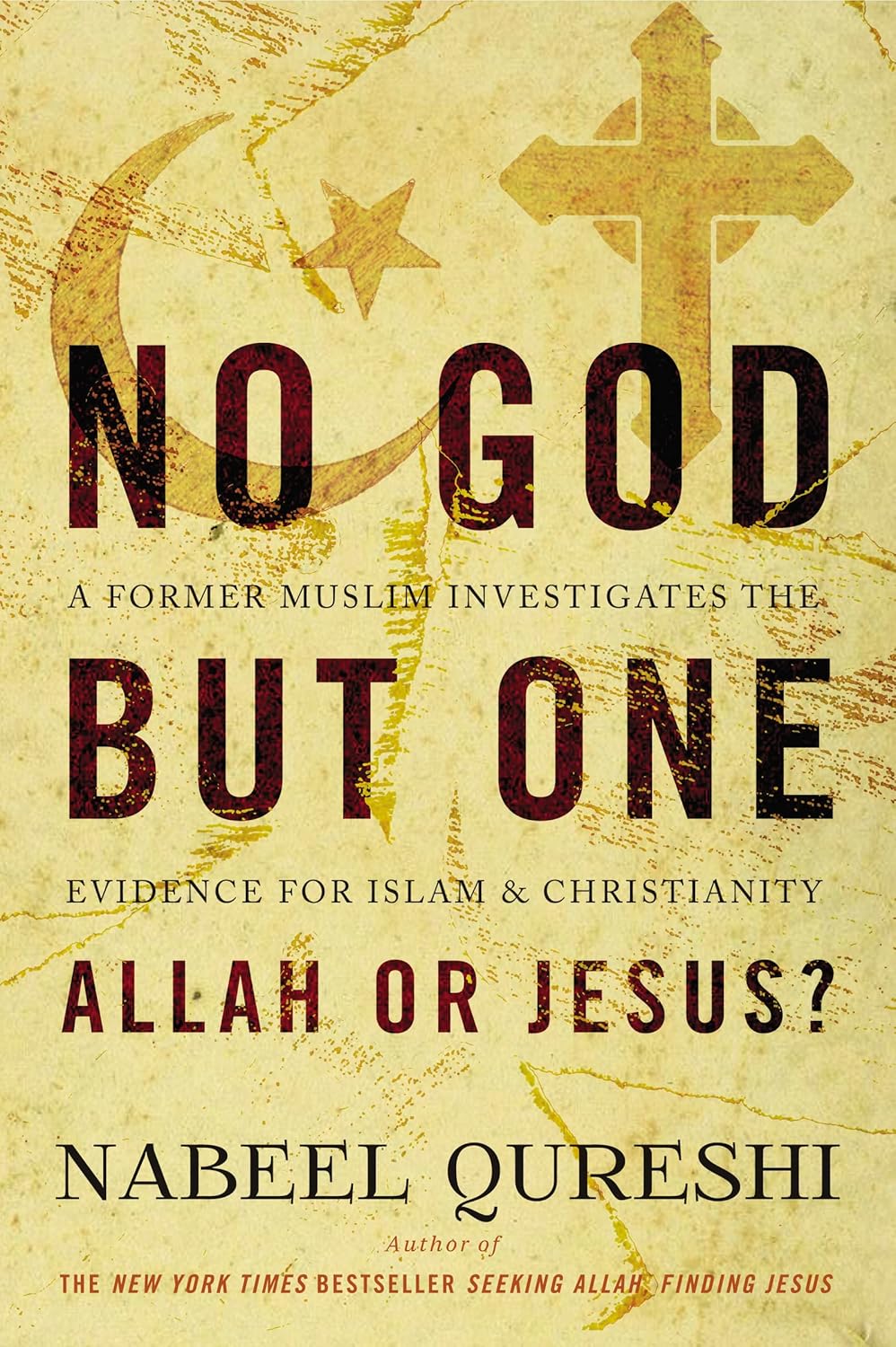
About No God but One: Allah or Jesus? by Nabeel Qureshi – Explore the Differences Between Islam and Christianity Through Faith, History and Evidence
Can two religions that believe in one God teach different things about who God is? Why do Muslims and Christians understand Jesus differently? And how can someone examine religious beliefs that have shaped their entire life?
No God but One: Allah or Jesus? by Nabeel Qureshi explores these questions through history, religious teachings, personal experiences, and the author's interpretation of evidence.
In this follow-up to Seeking Allah, Finding Jesus, Qureshi moves beyond his personal conversion story to examine the beliefs of Islam and Christianity in greater detail. Raised in a Muslim family before becoming a Christian, he explains why he came to believe that the differences between the two religions matter.
The book compares the Quran and the Bible, Tawhid and the Trinity, Muhammad and Jesus, Sharia and the Gospel, and historical questions surrounding the crucifixion and resurrection of Jesus. Qureshi presents these subjects from a Christian apologetics perspective, arguing for Christianity while discussing Islamic beliefs and objections.
Published by Zondervan in 2016, this 320-page nonfiction book is intended for readers interested in comparative religion, Christian apologetics, and questions about faith.
Why Do Islam and Christianity Have Different Beliefs?
Islam and Christianity share important historical figures and teach belief in one God. However, they differ in their understanding of Jesus, scripture, salvation, and the nature of God.
These differences can be confusing for someone who has only studied one religion.
Qureshi organizes his book around major questions to help readers understand where the teachings differ.
Rather than discussing religious ideas without context, he uses stories, historical sources, and comparisons to explain his arguments.
The result is an introduction to major theological disagreements from the perspective of someone who has personally belonged to both religious communities.
Discover the Difference Between Tawhid and the Trinity
One of the book's central discussions concerns the nature of God.
Islam teaches Tawhid, the absolute oneness of God. Mainstream Christianity teaches the Trinity: one God in three persons, the Father, Son, and Holy Spirit.
Qureshi examines these teachings and explains why their differences were important in his own religious journey.
He considers their theological meaning and presents his reasons for accepting the Christian understanding.
The title reflects this debate, although Allah is also the Arabic word for God used by Arabic-speaking Christians. The disagreement concerns theological beliefs, not simply the language used to name God.
Explore the Different Teachings About Jesus
Who was Jesus, and what role does he have in each religion?
Muslims honor Jesus as a prophet and the Messiah but do not accept that he is God. Mainstream Christians believe Jesus is divine and central to salvation.
These differences form an important part of Qureshi's investigation.
He examines the historical questions surrounding Jesus' crucifixion, resurrection, and claims about his identity.
The author presents arguments supporting the Christian understanding of these events while addressing Islamic explanations.
Readers can examine the arguments and consider how different religious traditions interpret the same historical figure.
The Quran and the Bible Under Examination
Religious beliefs are deeply connected to sacred texts.
Qureshi examines the Quran and the Bible, asking questions about their origins, transmission, and claims of divine authority.
He also explores how the two scriptures present important religious events and figures.
For readers unfamiliar with comparative theology, these discussions provide a starting point for understanding why the two traditions sometimes reach different conclusions.
The author uses historical arguments to support his position. However, his interpretations are not universally accepted by Muslim scholars or all historians.
For a wider understanding, readers may also want to study Islamic scholarship and independent academic research alongside his arguments.
Sharia and the Gospel: Two Different Approaches
Another important subject is the relationship between religious belief and the way people live.
Qureshi compares Sharia, which concerns Islamic guidance for life and conduct, with the Christian Gospel, the message centered on Jesus and salvation.
He examines how each tradition understands humanity's relationship with God.
His discussion focuses on differences in religious teachings, moral responsibility, and salvation.
The book presents his Christian interpretation rather than a comprehensive account of every Muslim or Christian theological tradition.
This section can help readers identify important terms and understand why questions about faith often involve everyday life as well as abstract beliefs.
Understand the History Behind Jihad and the Crusades
Religious history contains difficult events that continue to influence discussions today.
Qureshi examines jihad and the Crusades as part of his comparison between Islam and Christianity.
He considers historical examples and their relationship to religious teachings.
These subjects involve many historical, political, and theological factors, and interpretations differ among scholars and believers.
The author's discussion gives readers one perspective on these controversial questions.
Approaching this section thoughtfully can help readers distinguish between historical events, religious teachings, and the actions of individual communities.
A Personal Journey That Makes the Questions Meaningful
Qureshi's interest in these subjects was deeply personal.
He was raised in a Muslim family and later converted to Christianity after years of investigating religious questions.
His earlier book, Seeking Allah, Finding Jesus, describes that journey in greater detail.
In No God but One, he returns to the questions that influenced his decision and shares what he learned through further study.
His experiences remind readers that changing religious beliefs can affect friendships, family relationships, and personal identity.
These personal accounts bring a human element to discussions that might otherwise feel like academic debates.
Learn About Religion Without Getting Lost in Complicated Terms
Comparing two major religions can feel difficult, especially when unfamiliar words and historical arguments appear together.
This book uses a question-based structure to organize the discussion.
Instead of covering every aspect of Islam and Christianity, Qureshi concentrates on major differences and the evidence he believes is relevant.
Readers can study one topic at a time, return to earlier chapters, and use the book's notes to explore particular claims.
The structure makes it useful for readers who want to understand the author's reasoning without beginning with a specialist theology textbook.
What Will You Discover Inside This Book?
No God but One: Allah or Jesus? covers several important subjects:
-
Comparative religion: Explore differences between Islam and Christianity.
-
Religious history: Examine historical events and their interpretations.
-
Theology: Learn about Tawhid, the Trinity, and salvation.
-
Sacred scriptures: Consider arguments about the Quran and the Bible.
-
Personal experience: Understand how Qureshi's faith journey shaped his writing.
-
Historical evidence: Review the author's arguments concerning Jesus and Muhammad.
-
Difficult questions: Consider how religious beliefs affect personal decisions.
The book combines personal storytelling with theological arguments and historical discussion.
Who Should Read No God but One?
This book is intended for adult readers interested in comparative religion, theology, religious history, and Christian apologetics.
It may interest students, researchers, and readers exploring Qureshi's personal perspective on Islam and Christianity.
It can also be used for individual study or group discussions. Readers should know that the author argues from a Christian viewpoint rather than offering a religiously neutral textbook.
A Premium Edition for Your Reading Collection
Bookish Wonderland offers a premium printed edition with features designed for comfortable reading:
-
Premium eye-soothing cream paper.
-
Crystal-clear printing for sharp, readable text.
-
High-quality stitched and glue binding designed for longevity.
The physical format is suitable for readers who want to revisit important chapters, take notes, and keep the book in their personal library.
Book price in Bangladesh and Easy Ordering
Check the current price of No God but One: Allah or Jesus? by Nabeel Qureshi on Bookish Wonderland.
We offer nationwide delivery inside and outside Dhaka, with Cash on Delivery available across Bangladesh. Customers in Dhaka can also ask about fast or urgent delivery.
For customization requests or ordering questions, contact us through Facebook or Instagram.
Add This Thought-Provoking Book to Your Collection Today
Explore Nabeel Qureshi's personal investigation of religious history, theology, and faith.
Order No God but One: Allah or Jesus? from Bookish Wonderland today and discover the arguments and questions presented in this comparative religion book.
If you require any customization or have any questions, please inbox us via FB or Insta.
| Primary Specification | |
| Author | Nabeel Qureshi |
| Narrator | Nabeel Qureshi |
| Editor | Kait Lamphere |
| Genre | Comparative Religion, Christian Apologetics, Theology |
| ISBN-13/ISSN | 978-0310522553 |
| ISBN-10 | 9780310522553 |
| Publisher | Zondervan |
| Publishing Date | August 30, 2016 |
| Language | English |
| Reading Age | 16+ years |
| Format | Printed book |
| Physical Specification & Quality | |
| Paper Quality | Premium eye-soothing cream paper |
| Binding Quality | High quality stitched and glue binding (for longevity) |
| Print Quality | Crystal-clear print |
| Pages | 320 pages |
| Country | USA |
| Logistics Information | |
| Weight | 329g |
| Length | 8.5 inches |
| Width | 5.6 inches |
| Height | 0.77 inches |