

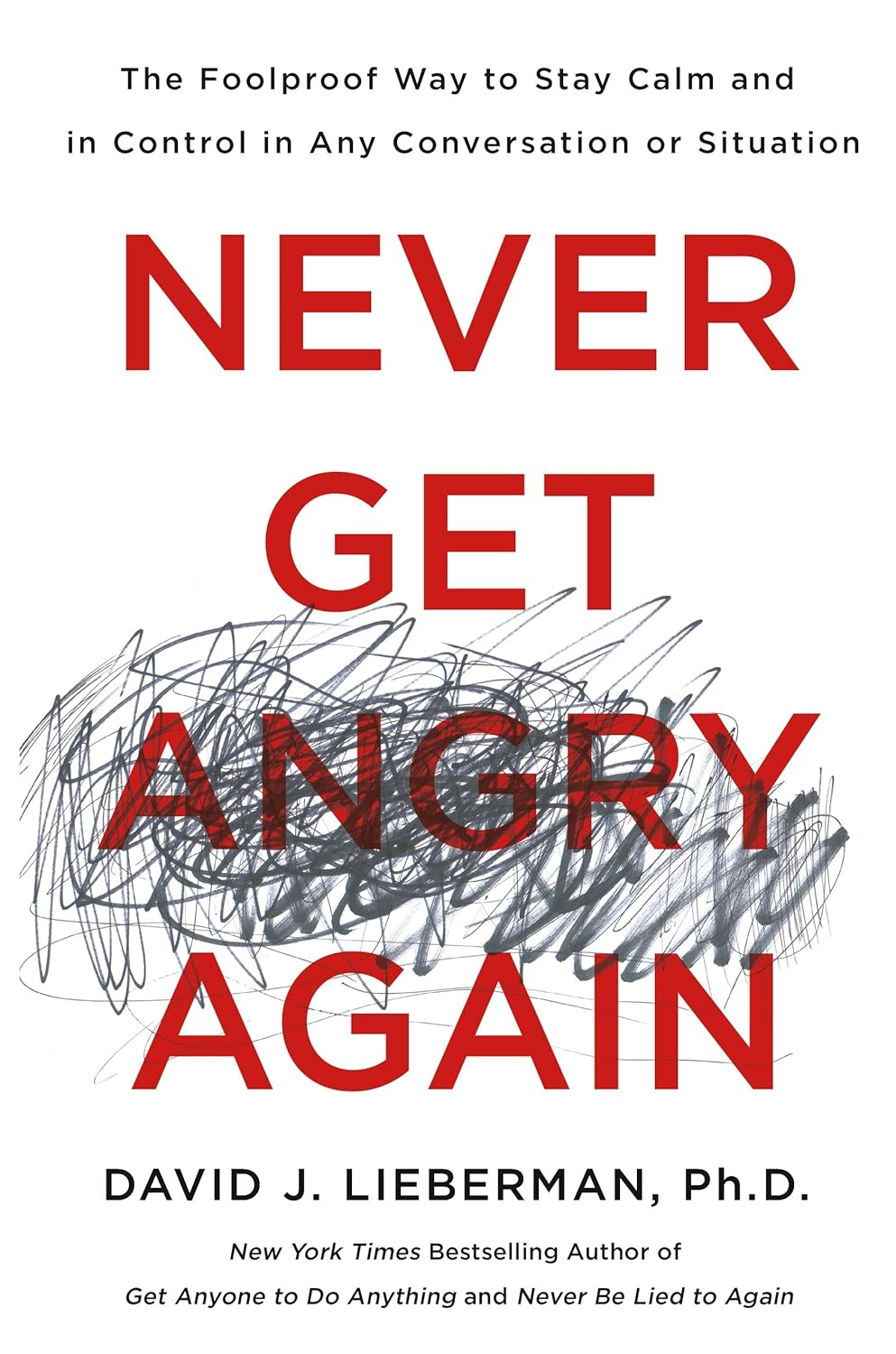
About Never Get Angry Again by David J. Lieberman Ph.D.: Understand Your Anger and Learn to Respond With Greater Calm
A small comment ruins your morning. Someone cuts in front of you, ignores your message, or speaks in a rude way, and suddenly you feel ready to shout. Later, you may wish you had handled it differently. Never Get Angry Again by David J. Lieberman Ph.D. is a self-help book for readers who know this feeling and want to understand what happens before an angry reaction takes over. Instead of offering only quick tricks for staying quiet, Lieberman asks readers to look at the deeper reasons they become upset. He explores the mind, the body, and personal beliefs, then offers ways to change how a difficult moment is understood. This is a book about building a calmer way of seeing daily life, not pretending that hurtful actions are acceptable or that every problem will disappear.
Why Does One Small Thing Make You So Upset?
Think about a day when you are tired and someone makes a simple mistake. On another day, you might laugh it off. Today, it feels like the last straw. The event is the same, but your reaction is different. Lieberman's central idea is that anger involves more than the action happening in front of you. The meaning you give that action can make it feel larger and more personal. The book invites you to notice what is happening inside you before blaming every feeling on another person. Understanding that difference can open up more choices. You may still need to speak up or fix a problem, but you can do it without letting the moment decide every word you say.
More Than Counting to Ten
Many people have heard the usual advice: breathe, count, walk away, and wait until you feel better. Some of these steps may help in the moment, but you can still find yourself upset again the next day. Lieberman questions the idea that controlling the reaction is the whole answer. His approach begins earlier, with examining why certain situations disturb you so deeply. If you can change the way you see an insult, delay, or disappointment, he argues, you may not become as angry in the first place. The book is not telling you to avoid every useful coping tool. It offers another way to think about the problem, one that looks at the source of the feeling as well as the moment it appears.
Look Beneath the Surface of Anger
Anger can seem simple when you are in the middle of it. You may say, "I am angry because that person was rude." Later, a more careful look might reveal embarrassment, fear, feeling overlooked, or a painful memory. Lieberman explores the emotional parts of anger and encourages readers to examine what their reactions may be protecting. That does not mean every angry feeling has one secret cause. It means asking a better question than who is to blame. What made this situation feel so important? What were you hoping would happen? What felt threatened? You can use questions like these to reflect after a difficult conversation and prepare yourself to respond more thoughtfully next time.
Speak Clearly Without Turning Every Talk Into a Fight
Difficult conversations happen in families, classrooms, friendships, and offices. One person says something sharp, another person answers even more sharply, and soon the real problem gets lost. Lieberman's ideas invite readers to examine their own reactions before responding. Imagine asking a coworker to correct a mistake without attacking their character, or explaining to a relative why a comment hurt you without shouting. These are examples of how readers might apply the book's broader ideas, not promises of a fixed script for every conflict. Calm communication still allows you to be firm. You can say no, ask for a change, or end a conversation when necessary. The difference is choosing your response instead of letting an emotional rush make it for you.
Make Room for Boundaries and Self Respect
Some readers hear the words "stay calm" and worry that they are being told to put up with unfair behavior. That is not a useful way to approach any anger book. It is possible to feel less overwhelmed and still protect yourself. The book includes discussion of redefining boundaries and reclaiming a sense of personal direction. Think of a friend who repeatedly ignores your time. You can explain what you will and will not do without insulting them or pretending that nothing happened. A boundary concerns your own actions and limits; it does not guarantee that another person will change. Reading with this distinction in mind helps make the ideas more practical and prevents calmness from becoming another name for silence.
Leave Old Arguments Where They Belong
Sometimes an argument ends, but your mind keeps returning to it. You imagine what you should have said, replay another person's words, or feel upset again when you see something that reminds you of the event. Never Get Angry Again includes a section devoted to making peace with the past. This does not require pretending that harm never happened. It means exploring how old experiences may continue to shape today's reactions and what it would mean to stop carrying every argument into the next one. The subject is especially relevant if you notice that a small disagreement can quickly turn into a much bigger fight about things that happened years ago. Reflection cannot rewrite the past, but it may help you recognize its place in the present.
Learn What the Pages Actually Offer
If you are comparing self-help books, it helps to know what you will be reading. Never Get Angry Again combines an explanation of anger with strategies for changing your perspective and responding with greater control. Its subjects include the reasons people become angry, the cost of trying to escape discomfort, pain, past experiences, boundaries, and more advanced psychological approaches. The author spends time explaining his view of the problem before moving into practical guidance. It is not simply a list of ten tricks or a short collection of inspiring sayings. Expect a full argument about why people react and how their understanding of a situation might change. Consider your own recent experiences.
What Can You Explore in This Book?
- Reasons a small event can lead to a much bigger emotional reaction.
- The difference between stopping an angry outburst and examining why it begins.
- How thoughts, emotions, physical experiences, and spiritual ideas feature in the author's approach.
- Ways to reflect on old hurts and difficult expectations.
- The connection between personal limits, relationships, and calmer responses.
- Psychological strategies the author presents for changing your perspective.
These points describe the book's subjects, not a guarantee that every reader will stop feeling anger. You can return to the sections that match your situation and discuss what you learn with someone you trust. If anger is leading to threats, violence, or serious problems at home, a book should not replace professional support or a safety plan.
Is This the Right Self Help Book for You?
This title may interest adults who often regret what they say during arguments, find themselves holding on to small frustrations, or want to understand their reactions more deeply. It can also appeal to readers of books about habits, relationships, personal growth, and emotional self-control. You do not need advanced psychology knowledge to follow the main questions. The author presents his ideas for general readers, although his approach includes philosophical and spiritual discussion rather than only step-by-step exercises. If you want a practical book that also spends time explaining its ideas, this format may suit you. If you need treatment for severe anger or another mental health concern, seek support from a qualified professional rather than relying on the title's promise as a medical guarantee.
Meet the Author Behind the Ideas
David J. Lieberman, Ph.D., writes about human behavior and relationships. His other titles include Never Be Lied to Again, You Can Read Anyone, and Make Peace with Anyone. Never Get Angry Again was first published in 2018 by St. Martin's Press and carries the subtitle The Foolproof Way to Stay Calm and in Control in Any Conversation or Situation. Despite that bold subtitle, it is best to see the book as the author's approach to self-reflection and emotional control, not a promise that human anger can be removed forever. His writing brings together psychological ideas and a broad view of personal experience. Readers who like exploring the reasons behind behavior may find this a natural addition to their nonfiction collection.
A Comfortable Premium Copy for Your Reading Time
A thoughtful book is easier to return to when the physical copy feels comfortable in your hands. Bookish Wonderland offers Never Get Angry Again with premium eye-soothing cream paper, crystal-clear printing, and high-quality stitched and glue binding. The softer-looking pages give the text a gentle appearance, while sharp letters help you read each paragraph clearly. The binding is selected with repeated use in mind, whether you finish the book in a week or revisit a chapter after a difficult day. These are details of the copy offered by Bookish Wonderland, not specifications for every edition sold by other retailers. You can contact the store to ask about the available format or customization options before ordering.
Check the Current Price and Choose Your Copy
Book price in Bangladesh for Never Get Angry Again by David J. Lieberman Ph.D. is shown on the Bookish Wonderland product page. Check the current price and available copy before placing your order. This book is a useful option to consider if you prefer personal growth titles that ask you to reflect rather than simply repeat short motivational phrases. It may also make a thoughtful gift for a reader who has expressed an interest in understanding emotions or improving everyday conversations. Avoid giving it as a judgment about someone else's personality; a self-help book is most welcome when the reader wants it. Browse the listing, compare the details with your needs, and contact the team if anything about the available edition is unclear.
Get Your Book Delivered Across Bangladesh
You can order from Bookish Wonderland without traveling to a physical bookshop. The store offers nationwide delivery to addresses inside and outside Dhaka, helping readers in different parts of Bangladesh access its English book collection. Cash on Delivery is available across the country for customers who prefer to pay when the order arrives. Readers in Dhaka can ask whether fast or urgent delivery is available for their address. If you are buying a gift, building your home library, or adding one nonfiction title to your next order, these options make the purchase easier to arrange. For questions about delivery, formats, or customization, message Bookish Wonderland through Facebook or Instagram before checkout. The team can explain the available options so you can choose what works for you.
Start Reading With a Different Question in Mind
The next time someone interrupts you or a plan falls apart, you may still feel frustrated. The value of Never Get Angry Again by David J. Lieberman Ph.D. is in the question it invites you to ask: what is happening beneath my reaction, and how else might I understand this moment? Through its discussion of emotions, perspective, past pain, and personal limits, the book offers material for readers who want to examine their habits more closely. It cannot control the behavior of other people or promise a life without conflict. It can give you ideas to consider before the next difficult conversation. If that is what you want from your next self-help read, add this title to your Bookish Wonderland order. Check the listing for price and availability, then message the store on Facebook or Instagram if you need help selecting your copy. A calmer response can begin with curiosity about your own choices.
If you require any customization or have any questions, please inbox us via FB or Insta.
| Primary Specification | |
| Author | David J. Lieberman, Ph.D. |
| Narrator | David J. Lieberman Ph.D., Robert Fass |
| Genre | Self-Help, Psychology, Anger Management |
| ISBN-13/ISSN | 978-1250308351 |
| ISBN-10 | 1250308356 |
| Publisher | St. Martin's Griffin |
| Publishing Date | March 5, 2019 |
| Language | English |
| Reading Age | 18+ |
| Format | Printed Book |
| Physical Specification & Quality | |
| Paper Quality | Premium eye-soothing cream paper |
| Binding Quality | High quality stitched and glue binding (for longevity) |
| Print Quality | Crystal-clear print |
| Pages | 240 pages |
| Country | United States |
| Logistics Information | |
| Weight | 264 gm |
| Length | 8.5 inches |
| Width | 5.6 inches |
| Height | 0.65 inch |