

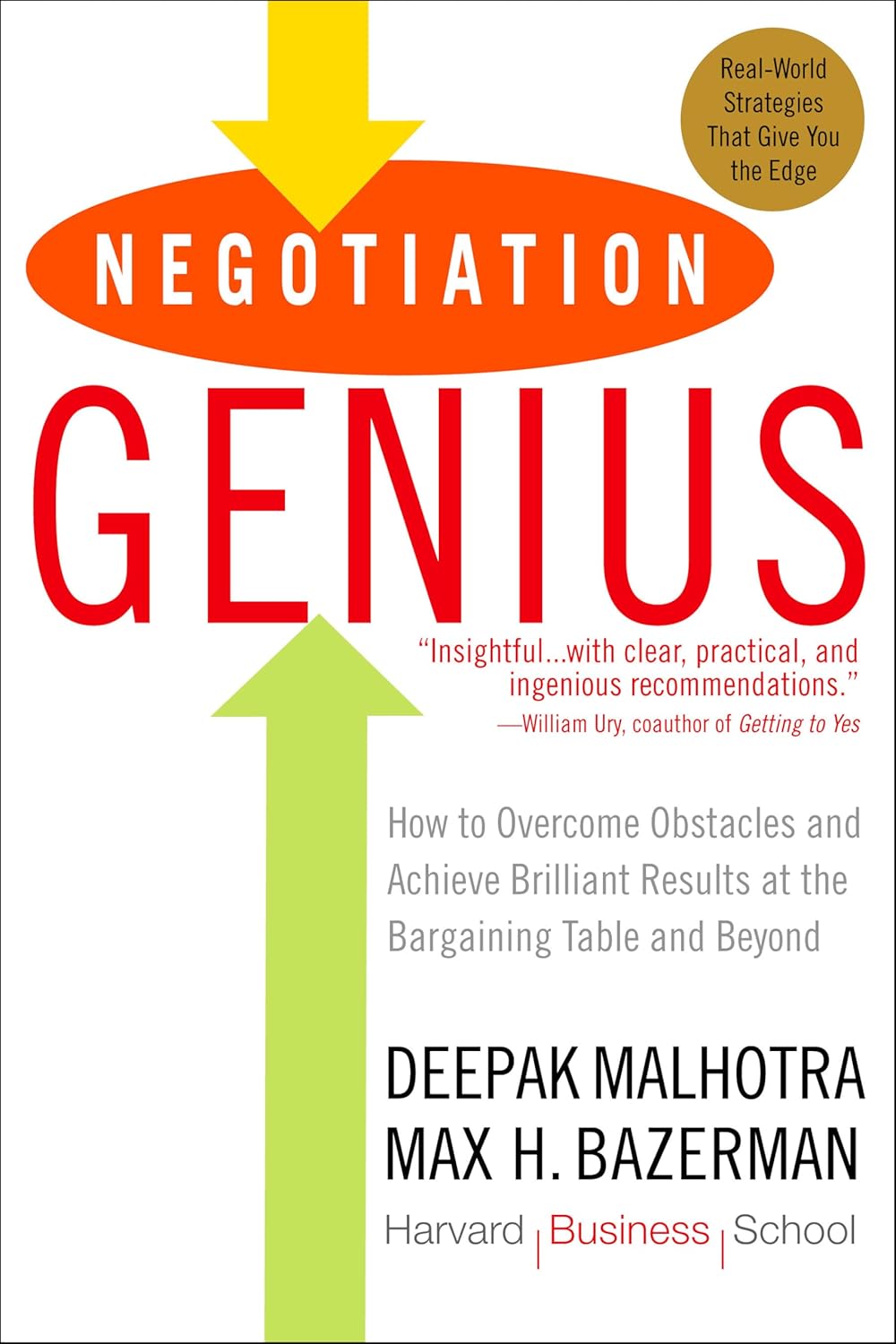
About Negotiation Genius by Deepak Malhotra and Max Bazerman: A Practical Guide to Better Deals, Smarter Decisions, and Stronger Negotiation Skills
Negotiation Genius by Deepak Malhotra and Max Bazerman is a practical guide for people who want better results from important conversations. Drawing on behavioral research, business experience, and years of teaching negotiation at Harvard Business School, the authors explain how strong negotiators prepare, gather information, create value, protect their interests, and recognize when a deal is not worth accepting. The lessons can be used in salary discussions, purchases, sales, client conversations, business deals, and workplace disagreements. Instead of treating negotiation as a natural talent that only confident people possess, the book breaks it into habits and decisions that can be learned. Readers see how to understand what the other side values, how to avoid common thinking mistakes, and how to walk into a difficult conversation with a clearer plan. It is detailed enough for experienced professionals but written so that beginners can follow the main ideas without needing a business degree.
Good Negotiation Starts Before You Sit Down
Many people think negotiation begins when two sides start talking, but Malhotra and Bazerman show that much of the work happens earlier. Before you negotiate, you need to understand your goals, your alternatives, the limits you should not cross, and the issues that matter most to the other side. If you have no idea what you will do when an agreement fails, pressure can push you toward a poor deal. The book helps readers organize these choices before the conversation starts. This is useful for a job offer, a supplier discussion, a purchase, or a difficult client meeting. Instead of walking in with only one number in mind, you learn to consider several possibilities and identify the information that could change your position. Preparation cannot force the other side to cooperate, but it gives you a stronger base for making calm decisions when the conversation becomes tense.
Learn the Difference Between Claiming Value and Creating Value
A common mistake is to treat every negotiation as a fight over one fixed amount. Often, however, the two sides care about different things. One person may focus on price while another cares more about timing, flexibility, future work, location, or risk. Negotiation Genius shows how these differences can create room for a better agreement. A company, for example, may have little flexibility on salary but more freedom around a signing bonus, remote work, vacation, or a start date. If both sides discuss only one number, they can miss options that help each of them. Creating value does not mean giving everything away. Once more possibilities are on the table, you still need to protect your own interests and decide what a fair agreement looks like.
Your Best Alternative Gives You Real Power
One of the most important negotiation ideas is knowing what you will do if the current deal fails. That alternative affects how much pressure you should feel and what you should be willing to accept. A second job offer, another supplier, a different buyer, or another way to solve the problem can make you less dependent on one conversation. The book encourages readers to improve these alternatives before negotiating whenever possible. That may mean collecting several quotes, speaking with more than one employer, or developing another route to the same goal. Real options are more useful than pretending to have power you do not possess. When you know your alternatives clearly, you can judge an offer against something real and decide whether continuing the discussion is better than walking away.
Stop Guessing and Start Learning What the Other Side Values
A strong negotiator does more than speak well; they gather information. Malhotra and Bazerman explain that hidden interests often decide whether an agreement is possible. The other side may care about something you have not considered, or they may be working under limits you cannot see. Useful questions can reveal those details. The authors also warn against deciding too quickly that strange behavior is irrational. A person may have private information, internal rules, pressure from someone else, or goals that make their behavior sensible from their point of view. Before calling the other side unreasonable, ask what you may be missing. That habit can reduce unnecessary conflict and reveal options that would otherwise stay hidden.
Negotiate Even When You Feel Weaker
Not every negotiation begins with equal power. You may be a new employee speaking with a large company, a small business dealing with a major supplier, or a customer facing an organization with far more resources. Negotiation Genius pays attention to these situations instead of assuming both sides are equally strong. The authors show that power can come from information, preparation, alternatives, timing, reputation, and understanding what the other side needs. A weaker position does not mean you will always get what you want, but it also does not mean you should surrender before the conversation begins. The book helps readers look for leverage that is easy to miss and avoid unnecessary concessions simply because the other side appears more powerful.
Handle Threats, Ultimatums, and Hardball Tactics Without Losing Control
Some negotiations become difficult because the other side uses pressure. They may issue an ultimatum, make a threat, hide information, or try to force a quick decision. These tactics can push people into emotional reactions and poor choices. The authors explain how to slow the situation down, understand what the tactic is trying to achieve, and respond without copying the same aggressive behavior. This can be useful in business, sales, purchasing, or workplace discussions where the relationship may still matter afterward. The goal is not to become passive. It is to stay clear enough to choose your response instead of letting pressure choose it for you.
Know When a Deal Is Worse Than No Deal
Closing an agreement is not always a success. Sometimes the smartest decision is to say no. Negotiation Genius repeatedly returns to the importance of knowing your limits and comparing any proposal with your best alternative. People can become attached to finishing simply because they have already spent time, money, or effort on the process. That can lead them to accept terms that no longer make sense. The book helps readers separate the desire to finish from the question of whether the deal is actually beneficial. This matters in salary talks, purchases, partnerships, contracts, and other situations. Walking away can feel uncomfortable, but a bad deal does not become good simply because both sides sign it.
Learn From Real Cases Instead of Empty Motivation
This book is not built around motivational slogans. Readers see how negotiators frame problems, how new information changes a deal, and how psychological biases can affect judgment. The examples also show that smart people can make predictable mistakes when pressure, ego, fear, or limited information enters the room. Seeing those errors in other situations can make them easier to notice in your own negotiations.
What Can You Learn From Negotiation Genius?
- How to prepare before an important negotiation instead of relying on instinct.
- How to understand alternatives, limits, and the point where walking away makes sense.
- How to create value by finding differences in what each side cares about.
- How to gather information and discover interests the other side may not reveal at first.
- How to respond to threats, lies, ultimatums, and other hardball tactics.
- How to negotiate ethically while still protecting your own interests and building trust.
These skills can be used in many situations, but the book does not promise that every negotiation will end in your favor. It gives you a stronger process for making decisions, asking questions, and protecting yourself when the outcome matters.
Useful for Salary Talks, Business Deals, and Everyday Decisions
You do not need to be a corporate executive to use this book. A student negotiating a first job offer, a freelancer discussing payment, a manager handling a difficult client, a business owner buying services, or a customer solving a problem can all face situations where negotiation matters. Even personal decisions can involve different interests, limited information, and choices about when to compromise. The exact words may change, but preparation, alternatives, information, value creation, and clear limits remain useful. Readers can return to the sections that match the situation they are facing.
Meet the Authors Behind the Framework
Deepak Malhotra and Max Bazerman are Harvard Business School professors known for work in negotiation, decision making, and behavioral research. The publisher describes Negotiation Genius as drawing on decades of behavioral research and experience with thousands of business clients. Their academic background gives the book a strong research base, while the cases and practical advice keep it connected to real negotiations. The book was first published by Bantam in 2007, with a paperback edition following in 2008. It is a standalone business and self-improvement title, so you do not need another book before starting it. The authors write for both beginners and experienced negotiators.
A Premium Copy for Study, Notes, and Repeat Reading
Bookish Wonderland offers Negotiation Genius with premium eye-soothing cream paper, crystal-clear printing, and high-quality stitched and glue binding. The softer-looking pages make longer reading sessions more comfortable, while clear print helps you follow examples and practical advice easily. The strong binding is useful for a book you may reopen before future negotiations, mark with notes, or keep near your desk for reference. These details describe the copy offered by Bookish Wonderland and should not be assumed for every edition sold elsewhere. If you want to confirm the cover, size, format, or customization options, contact the store before ordering.
Check the Current Price and Choose Your Copy
Looking for the Book price in Bangladesh for Negotiation Genius by Deepak Malhotra and Max Bazerman? Check the Bookish Wonderland product listing for the current price and available edition before ordering. The live listing is the best place to see the amount that applies when you purchase instead of relying on an old or guessed price. This book can be a useful addition to a business, career, leadership, or personal-development collection. It can also make a thoughtful gift for a student, manager, entrepreneur, freelancer, salesperson, or anyone preparing for an important professional conversation. Because it is a standalone title, you do not need to buy a series to use its ideas. If you need edition details or customization, message the store before checkout.
Get Negotiation Genius Delivered Across Bangladesh
You can order this business book from Bookish Wonderland without visiting a physical bookstore. Nationwide delivery is available across Bangladesh, including addresses inside and outside Dhaka. Cash on Delivery is available throughout the country for customers who prefer to pay when the book arrives. If you live in Dhaka and need your copy quickly, ask about the fast or urgent delivery option for your area. Bookish Wonderland also offers a large premium English book collection, making it easier to find another title about business, leadership, psychology, or personal growth in the same place. If you have questions about delivery, the available copy, or customization, message us through Facebook or Instagram before completing your purchase.
Walk Into Your Next Negotiation With a Better Plan
Negotiation Genius by Deepak Malhotra and Max Bazerman is built around a simple idea: better outcomes come from better thinking before and during the conversation. The book teaches readers to prepare carefully, understand alternatives, discover hidden interests, create value, handle pressure, and know when to walk away. It also shows that negotiation is not about speaking louder or acting more aggressive than the other person. Good negotiation depends on judgment, information, timing, ethics, and the ability to notice options others miss. If you want a practical guide for salary talks, business deals, client discussions, purchases, and difficult conversations, this book is worth adding to your shelf. Order Negotiation Genius from Bookish Wonderland, check the current listing for price and availability, and message us through Facebook or Instagram if you need help choosing your copy or requesting customization.
If you require any customization or have any questions, please inbox us via FB or Insta.
| Primary Specification | |
| Author | Deepak Malhotra, Max Bazerman |
| Narrator | Fred Sanders |
| Editor | Robert Bull |
| Genre | Business, Negotiation, Psychology, Self-Help |
| ISBN-13/ISSN | 978-0553384116 |
| ISBN-10 | 0553384116 |
| Publisher | Bantam |
| Publishing Date | August 26, 2008 |
| Language | English |
| Reading Age | 18+ |
| Format | Printed Book |
| Physical Specification & Quality | |
| Paper Quality | Premium eye-soothing cream paper |
| Binding Quality | High quality stitched and glue binding (for longevity) |
| Print Quality | Crystal-clear print |
| Pages | 352 pages |
| Country | USA |
| Logistics Information | |
| Weight | 373 gm |
| Length | 8.5 inches |
| Width | 5.6 inches |
| Height | 0.71 inch |