

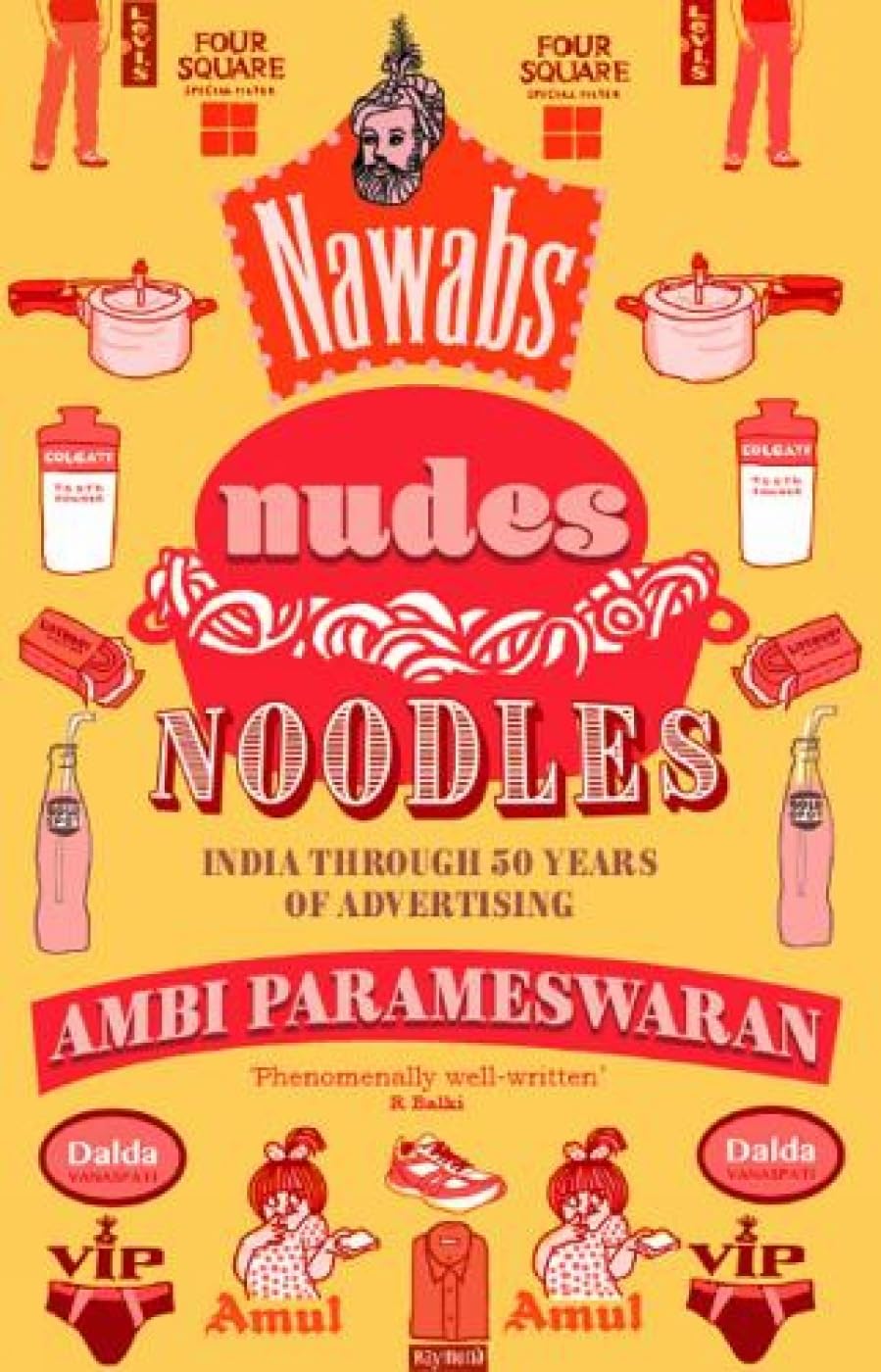
About Nawabs, Nudes, Noodles by Ambi Parameswaran: A Lively Journey Through India’s Advertising, Brands, and Changing Consumer Culture
Nawabs, Nudes, Noodles by Ambi Parameswaran looks at India through something people usually see every day and forget quickly: advertising. Instead of treating advertisements as only sales messages, the book uses them as clues to understand how Indian families, ambitions, tastes, fears, habits, and ideas changed over several decades. Parameswaran brings the perspective of someone who spent many years inside the advertising and marketing world, but the book is not simply a personal memoir. It looks outward at consumers and society. Familiar categories such as food, household products, beauty, fashion, children’s goods, and services become windows into bigger changes. Readers can see how brands learned to speak differently as television spread, the middle class grew, women’s roles changed, children became stronger voices in the home, and new lifestyles appeared. The result is a readable mix of business history, cultural observation, brand stories, and advertising insight that can interest marketers as well as general readers.
Advertising Can Tell You More About Society Than You Expect
An advertisement lasts only seconds on television or takes up one page in a newspaper, yet it must quickly understand what people care about. That is why old advertisements can become useful records of changing social values. A campaign made decades ago may show what a family was expected to look like, who made buying decisions, what counted as success, and which dreams brands believed people wanted. Parameswaran uses this basic idea throughout the book. He looks at how advertising did not simply change because agencies became more creative. It changed because consumers changed. New jobs, new media, new products, growing cities, changing gender roles, and wider access to global culture all affected the language brands used. This makes the book useful even if you do not work in advertising. You can read it as a popular history of modern Indian consumer culture, told through slogans, campaigns, products, and the people who created or watched them.
The Title Is Strange on Purpose
Nawabs, Nudes, Noodles is a title designed to make you stop and look twice. Parameswaran has explained that the three words point toward different kinds of advertising stories in the book. “Nawabs” connects with the famous use of the Nawab of Pataudi in suiting advertisements. “Nudes” points toward controversial advertising that used nudity or sexual imagery. “Noodles” reflects the place of packaged food and changing consumer habits in modern India. Together, the words create an unusual doorway into a serious subject. The book is not only about those three examples. They stand for a much wider world of celebrities, fashion, food, aspiration, controversy, and shifting taste. That playful title also matches the style of the book, which tries to keep advertising history lively rather than turning it into a dry textbook full of definitions.
See How Indian Consumers Changed Across Five Decades
The original 2016 edition carries the subtitle India through 50 Years of Advertising, and its central idea is exactly that broad. Parameswaran looks across decades to show how consumers and campaigns developed together. Early advertising worked in a media environment dominated more by print and radio. Television later became a major force, allowing brands to enter homes through memorable faces, music, stories, and repeated visual ideas. As economic and social conditions changed, advertisers also had to understand new kinds of buyers. Products that once represented simple usefulness could later be sold through lifestyle, identity, modernity, or personal choice. The book helps readers see that advertising does not stay frozen. A successful message from one decade can feel outdated in another because the person watching it has changed. For students and young marketers, this long view is valuable because it shows that consumer behavior is always moving.
Television Changed the Way Brands Entered Indian Homes
Parameswaran has said that television receives a large share of attention because it became such an important medium during the period covered by the original book. Television advertising could combine faces, voices, music, humor, emotion, and repeated characters in a way print could not. A short commercial could create a family scene, a child’s wish, a romantic moment, or a social argument and make the brand part of that story. The book revisits the kind of campaigns that many Indian viewers grew up remembering, while also looking at what those campaigns reveal about their time. Readers interested in media history can see how the arrival and growth of television changed not only the scale of advertising but also its emotional style. Those who remember older commercials may enjoy the nostalgia, while younger readers can discover why certain slogans, jingles, and characters stayed in public memory for years.
Women, Family, and Modern Life Keep Changing on the Page
Advertising often shows an idealized version of daily life, so changes in the way women appear in ads can reveal changes in the society around them. Over decades, the image of the homemaker, working woman, wife, mother, and independent consumer has changed in important ways. A brand may still sell soap, pressure cookers, food, clothing, or beauty products, but the person being addressed is not always imagined in the same role. Nawabs, Nudes, Noodles asks readers to notice these shifts instead of seeing campaigns only as catchy entertainment. That makes the book useful for people interested in gender, media, culture, and consumer behavior. It also shows one of advertising’s tensions: campaigns can reflect social change, but they can also repeat old ideas. Looking at both sides helps readers understand why certain advertisements become loved, mocked, debated, or criticized.
Controversy, Censorship, and the Limits of What Ads Can Say
Advertising does not operate without limits. Campaigns can be questioned because of sexuality, religion, taste, public decency, stereotypes, or other social concerns. Parameswaran discusses controversial advertising and the systems that have shaped what could appear in public media. He has also spoken about the experience of working in an era when Doordarshan approval could matter and about the later role of industry self-regulation. These parts of the story show that advertising is always negotiating between creativity and public acceptability. A campaign that one group sees as bold may feel offensive to another. Standards can also change across time. This makes censorship and controversy especially interesting in a historical book because yesterday’s shocking idea may later look ordinary, while an old “normal” advertisement may become uncomfortable when viewed through modern values.
What Will You Discover Inside This Book?
- A broad look at India through five decades of advertising and changing consumer behavior.
- Stories about television, print, radio, brands, celebrities, families, children, and social change.
- Examples of how advertising responded to changing ideas about aspiration, gender, lifestyle, and status.
- Discussion of controversial campaigns, censorship, and the boundaries advertisers have faced.
- Behind-the-scenes observations from an author with decades of experience in marketing and advertising.
- An accessible mix of business history, cultural commentary, nostalgia, and practical brand thinking.
These parts make the book suitable for more than one kind of reader. You can approach it as an advertising book, a marketing book, a cultural history, or simply a collection of stories about the messages Indians saw around them while the country changed.
Who Should Read Nawabs, Nudes, Noodles?
This book is a strong choice for marketing students, advertising professionals, brand managers, copywriters, entrepreneurs, media students, business readers, and anyone curious about Indian consumer culture. It can be especially useful for younger readers who know today’s digital advertising but want to understand what came before social media, online video, and influencer marketing. Older readers may enjoy recognizing campaigns, products, personalities, and styles from earlier decades. The writing is designed for a general audience, so you do not need professional advertising knowledge before starting. If you enjoy books that connect business with culture rather than giving only formulas, this title offers an approachable entry point. It can also work well for classroom discussion because the examples invite readers to ask whether advertising follows society, changes society, or does a little of both.
Know Which Edition You Are Buying
The original Pan Macmillan India edition was published in 2016 as Nawabs, Nudes, Noodles: India through 50 Years of Advertising. In 2026, a 10th-anniversary edition expanded the idea to India through 60 Years of Advertising, adding material that covers the following decade. Because both versions now exist, buyers who care about the exact contents should check the edition before ordering. The newer anniversary edition is not simply evidence that the earlier book is incomplete; it reflects another ten years of change in media, consumers, and advertising. At Bookish Wonderland, you can message the team to confirm the available edition, cover, page count, ISBN, or format. This is especially useful for students using a specific edition for a course or readers who want the newest expanded version.
A Premium Copy for Comfortable Reading and Study
Bookish Wonderland offers Nawabs, Nudes, Noodles with premium eye-soothing cream paper, crystal-clear printing, and high-quality stitched and glue binding. The softer-looking pages make longer reading sessions comfortable, while sharp text helps you follow examples, names, campaigns, and observations clearly. The binding is chosen for regular use, which is helpful for students, marketers, or readers who may return to particular chapters for reference. These specifications describe the copy offered by Bookish Wonderland and should not be assumed for every edition sold elsewhere. If you want to confirm the cover, format, size, page count, or customization options, contact the store before placing your order so you can choose the copy that fits your needs.
Check the Current Price Before Ordering
Looking for the Book price in Bangladesh for Nawabs, Nudes, Noodles by Ambi Parameswaran? Check the Bookish Wonderland product listing for the current price and available edition before buying. The live listing is the best place to confirm the amount that applies when you order instead of relying on an old or estimated price. This title can be a valuable addition to a marketing, advertising, branding, media, or business collection. It can also make an interesting gift for someone who enjoys Indian popular culture or remembers classic advertisements. Because a 10th-anniversary edition now exists, confirm which version is available if the added decade matters to you. For questions about edition details or customization, message the store before checkout.
Get the Book Delivered Across Bangladesh
Bookish Wonderland offers nationwide delivery across Bangladesh, including addresses inside and outside Dhaka. Cash on Delivery is available across the country for customers who prefer to pay when the order arrives. If you are in Dhaka and need your copy quickly, ask whether fast or urgent delivery is available for your location. The store also carries a large collection of premium English books, making it easy to discover another title on marketing, business, branding, psychology, or media in one place. If you have questions about delivery, the available edition, or customization, message Bookish Wonderland through Facebook or Instagram before completing your purchase.
Read the Ads and Discover the India Behind Them
Nawabs, Nudes, Noodles by Ambi Parameswaran turns advertising into a lively way of looking at social change. Instead of asking you to memorize marketing theory, it asks you to notice what brands said, who they spoke to, what dreams they sold, and how those messages changed as India changed. Behind familiar products and old campaigns are stories about families, ambition, women, children, celebrities, television, controversy, and new consumer habits. If you enjoy business books that also explain culture, this is an engaging title to keep on your shelf. Order Nawabs, Nudes, Noodles from Bookish Wonderland, check the current listing for price and edition availability, and message us through Facebook or Instagram if you need help choosing your copy or requesting customization. Open the book and see how decades of advertisements can become a surprising record of a changing country, especially for marketers, students, and curious readers.
If you require any customization or have any questions, please inbox us via FB or Insta.
| Primary Specification | |
| Author | Ambi Parameswaran |
| Narrator | Suyash Barve |
| Genre | Business, Marketing, Advertising, Cultural History |
| ISBN-13/ISSN | 978-9386215130 |
| ISBN-10 | 9386215130 |
| Publisher | Macmillan |
| Publishing Date | January 1, 2017 |
| Edition | 1st |
| Language | English |
| Reading Age | 18+ |
| Format | Printed Book |
| Physical Specification & Quality | |
| Paper Quality | Premium eye-soothing cream paper |
| Binding Quality | High quality stitched and glue binding (for longevity) |
| Print Quality | Crystal-clear print |
| Pages | 320 pages |
| Country | India |
| Logistics Information | |
| Weight | 343 gm |
| Length | 8.5 inches |
| Width | 5.6 inches |
| Height | 0.98 inch |