Skip to product information
1 of 1

Bookish Wonderland

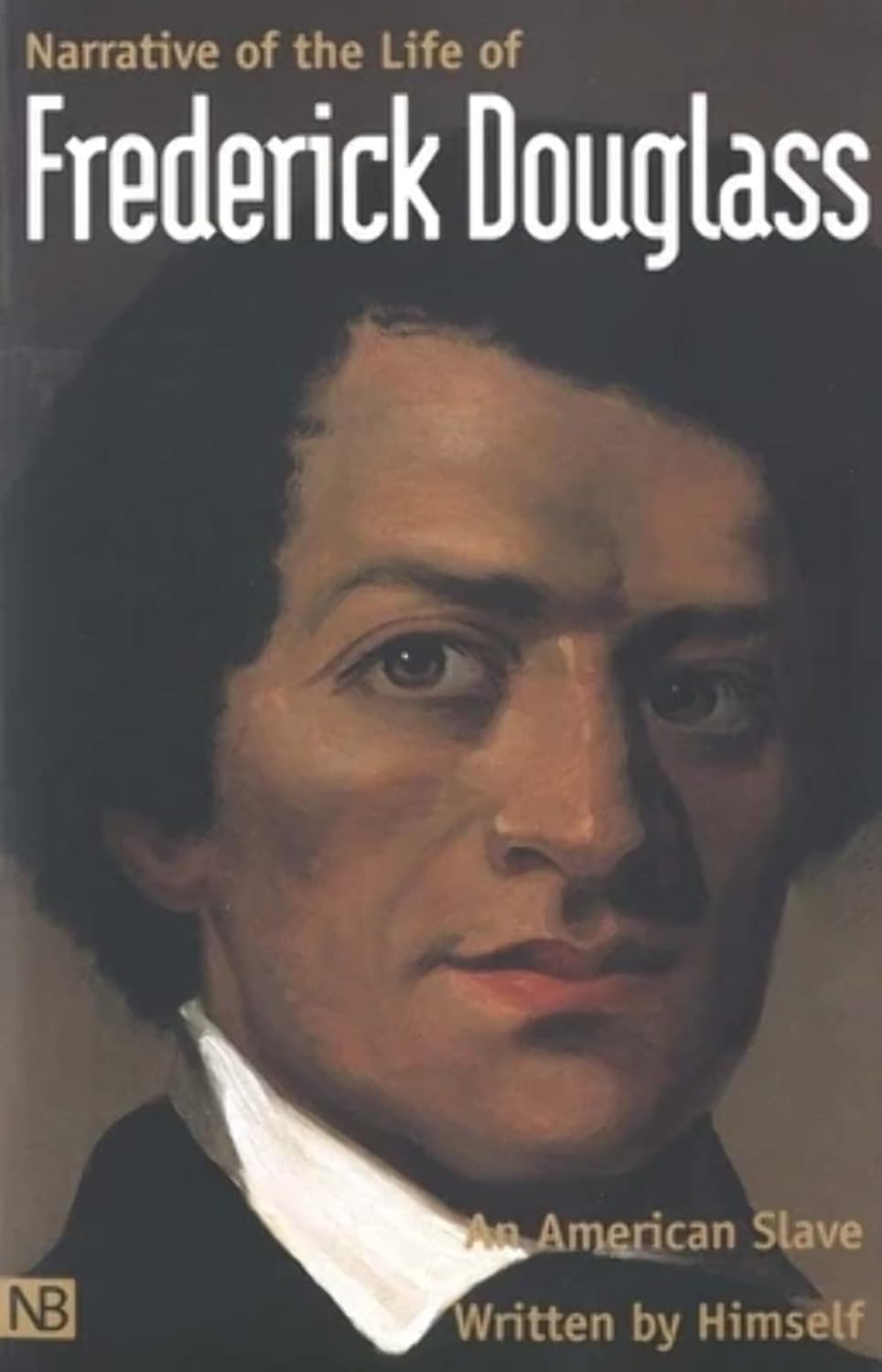
Narrative of the Life of Frederick Douglass by Frederick Douglass

Narrative of the Life of Frederick Douglass by Frederick Douglass

Regular price Tk 182.00 BDT
Regular price Sale price Tk 182.00 BDT
Sale Sold out
Book cover type
Quantity

First published in 1845, Narrative of the Life of Frederick Douglass recounts the author's journey from enslavement in Maryland to freedom. Separated from his mother as a child, Douglass witnesses violence, deprivation, and the denial of education. When a slaveholder's wife begins teaching him the alphabet, he discovers that literacy offers a path toward understanding and resisting oppression. He secretly continues learning, teaches other enslaved people, and confronts the brutal enslaver Edward Covey, an encounter that strengthens his resolve. Douglass exposes the hypocrisy of enslavers who profess Christianity while committing cruelty and describes how slavery damages both those enslaved and those wielding power. His account builds toward his escape to the North in 1838, although he withholds the method to protect others. Written in forceful prose, this autobiography documents one man's struggle for autonomy while arguing against the institution of slavery and affirming the power of education, dignity, and freedom.
Read More

View full details

About Narrative of the Life of Frederick Douglass by Frederick Douglass: A Powerful True Story of Slavery, Literacy, Courage, and the Fight for Freedom

Narrative of the Life of Frederick Douglass by Frederick Douglass is one of the most important firsthand accounts of American slavery. First published in 1845, the book tells how Douglass was born into slavery in Maryland, separated from family, moved between enslavers, taught himself to read, resisted brutal treatment, and eventually escaped to freedom. He writes with direct language and clear detail, showing not only physical cruelty but also the way slavery tried to control knowledge, identity, family life, and hope. For readers of history, freedom, and African American literature, this autobiography remains an essential voice.

A Childhood Shaped by Separation and Uncertainty

Douglass begins with the painful fact that he does not even know his exact birthday. Like many enslaved children, he was denied basic information about his own life and family. He knew his mother, Harriet Bailey, only briefly because they were separated while he was very young, and she had to travel at night to see him. His father was white, but Douglass could not state with certainty who he was. Children could be separated from parents, moved to another household, and treated as property rather than as members of a secure family. He shows what it felt like to grow up without the normal knowledge and protection that a child should have.

The Move to Baltimore Opens a Door to Literacy

A major change comes when young Frederick is sent to Baltimore to live with Hugh and Sophia Auld. At first, Sophia begins teaching him the alphabet and simple words. Her husband soon stops the lessons, arguing that literacy would make an enslaved person unfit for slavery. He realizes that reading is connected to freedom because knowledge can help him understand the system controlling his life. From that point, he looks for every chance to learn. He trades bread with poor white children in exchange for reading lessons and studies words whenever he can. Education gives him language for ideas that were already growing inside him and helps him imagine a life beyond the limits other people tried to place around him.

Learning to Read Gives Freedom and Pain at the Same Time

Douglass's education does not make life easier in a simple way. The more he learns, the more clearly he understands the injustice of slavery and the full meaning of his own condition. Reading opens his mind, but that new awareness can also make his captivity feel even more painful. He comes across arguments about liberty and human rights, and he begins to see that the system around him is neither natural nor morally acceptable. Douglass does not regret learning. Instead, literacy becomes one of the tools that helps him move toward freedom and later speak publicly against slavery.

Violence Is Shown Without Turning Suffering Into Entertainment

The narrative includes severe physical abuse, hunger, overwork, threats, and other forms of cruelty. Douglass describes violence because it was part of the system he is exposing, not because he wants to make suffering feel exciting. He records what happened to himself and what he witnessed happening to other enslaved people, including punishments carried out by overseers and enslavers. These scenes can be difficult to read, especially for younger or sensitive readers, but they are important to understanding the book's purpose. Douglass also shows that cruelty was not only physical. People could be denied food, family contact, education, legal protection, and control over their own future. Readers see how fear could be used every day, even when no beating was happening at that exact moment.

The Fight With Edward Covey Becomes a Turning Point

One of the most remembered parts of the autobiography is Douglass's time with Edward Covey, a man known for breaking the spirit of enslaved people through harsh labor and violence. Under Covey's treatment, Douglass becomes physically and emotionally exhausted. Eventually, he fights back when Covey attacks him. The struggle lasts for a long time, and Douglass later describes it as a major turning point in his sense of self. He is still legally enslaved after the fight, but inwardly he no longer feels completely broken or powerless. Douglass begins to reclaim a sense of dignity that slavery tried to destroy.

Douglass Shows How Slavery Corrupts More Than the Enslaved

Another important idea in the narrative is that slavery damages the moral lives of enslavers as well as the lives of enslaved people. Douglass pays close attention to how power changes behavior. He describes people who become harder, more violent, or more willing to ignore suffering because the system gives them control over another human being. His observations are especially clear in the story of Sophia Auld, who begins as a comparatively kind woman but changes after being taught to think of an enslaved person as property. Douglass also criticizes people who use religion to justify cruelty. He carefully distinguishes between the Christianity he respects and the religion practiced by enslavers who use faith as a cover for abuse. He is examining how unjust institutions influence character, language, morality, and social behavior.

Planning for Freedom Requires Courage, Patience, and Secrecy

Douglass does not present escape as an easy decision. Enslaved people who tried to run away faced severe punishment, capture, separation from loved ones, and the possibility of being sold farther south. He describes an earlier escape plan with other enslaved men that fails before they can reach freedom. Douglass later escapes successfully in 1838, but in the 1845 narrative he deliberately leaves out some practical details because revealing them could put other people at risk and make future escapes harder. The narrative focuses instead on the emotional meaning of becoming free, the fear of being captured again, and the challenge of building a new life in the North.

Freedom in the North Is Real, but Fear Does Not Disappear

After escaping, Douglass reaches New York and experiences the excitement of being in a free state, yet he is still a fugitive under the law. He cannot simply assume that every stranger is safe. He soon marries Anna Murray, a free Black woman who had supported him, and they move to New Bedford, Massachusetts. There, he works, builds a family life, and becomes increasingly involved in the antislavery movement. Douglass must earn a living, protect himself from recapture, and learn how to live in a society where racism remains present even outside slavery.

Why Did Frederick Douglass Write This Book?

By the early 1840s, Douglass had become a powerful antislavery speaker, but some listeners doubted that a man who spoke so well could really have escaped from slavery. Publishing his autobiography allowed him to answer those doubts with names, places, and details from his life. That honesty also created danger because it made his identity easier to trace. Douglass wanted readers to understand slavery through the testimony of someone who had lived inside it. The original 1845 edition also included a preface by abolitionist William Lloyd Garrison and a letter from Wendell Phillips.

What Will You Learn From This Autobiography?

  • How Frederick Douglass experienced childhood slavery in Maryland and the separation of enslaved families.

  • Why learning to read became a major step in his intellectual journey toward freedom.

  • How violence, hunger, forced labor, and fear were used to control enslaved people.

  • Why his resistance to Edward Covey became a major turning point in his sense of dignity.

  • How Douglass escaped slavery and began building a new life in the North.

  • Why he published his first autobiography in 1845 and used his voice in the antislavery movement.

These parts make the book valuable for history, literature, biography, and social studies. It is also a direct example of how personal testimony can challenge false ideas about an unjust system.

Who Should Read Narrative of the Life of Frederick Douglass?

This book is a strong choice for readers interested in history, autobiography, African American literature, abolition, civil rights, education, and the meaning of freedom. It is often studied in schools and universities because it combines a personal life story with major historical questions. The book includes descriptions of violence, racial oppression, family separation, hunger, and dehumanization. For that reason, younger students may benefit from guidance from a teacher or parent. Adult readers can approach it both as history and as literature, paying attention to how Douglass organizes his story to persuade readers as well as inform them.

Choose a Comfortable Copy for Study and Rereading

Bookish Wonderland offers Narrative of the Life of Frederick Douglass with premium eye-soothing cream paper, crystal-clear printing, and high-quality stitched and glue binding. The cream paper gives the pages a softer appearance during longer reading sessions, while clear printing helps students and general readers follow the text without struggling with weak or blurry letters. The binding is selected for regular use, which is useful for a classic that may be read for school, university, personal study, or later rereading. These details describe the copy offered by Bookish Wonderland and should not be treated as specifications for every edition sold elsewhere. If you need a particular edition, ISBN, introduction, or page layout, contact the store before ordering so you can confirm the available copy.

Check the Current Price Before You Place Your Order

Looking for the Book price in Bangladesh for Narrative of the Life of Frederick Douglass by Frederick Douglass? Check the Bookish Wonderland product listing for the current price and available edition before buying. The live listing is the best place to see the amount that applies at the time of purchase instead of relying on an old or estimated price. This title can be a meaningful addition to a personal library, a history collection, or a student's reading shelf. It can also make a thoughtful gift for someone interested in biography, social history, education, or classic nonfiction. Since different publishers release different editions of this public-domain work, confirm any edition-specific details that matter to you before checkout. If you need help with the available copy or want to ask about customization, message Bookish Wonderland through Facebook or Instagram.

Get This Classic Delivered Across Bangladesh

Bookish Wonderland offers nationwide delivery across Bangladesh, including addresses inside and outside Dhaka. Cash on Delivery is available across the country for customers who prefer to pay when the book arrives. If you are in Dhaka and need your copy quickly, ask whether fast or urgent delivery is available for your location. Our large collection of premium English books also makes it easier to add another autobiography, classic, history title, or work of nonfiction to the same order. If you have questions about delivery, the available edition, or customization, send a message through Facebook or Instagram before completing your purchase. This gives you a chance to confirm the book details first and choose a copy that fits your study, reading, or gifting needs.

Read a Firsthand Voice That Changed the Conversation About Slavery

Narrative of the Life of Frederick Douglass by Frederick Douglass is powerful because it refuses to let slavery remain an abstract subject. Douglass shows what the system meant for a child separated from family, a young person denied education, a worker controlled through violence, and a man determined to claim freedom. He also shows how reading, resistance, community, and the courage to tell the truth can change a life. Published in 1845, the narrative helped answer people who doubted his past and became an important part of his antislavery work. Today, it remains valuable because readers can encounter Douglass's own account rather than only reading a later summary of his experiences. Order Narrative of the Life of Frederick Douglass from Bookish Wonderland, check the current listing for price and availability, and contact us through Facebook or Instagram if you need help confirming the edition or requesting customization.

If you require any customization or have any questions, please inbox us via FB or Insta.

Primary Specification
AuthorFrederick Douglass
GenreAutobiography, Memoir, Historical Nonfiction, Slave Narrative
ISBN-13/ISSN978-0486284996
ISBN-100486284996
PublisherDover Publications, Incorporated
Publishing DateAugust 1, 2016
EditionFirst Edition
LanguageEnglish
Reading Age14+
FormatPrinted Book
Physical Specification & Quality
Paper QualityPremium eye-soothing cream paper
Binding QualityHigh quality stitched and glue binding (for longevity)
Print QualityCrystal-clear print
Pages 96 pages
CountryUSA
Logistics Information
Weight118 gm
Length8.5 inches
Width5.6 inches
Height0.24 inch
What is Narrative of the Life of Frederick Douglass by Frederick Douglass about?

Narrative of the Life of Frederick Douglass, an American Slave is an autobiography that recounts Frederick Douglass's experiences of enslavement in nineteenth-century America and his struggle to achieve freedom. Born into slavery in Maryland, Douglass describes his childhood, separation from his mother, brutal treatment by enslavers, and determination to educate himself despite restrictions on literacy. He explains how learning to read transformed his understanding of slavery and strengthened his desire for independence. The narrative also describes his resistance against Edward Covey, his efforts to help other enslaved people learn, and his eventual escape in 1838. Originally published in 1845, the book combines personal testimony, historical documentation, and arguments against slavery. It offers readers a firsthand account of the physical and psychological violence of slavery while exploring education, freedom, human dignity, and resistance.

How many books are in the series of Narrative of the Life of Frederick Douglass by Frederick Douglass and what are they?

There are no books in a series for Narrative of the Life of Frederick Douglass by Frederick Douglass. It is a standalone Nonfiction book.

Why is learning to read and write so important in Narrative of the Life of Frederick Douglass?

Learning to read and write is one of the most important developments in Frederick Douglass's autobiography because education helps him understand the injustice of slavery and imagine a life beyond it. When Douglass lives with Hugh and Sophia Auld in Baltimore, Sophia initially begins teaching him the alphabet. Her husband eventually stops the lessons, arguing that education would make an enslaved person difficult to control. This conversation helps Douglass recognise the connection between enforced ignorance and enslavement. Determined to continue learning, he finds other opportunities to practise reading and writing. His growing literacy allows him to examine arguments about freedom and develop the communication skills that later support his work as an abolitionist. The book demonstrates how access to education can challenge systems built on denying people independence and intellectual opportunity.

Why is Frederick Douglass's fight with Edward Covey considered a turning point in the book?

Frederick Douglass's confrontation with Edward Covey is one of the most significant moments in Narrative of the Life of Frederick Douglass. Covey is known for his brutal treatment of enslaved people and is employed to force Douglass into submission through exhausting labour and physical punishment. After enduring months of abuse, Douglass decides to resist when Covey attempts to beat him again. Their physical struggle lasts approximately two hours, and Covey does not whip him afterward. Douglass describes the confrontation as a turning point because it restores his determination and sense of personal dignity, even though he remains legally enslaved. The episode illustrates the distinction between physical captivity and the refusal to accept psychological submission. Readers studying the autobiography frequently examine this scene because of its importance to Douglass's developing understanding of freedom and resistance.

Does Narrative of the Life of Frederick Douglass explain exactly how he escaped from slavery?

Narrative of the Life of Frederick Douglass confirms that Frederick Douglass successfully escaped from slavery in 1838, but it deliberately avoids revealing every detail of his journey. In Chapter 11, Douglass explains that publishing specific information could endanger the people who assisted him and make it easier for enslavers to prevent other people from escaping. He therefore describes the emotional circumstances surrounding his departure and his experiences after reaching the North without providing a complete account of his escape method. This decision reflects the serious risks that formerly enslaved people and those helping them continued to face. Readers seeking more information about the escape can consult Douglass's later autobiographical writings and his 1881 account, My Escape from Slavery. Customers should understand that the missing details in the original narrative were intentionally withheld rather than accidentally omitted.

Does Frederick Douglass criticise Christianity in his autobiography, and what does the appendix explain?

Frederick Douglass strongly criticises the religious hypocrisy of enslavers who claimed to follow Christianity while participating in or defending slavery. Throughout the narrative, he describes how certain slaveholders used religious language and practices while committing acts of cruelty against enslaved people. However, his criticism is not directed at Christianity as a whole. In the appendix, Douglass explicitly distinguishes the Christianity he associates with the teachings of Christ from the version practised by slaveholders and their supporters. He condemns the contradiction between professing religious values and treating other human beings as property. This distinction is important for readers studying the book's treatment of religion, morality, and social institutions. The appendix also helps prevent misunderstandings about Douglass's religious views and provides additional context for his criticism of American slavery.

Is Narrative of the Life of Frederick Douglass suitable for beginners, and what is the recommended reading age?
Narrative of the Life of Frederick Douglass is suitable for students, history enthusiasts, and general readers interested in autobiography, American history, and slavery. Mature teenagers aged approximately 14 and above may be able to study the book with appropriate historical context, although this is suggested guidance rather than an official rating for every edition. Penguin's educational listing identifies one edition as appropriate for grades 9–12 and advanced school courses. The narrative contains disturbing descriptions of physical violence, whipping, abuse, racial discrimination, family separation, and historical racial slurs. Parents and teachers should consider these subjects before recommending it to younger readers. Although the nineteenth-century language may initially require concentration, the book is relatively short and uses a direct first-person narrative. Readers unfamiliar with the history of American slavery may benefit from an edition containing an introduction and explanatory notes.
Are all editions of Narrative of the Life of Frederick Douglass the same, and which edition should I buy?
The original narrative was published in English in 1845, so readers do not need an English translation. However, modern editions differ in their introductions, annotations, supplementary documents, page counts, and physical formats. For example, the Dell edition with ISBN 9780440222286 contains 176 pages and includes an introduction by Henry Louis Gates Jr. Penguin Classics also publishes a 224-page edition edited by Ira Dworkin, which includes additional material such as Douglass's speech What to the Slave Is the Fourth of July? and his fictional work The Heroic Slave. Both editions contain Douglass's autobiography, but their supporting materials serve different reading needs. Students may prefer editions containing historical explanations and scholarly commentary, while general readers may prefer a simpler presentation of the original text. Customers should confirm the exact publisher, ISBN, contents, and available edition with Bookish Wonderland before purchasing.
Is Narrative of the Life of Frederick Douglass available in a premium edition at Bookish Wonderland?

Bookish Wonderland offers Narrative of the Life of Frederick Douglass as part of its premium English book collection, with an emphasis on comfortable reading and durable physical construction. According to the store's advertised specifications, its premium printed books feature eye-soothing cream paper, crystal-clear printing, and high-quality stitched and glue binding. These characteristics are intended to provide a comfortable physical copy suitable for regular reading, educational use, and personal collection. A well-constructed edition may appeal to readers interested in preserving important historical autobiographies alongside other works of classic nonfiction. However, Bookish Wonderland's premium quality specifications should not automatically be confused with an officially designated special edition from a particular publisher. Customers looking for a specific annotated edition, ISBN, cover design, or publisher should verify the available version before ordering.

What is the paper quality of Narrative of the Life of Frederick Douglass from Bookish Wonderland?

Bookish Wonderland describes its premium English books as featuring high-quality, eye-soothing cream paper designed to provide a pleasant physical reading experience. The warm cream shade offers a softer-looking background than bright white paper, which may appeal to readers who prefer printed material for extended study sessions. This feature is particularly useful for Narrative of the Life of Frederick Douglass because students and general readers may spend considerable time examining historical events, studying the author's arguments, and reflecting on important passages. The traditional appearance of cream-coloured pages may also appeal to customers who collect classic literature and historical nonfiction. However, individual reading comfort depends on lighting, typography, and personal preferences. Customers seeking a particular paper thickness, texture, or finish should confirm the specifications of the available copy with Bookish Wonderland before placing an order.

Does Narrative of the Life of Frederick Douglass from Bookish Wonderland have crystal-clear printing and durable binding?

Bookish Wonderland describes its premium books as featuring crystal-clear printing combined with high-quality stitched and glue binding. Sharp printing is intended to produce clean, readable text, making it easier for readers to follow Douglass's detailed descriptions, historical observations, and arguments about slavery. This is particularly useful for students who need to locate important passages, study the author's writing techniques, or revisit individual chapters while preparing assignments. The binding combines stitching with adhesive to help keep pages securely attached during normal handling. These specifications are intended to support repeated use, although the actual longevity of any physical book depends on manufacturing quality, handling, and storage conditions. Readers should avoid forcing the spine completely flat, exposing pages to moisture, or bending the covers excessively. Proper care can help preserve the book for future study and long-term collection.

Why should I buy Narrative of the Life of Frederick Douglass from Bookish Wonderland, and is Cash on Delivery available across Bangladesh?

Bookish Wonderland provides readers throughout Bangladesh with access to a large collection of premium English books, including historical autobiographies and classic nonfiction titles such as Narrative of the Life of Frederick Douglass. The store emphasises comfortable cream paper, crystal-clear printing, and durable stitched and glue binding for customers who value physical reading quality. These specifications may appeal to history students, teachers, researchers, and readers who want to preserve important literary works in their personal libraries. Nationwide delivery is available for locations both inside and outside Dhaka, while Cash on Delivery allows customers across Bangladesh to pay when their orders arrive. Readers in Dhaka can also request fast or urgent delivery when available. Customers should confirm the available edition, current stock, final book price, shipping charges, and estimated arrival time with Bookish Wonderland before completing their purchase.