

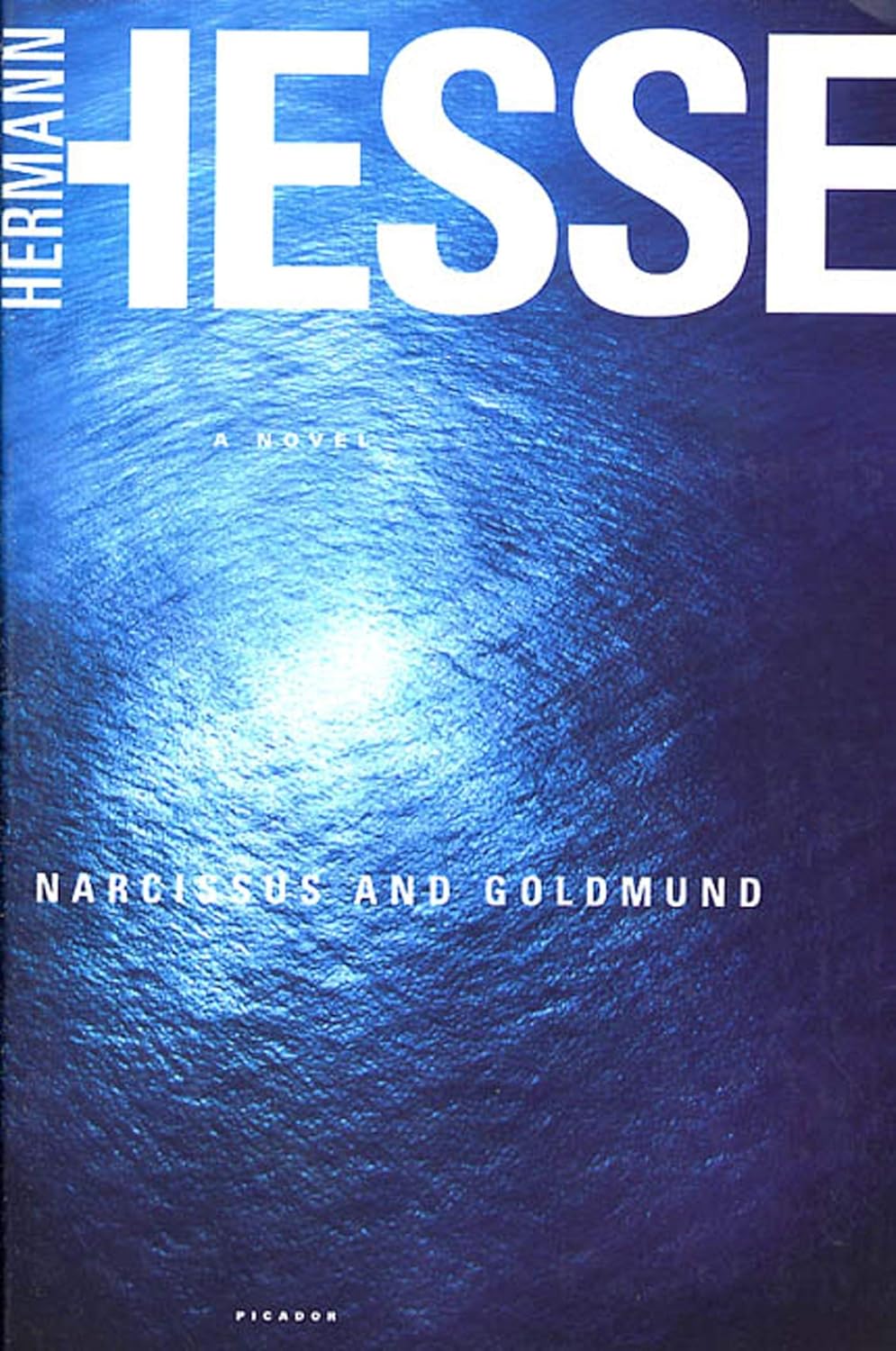
About Narcissus and Goldmund by Hermann Hesse: A Timeless Novel About Friendship, Art, Desire, and Two Different Ways of Living
Narcissus and Goldmund by Hermann Hesse is a thoughtful literary novel about two men who seem completely different but remain deeply connected. Narcissus is disciplined, intellectual, spiritual, and comfortable with a life of study inside a monastery. Goldmund is emotional, restless, sensual, artistic, and drawn toward the wider world. Narcissus soon understands that Goldmund is trying to live a life that does not truly fit him and encourages the younger man to discover his own nature. Goldmund eventually leaves the monastery and travels through medieval Europe, meeting lovers, facing danger, learning about art, and discovering both beauty and suffering. Hesse uses their different lives to explore a difficult question: should a person live mainly through thought and discipline, or through feeling, experience, and creation?
Two Friends Who Represent Two Very Different Paths
Narcissus and Goldmund are not simply characters with different personalities. They represent two ways of approaching life. Narcissus values order, study, spiritual discipline, reason, and the life of the mind. Goldmund is drawn toward touch, beauty, nature, women, travel, memory, and artistic creation. Their friendship matters because neither man can fully become the other, yet each recognizes something important in his friend. Hesse does not turn their difference into a competition where one way of living wins. Narcissus has clarity but gives up many worldly experiences. Goldmund gains rich experience but also faces confusion, danger, loss, and instability. Their bond becomes a place where thought and feeling can meet without becoming the same thing.
Goldmund Leaves the Monastery to Discover Who He Really Is
Goldmund arrives at the cloister believing that the religious life may be his proper future. He studies, follows rules, and tries to become the kind of person expected of him. Narcissus notices that something does not fit. Goldmund’s deepest nature is not built around the same discipline that guides Narcissus. Once Goldmund understands this, he leaves the monastery and enters the uncertain world beyond its walls. From that point, his education comes through travel, hunger, love, fear, sex, friendship, illness, nature, and the consequences of his own decisions. Goldmund asks what happens when someone stops living through a borrowed identity and begins searching for a life that feels true.
The Road Gives Goldmund Freedom but Never Guarantees Happiness
Leaving the monastery gives Goldmund freedom, but Hesse never suggests that freedom is always comfortable. Goldmund experiences beauty and pleasure, yet he also faces hunger, loneliness, danger, rejection, and loss. He travels without the security Narcissus has inside the monastery, forms strong attachments, and then moves on. His wandering life can feel romantic, but it has a cost. He rarely has a permanent home, and the things he loves cannot always remain with him. This balance keeps the story from becoming a simple celebration of escape. Goldmund gains a wider experience of life, but that experience includes suffering as well as joy. Becoming yourself, the novel suggests, may require losing some of the protection that came with old rules.
Women, Memory, and the Image of the Mother Shape Goldmund’s Inner Life
Women are central to Goldmund’s emotional and artistic world. His relationships are connected to a deeper image of femininity, memory, and the mother he lost. As he moves through life, he searches for beauty in faces, bodies, gestures, and moments of tenderness. This desire is physical, but it is also connected to something larger that he struggles to name. The remembered or imagined mother becomes a symbol of life, nature, birth, love, and death. Modern readers may notice that many women are seen mainly through Goldmund’s perspective rather than developed with the same depth as the two male leads. That can be worth discussing critically. Even so, the feminine image plays an important role in the way Goldmund understands creativity, mortality, and the world around him.
Art Gives Goldmund a Way to Turn Experience Into Form
One of the most important changes in Goldmund’s life comes when he discovers artistic talent. His wandering has filled him with faces, memories, losses, desires, and images, but art gives those experiences a shape. Under the guidance of a master sculptor, he learns how discipline and craft can transform feeling into something lasting. Goldmund begins to understand that freedom alone is not enough. To create art, he must also work, observe, practice, and accept limits. In this way, his path moves closer to Narcissus’s world without becoming the same. Art becomes a bridge between emotion and discipline. Feeling may begin the work, but patience allows the work to become real.
The Plague Brings Goldmund Face to Face With Death
Goldmund’s travels eventually bring him into a world devastated by plague. Scenes of sickness, abandoned places, fear, and death darken the novel and change the emotional scale of his journey. The plague reminds him that beauty and pleasure exist beside suffering and mortality. Hesse does not treat death as a distant philosophical idea. Goldmund sees what happens when ordinary life breaks apart and people become frightened, desperate, or cruel. These experiences deepen his understanding of the mother-image that represents both creation and destruction. Life gives birth, but life also ends. For Goldmund, art becomes one way to face that truth without pretending it can be solved. The book connects mortality to the need to create, love, and pay attention while life is still present.
Narcissus Chooses Stillness, but His Life Is Not Empty
Because Goldmund has the more dramatic adventures, it can be easy to think Narcissus is simply the quieter character who stays behind. Narcissus’s life is built around study, discipline, faith, teaching, and reflection. He does not need constant travel to feel that his life has meaning. His strength comes from concentration and from seeing patterns in himself and others. He also cares deeply for Goldmund, even though he cannot follow the same path. Their friendship shows that closeness does not require two people to make identical choices. Narcissus respects Goldmund enough to let him become different rather than forcing him into the monastery’s mold. When the two men meet again after years apart, their differences remain, but so does affection.
Why the Friendship Matters More Than Choosing a Winner
Many readers approach Narcissus and Goldmund as a debate between mind and body, spirit and flesh, discipline and freedom, or thought and feeling. Those oppositions matter, but the friendship makes the novel more than a philosophical argument. Narcissus and Goldmund care about each other across difference. Goldmund’s life shows Narcissus the richness of experience and art, while Narcissus gives Goldmund a form of understanding that wandering alone cannot provide. Hesse does not force the reader to choose one man as the correct model. The novel suggests that a complete human life may contain tensions that cannot be solved by one formula. The friendship holds those opposites together without pretending they are identical.
What Will You Find Inside Narcissus and Goldmund?
-
A deep friendship between two men with opposite personalities and life paths.
-
A medieval monastery setting that opens into years of travel across towns, forests, workshops, and roads.
-
Goldmund’s search for freedom through love, sensual experience, nature, danger, and wandering.
-
A powerful exploration of art and the discipline required to turn memory into lasting form.
-
Encounters with plague, death, loss, desire, faith, beauty, and the limits of human life.
-
A philosophical story about mind and body, spirit and experience, discipline and freedom, without one simple answer.
Together, these elements make the novel both an adventure of personal discovery and a serious reflection on how different people search for meaning. You can read it for the journey, the friendship, the ideas, or all three.
Who Should Read Narcissus and Goldmund?
This book is a strong choice for readers who enjoy literary fiction, philosophical novels, coming-of-age stories, medieval settings, art, spirituality, and questions about identity. Readers who liked Siddhartha, Demian, or Steppenwolf may recognize Hesse’s interest in people divided between different parts of themselves. The pace is thoughtful rather than fast, and some sections spend more time on reflection than action. The novel also includes sexuality, violence, plague, death, and mature relationships, so it is better suited to mature teens and adults than young children. Students may find plenty to discuss about symbolism, gender, art, religion, friendship, and the contrast between intellect and sensual experience.
Know Which Translation and Edition You Are Buying
Narcissus and Goldmund was originally published in German in 1930 as Narziss und Goldmund. English readers may encounter more than one translation. An early English version by Geoffrey Dunlop appeared as Death and the Lover, while later editions include the widely available translation by Ursule Molinaro. Farrar, Straus and Giroux currently lists a 320-page edition translated by Molinaro, while other publishers may offer different page counts, covers, or translations. If you need a specific version for a class, book club, or collection, confirm the translator and ISBN before ordering. At Bookish Wonderland, you can message the team to check the available edition, cover, size, or customization options before purchase.
A Premium Copy for Slow, Comfortable Reading
Bookish Wonderland offers Narcissus and Goldmund with premium eye-soothing cream paper, crystal-clear printing, and high-quality stitched and glue binding. The softer-looking pages can make longer reading sessions more comfortable, while clear printing helps you stay focused through reflective passages and detailed scenes. The binding is selected for regular use, which is useful for a classic you may want to reread or keep as part of a Hermann Hesse collection. These specifications describe the copy offered by Bookish Wonderland and should not be assumed for every edition sold elsewhere. If you want to confirm the cover, translation, size, page count, or available customization, contact the store before checkout.
Check the Current Price Before Ordering
Looking for the Book price in Bangladesh for Narcissus and Goldmund by Hermann Hesse? Check the Bookish Wonderland product listing for the current price and available edition before placing your order. The live listing is the best place to see the amount that applies when you buy instead of relying on an old figure. This novel can be a meaningful addition to a literary fiction, philosophy, or classic literature collection. It can also make a thoughtful gift for a reader interested in art, spirituality, friendship, or self-discovery. If translation matters to you, confirm the edition before purchase. For questions about availability or customization, message the store through Facebook or Instagram.
Get Narcissus and Goldmund Delivered Across Bangladesh
Bookish Wonderland offers nationwide delivery across Bangladesh, including addresses inside and outside Dhaka. Cash on Delivery is available across the country for customers who prefer to pay when the order arrives. If you are in Dhaka and need the book quickly, ask whether fast or urgent delivery is available for your location. Bookish Wonderland also carries a large collection of premium English books, making it easier to add another Hermann Hesse title, literary classic, or philosophical novel to the same order. If you have questions about delivery, the available edition, translation, or customization, message the store before completing your purchase.
Follow Two Lives and Ask Which Path Feels Closest to Your Own
Narcissus finds meaning through discipline, thought, faith, and stillness. Goldmund searches through movement, love, art, beauty, danger, and experience. Their paths separate, but their friendship allows each man to recognize value in a life unlike his own. That makes the novel personal for readers who have felt pulled between security and freedom, reason and emotion, responsibility and desire, or study and experience. Order Narcissus and Goldmund from Bookish Wonderland, check the current listing for price and availability. Open the book for the friendship, stay for Goldmund’s journey, and discover why Hesse’s questions about identity, art, and meaning still feel alive.
If you require any customization or have any questions, please inbox us via FB or Insta.
| Primary Specification | |
| Author | Hermann Hesse |
| Translator | Ursule Molinaro |
| Narrator | Simon Vance |
| Genre | Philosophical Fiction, Literary Fiction, Historical Fiction |
| ISBN-13/ISSN | 978-0312421670 |
| ISBN-10 | 0312421672 |
| Publisher | Picador |
| Publishing Date | February 1, 2003 |
| Edition | First Edition |
| Language | English |
| Reading Age | 18+ |
| Format | Printed Book |
| Physical Specification & Quality | |
| Paper Quality | Premium eye-soothing cream paper |
| Binding Quality | High quality stitched and glue binding (for longevity) |
| Print Quality | Crystal-clear print |
| Pages | 315 pages |
| Country | German |
| Logistics Information | |
| Weight | 335 gm |
| Length | 8.5 inches |
| Width | 5.6 inches |
| Height | 0.85 inch |