

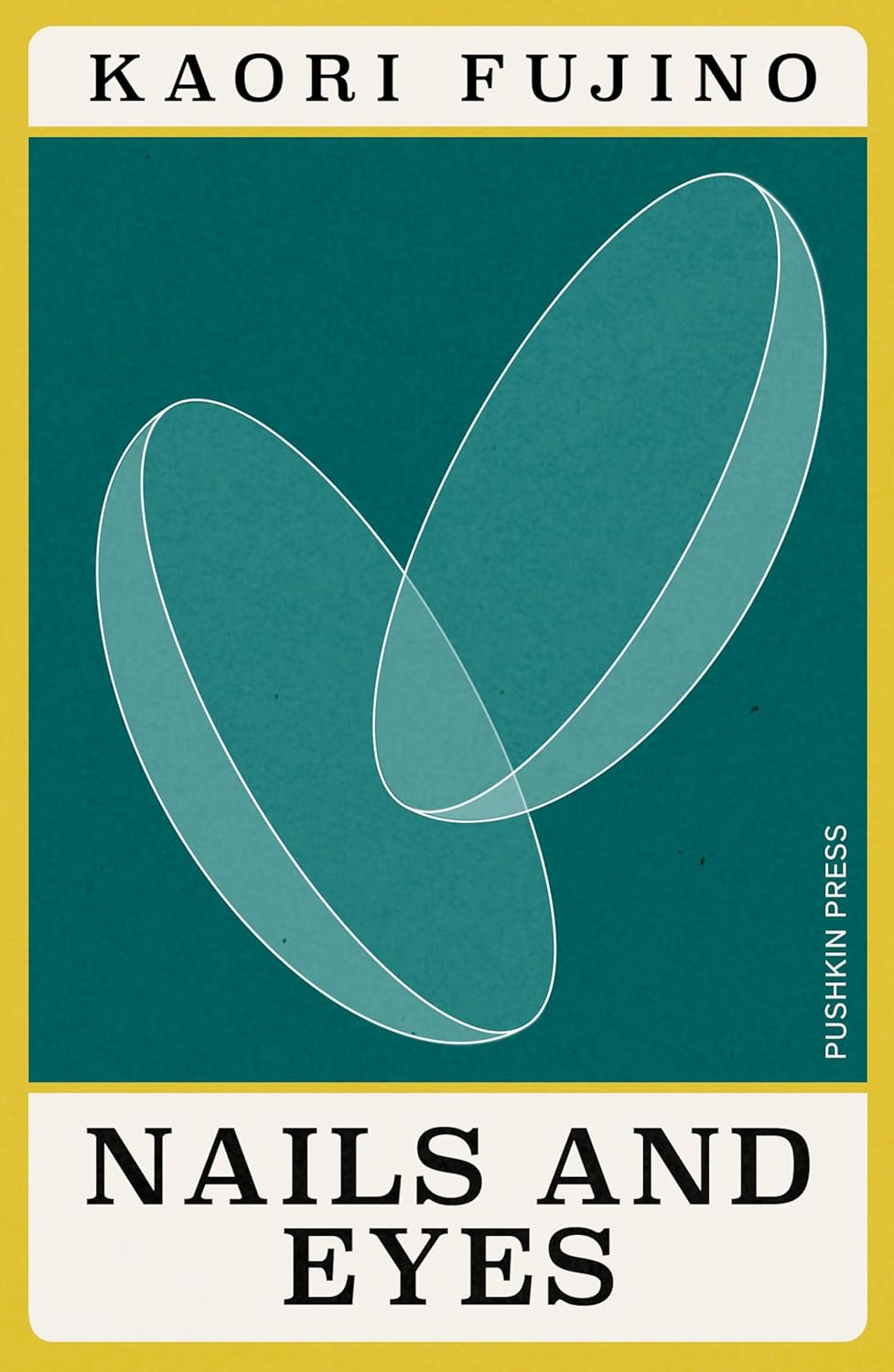
About Nails and Eyes by Kaori Fujino: Three Quiet Japanese Horror Stories About Family, Memory, and Hidden Harm
Nails and Eyes by Kaori Fujino is a collection of Japanese literary horror. It brings together three stories: Nails and Eyes, What Shoko Forgets, and Minute Fears. Each tale begins in a safe place, such as a family home or a care setting. Then a small detail feels wrong. The fear grows slowly, almost without a sound, until ordinary life becomes hard to trust.
The title story follows a young girl after her mother dies. Her father brings his secret lover into their home, and the woman tries to build a clean, perfect new life. She cares about order, beauty, and how things look, but she does not truly see the child watching her. The girl notices every lie, every selfish act, and every danger the adults choose to ignore.
Translated by Kendall Heitzman, this English edition lets new readers enter Kaori Fujino’s cold and careful world. The book is brief, but its pictures and questions can stay in the mind for a long time. It is made for readers who enjoy horror that whispers before it strikes.
When loud horror no longer feels frightening
Some horror books depend on monsters, fast attacks, and one shock after another. The reader may feel excited, but the fear can vanish when the scene ends. Other books explain every secret, leaving little space for the mind to work.
Fujino offers a different kind of fear. She takes a normal room, a family duty, a weak memory, or a worried thought and makes it feel unsafe. Her calm voice gives the reader time to notice what the characters refuse to see. Silence becomes part of the danger. A small object can feel more threatening than a loud creature.
This makes the collection a strong choice for readers who want smart, quiet, psychological horror. You do not need a long reading plan or deep knowledge of Japanese fiction. Each story stands alone, uses clear human fears, and reaches its effect in a small number of pages.
What is Nails and Eyes about?
Nails and Eyes is about the harm that grows when people look away. Across the three stories, children and older people depend on adults who may be careless, selfish, tired, or blind to their needs. Homes and care spaces appear orderly on the outside, while pain waits underneath.
In the title tale, a child speaks to the woman who replaces her dead mother. The woman thinks she understands the home and the man she loves. Yet the child sees parts of their story that the woman cannot face. The unusual voice places the reader close to both watcher and watched, creating a feeling that is private, cold, and hard to escape.
What Shoko Forgets turns memory and care into sources of doubt. Minute Fears takes a common worry and lets it spread through daily life. Together, the pieces ask who is safe when a person cannot explain what is happening, and what becomes possible when those with power fail to pay attention.
A child sees what the adults miss
The child in the title story is quiet, but she is not absent. She studies the father and his lover with a sharp eye. The adults are busy with desire, grief, comfort, and the wish to begin again. They treat the girl as a problem to manage instead of a full person with thoughts and needs.
That gap drives the horror. The woman may arrange a room, choose an object, or decide what a family should look like. The child notices the truth behind the neat surface. Because the story is told from such a close and strange point of view, even a simple action can carry a warning.
A perfect home cannot hide every truth
The father’s lover wants to create order. She hopes that clean rooms and chosen details will make the new family feel real. Yet beauty cannot repair a bond built on secrecy. Her need for a perfect surface keeps her from seeing the child and the risks inside the home.
This idea gives the story power beyond its plot. People often judge a family by what they can see: a tidy table, polite words, or a smiling photo. Fujino asks what happens outside that picture. Who is ignored? Who is made to stay silent? Which warning is dismissed because it would disturb a pleasant story?
What Shoko Forgets makes memory feel unsafe
The second story moves toward old age, illness, and care. Shoko’s fading memory makes it hard to know what she understands and what others believe she has forgotten. People around her may speak as if her inner life has become small. The story quietly questions that idea.
When memory becomes weak, trust becomes vital. A person may need help with movement, food, medicine, or daily choices. That need can invite kindness, but it can also create danger. Fujino explores the fear of not being believed and the power held by people who control a care space.
The tale does not turn Shoko into only a symbol of age. It asks the reader to watch her closely and respect what may still remain inside. Uncertainty becomes the source of tension. A missing fact, a half-known name, or a night sound can feel larger because neither Shoko nor the reader has a safe view of the whole truth.
Minute Fears lets one worry keep growing
Minute Fears begins with ordinary family concern. A child is upset, a mother must decide what to do, and plans for the day begin to shift. These are small events that could happen in many homes. Fujino slows down the moment until each choice feels heavy.
The story understands how fear can enter through love. A parent wants to protect a child, but worry can change the way every sign is read. Is the danger real, imagined, remembered, or still coming? The mind keeps checking, and each check creates another question.
Three stories joined by watching and silence
The pieces have different characters, but they speak to one another. Each asks who watches, who is watched, and who is allowed to explain the truth. A child may notice more than an adult expects. An older person may know more than a caregiver believes. A parent may see danger where another person sees nothing.
Silence is just as important. Some characters cannot speak freely. Others choose not to ask a hard question. A quiet room may hold grief, neglect, anger, or fear. The reader becomes another watcher, gathering clues while knowing that attention may come too late.
Why Kaori Fujino’s quiet style works
Fujino writes with control. She does not rush to explain what the reader should feel. Her sentences stay close to small actions, body details, objects, and private thoughts. That calm style makes the dark moments stronger because they rise from a world that first looks normal.
The stories also leave useful space. Not every feeling is named, and not every question receives a neat answer. Readers must decide what a character knows, why another person looks away, and when care turns into control. The mind continues working after the book is closed.
Kendall Heitzman’s English translation carries this careful balance into clear, direct prose. It keeps the domestic details easy to follow while protecting the strange tone. Readers can focus on the growing unease without losing the sharp ideas about family, gender, age, duty, and power.
What makes this small book rewarding
The collection offers three complete stories in a compact form, so it fits a busy week. Its quiet horror rewards slow reading, while the unusual viewpoints invite discussion and rereading. Ordinary homes and care spaces create a close setting, and repeated ideas about watching, memory, neglect, and hidden harm connect the pieces.
The book can also change how a reader notices small details. A clean room may no longer mean a safe home. Silence may not mean peace. Forgetting may not remove fear, and watching may be both protection and threat. Fujino makes these ideas felt through story instead of turning them into a lesson.
Know the difficult themes before reading
This is an adult horror collection, even though children and family life are central to it. The stories include death, grief, an affair, neglect, unsafe care, illness, weak memory, threats to vulnerable people, and disturbing harm involving the body. Some scenes and ideas may upset readers who are sensitive to danger around children or older adults.
The book is not built around nonstop gore, but its strongest images can be sharp. Much of the fear comes from emotional coldness and the knowledge that a trusted adult may fail someone who needs help. That quiet cruelty can feel more intense than a fast scare.
Who should read Nails and Eyes?
Choose this book if you enjoy Japanese fiction, psychological horror, literary short stories, domestic dread, strange narrators, or slow suspense. It may appeal to readers who like work by Yoko Ogawa, Sayaka Murata, Mieko Kawakami, or Shirley Jackson, while keeping a voice of its own.
It works well for a quiet weekend, a short reading challenge, a translated-fiction shelf, or a book club. A group can discuss whether the characters truly see one another, how power changes care, and why the normal settings become frightening. Students can explore narration, repeated images, family roles, age, memory, and the line between watching and understanding.
A comfortable copy for close reading
Bookish Wonderland offers a reader-friendly edition made for steady reading and later returns.
- Premium eye-soothing cream paper gives every page a soft look.
- Crystal-clear printing keeps the text easy to read.
- High-quality stitched and glue binding supports long book life.
- A durable finish helps protect the copy in a bag or on a shelf.
These features suit personal reading, class discussion, a home library, or a gift. The comfortable pages help you slow down, notice Fujino’s careful clues, and return to a scene after its hidden meaning becomes clear.
Easy ordering from Bookish Wonderland
When comparing the Book price in Bangladesh for Nails and Eyes by Kaori Fujino, look at translation, paper comfort, print clarity, binding strength, and delivery help along with cost. A short book with layered details deserves a copy that remains pleasant when you return to its clues.
Cash on Delivery is available nationwide, with service inside and outside Dhaka. Fast or urgent delivery is available in Dhaka when you need the book soon. Contact Bookish Wonderland through Facebook or Instagram for the current price, stock, edition, delivery time, or customization support.
Look closely before the danger looks back
A child watches a new woman take her mother’s place. An older person stands inside the fog of memory. A parent follows a small fear as it grows. In each story, the danger begins near the people who should offer safety.
Open Nails and Eyes and enter three quiet rooms where every glance matters. Read for the sharp voice, the slow tension, and the moment when a normal detail changes shape. Then look back and notice the warnings that were waiting in plain sight.
Order Nails and Eyes by Kaori Fujino from Bookish Wonderland today. Bring home a prize-winning work of Japanese horror that proves a short, calm story can leave a deep and lasting mark.
If you require any customization or have any questions, please inbox us via FB or Insta.
| Primary Specification | |
| Author | Kaori Fujino |
| Translator | Kendall Heitzman |
| Editor | Tetragon |
| Genre | Literary Horror, Psychological Horror, Short Stories, Contemporary Fiction, Japanese Literature |
| ISBN-13/ISSN | 978-1782279549 |
| ISBN-10 | 1782279547 |
| Publisher | Pushkin Press |
| Publishing Date | September 12, 2023 |
| Edition | 1st |
| Language | English |
| Reading Age | 16+ |
| Format | Printed book |
| Physical Specification & Quality | |
| Paper Quality | Premium eye-soothing cream paper |
| Binding Quality | High quality stitched and glue binding (for longevity) |
| Print Quality | Crystal-clear print |
| Pages | 112 pages |
| Country | Japan |
| Logistics Information | |
| Weight | 132 gm |
| Length | 8.5 inches |
| Width | 5.6 inches |
| Height | 0.5 inch |