

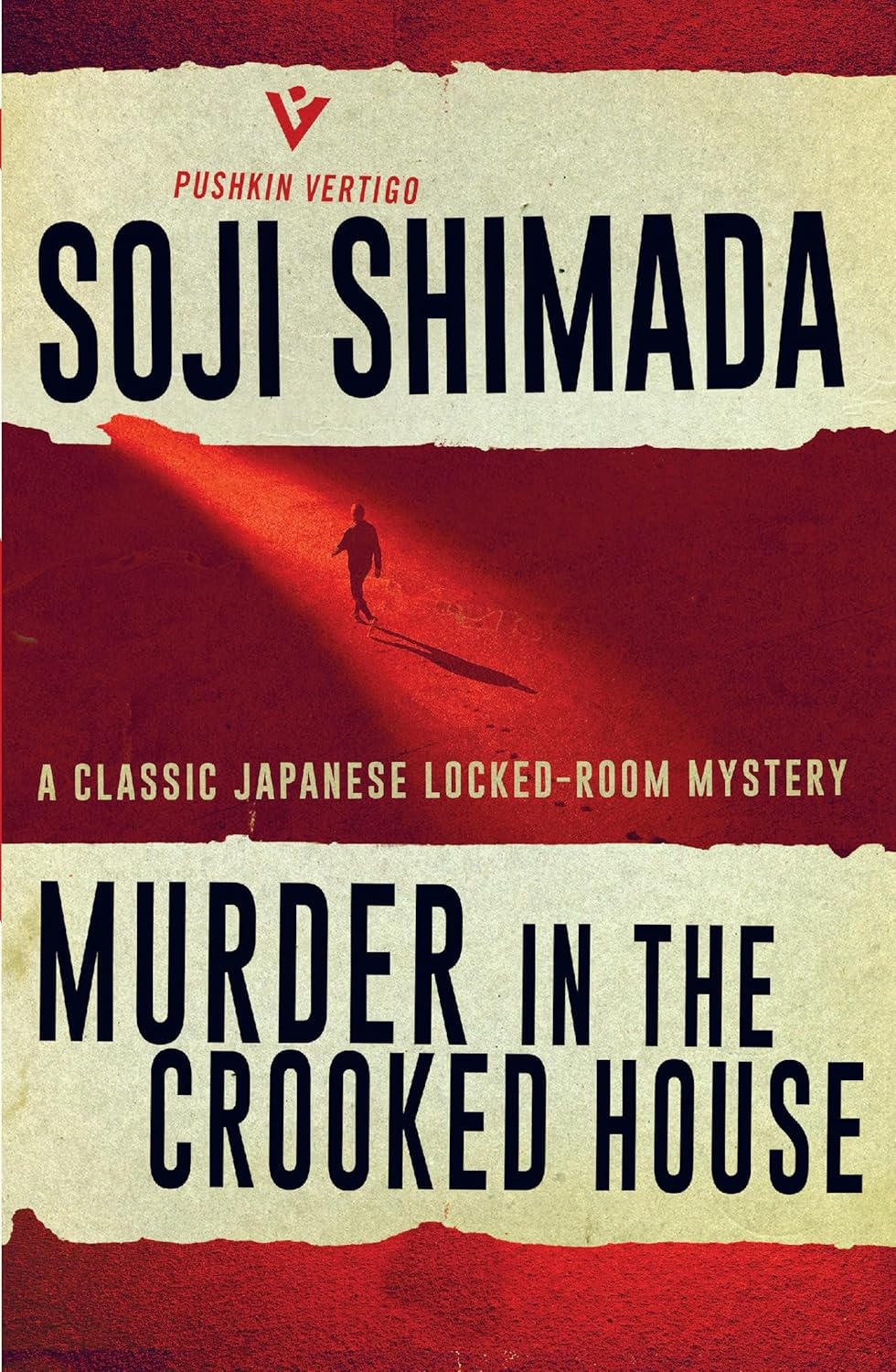
About Murder in the Crooked House by Soji Shimada: A Mystery You Can Try to Solve
A guest is murdered inside a strange house on a snowy cliff in northern Japan. The death seems impossible. The police search for an answer, but the house gives them more questions. Its floors slope, its stairs lead in odd directions, and its rooms are full of unsettling masks and dolls. Then more deaths follow.
Murder in the Crooked House by Soji Shimada invites you to look closely at every clue. Detective Kiyoshi Mitarai will take on the case, but you can try to work it out before he does. If you like mysteries that let you think along with the detective, this book gives you a good reason to keep turning pages.
A House That Makes Every Clue Matter
Many murder mysteries ask one big question: Who did it? This one asks another: How could anyone have done it? A guest is found dead in circumstances that do not seem to allow for a killer. As the police investigate, the building itself becomes part of the puzzle. A room, a stair, a window, or a sound may mean more than it first appears to mean.
That makes the Crooked House a memorable place to read about. It stands alone on a cliff, with snow outside and an unusual layout inside. Its sloping floors and strange stairs can make a simple walk through the building feel uncertain. The masks and dolls add to the uneasy mood. You do not need to believe in ghosts to feel that something is wrong there. You only need to know that a murderer may still be close.
The setting also gives you something useful to do as a reader. Pay attention to where people are. Think about how they could move from one part of the house to another. When someone describes what they saw or heard, ask whether the house might have changed their view. The story offers a place you can picture, inspect, and question as the case grows.
Follow the Case Alongside Kiyoshi Mitarai
When the police cannot explain the deaths, Kiyoshi Mitarai enters the case. He is known for solving difficult mysteries, yet the book does not ask you to sit back and wait for him to speak. The clues are there for you as well. You can make a guess, change your mind, and test each new idea against what has happened.
That is one of the pleasures of a locked-room mystery. A door may be shut. A route may seem blocked. A person may appear to have had no chance to enter or leave. You can accept that the crime is impossible, or you can look for the detail that makes it possible. Shimada gives the case room to grow, so your answer may change more than once.
You may suspect one guest, then notice a problem with that theory. You may think you understand a room, then realize its shape matters. Each new fact asks you to look back at an earlier one. The fun comes from taking part. By the time Mitarai explains his thinking, you will have had the chance to build an answer of your own.
The book is a strong choice for readers who enjoy a fair challenge. You do not need to be good at solving puzzles to enjoy it. You can read for the mood and the story, or you can pause and take notes. Either way, the central question stays clear: how did the killer carry out a crime that should not have been possible?
What Kind of Mystery Is This?
This is a Japanese detective novel and a locked-room mystery. Its focus is on clues, the layout of the house, the people inside it, and the reasoning that connects them. It has an eerie setting and several deaths, so it can feel tense. At heart, though, it is a puzzle story. It asks you to seek an explanation for events that first seem to make no sense.
That helps you decide if it suits your reading taste. If you mainly want a chase from the first page to the last, this book asks for a different kind of attention. It gives you a strange place to explore and an unlikely crime to consider. You may want to slow down when someone describes a room or a movement through the house. Those details are part of the experience.
If you enjoy asking questions while you read, there is plenty to hold your interest. Could the killer have used a path no one noticed? Has a witness made a mistake? Is a small fact being overlooked because something more frightening has taken everyone’s attention? You can keep those questions in mind without knowing the answer in advance.
The book also works for readers who like mysteries set in an isolated place. Snow and distance make the house feel cut off from normal life. The people inside must face what has happened while the police try to find a clear account of it. The more the case resists an easy answer, the more closely you may find yourself watching everyone.
Why the Crooked House Is More Than a Backdrop
In some crime stories, a murder could happen in almost any building. Here, the house is central to the question. Its odd design affects how you imagine the crime. A sloping floor can change how a room feels. An unusual stair can make it harder to picture the way from one place to another. When the police have trouble explaining a death, those details become hard to ignore.
The house also changes the way you read ordinary actions. A person going to bed, hearing a noise, or looking down a corridor may seem to be doing something simple. In this setting, you may stop and wonder exactly where that person stood and what they could see. The building encourages you to pay attention without telling you which detail will matter most.
That is why the book can be enjoyable to discuss with another mystery reader. Two people may notice different things. One may focus on a guest’s behaviour; the other may focus on the shape of the house. You can compare guesses without giving away the solution. You can even agree on what happened and still disagree about how it happened.
Shimada keeps the central puzzle close to the reader. The house may be strange, but the task is easy to understand: find an explanation that fits the facts. You can return to that question whenever the case becomes more complex. It gives the story a clear path, even when the building seems to have none.
A Good Pick for Readers Who Like to Guess
You do not have to solve the murder to get something from this book. The pleasure is in trying. You can read one chapter and make a note of what you know. After the next, you can ask which parts of your idea still work. When a new death or clue changes the case, you can start again.
That approach makes the book well suited to a quiet weekend, a reading break, or a book club. Read it alone if you like to think through a puzzle in peace. Read it with a friend if you enjoy sharing theories. If you choose it for a group, ask everyone to write down a guess before the answer is revealed. The discussion can focus on the clues people noticed and the ones they missed.
It is also a good choice if you are curious about Japanese mystery fiction. The story gives you a clear way in: an isolated house, a baffling death, and a detective who must explain it. You can follow the case without needing to know the other books first. Readers who have met Mitarai before may enjoy seeing him face another unusual problem; new readers can meet him here through the case in front of them.
The English translation is by Louise Heal Kawai. That lets English-language readers take part in Shimada’s puzzle while following the story as a full novel, with its setting, characters, and growing sense of unease.
What You Get from the Reading Experience
The main reward is an active mystery. You are given more to do than wait for the name of a killer. You can study the scene, question what people say, and decide whether an apparently impossible event has a practical answer. Each time your theory fails, you have a reason to look again.
The snowy setting adds another layer. A house on a remote cliff feels far from the busy world outside. That distance keeps your attention on the guests, the rooms, and the case. The unsettling objects inside the house make its spaces easy to remember, while its unusual design keeps drawing you back to the question of how the crimes happened.
Mitarai gives the story a detective to follow, but he does not remove your part in it. You can notice a clue before he explains it. You can also reach the wrong answer and still enjoy seeing how the pieces fit at the end. The book is made for both kinds of reader: the one who wants to compete with the detective and the one who wants to see a difficult case carefully solved.
A printed copy makes it easy to stop at a clue and look back at an earlier passage. That can be useful in a story where places and movements matter. You might finish a chapter, turn back a few pages, and check whether your memory of the house matches what the book actually says. A second look may give you a new idea.
At Bookish Wonderland, this book is offered for readers who want a comfortable physical reading experience. The store describes its books as having premium eye-soothing cream paper, crystal-clear print, and high-quality stitched and glue binding for longevity. Those details matter when you plan to spend time with a mystery, return to clues, and keep the book for a later reread.
Is This the Right Book for You?
Choose Murder in the Crooked House if the phrase “impossible murder” makes you curious. The story starts with a death the police cannot readily explain and lets that problem lead you deeper into the house. The more you learn, the more questions you may have about its rooms and the people moving through them.
It may also suit you if you enjoy a mystery with a strong sense of place. The Crooked House is easy to picture and hard to forget. Its strange shape is part of what makes the case interesting. You can read for the eerie mood while still keeping your eye on the facts.
If you like detective stories where the answer can be reasoned out, this book gives you that kind of challenge. The publisher directly invites readers to try solving the murders before Mitarai does. You can take that invitation seriously, or simply enjoy watching the investigation unfold. The story gives you space for both.
It is a useful gift for someone who enjoys crime fiction, puzzle books, or talking through theories after finishing a novel. A reader who loves a direct, simple crime story should know that this one asks for close attention. The unusual house and the question of how the murders occurred are a large part of its appeal.
Where It Fits in the Detective Mitarai Series
Murder in the Crooked House is part of Soji Shimada’s Kiyoshi Mitarai detective series. The Tokyo Zodiac Murders came before it. This story presents its own case in the Crooked House, so you can start with the mystery here and follow what happens inside this book. If you later want to read more about Mitarai, you can explore his other cases.
Order Your Copy from Bookish Wonderland
If you are looking for a mystery that lets you join the investigation, this is a good place to start. Step inside the Crooked House, notice what each room tells you, and see whether your answer holds up when Mitarai takes a closer look. The story gives you a crime to question from the first death to the final explanation.
When checking the Book price in Bangladesh, see the current listing at Bookish Wonderland for the amount and availability. You can order for delivery inside or outside Dhaka, with nationwide delivery across Bangladesh. Cash on Delivery is available, and readers in Dhaka can ask about the fast or urgent delivery option.
Order Murder in the Crooked House by Soji Shimada today and find out whether you can solve the case before the detective does.
If you require any customization or have any questions, please inbox us via FB or Insta.
| Primary Specification | |
| Author | Soji Shimada |
| Translator | Louise Heal Kawai |
| Genre | Mystery, Crime Fiction, Locked-Room Mystery, Detective Fiction, Thriller PenguinRandomhouse.com |
| ISBN-13/ISSN | 978-1805335788 |
| ISBN-10 | 1805335782 |
| Publisher | Pushkin Vertigo |
| Publishing Date | July 7, 2026 |
| Language | English |
| Reading Age | 16+ years |
| Format | Printed book |
| Physical Specification & Quality | |
| Paper Quality | Premium eye-soothing cream paper |
| Binding Quality | High quality stitched and glue binding (for longevity) |
| Print Quality | Crystal-clear print |
| Pages | 352 pages |
| Country | USA |
| Logistics Information | |
| Weight | 373 gm |
| Length | 8.5 inches |
| Width | 5.6 inches |
| Height | 0.79 inch |