

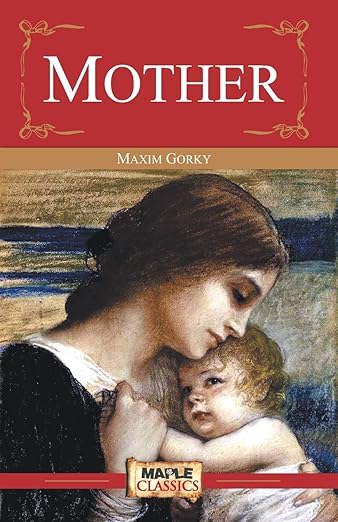
About Mother by Maxim Gorky—A Powerful Russian Classic About Courage, Change, and a Mother’s Awakening
Pelageya Nilovna Vlasova has spent much of her life in fear. She lives in a poor Russian factory community where long work, low pay, heavy drinking, and violence are common. Her husband treated her badly, and she learned that staying silent could help her survive. After his death, she hopes life may become calmer.
Her son Pavel is growing into a different kind of man. He reads books that the authorities do not want workers to read. He meets people who speak about fair pay, dignity, learning, and a better future. At first, Pelageya is frightened by these new ideas. She worries that Pavel will be arrested or hurt. She does not understand his cause, but she understands that her son is trying to live with purpose.
Mother by Maxim Gorky follows Pelageya as love slowly becomes courage. She begins by listening. Then she helps in small ways. Step by step, the fearful mother becomes someone willing to carry words, face danger, and stand beside people who dream of change.
Pavel brings a new world into the house
Pavel works in the factory like the men around him, but he does not accept that their hard lives must stay the same. Instead of spending his pay on drink, he reads and learns. Friends begin visiting his home. They discuss the lives of workers, the power of knowledge, and the need to work together.
Pelageya watches these meetings with worry. The young people speak openly about ideas that could bring police attention. Yet they do not act like the dangerous people she imagined. They are serious, caring, and ready to help one another. Their respect surprises her. For much of her life, she has known shouting and fear. In Pavel’s friends, she sees a different way for people to live together.
These home meetings change the feeling of the novel. A small room becomes a place where people learn to hope. Pelageya may not understand every word, but she begins to see the kindness behind the message. Her growth starts with this simple act of watching people treat each other with dignity.
The problem is larger than one family
Pelageya’s pain is personal, but it is not hers alone. The factory community is filled with tired people who have little control over their work or future. Many accept unfair treatment because they believe nothing can change. Fear keeps each person alone, and loneliness makes the system stronger.
Pavel and his companions offer another path. They share books, print leaflets, discuss ideas, and ask workers to stand together. Their answer is knowledge and common action. They believe people can become stronger when they understand why they suffer and stop facing that suffering alone.
Love gives Pelageya a reason to act
Pelageya does not enter the movement because she has studied political books. She begins because she loves Pavel and wants to protect him. When he and his friends need help, she finds ways to be useful. Each task teaches her something new about herself.
Her love also becomes wider. She starts by caring for one son. Over time, she feels close to the young people who work with him and to workers she has never met. She begins to see their pain as part of one shared life. The title “Mother” therefore means more than a family role. Pelageya becomes a caring figure within a much larger human struggle.
A mother and son learn from each other
Pavel first appears to be the teacher. He has the books, the ideas, and the clear plan. Pelageya listens and tries to understand. Yet their bond is not one-sided. Her patience, care, and bravery give strength to Pavel and his friends. She brings warmth to a movement that might otherwise seem made only of speeches and plans.
Their relationship changes as Pelageya grows. She no longer sees Pavel only as a son who must be kept safe. She begins to respect the person he has chosen to become. Pavel also sees that his mother has her own power. The woman who once lowered her eyes can make hard choices and carry great responsibility.
The factory world feels hard and close
Gorky presents a community shaped by exhausting labour and limited choices. Factory whistles control the day. Workers return home tired, and many use alcohol to escape. Anger from the workplace often enters the home. Poverty is not shown as a simple lack of money; it affects health, learning, family life, and the way people see themselves.
This setting explains why Pavel’s message matters to the workers. He is not speaking about an idea far away. He is speaking about their daily lives. The book asks why people who create so much through work receive so little safety or respect.
Printed words become a form of courage
Books, papers, and leaflets have great power in this story. The authorities fear them because words can move from one worker to another. A person who reads may begin to ask questions. A person who asks questions may stop accepting old rules.
Pelageya helps carry and share printed messages. For someone who once tried to stay unnoticed, this is a dangerous step. The act may look small, but it shows how far she has come. She is no longer only hiding from power. She is helping ideas travel.
Fear never fully disappears
The danger in the novel is real. Police watch meetings, search homes, seize printed work, and arrest people. Pavel and his friends know that their actions may lead to prison or worse. Pelageya knows it too. Her courage matters because she does not stop feeling afraid.
The story therefore offers a clear answer to a common human problem: what can a person do when fear has ruled life for years? Pelageya begins with one safe step, then another. She learns from people she trusts. She lets care lead her toward action. Readers do not need to share every political view in the book to understand the power of that journey.
More than a political message
Mother openly supports a workers’ revolutionary movement, so it is clearly a political novel. However, its lasting interest also comes from its people. The story looks at family love, abuse, shame, faith, friendship, sacrifice, and the need to belong.
The novel can also lead to debate. Some readers may admire its hope and shared purpose. Others may question its strong political direction or the way some characters represent ideas. Both responses can create useful discussion. A classic does not need every reader to agree. It needs to open a door into another time and make important questions feel alive.
Why readers still return to this classic
The novel gives readers a strong female journey. Pelageya has little money, education, or public power. Still, she learns, adapts, and becomes useful to a cause that once frightened her. Her growth challenges the idea that age, poverty, or a painful past must decide a person’s future.
What you will find in the story
- A working-class mother who grows from fear into courage
- A devoted son involved in a revolutionary workers’ movement
- A close look at factory life and poverty in pre-revolutionary Russia
- Secret meetings, banned reading, printed leaflets, police searches, and arrests
- Themes of motherhood, dignity, learning, unity, sacrifice, and social change
- A political story built around a clear emotional bond
- A well-known Russian classic that can support study and discussion
- A complete standalone novel with no sequel required
What this book can give the reader
Mother can make history feel closer by showing social pressure through daily life. Instead of giving only dates and names, it shows tired workers, worried families, secret papers, tense meetings, and people trying to decide how much risk they can bear.
Reading the book may also build interest in Russian classics, labour writing, women in political fiction, and the literature of social change. Because the novel has been translated many times, wording and character-name spelling may differ by edition. The story and central journey remain the same, but customers who need a specific translation should check the listed edition or ask the store before ordering.
Who will enjoy Mother?
Choose this book if you enjoy Russian literature, political novels, social history, family stories, or characters who change greatly over time. It is a good match for readers who want a classic with a clear social purpose and an emotional centre.
This is an adult classic. It includes domestic abuse, poverty, alcohol misuse, political persecution, arrest, violence, and intense ideological debate. Mature older teens may read it for study, but guidance can help them understand the historical setting and political language. Readers should also expect speeches and discussions alongside the action.
Read it with time to think
This is a good book for quiet evening reading, a classic reading plan, or a course on world literature. Keep notes if you want to follow the ideas and the many people around Pavel. Read a few chapters at a time and watch how Pelageya changes through repeated small acts.
A comfortable copy for a lasting classic
Bookish Wonderland offers a reader-friendly copy made for long reading sessions. Premium eye-soothing cream paper helps reduce harsh glare. Crystal-clear printing keeps the text sharp and easy to read. High-quality stitched and glue binding supports the pages and helps the book stay secure through regular use.
Common questions before ordering
Is Mother based on real events? The novel was inspired by real labour and political activity, including events connected with a 1902 May Day demonstration. Its main story remains a work of fiction.
Is Mother a communist book? It supports revolutionary socialist ideas and workers’ unity. Readers often study it in relation to socialist literature and the later development of socialist realism.
Is it only about politics? No. Politics shapes the plot, but the emotional centre is Pelageya’s growth and her changing relationship with Pavel and his companions.
Which translation does this copy use? The supplied details do not name a translator. Please check the product images or contact Bookish Wonderland if a specific translation is important to you.
Check the latest price and delivery options
Looking for Mother by Maxim Gorky price in Bangladesh? Check the amount shown on the Bookish Wonderland product page before placing your order. This gives you the latest store price and any active offer.
Cash on Delivery is available nationwide, with delivery inside and outside Dhaka. Customers in Dhaka may request fast or urgent delivery before confirming the order. Availability and timing can depend on the address and current delivery service.
For questions about the edition, translation, order, or customization, send Bookish Wonderland a message through Facebook or Instagram. The team can help you check the available copy before you buy.
Add this Russian classic to your shelf
Pelageya has spent most of her life staying quiet and avoiding trouble. But when Pavel begins standing up for factory workers, she can no longer watch from the side. Little by little, she finds the courage to help him and believe in something greater than her fear.
Order Mother by Maxim Gorky from Bookish Wonderland today. It is a good choice for readers who enjoy Russian classics, political fiction, and stories about ordinary people finding their voice. Keep it for your collection, use it for study, or give it to someone who enjoys thoughtful books about courage and change.
If you require any customization or have any questions, please inbox us via FB or Insta.
| Primary Specification | |
| Author | Maxim Gorky |
| Genre | Political fiction, social realism and revolutionary fiction |
| ISBN-13/ISSN | 978-9352230068 |
| ISBN-10 | 9352230068 |
| Publisher | Maple Press Pvt Ltd |
| Publishing Date | January 1, 2019 |
| Language | English |
| Reading Age | 16 years and above |
| Format | Printed Book |
| Physical Specification & Quality | |
| Paper Quality | Premium eye-soothing cream paper |
| Binding Quality | High quality stitched and glue binding (for longevity) |
| Print Quality | Crystal-clear print |
| Pages | 442 pages |
| Country | Russia |
| Logistics Information | |
| Weight | 465 gm |
| Length | 8.5 inches |
| Width | 5.6 inches |
| Height | 0.98 inch |