

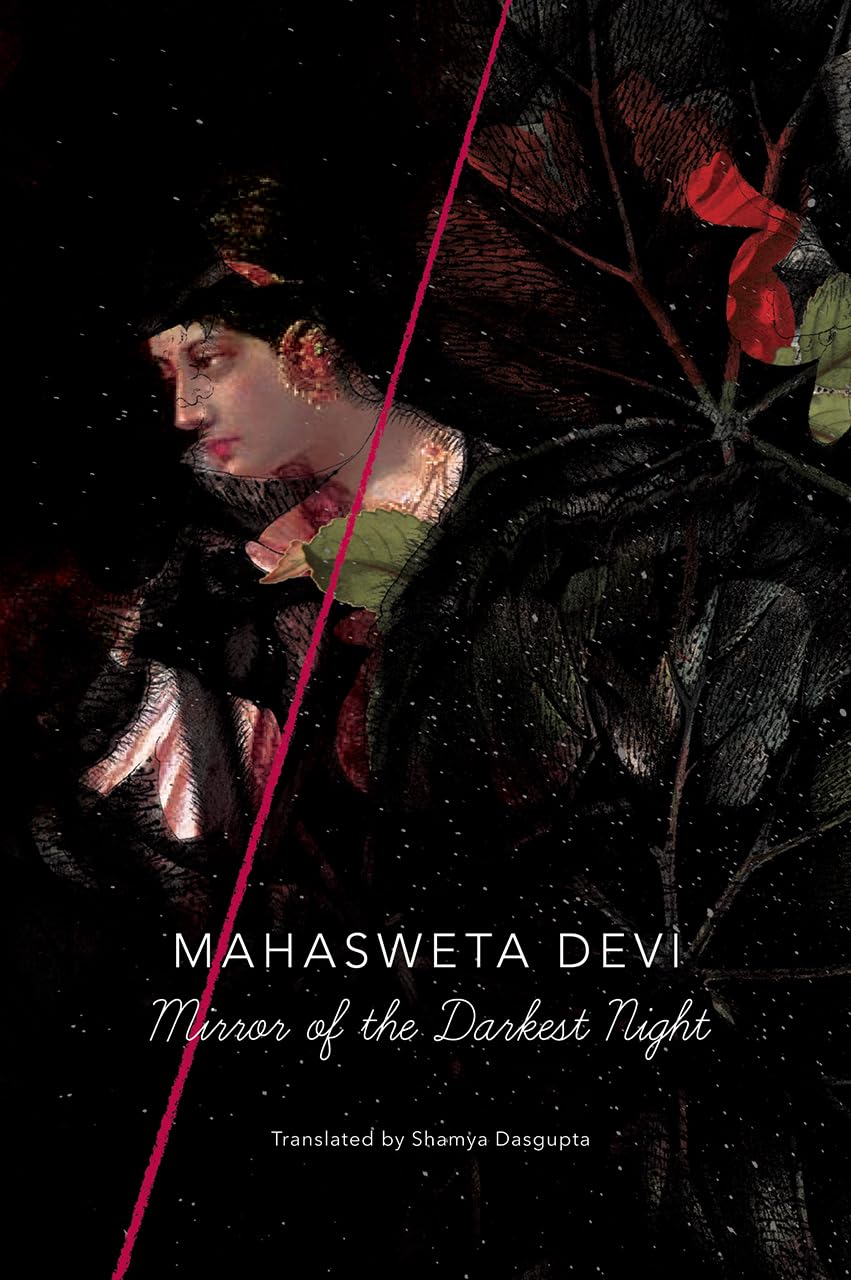
About Mirror of the Darkest Night by Mahasweta Devi – A Rich Historical Novel of Love, Betrayal, Power and Survival
Mirror of the Darkest Night by Mahasweta Devi is a sweeping historical novel set in the mid-to-late nineteenth century, when the British have removed Wajid Ali Shah, the nawab of Awadh, from Lucknow and sent him to Calcutta. Against this changing political world, the novel follows Laayl-e Aasman, a powerful and unpredictable courtesan whose life becomes tied to love, danger, loyalty, deception, and betrayal.
At the center of the story are Laayl-e, Kundan, and Bajrangi. Kundan comes from a violent family history, while Bajrangi is his close companion and a gifted sarangi player. Both men are deeply connected to Laayl-e, and their relationships create a tense emotional triangle shaped by desire, trust, fear, and responsibility.
The story moves across places, years, and generations. Crime figures, strange characters, family histories, and shifting loyalties enter the plot, giving the novel the feeling of a large old tale told with energy and detail.
Translated into English by Shamya Dasgupta, the novel shows a different side of Mahasweta Devi: historical, romantic, dramatic, and still alert to power.
A historical world shaped by change and uncertainty
The novel takes place during a period when British rule was changing old systems of power in India. The exile of Wajid Ali Shah from Lucknow to Calcutta creates an important background for the story.
This setting matters because the characters live in a world where old positions, loyalties, and identities are becoming unstable. Courts change. Cities change. People move. Those who once had status may lose it, while people living outside formal power may find new ways to survive.
Mahasweta Devi does not turn the novel into a history lesson. Instead, the historical setting gives the characters more pressure. Their personal choices happen inside a larger world of political change.
That makes the story useful for readers who enjoy historical fiction with both private emotion and public history. You can follow the love, danger, and betrayal while also feeling the uncertainty of the period around the characters.
Laayl-e Aasman stands at the center of the story
Laayl-e Aasman is one of the main reasons the novel feels so alive.
She is not written as a simple romantic heroine. She is clever, difficult, attractive, strong, vulnerable, and often hard to predict. Her life as a courtesan places her near wealth and power while also keeping her outside the safe respectability that society gives to certain women.
Her story is also a story of change. The English translation and discussion around the novel show her journey from a frightened young girl named Munni to the courtesan Laayl-e Aasman.
That change raises important questions. How does a person survive in a world that can use and judge them at the same time? How much control can a woman build for herself when men, money, reputation, and danger are always around her?
Laayl-e does not wait quietly for other people to decide everything. Her choices affect the men around her, and her presence shapes the movement of the whole novel.
Love here is never simple
Mirror of the Darkest Night contains romance, but it is not a soft story where love solves every problem.
Kundan, Bajrangi, and Laayl-e are connected by feelings that create both comfort and danger. Love can lead to loyalty, but it can also lead to jealousy. Desire can bring people together, but it can also make them selfish or careless.
Kundan and Bajrangi share a bond of their own, yet both are drawn toward Laayl-e. That makes their relationships difficult to separate into simple boxes.
Readers who enjoy emotional tension may find this part especially strong. The question is not only “Who loves whom?” The deeper question is what people are willing to do because of love, and what they may destroy while trying to keep it.
The novel shows that love can be mixed with pride, fear, duty, obsession, and power. That gives the romance more weight than a simple love story.
Music gives the story another emotional voice
The sarangi is important to the atmosphere of the book.
Bajrangi is connected with the instrument, and its sound fits the emotional world around Laayl-e. The sarangi can carry sadness, longing, beauty, and tension, so it becomes more than a small background detail.
Music also suits a story centered partly on a courtesan culture in which performance, art, poetry, and social life could exist together.
For readers, these details make the historical setting feel immediate, with rooms, voices, music, movement, clothing, and social rules shaping the characters.
Crime, danger and family history keep the plot moving
This is not only a romance.
Kundan’s background connects the story with violence and crime. The novel also includes dangerous figures and a wider group of unusual characters who move through different places and generations.
That gives the story the energy of an adventure as well as a historical romance.
People carry old histories with them. Family ties can protect, control, or threaten. A past choice may continue affecting someone years later. Loyalty can become dangerous when it is given to the wrong person.
The mix of crime, love, history, and personal ambition keeps the novel from staying in one mood for too long.
A different side of Mahasweta Devi
Mahasweta Devi is widely known for writing about social inequality, exploitation, tribal communities, resistance, and people pushed to the edges of society.
Mirror of the Darkest Night feels different from many of her better-known works.
The publisher itself describes the novel as unusual within her body of work because it gives more space to romance, historical color, adventure, and a large dramatic plot.
That difference makes the book especially interesting for readers who already know Mahasweta Devi. It shows that her range was wider than one kind of political or social fiction.
At the same time, the novel still pays attention to power. Courtesans, criminals, servants, men of status, and people living outside respectable society all exist inside unequal systems.
So even when the book feels more romantic or adventurous, questions about who has control and who must fight for space are never far away.
The English translation opens the novel to new readers
Mirror of the Darkest Night was originally written in Bengali as Laayl-e Aasmaaner Aayna and was published decades before its English translation.
Shamya Dasgupta translated the novel into English, allowing many readers outside Bengali to discover this unusual part of Mahasweta Devi’s work.
A translation has a difficult job. It must carry story, tone, culture, humor, emotion, and rhythm from one language into another.
For readers interested in Indian literature in translation, this edition is valuable because it gives access to a work that remained unavailable in English for many years.
It can also be a good choice for readers who want to explore Bengali literature beyond the titles that are most often taught or discussed.
What makes Mirror of the Darkest Night worth reading
The novel offers several reasons to pick it up:
- A dramatic historical setting shaped by the exile of Wajid Ali Shah and British rule.
- A strong central woman in Laayl-e Aasman.
- A complicated emotional bond between Laayl-e, Kundan, and Bajrangi.
- Love, loyalty, deception, betrayal, crime, and family history in one story.
- Rich details that create a vivid nineteenth-century atmosphere.
- A mix of romance, historical fiction, literary fiction, and adventure.
- A rare look at a different side of Mahasweta Devi’s writing.
- An English translation by Shamya Dasgupta.
- A broad story that moves across generations and geography.
- Strong themes of power, survival, desire, reputation, and social judgment.
It also rewards readers who enjoy stories where history, romance, danger, music, and social power meet together inside one carefully built world of human conflict.
Who should read this book?
Mirror of the Darkest Night is a strong choice for readers of historical fiction, Indian literature, Bengali literature in translation, literary romance, and character-driven drama.
It may especially appeal to readers who enjoy stories about courtesans, royal decline, changing social systems, hidden power, crime, and complicated relationships.
Students of South Asian literature may also find the book useful because it shows a less familiar side of Mahasweta Devi. Readers who know her through works about social struggle can see how she handles a more sweeping historical tale.
Book clubs can discuss Laayl-e’s choices, gender, loyalty, class, and how love changes when power is unequal.
A story about women, respectability and power
Laayl-e’s position as a courtesan makes the novel especially interesting.
She can attract powerful people, influence emotions, and command attention, yet society may still place limits on how she is viewed.
This creates a sharp difference between social respect and real power.
A woman may be wanted but not respected. She may have money but still face danger. She may control one room while having very little control over the wider world.
The novel uses Laayl-e’s life to show how complicated these positions can be.
For modern readers, this can lead to questions about who decides what kind of woman is considered respectable, and how those rules can be used to control people.
A premium reading copy from Bookish Wonderland
A detailed historical novel becomes easier to enjoy when the physical copy is comfortable to read.
Bookish Wonderland offers a reader-friendly copy with premium eye-soothing cream paper, crystal-clear print, and high-quality stitched plus glue binding for better longevity. The cream paper gives the pages a softer look, while the clear print keeps the text easy to follow during long reading sessions.
The durable binding is designed for repeated reading and long-term collection.
For readers comparing the Book price in Bangladesh for Mirror of the Darkest Night by Mahasweta Devi, Bookish Wonderland offers a convenient local option for ordering this translated work of Indian historical fiction.
Nationwide delivery is available across Bangladesh, including inside and outside Dhaka. Cash on delivery is available, and fast or urgent delivery options may also be available in Dhaka.
Why the novel can stay with you after the final page
The story works because it does not reduce its characters to one simple role.
Laayl-e is more than a courtesan. Kundan is more than a man from a violent family. Bajrangi is more than a musician or loyal friend.
Each person carries desire, fear, memory, pride, and responsibility.
Their choices show how people can love one another and still cause pain. They can be loyal and selfish at the same time. They can want freedom while also trying to control someone else.
That human conflict gives the novel emotional force.
Enter a dramatic world of love, music, danger and history
Mirror of the Darkest Night by Mahasweta Devi offers a very different reading experience from a quiet historical novel.
Its world is full of movement. A courtesan becomes the center of desire and conflict. A sarangi gives the story an emotional sound. Crime and family history create danger. Political change shapes the background. Love keeps pulling people together even when loyalty and betrayal threaten to tear them apart.
The novel also gives readers a rare chance to see Mahasweta Devi working in a more romantic and adventurous mode while still exploring power and social boundaries.
If you enjoy historical fiction with strong characters, Indian settings, complicated love, crime, and a sense of a larger world beyond the main plot, this title is a rewarding choice.
Order Mirror of the Darkest Night by Mahasweta Devi from Bookish Wonderland and discover a vivid historical tale where love, power, music, danger, and betrayal meet across generations.
If you require any customization or have any questions, please inbox us via FB or Insta.
| Primary Specification | |
| Author | Mahasweta Devi |
| Translator | Shamya Dasgupta |
| Narrator | Shamya Dasgupta |
| Genre | Historical Fiction, Literary Fiction |
| ISBN-13/ISSN | 978-0857424396 |
| ISBN-10 | 0857424394 |
| Publisher | Seagull Books |
| Publishing Date | April 15, 2019 |
| Language | English |
| Reading Age | 18+ |
| Format | Printed book |
| Physical Specification & Quality | |
| Paper Quality | Premium eye-soothing cream paper |
| Binding Quality | High quality stitched and glue binding (for longevity) |
| Print Quality | Crystal-clear print |
| Pages | 208 pages |
| Country | India |
| Logistics Information | |
| Weight | 228 gm |
| Length | 8.5 inches |
| Width | 5.6 inches |
| Height | 0.46 inch |