Skip to product information
1 of 1

Bookish Wonderland

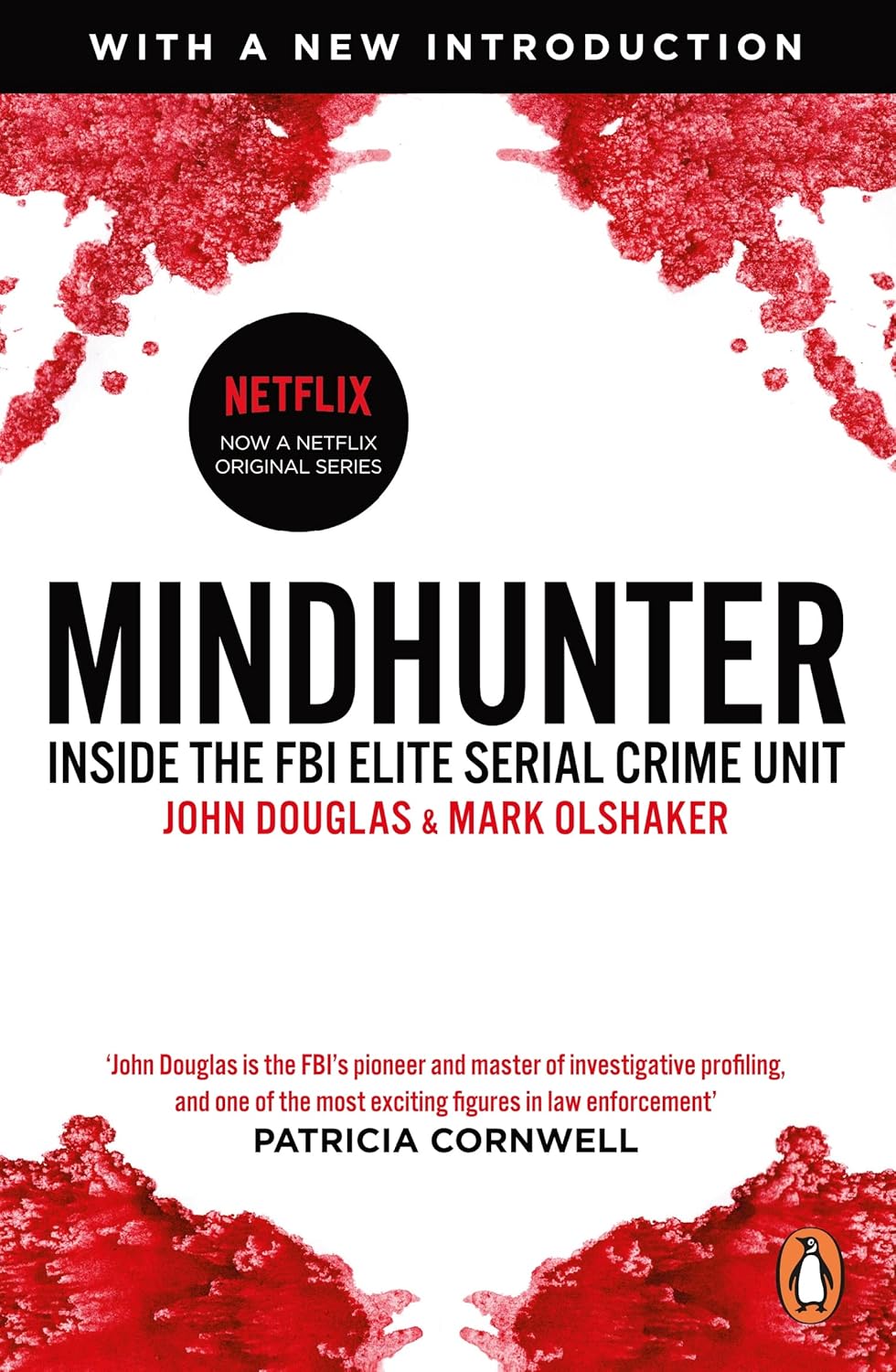
Mindhunter by John Douglas and Mark Olshaker

Mindhunter by John Douglas and Mark Olshaker

Regular price Tk 298.00 BDT
Regular price Sale price Tk 298.00 BDT
Sale Sold out
Book cover type
Quantity

Mindhunter by John Douglas and Mark Olshaker is a landmark true-crime book that explores the development of criminal profiling within the FBI. Drawing on Douglas’s twenty-five-year career in the FBI’s Investigative Support Unit, the book recounts his work studying, interviewing, and investigating some of America’s most notorious serial killers and violent criminals. Through real cases and psychological observations, Douglas explains how investigators analyze behavior, motives, crime scenes, and patterns to better understand offenders and help solve difficult cases. Combining memoir, criminology, investigative history, and true crime, Mindhunter provides readers with an unsettling but fascinating look into criminal psychology and the evolution of modern behavioral profiling. Read More

View full details

About Mindhunter by John Douglas and Mark Olshaker—Enter the Real World of FBI Criminal Profiling

How can an investigator understand a killer who leaves few clear clues? Mindhunter by John Douglas and Mark Olshaker takes readers behind the doors of the FBI unit that studied violent crime in a new way. The book follows Douglas through his long career as he visits crime scenes, speaks with convicted killers, studies their acts, and helps police think about the person behind a crime.

This is not a made-up detective tale. It is true crime, memoir, and a close look at early criminal profiling. Douglas shares hard cases, dangerous meetings, mistakes, pressure, and the heavy cost of doing this work. Olshaker helps turn that experience into a tense and clear story. The result is a book that feels like a thriller while showing the slow work behind real investigations.

Go Behind the Crime Scene Tape

Many crime books tell readers what happened. Mindhunter asks a darker question: why did it happen, and what may the offender do next? Douglas explains how he looked at details that could show planning, control, anger, fear, fantasy, or risk. The place, the victim, and the offender's choices could help form a picture of the unknown person.

That picture is called a profile. It may suggest age, habits, work, relationships, behaviour, or the way a suspect might react during an interview. A profile is not a name, a magic answer, or proof of guilt. It is one tool that can help police narrow a search and choose useful questions. Evidence, careful inquiry, and fair legal steps still matter.

The book makes this thinking easy to follow. Readers see Douglas study small facts, connect patterns, test an idea, and change his view when a clue does not fit. That process gives the book its pull. You are not only reading about a case. You are learning how an investigator tries to make sense of it.

From a Hard Problem to a New Kind of Tool

Police may know what a criminal did but know little about who the person is. Random attacks, repeated crimes, and cases with no clear link between victim and offender can leave a team with too many paths. Douglas and other members of the FBI's Behavioural Science work tried to meet this problem by studying behaviour across cases.

They spoke with people who had committed terrible acts. The aim was not to admire them or excuse them. The aim was to learn how they chose victims, prepared, controlled a scene, hid evidence, and spoke about their crimes later. Those talks could be compared with case files and crime scenes.

Mindhunter shows how this work grew while the people doing it were still learning. Readers see new ideas meet doubt, limited money, tired teams, and the risk of being wrong. This makes the story more human. Progress does not arrive as one perfect discovery. It comes through questions, trial, review, and years of field work.

Follow John Douglas Through a Demanding Career

The book begins with Douglas as a young man who did not yet know where his career would lead. It follows his path into the FBI, his training, and his move toward work with violent offenders. He travels, teaches, advises police, and takes on cases that stay in his mind long after the files close.

His work asks him to imagine a crime from more than one view. He considers what the victim may have faced, what the offender wanted, and why a certain place or act mattered. This mental work can help him spot behaviour, but it also brings him close to pain again and again.

The strain grows as the cases and travel build up. Douglas writes about stress, family pressure, illness, and the moment his body could no longer carry the load. These parts keep the book from feeling like a list of famous crimes. They show the private cost behind public work.

Meet Cases That Changed Criminal Investigation

Mindhunter moves through some of the most disturbing cases in modern American crime. Douglas discusses the Atlanta child murders, the Green River investigation, and the hunt for a man who targeted women in Alaska. He also writes about interviews and studies involving known killers such as Charles Manson, Ted Bundy, and Ed Gein.

These names may be familiar, but the book offers a different view. Its main interest is not fame. Douglas looks for repeated acts, changes in method, choices at a scene, and words that reveal how an offender sees himself. He also shows how a useful interview may require calm control, careful preparation, and questions shaped for one person.

The details can be graphic and upsetting. The book deals with murder, sexual violence, crimes against children, and other cruel acts. It is written for mature readers. Anyone who finds these subjects deeply distressing should read with care or choose a different title.

See Why Behaviour Can Become a Clue

A crime scene can contain more than objects. Actions also leave signs. An offender may plan carefully or act in sudden anger. The person may try to control the victim, hide the body, stage the scene, or return to the same kind of place. Such choices may point to needs and habits.

Douglas explains how investigators can compare these signs with known behaviour. A pattern may help them decide which leads deserve more attention. It may also guide the way officers speak to a suspect or share warnings with the public.

Still, behaviour is complex. Two people can act alike for different reasons, and an offender can change. The strongest lesson is not that a profiler can read minds. It is that close observation, good records, experience, and careful questions can add value when used with solid evidence.

More Than a Story About Killers

The heart of Mindhunter is the search for understanding, not love for darkness. Douglas often focuses on what investigators can learn so that more harm may be stopped. He shows the need to study victims with care because their lives, routines, and last choices can explain why an offender selected them.

This approach can feel uncomfortable. To predict a violent person, an investigator may need to enter that person's way of thinking for a short time. Douglas describes trying to become both hunter and hunted in his mind. That skill gives the book its famous title, but it also explains why the work can be hard to leave at the office.

Readers come away with respect for the people who collect facts, check tips, speak with families, compare cases, and keep working when an answer is far away. A profile may help, but a case is solved by many people and many forms of proof. It also asks readers to think about how patience, teamwork, and respect for facts can protect an inquiry from quick guesses, fear, bias, and simple answers that feel too easy.

True Crime Told with the Pace of a Thriller

Mark Olshaker helps give the book a smooth, story-led shape. Technical ideas appear inside real events, so readers can understand them without a degree in psychology or law. Scenes move from training rooms and police offices to prisons, homes, and active investigations.

The writing builds tension through questions. What detail does not fit? What kind of person would take this risk? Is a suspect changing his story? Why did the offender choose this victim or place? Each question pulls the reader deeper while teaching a way to examine facts.

Short explanations keep the book readable, but the ideas stay serious. You can enjoy the pace and still pause to think about justice, public safety, human behaviour, and the limits of any one method.

The Book Behind the Screen Story

Mindhunter inspired the Netflix drama of the same name. Viewers of the show will recognise the broad world of FBI agents interviewing imprisoned killers and building new ways to study serial crime. The book, however, gives Douglas's own account and covers more of his career, methods, cases, and personal life.

You do not need to watch the series before reading. The book stands on its own. If you have watched it, the source material can help you separate dramatic characters from the real work that inspired them. It adds context that a television scene may not have time to explain.

What Will You Find Inside?

  • A first-person account of John Douglas's long FBI career.

  • A clear look at the early growth of criminal profiling.

  • Interviews with convicted murderers and other violent offenders.

  • Major investigations explained through behaviour and evidence.

  • Simple examples of how a profile may guide a police team.

  • Honest detail about stress, doubt, danger, and physical strain.

  • A true story written with strong pace and rising tension.

  • Background that adds depth for viewers of the Netflix series.

  • Important reminders that profiling is a tool, not certain proof.

  • A close look at how careful questions can uncover hidden patterns.

Who Should Read Mindhunter?

This book is a strong choice for adult readers who enjoy true crime, criminal psychology, police history, memoirs, forensic study, and real investigations. It can also interest students of criminology, psychology, law, journalism, and public safety.

Mystery readers may enjoy seeing how real cases differ from neat fictional puzzles. Fans of the Netflix series can discover the book that helped inspire it. Readers who like detailed first-person accounts will value the mix of personal memory and professional insight.

This is not a light or gentle read. It contains disturbing crimes and adult material. It also reflects Douglas's own experience and view. Readers can stay thoughtful, compare ideas with modern research, and remember that every case involves real victims and families.

A Book Made for Focused Reading

This Bookish Wonderland edition is made for comfortable, regular use. Premium eye-soothing cream paper gives each page a soft look under normal light. Crystal-clear printing keeps the words sharp. High-quality stitched and glue binding helps the pages stay secure as you read, mark, and revisit key parts.

The printed format is useful for notes, study, book-club talks, and slow reading away from phone alerts. It also makes a bold gift for a mature true-crime reader or a student exploring criminal behaviour.

Why Order from Bookish Wonderland?

Bookish Wonderland offers premium and durable English books for readers across the country. When checking the Book price in Bangladesh for Mindhunter by John Douglas and Mark Olshaker, consider the value of comfortable paper, clean print, and strong binding for a book you may study more than once.

Cash on Delivery is available across Bangladesh. We deliver inside and outside Dhaka. Readers in Dhaka may also ask about fast or urgent delivery. Contact us through Facebook or Instagram for current stock, order help, or delivery details.

Step Into the Mind of an Investigator

Some books tell you who committed a crime. Mindhunter shows how trained investigators begin when the answer is not clear. It turns crime-scene choices, words, habits, and patterns into questions that may lead a team closer to the truth.

Order Mindhunter by John Douglas and Mark Olshaker from Bookish Wonderland today. Follow a remarkable FBI career, learn how criminal profiling began to grow, and see famous cases from inside the investigative process. This is a gripping choice for readers who want true crime with real thought, human cost, and hard-earned lessons.

Nationwide delivery, Cash on Delivery, and fast or urgent delivery options in Dhaka make ordering simple.

If you require any customization or have any questions, please inbox us via FB or Insta.

Primary Specification
AuthorJohn E. Douglas and Mark Olshaker
Narrator Richard M. Davidson
GenreTrue Crime, Criminology, Criminal Psychology, Biography
ISBN-13/ISSN978-1501191961
ISBN-101501191969
PublisherGallery Books
Publishing Date‎ October 24, 2017
EditionMedia Tie-In
LanguageEnglish
Reading Age18+
FormatPrinted book
Physical Specification & Quality
Paper QualityPremium eye-soothing cream paper
Binding QualityHigh quality stitched and glue binding (for longevity)
Print QualityCrystal-clear print
Pages‎ 448 pages
CountryUSA
Logistics Information
Weight468 gm
Length8.5 inches
Width5.6 inches
Height0.98 inch
What is Mindhunter by John E. Douglas and Mark Olshaker about?

Mindhunter: Inside the FBI’s Elite Serial Crime Unit is a true-crime and criminal-psychology book based on former FBI Special Agent John E. Douglas’s career investigating violent offenders and helping develop behavioral approaches to criminal investigation. Written with Mark Olshaker, the book combines Douglas’s professional memoir with detailed discussions of serial murder, sexual violence, offender behavior, crime scenes, interviewing techniques, and criminal profiling. Douglas explains how members of the FBI’s Behavioral Science Unit studied convicted murderers and compared their personalities, backgrounds, fantasies, and methods with evidence from unsolved crimes. The book also recounts major investigations in which behavioral analysis was used to narrow suspect pools or advise local investigators. Rather than functioning as a fictional detective story, Mindhunter gives readers Douglas’s first-person account of how behavioral profiling developed during an important period in modern American criminal investigation.

How many books are in the Mind Hunter series by John E. Douglas and Mark Olshaker, and what are they?

There are no books in a series for Mindhunter by John E. Douglas & Mark Olshaker. It is a standalone True Crime nonfiction book.

Is Mindhunter based on true events and real serial killer investigations?

Yes. Mindhunter is nonfiction and draws from John Douglas’s real FBI career, including his work in behavioral science, violent-crime investigation, interviews with offenders, and consultation on major cases. Douglas discusses real criminals and investigations while explaining how investigators tried to infer characteristics of an unknown offender from crime-scene behavior, victim selection, patterns, and other evidence. The book covers notorious offenders and cases that became important to the development of criminal profiling and behavioral analysis. However, readers should remember that the narrative is told primarily from Douglas’s own perspective and was written years after many of the events occurred. It is therefore both professional memoir and true crime rather than a neutral academic history of every case. Readers interested in individual investigations may want to compare Douglas’s account with official records, reporting, and books by other investigators for additional perspectives.

Does Mindhunter actually explain how criminal profiling works?

Yes, but it is better described as an introduction through cases and experience than as a technical profiling textbook. Douglas explains how investigators consider factors such as victim choice, crime-scene organization, methods of control, evidence of planning, post-offense behavior, geography, and the psychological meaning of particular actions. He shows how these observations can be used to suggest possible characteristics of an unknown offender and help investigators decide where to focus attention. However, readers expecting a strict step-by-step formula may find the explanation less systematic than expected. Online discussions frequently note that Douglas often demonstrates profiling through successful case examples rather than presenting detailed accuracy statistics or every instance where predictions were incorrect. Profiling is therefore best understood as one investigative tool that can generate hypotheses and narrow possibilities, not as a method that identifies offenders with certainty.

Is criminal profiling in Mindhunter scientifically accurate and reliable?

The book presents profiling as highly useful, but modern readers should approach some of its claims critically. Behavioral analysis can help investigators organize evidence, identify patterns, prioritize suspects, and generate investigative leads. However, criminal profiling is not a perfect predictive science, and individual profile details can be wrong. Reader discussions frequently criticize the memoir for emphasizing successful predictions more strongly than failures, which can make the method appear more precise than it is. Douglas himself describes profiling as something that depends heavily on experience, observation, behavioral interpretation, and comparison with previous crimes. It should therefore complement forensic evidence, witness information, investigative work, and other evidence rather than replace them. This makes Mindhunter valuable both as a history of behavioral investigation and as a book that encourages discussion about the strengths and limitations of profiling.

Which famous serial killers and criminal cases are discussed in Mindhunter?

Mindhunter discusses numerous notorious criminals and violent-crime investigations connected with Douglas’s career and the FBI’s developing behavioral-analysis work. Readers encounter discussions involving offenders such as Edmund Kemper, David Berkowitz, Charles Manson, Ted Bundy, and other murderers and sexual offenders, along with major investigations such as the Atlanta child murders. The book uses these cases to illustrate different offender personalities, crime-scene behaviors, motives, and investigative challenges rather than simply retelling crimes for shock value. Some chapters focus heavily on how Douglas approached an unknown offender before an arrest, while others describe what investigators learned from interviewing convicted criminals. This case-based structure is one reason true-crime readers often find the book highly engaging: theories about behavior are repeatedly connected to actual crimes, offenders, victims, and investigative decisions.

How graphic and disturbing is Mindhunter, and is it suitable for younger readers?
Mindhunter is written for mature readers and contains disturbing real-world material. It discusses serial murder, sexual violence, mutilation, child victims, crime scenes, offender fantasies, abuse, and other forms of serious violence. Some descriptions are clinical, while others are detailed enough to be upsetting because the events actually happened. The book is not primarily written to sensationalize violence, but Douglas needs to explain crime-scene behavior and offender psychology in order to describe how investigations and profiles were developed. Readers who are sensitive to sexual violence, crimes against children, homicide, or graphic true-crime material should know this before starting. Mature older teenagers who already read serious true crime may be able to handle it, but it is more appropriately categorized as adult nonfiction because of the nature of the crimes and psychological material rather than simply the difficulty of the vocabulary.
How is the Mindhunter book different from the Netflix series?
The Netflix series was inspired by Mindhunter, but it is a dramatized adaptation rather than a scene-by-scene recreation of Douglas and Olshaker’s book. Holden Ford is substantially inspired by John Douglas, while other characters draw on real investigators, researchers, and colleagues associated with the FBI’s behavioral work. The television series combines, alters, and dramatizes events to create continuing character arcs, workplace conflicts, and narrative tension. The book is much more directly focused on Douglas’s personal career, his views on profiling, individual investigations, and what he believes investigators learned from violent offenders. Readers who loved the series should therefore not expect a prose version of the television episodes. Instead, the book provides more background on Douglas himself and the real cases behind the broader ideas that inspired the show. Reader discussions frequently note substantial differences between the real investigators’ accounts and their fictionalized screen counterparts.
Is Mindhunter by John E. Douglas and Mark Olshaker a premium edition at Bookish Wonderland?

Yes. Bookish Wonderland offers Mindhunter as a premium edition designed for readers who want a comfortable and dependable physical copy of this influential true-crime book. The book contains detailed case narratives, investigative reasoning, behavioral terminology, and psychological analysis, so clean text reproduction makes longer reading sessions easier to follow. A well-produced physical edition is particularly useful for criminology students, psychology readers, true-crime enthusiasts, law-enforcement readers, and fans of the Netflix adaptation who may want to return to particular cases or profiling concepts later. The edition is designed not only for a first reading but also for repeated consultation, highlighting, and long-term collection alongside other books on criminal psychology, behavioral science, forensic investigation, and true crime.

What is the paper and print quality of Mindhunter from Bookish Wonderland?

The Bookish Wonderland edition uses premium eye-soothing cream paper with crystal-clear printing. The cream-toned page surface provides a softer visual background than extremely bright white paper, which can make long nonfiction reading sessions more comfortable. Sharp printing keeps case details, names, investigative terminology, dialogue, and behavioral explanations clean and easy to follow. This is particularly important in Mindhunter because many chapters contain dense sequences of crimes, suspect characteristics, investigative decisions, and psychological observations. Readers may also want to return to earlier passages while comparing different offenders or profiling techniques. The combination of clear text reproduction and quality paper provides a smoother reading experience for general true-crime readers as well as students using the book for criminology, psychology, or behavioral-science study.

How durable is the binding of Mindhunter from Bookish Wonderland?

Mindhunter comes with high-quality stitched and glue binding designed for longevity. Stitching reinforces the page block, while adhesive adds further support to keep the pages firmly secured during repeated opening, carrying, lending, studying, and shelving. This is useful for a substantial nonfiction title because readers may frequently revisit individual cases, profiling principles, interviews, or investigative sections rather than simply reading the book once from beginning to end. Students and true-crime researchers may also use specific chapters repeatedly for reference. Stronger binding helps reduce the risk of loose pages or rapid spine deterioration during normal use. Combined with durable cream paper and sharp printing, the construction makes the edition suitable for long-term placement in a criminology, psychology, law-enforcement, or true-crime collection.

Why should I buy Mindhunter by John E. Douglas and Mark Olshaker from Bookish Wonderland in Bangladesh?

Bookish Wonderland provides a convenient way to buy Mindhunter by John E. Douglas and Mark Olshaker and other premium English true-crime books in Bangladesh while receiving a physical copy designed for comfortable and durable reading. This edition combines premium eye-soothing cream paper, crystal-clear printing, and high-quality stitched and glue binding, making it suitable for true-crime enthusiasts, psychology students, criminology readers, Netflix Mindhunter fans, and customers interested in criminal behavior and forensic investigation. Cash on Delivery is available across Bangladesh, allowing customers to order and pay when the book arrives. Delivery is available both inside and outside Dhaka, while customers in Dhaka can request fast or urgent delivery when available. Bookish Wonderland maintains a large premium and durable English book collection covering true crime, psychology, history, biography, thriller, science, business, classics, and many other categories.