

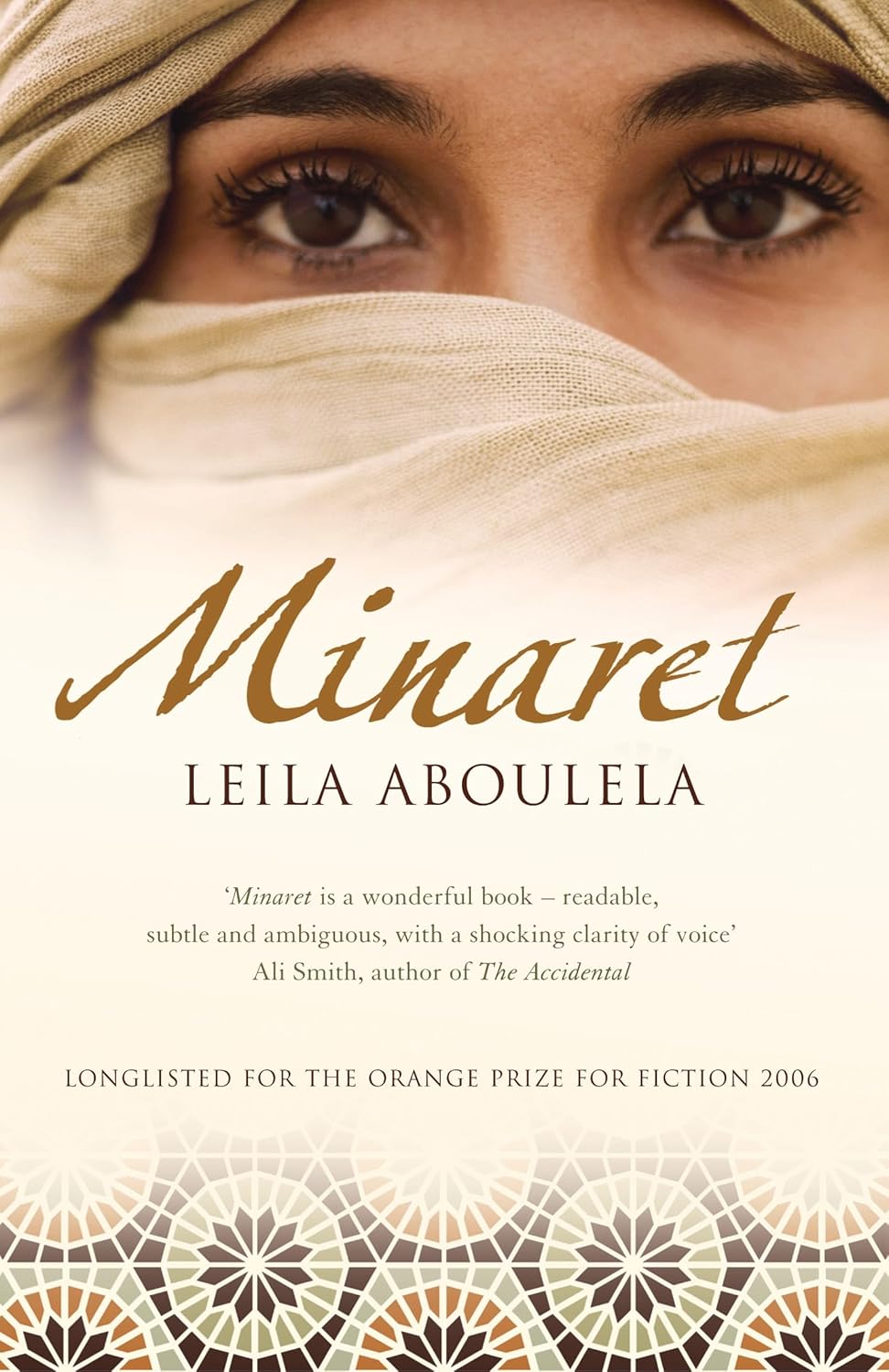
About Minaret by Leila Aboulela—A Moving Novel of Faith, Exile, Love, and Finding a New Home
What remains when wealth, status, family safety, and the future you expected disappear? Minaret by Leila Aboulela follows Najwa, a young Sudanese woman whose life changes after political trouble forces her family to leave Khartoum for London. Once rich and protected, she later cleans the homes of wealthy families and moves through a city where most people barely see her.
Yet this is not only a story about losing everything. It is also about discovering what cannot be bought. Through the mosque, prayer, Muslim women, and a growing relationship with faith, Najwa begins to find calm and a sense of belonging. When she meets Tamer, the younger brother of her employer, shared belief draws them together and opens a difficult new path.
Leila Aboulela tells Najwa's story with quiet power. The novel explores exile, class, love, modesty, memory, family, and spiritual need without turning its heroine into a simple lesson. It invites readers to enter a Muslim woman's inner world and see how a life can become smaller on the outside while growing deeper within.
From a Protected Life to an Uncertain Future
In Khartoum, Najwa grows up inside comfort. Her family has money and social power. She attends university, enjoys parties, and imagines a familiar future built around marriage and family. Political danger feels far away until it reaches her own home.
A coup changes everything. The position that once protected the family now places it at risk. Najwa, her mother, and her twin brother must leave Sudan and begin again in London. The move is not a free adventure. It is exile, filled with fear, grief, and the shock of losing control.
Aboulela shows how quickly class can change. Money, servants, influence, and a known place in society can vanish. Najwa must learn tasks she once watched other people perform. Her fall in status is painful, but it also makes her see labour, dependence, and human worth in a new way.
Invisible in the Homes of the Rich
Years later, Najwa works as a maid. In her hijab, with her quiet manner, she often feels unseen by the rich London families whose homes she cleans. People notice what she does for them but may not imagine the full life behind her lowered gaze.
This creates one of the novel's strongest contrasts. Najwa once belonged to the kind of household that employed servants. Now she enters other people's private spaces as a worker. She sees comfort from the outside and carries memories of the life she lost.
The work is not shown as a simple punishment. It gives her routine, income, and contact with others. At the same time, it reveals how class shapes the way people look at one another. Minaret asks whether a job can make someone invisible and whether dignity can survive when society measures worth through money and position.
Finding Peace Through Faith
Najwa was born Muslim, but religion was not at the centre of her early life. In London, after loss and disappointment, she begins to turn toward Islam with new attention. Her faith grows as a chosen source of meaning rather than a label she carries without thought.
Prayer gives form to days that once felt broken. The mosque gives her a place where she is not only a maid, exile, or fallen member of a wealthy family. She becomes part of a worshipping community. The hijab becomes connected to modesty, identity, and the life she now wants to build.
Aboulela treats this spiritual change seriously and from within Najwa's mind. Faith is not presented as decoration or as an easy answer that removes every problem. Najwa still faces loneliness, desire, regret, and hard choices. Religion gives her a way to understand those struggles and seek peace inside them.
The Strength of Women's Community
The women Najwa meets through the mosque offer companionship in a city where exile has left her rootless. They come from different places, yet shared worship creates a bond. Their company gives Najwa warmth, structure, and a sense that she does not have to carry every loss alone.
This community matters because belonging is one of the novel's deepest needs. Najwa cannot simply return to the old Khartoum of her memory. London may be where she lives, but it does not always feel like home. The mosque becomes a space where past and present can meet.
Readers see faith lived through ordinary acts: attending prayers, learning, dressing, talking, helping, and sitting beside other women. These details create a calm picture of Muslim life that moves beyond fear or stereotypes. The novel shows community as something built through repeated care.
A Quiet Love with Difficult Questions
At work, Najwa meets Tamer, the younger brother of her employer. He is lonely, thoughtful, and serious about his faith. Their shared values allow them to see parts of each other that other people miss.
The bond grows slowly. It is shaped by silence, restraint, attraction, and spiritual understanding. Yet love does not arrive in an empty world. Differences in age, class, family power, and social expectation stand around them. Najwa must ask what she wants and what the relationship may cost.
The novel also asks whether shared faith is enough to overcome every social divide. Aboulela does not reduce the answer to a slogan. She lets love remain tender, serious, and complicated.
Between Khartoum and London
Minaret moves between Najwa's earlier life in Sudan and her later years in Britain. The shifts allow readers to see not only what happened but how memory changes the meaning of the present.
Khartoum holds family, youth, heat, privilege, political danger, and the life Najwa thought would continue. London holds cold streets, work, loss, privacy, new community, and the chance to become someone different. Neither city is shown as simply good or bad.
This movement captures the feeling of exile. A person may live in one place while part of the mind remains in another. Food, weather, clothing, language, and streets can wake old memories without warning. Najwa's story shows that finding a new home does not require forgetting the first one.
Class, Work, and Human Dignity
The change in Najwa's social position is more than a plot event. It makes the novel examine who receives respect and who is expected to stay quiet. Rich employers can treat household workers as useful but replaceable. A worker may know intimate details about a family while remaining unknown to them.
Najwa's past creates an unusual view of this divide. She understands the habits of the rich because she once shared them. She also understands the tired body and careful silence of a servant because that is now her daily life.
Readers are invited to look beyond clothing, work, accent, and money. A person cleaning a room carries memories, beliefs, grief, intelligence, hope, and private dreams. Minaret gives that hidden life full attention.
A Muslim Woman at the Centre of Her Own Story
Najwa is not described only from the outside. Readers hear her doubts, memories, desires, prayers, and judgments. Her religious choices are treated as meaningful parts of her inner life.
This matters because Muslim women in fiction are often reduced to victims, symbols, or topics for other people to debate. Aboulela gives Najwa the space to be complex. She can be proud and humble, fearful and brave, mistaken and wise. Her hijab is not allowed to explain her whole personality.
The novel asks readers to understand before they judge. You do not have to share every belief or choice to recognise the human search for safety, love, purpose, and peace.
Writing That Is Quiet but Powerful
Aboulela uses clear, restrained, and lyrical prose. The drama grows from memory, private thought, class tension, family trouble, and feelings that characters cannot always speak aloud. The pace is thoughtful rather than fast.
Small details carry meaning. A London street, a room being cleaned, clothing, a visit to the mosque, or a view of a minaret can hold both present life and remembered loss. The title becomes a sign of spiritual direction and of the place where Najwa begins to feel less alone.
Readers who enjoy action on every page may find the novel slow. Readers who value voice, atmosphere, emotional change, and moral questions may find that its quiet scenes stay with them.
What Readers Can Discover
-
A moving first-person story centred on a Sudanese Muslim woman.
-
A thoughtful picture of exile from Khartoum to London.
-
An honest fall from wealth and status to domestic work.
-
Faith shown as practice, community, comfort, and choice.
-
A gentle romance shaped by age, class, family, and belief.
-
Strong themes of identity, dignity, memory, and belonging.
-
Muslim women shown with variety, agency, and inner depth.
-
A structure that connects past events with present feelings.
-
Clear, lyrical prose suited to slow and reflective reading.
-
Rich questions for study, book clubs, and personal thought.
The main benefit is perspective. Minaret opens a private world that many readers may not know and makes its hopes and struggles deeply human.
Who Should Read Minaret?
This novel is a strong choice for adults and mature young readers who enjoy literary fiction, Muslim fiction, African literature, migration stories, women's fiction, quiet romance, and books about faith. It can also interest students of religion, gender, class, diaspora, and postcolonial writing.
Readers who have lived away from home may recognise the pull of memory and the need to build belonging again. Muslim readers may value a heroine whose worship is treated with respect and seriousness. Non-Muslim readers can gain a close and humane view of a woman's spiritual journey.
Book clubs can discuss whether Najwa's changes bring freedom, safety, sacrifice, or all three. They can also explore the meaning of the title, the role of work, and the difference between being seen and truly known.
Premium Quality for Thoughtful Reading
This Bookish Wonderland edition is designed for comfortable reading and lasting use. Premium eye-soothing cream paper gives each page a soft appearance. Crystal-clear printing keeps the lyrical text easy to follow. High-quality stitched and glue binding helps the pages stay secure through rereading, study, and discussion.
Why Choose Bookish Wonderland?
Bookish Wonderland offers a large collection of premium and durable English books for readers across the country. When checking the Book price in Bangladesh for Minaret by Leila Aboulela, consider the comfort of cream paper, clean print, and strong binding for careful reading.
Cash on Delivery is available across Bangladesh. We deliver inside and outside Dhaka, while customers in Dhaka may ask about fast or urgent delivery. Contact Bookish Wonderland through Facebook or Instagram for stock, order help, customization, or delivery details.
Follow Najwa's Search for Peace
Minaret begins with a life broken by politics, exile, family loss, and class change. It grows into something more intimate: one woman's attempt to understand who she is when the old answers no longer work.
Najwa's journey does not follow an easy line. Love brings hope and risk. Memory offers comfort and pain. Faith gives her direction, but it also asks her to make choices. Through these tensions, Leila Aboulela creates a heroine whose quiet voice carries emotional force.
Order Minaret by Leila Aboulela from Bookish Wonderland today. Enter a thoughtful story of Sudan and London, wealth and work, longing and restraint, loneliness and community. Nationwide delivery, Cash on Delivery, and fast or urgent delivery options in Dhaka make ordering simple.
If you require any customization or have any questions, please inbox us via FB or Insta.
| Primary Specification | |
| Author | Leila Aboulela |
| Narrator | Lameece Issaq |
| Genre | Literary Fiction, Contemporary Fiction |
| ISBN-13/ISSN | 978-0802170149 |
| ISBN-10 | 0802170145 |
| Publisher | Grove Press, Black Cat |
| Publishing Date | August 19, 2005 |
| Language | English |
| Reading Age | 18+ |
| Format | Printed book |
| Physical Specification & Quality | |
| Paper Quality | Premium eye-soothing cream paper |
| Binding Quality | High quality stitched and glue binding (for longevity) |
| Print Quality | Crystal-clear print |
| Pages | 288 pages |
| Country | UK |
| Logistics Information | |
| Weight | 308 gm |
| Length | 8.5 inches |
| Width | 5.6 inches |
| Height | 0.75 inch |