

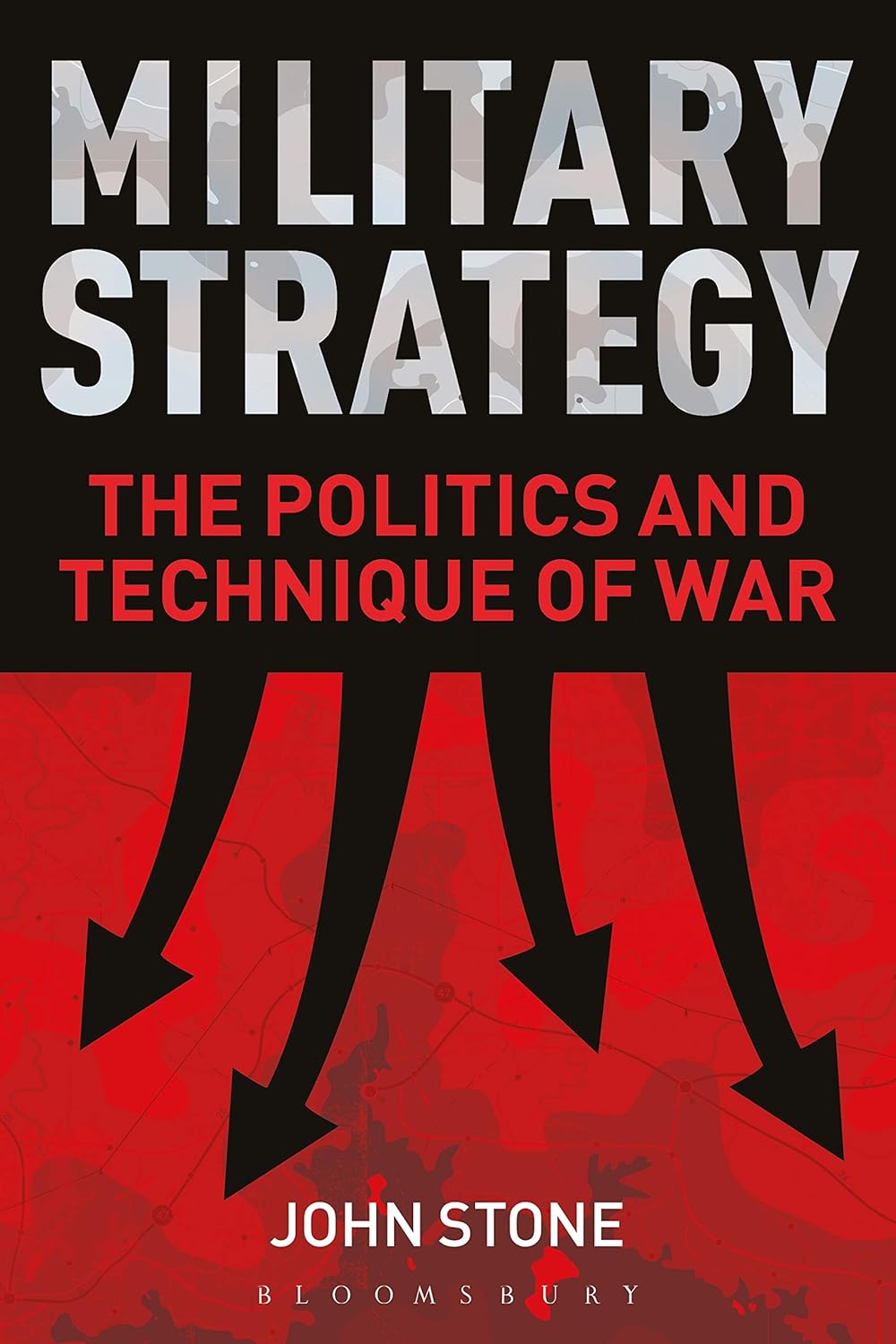
About Military Strategy: The Politics and Technique of War by John Stone – A Clear Guide to War, Politics and Strategic Thinking
Why do powerful armies sometimes fail? Why can winning a battle still lead to losing a war? Why does a country choose one type of military action instead of another? Military Strategy: The Politics and Technique of War by John Stone helps readers understand these difficult questions in a clear and organised way.
This is not simply a book about weapons, soldiers, or famous battles. It looks at the bigger picture. John Stone explains how military power connects with political goals and why a good strategy must think about much more than what happens on the battlefield.
For students, military history readers, international relations learners, defence enthusiasts, and anyone interested in how wars are planned and understood, this book offers a useful starting point.
Instead of treating strategy as a collection of clever tricks, the book asks a more important question: how can military force be used to achieve a political purpose?
That question sits at the heart of the book and gives readers a much deeper way to understand war.
Why Winning a Battle Is Not Always Enough
Many people first think of military strategy as a plan for defeating an enemy.
But real strategy is more complicated.
An army can win important battles and still fail to reach the political goal behind the war. A country can have strong weapons, skilled soldiers, and advanced technology but still use them in the wrong way.
Military Strategy: The Politics and Technique of War by John Stone helps explain this problem.
The book shows that military action must be connected to a clear political purpose. If leaders focus only on military power and forget the larger political situation, even a strong military campaign can produce poor results.
This makes the book useful for readers who want to understand why some wars develop in unexpected ways.
Stone encourages readers to look beyond the simple question, “Who won the battle?”
A better question is, “Did the military action achieve the political result that was wanted?”
That change in thinking can completely change the way you understand military history and modern conflict.
A Simple Way to Understand a Difficult Subject
Military strategy can sound like a very complex topic.
There are theories, historical events, military terms, political ideas, and many different ways of thinking about war. A beginner can easily feel lost.
John Stone approaches the subject as an introduction.
He explains strategy through its connection with politics and history. Instead of discussing military technique alone, he shows why the political environment matters when military decisions are made.
This helps readers build a strong base before moving into more advanced books about strategy, security, defence, international relations, or war studies.
The book also gives readers a useful framework for asking questions.
What is strategy?
How does it work?
Why is good strategy so difficult to create?
Why do military plans sometimes fail even when the people making them have large amounts of information and power?
These questions make the book valuable for readers who want understanding rather than simple facts.
See War Through a Wider Lens
One of the strongest ideas in the book is that war does not happen separately from politics.
Military action normally has a purpose outside the battlefield. Governments may want to protect territory, influence another state, defend an ally, stop a threat, force negotiations, or achieve another political goal.
Because of this, military strategy must connect what an armed force does with what political leaders actually want to achieve.
Stone explores this relationship through historical examples and strategic thought.
The result is a book that encourages readers to think about cause and effect.
Why was force used?
What did leaders expect it to achieve?
Did the military method match the political goal?
What happened when military thinking became separated from political reality?
These questions make the subject easier to understand because they give readers a clear way to examine different conflicts.
From Napoleon to Modern Conflict
The book does not stay inside one period of history.
Its discussion moves through major developments in modern military strategy, helping readers see how ideas about war changed over time.
The book considers the impact of the French Revolution and Napoleon before moving into nineteenth-century Prussian and German strategic thinking. It also discusses total war, liberal approaches to warfare, the role of the United States, limited nuclear war, limited conventional war, and the period associated with the Global War on Terror.
This wide historical range helps readers understand that military strategy is not fixed.
Technology changes.
Political systems change.
Weapons change.
Societies change.
The goals of governments change.
Because of these changes, strategy must also change.
Reading about several periods side by side can help students understand why an idea that worked in one situation may not work in another.
More Than a Book About Military Technology
Modern discussions about war often focus heavily on technology.
People talk about aircraft, missiles, intelligence systems, drones, communications, nuclear weapons, and other military tools.
These things matter, but technology alone does not create a successful strategy.
Military Strategy: The Politics and Technique of War explains why strategic thinking must go beyond technical power.
A new weapon may provide an advantage, but leaders still need to decide how that advantage supports the larger goal.
A military may be able to destroy a target, but another question remains: what political effect will that destruction create?
This difference between having military power and using military power wisely is central to understanding strategy.
Readers who usually look at war mainly through weapons and battlefield performance can therefore gain a broader point of view from this book.
Why Strategy Can Go Wrong
Strategy often looks simple after an event is over.
History books can make a decision seem obvious because readers already know what happened.
Real decision-makers do not have that advantage.
They must make choices while dealing with uncertainty, incomplete information, pressure, changing political conditions, enemy actions, public opinion, military limits, and many other problems.
This is one reason strategy is difficult.
Stone's discussion helps readers understand that failure does not always come from having a weak army or a bad battle plan.
Problems can begin much earlier.
Political goals may be unclear.
Military methods may not match those goals.
Leaders may expect force to produce results that it cannot realistically deliver.
Technical military questions may receive more attention than political consequences.
By understanding these problems, readers can analyse war in a more careful and mature way.
A Strong Choice for Students
This book can be especially useful for university students studying subjects connected with war and politics.
Students of international relations, political science, military history, strategic studies, security studies, defence studies, and war studies may find it valuable as introductory reading.
It can also help students who need a basic understanding of strategy before reading more specialised thinkers and theories.
The book gives readers ideas they can use when analysing historical cases, writing assignments, joining classroom discussions, or comparing different strategic approaches.
Instead of memorising only names and dates, students can focus on relationships.
How does military force connect with policy?
Why do political aims place limits on military action?
Why can a technically successful operation create an unwanted political outcome?
Questions like these can make academic reading much more meaningful.
Useful for Military History Readers Too
You do not need to be studying for a degree to enjoy the ideas in this book.
Readers who already enjoy military history can use it to look at familiar events differently.
A normal military history book may tell you where armies moved, who commanded them, what weapons they used, and which side won.
Strategic analysis asks another layer of questions.
Why was the campaign being fought?
What did the government expect the military to achieve?
Did the military plan support that aim?
Were the costs worth the political result?
When you begin asking these questions, military history becomes more than a story of battles.
It becomes a study of decisions, goals, limits, and consequences.
For curious readers, this can make historical events much more interesting.
Learn to Think Beyond Simple “Win or Lose” Ideas
War is often described using simple words such as victory and defeat.
Real outcomes can be much less clear.
A military operation can succeed while the wider strategy fails.
A state may achieve one goal but create new problems.
A battlefield loss may even support a larger political purpose in some situations.
Military Strategy encourages readers to think beyond simple labels.
This does not mean that battlefield results are unimportant. It means that they need to be understood within a larger plan.
By reading the book, you can learn to separate tactical or operational success from strategic success.
That distinction is important for anyone who wants to understand how governments and armed forces make decisions during conflict.
It also makes news, history, and discussions about international security easier to examine critically.
What You Will Explore Inside the Book
Military Strategy introduces readers to several important areas of strategic thought and history.
You will encounter discussion connected with:
-
The meaning and purpose of military strategy
-
The relationship between political goals and military force
-
The French Revolution and Napoleon
-
Prussian and German strategic development
-
Ideas connected with total war
-
Liberal thinking about warfare
-
The United States and modern military power
-
Limited nuclear war
-
Limited conventional war
-
Modern conflict and the Global War on Terror
-
The difficulty of turning military action into political results
These subjects are connected by one central idea: military action needs to serve a political purpose if it is going to make strategic sense.
That makes the book much more than a simple collection of historical events.
A Book That Helps Build Better Questions
One of the best benefits of reading strategy is learning how to ask better questions.
Instead of accepting an event at face value, you begin to examine the purpose behind it.
For example, when reading about a military campaign, you might ask what the political leaders wanted before the fighting began.
You may then ask whether the military had the tools and freedom needed to achieve that goal.
After that, you can examine whether the original political aim changed during the conflict.
These questions can reveal why a war developed in a certain direction.
They can also help you see the difference between what leaders wanted, what military forces could actually do, and what finally happened.
This style of thinking is useful for research, study, debate, and personal learning.
Clear Value for Serious Readers
Some military books focus mainly on dramatic battles.
Others focus heavily on technical details.
Military Strategy: The Politics and Technique of War takes a different path.
It helps readers understand the bridge between force and political purpose.
That makes it especially useful if you want to know why military power is used rather than only how it is used.
The book can sit well beside titles about military history, international politics, geopolitics, defence policy, security studies, and strategic theory.
It can also work as a foundation before reading more difficult books about thinkers such as Clausewitz or other major figures in strategic studies.
For a reader building a serious collection about war and international affairs, it can add an important analytical perspective.
Made for Comfortable Long Reading
A serious academic book becomes much easier to use when the physical copy feels comfortable.
Bookish Wonderland prepares this printed edition for readers who expect both useful content and dependable physical quality.
The book comes with premium eye-soothing cream paper that is comfortable for long study sessions. Crystal-clear printing keeps the text sharp and easy to read. High-quality stitched and glue binding adds strength and helps the pages stay secure through repeated reading.
These features are especially helpful for a book you may return to many times for study, notes, research, or reference.
Instead of buying a copy that feels disposable, you can keep a durable printed book on your shelf and use it whenever you need to review an idea.
Who Should Read This Book?
Military Strategy is suitable for several types of readers.
It is a strong choice for students who are learning about politics, international relations, military history, security, defence, or war.
It can also suit researchers who need an introductory text that connects historical examples with strategic ideas.
Military enthusiasts may enjoy the book because it goes deeper than weapons and battlefield stories.
Readers interested in geopolitics can also benefit because the book explains why political goals are central to military decisions.
Even if you are simply curious about why powerful countries sometimes struggle to turn military strength into lasting results, this book can give you a clearer framework.
You do not need to be a military professional to begin reading it.
How You Can Use This Book
You can read the book from beginning to end as an introduction to military strategy.
You can also use individual chapters when studying a particular historical period or strategic problem.
Students can use it while preparing class notes, essays, presentations, examinations, or research papers.
Teachers can use the themes to support discussions about the connection between war and politics.
General readers can keep it as a reference book when reading military history or following discussions about defence and international security.
Taking simple notes while reading can make the book even more useful.
Write down the political aim, military method, expected result, and actual result in each example.
This can help you see strategic patterns more clearly.
Why Buy from Bookish Wonderland?
Finding serious English-language books can sometimes be difficult, especially when you want both a readable copy and convenient delivery.
Bookish Wonderland focuses on offering a large collection of premium and durable English books for readers across the country.
If you are searching for Military Strategy: The Politics and Technique of War by John Stone Book price in Bangladesh, you can order through Bookish Wonderland and get a reader-friendly printed edition without having to search through many different sellers.
Nationwide delivery is available, including delivery inside and outside Dhaka.
Cash on Delivery is available for convenient purchasing.
Readers in Dhaka can also ask about fast or urgent delivery when available.
This makes it easier for students, researchers, teachers, and military history readers to add the book to their collection.
Add a Serious Strategy Book to Your Shelf
Military Strategy: The Politics and Technique of War by John Stone is for readers who want to understand what happens behind military decisions.
It shows why armies cannot be judged only by their size, weapons, or battlefield victories.
Strategy connects military action with political purpose.
When that connection is strong, force has a clearer direction. When it is weak, even impressive military power may fail to produce the intended result.
That idea makes this book useful far beyond one historical period.
It gives readers a way to think about Napoleon, industrial war, nuclear strategy, limited war, modern conflict, and many other questions through a common strategic lens.
For students, it can provide a foundation for further study.
For military history readers, it can add a deeper analytical layer to familiar events.
For curious readers, it can make the complicated relationship between war and politics easier to understand.
Order Military Strategy: The Politics and Technique of War by John Stone from Bookish Wonderland and build a stronger understanding of strategy, political goals, military power, and the difficult choices that shape war.
If you require any customization or have any questions, please inbox us via FB or Insta.
| Primary Specification | |
| Author | John Stone |
| Genre | Military Strategy, Military History, Politics, War Studies |
| ISBN-13/ISSN | 978-1350106246 |
| ISBN-10 | 1350106240 |
| Publisher | Bloomsbury Academic |
| Publishing Date | January 23, 2020 |
| Language | English |
| Reading Age | 18+ |
| Format | Printed book |
| Physical Specification & Quality | |
| Paper Quality | Premium eye-soothing cream paper |
| Binding Quality | High quality stitched and glue binding (for longevity) |
| Print Quality | Crystal-clear print |
| Pages | 216 pages |
| Country | UK |
| Logistics Information | |
| Weight | 236 gm |
| Length | 8.5 inches |
| Width | 5.6 inches |
| Height | 0.44 inch |