

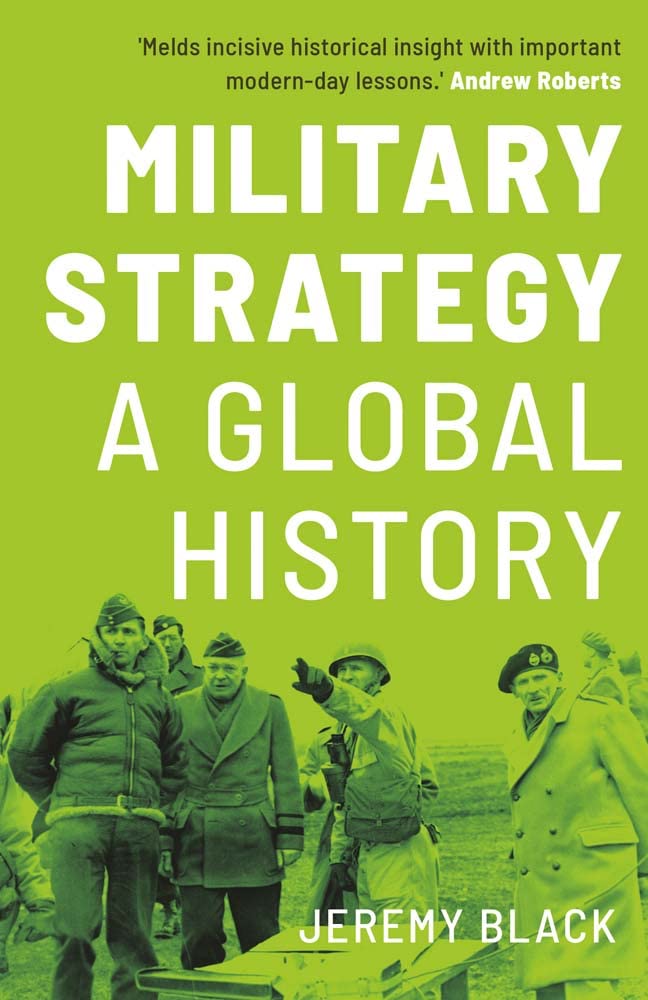
About Military Strategy: A Global History by Jeremy Black – Discover How Nations Plan, Fight and Use Power
War is not only about soldiers, weapons, and battles. Behind every major conflict there are plans, goals, choices, mistakes, and questions about power. Military Strategy: A Global History by Jeremy Black takes readers behind the battlefield and shows how military strategy has developed across different countries, empires, and periods of history.
Jeremy Black is a well-known military historian, and in this book he looks at strategy from a truly global point of view. Instead of telling the story only through Europe, he examines military thinking and action across different parts of the world. The result is a wide and thoughtful history of how rulers, governments, armies, and states have tried to use military power to reach larger goals.
The book is especially useful for readers who want to understand not only what happened in wars, but also why leaders made certain choices.
Why did one empire expand while another failed?
Why did powerful armies lose?
How did political goals change military plans?
Why did strategy change when technology, society, governments, and world power changed?
Military Strategy: A Global History helps readers explore these questions through centuries of military experience.
See the Bigger Picture Behind Every War
Many history books tell readers what happened during a battle.
They may explain where soldiers moved, who commanded an army, which side attacked first, and who finally won.
This book goes deeper.
Jeremy Black looks at the larger plans behind military action. He explores the connection between purpose, force, action, and results. This helps readers understand that a military victory is only one part of strategy.
A country can win a battle and still fail to reach its larger goal.
An army can be strong but follow the wrong plan.
A leader can have many soldiers but misunderstand the enemy.
A government can also change its aims while a war is still happening.
By looking at these problems, the book helps readers understand strategy as something much bigger than battlefield tactics.
It is about how political leaders and military leaders use power to shape events.
A Global Story Instead of One Narrow View
One of the strongest parts of Military Strategy: A Global History is its wide view.
Military history is sometimes explained mainly through European wars and European thinkers. Jeremy Black takes a broader approach.
He examines the development of military strategy across a long period and places major powers inside a wider global struggle for influence and security. His discussion includes important strategic developments connected with Britain, the United States, China, Russia, continental empires, European powers, and other political systems.
This global approach gives readers a richer understanding of military history.
Different states faced different problems.
Some needed to protect very large areas.
Some wanted to build empires.
Some depended heavily on sea power.
Others focused on land armies.
Some fought for independence.
Others tried to stop revolutions, protect borders, control trade, or increase political influence.
Looking at these different situations shows that there is no single strategy that works everywhere.
Good strategy depends on goals, geography, resources, leadership, enemies, politics, technology, and time.
Travel Through Centuries of Strategic Change
The book covers a large historical period rather than staying inside one war or one century.
Readers move through strategic developments involving continental empires, Britain and its imperial growth, republican powers, Napoleon, nineteenth-century America, European competition, the First World War, total war, the Cold War, and the strategic world after 1990.
This long timeline makes the book valuable because readers can see how military strategy changes.
The type of strategy used in an age of horses and sailing ships cannot simply be copied into an age of aircraft, missiles, nuclear weapons, satellites, and modern communication.
But some basic problems remain.
Leaders still need clear goals.
They still need to understand their enemies.
They still need enough resources.
They still need to connect military action with political needs.
They still need to know when to attack, defend, negotiate, or change direction.
Seeing both change and continuity is one of the most interesting parts of studying strategy.
Understand Why Powerful Armies Can Still Fail
A large army does not automatically create success.
This may sound simple, but military history shows how difficult the problem really is.
A country may have more soldiers, better equipment, more money, or stronger technology and still struggle to reach its goal.
Why?
Because strength must be used wisely.
Military power needs direction.
Leaders must decide what they are trying to achieve and what level of force is needed. They must also think about cost, geography, public support, alliances, supply, time, enemy reactions, and political effects.
Military Strategy: A Global History encourages readers to think about all of these issues together.
This makes the book useful for anyone who wants to move beyond simple ideas such as “the stronger side should win.”
History is rarely that easy.
Strategy is the process that connects available power with a desired result.
When that connection fails, military strength may be wasted.
Learn About Strategy Through Real Historical Practice
This is not only a book about abstract theories.
Jeremy Black pays close attention to how strategy was actually used in history. His focus includes major figures and strategic decision-makers such as the Kangxi Emperor, Napoleon, Clausewitz, and Hitler, while also considering wider national and international conditions.
That practical focus makes the subject more meaningful.
A theory can look perfect on paper.
Real war is different.
Leaders work with limited information.
Enemies do unexpected things.
Weather changes.
Supplies run low.
Allies disagree.
Governments change their goals.
Technology may create new opportunities while also creating new risks.
By studying strategy through real historical situations, readers can see how difficult military decision-making can become.
This is one reason the book can appeal to both history readers and students of strategic studies.
From Empires to Modern Global Power
Military power has helped shape the world we know today.
Empires grew through military action.
States protected borders through military force.
Revolutions changed political systems.
World wars transformed international power.
The Cold War created new strategic problems, especially because nuclear weapons changed what a major war could mean.
After 1990, military planners faced another set of challenges.
Military Strategy: A Global History places these changes inside one connected story.
This allows readers to see how the meaning of strategy has developed as the world itself has changed.
It also shows why strategy cannot be separated from politics, economics, geography, technology, and society.
A military plan is never created in an empty space.
Every decision is shaped by the conditions around it.
Understanding those conditions can help readers understand both historical and modern conflicts more clearly.
A Useful Book for Students and Serious Readers
This book can be a strong addition to the reading list of students studying military history, international relations, political science, security studies, strategic studies, defence studies, geopolitics, or world history.
It can also help general readers who enjoy learning about war and global power.
If you already read books about Napoleon, the world wars, empires, great-power competition, or the Cold War, this book gives you a wider framework that can connect many of those subjects.
Instead of studying each conflict as a completely separate event, you can begin comparing them.
What goal was each state trying to achieve?
What resources did it have?
What problems did its leaders face?
How did geography affect the plan?
What role did politics play?
Did military success produce the expected political result?
These questions can make historical reading much more interesting.
Build Better Critical Thinking About War
Military history can sometimes become a simple collection of dates, names, battles, and weapons.
That information matters, but strategy asks readers to think more deeply.
You begin looking for relationships between decisions and results.
You also learn that people making important choices did not know the future.
They had to act with the information available at the time.
That makes strategic history useful for critical thinking.
Readers can compare what leaders wanted with what actually happened.
They can look at successful plans and failed plans.
They can ask whether failure came from poor leadership, unrealistic political goals, limited resources, enemy action, or a combination of many problems.
This approach makes the book valuable for research, essays, discussions, presentations, and personal study.
It gives readers ideas they can continue using long after finishing the final chapter.
Why This Book Feels Different from a Normal War History
If you want only dramatic battlefield stories, this is not simply that kind of book.
Military Strategy: A Global History is interested in the thinking behind military power.
It asks readers to consider long-term goals rather than only short-term victory.
That difference matters.
Tactics may explain how to win a particular fight.
Strategy asks what that fight is meant to achieve.
A commander may capture a city, but what happens next?
A country may destroy an enemy force, but does that end the conflict?
A state may gain territory, but can it hold that territory?
A military may win quickly, but can political leaders create a lasting result?
Questions like these turn military history into something much larger.
They help explain why the end of fighting does not always mean the end of a strategic problem.
Important Topics You Will Explore
Readers can expect a broad discussion of military strategy across different periods and political systems.
The book examines subjects connected with:
-
Strategic thinking and the struggle for power
-
Continental empires and their military goals
-
Britain and the growth of imperial power
-
Republican military strategies
-
Napoleon and nineteenth-century warfare
-
The rise of the United States
-
European and global competition
-
Strategy during the First World War
-
Total war and the Second World War era
-
Cold War strategic thinking
-
Military strategy after 1990
-
The relationship between political goals and military action
-
The effect of geography, national strength, resources, and global competition on strategy
Together, these topics create a wide picture of how states have thought about force and power over hundreds of years.
Perfect for Readers Who Want More Than Basic History
This book can suit several types of readers.
A university student can use it to build a stronger understanding of strategic history.
A teacher can use its themes to support lessons about war, politics, empires, and international power.
A military history reader can use it to connect individual wars with larger historical changes.
A geopolitics reader can better understand how national interests and military power interact.
A curious general reader can simply enjoy learning why governments make different military choices.
You do not need to agree with every historical decision discussed in the book.
The value comes from examining how strategy worked, what leaders hoped to achieve, and what results followed.
That makes the book useful as both a history book and a tool for thinking.
A Premium Reading Experience from Bookish Wonderland
A serious history book deserves a copy that is comfortable to read and strong enough for regular use.
Bookish Wonderland offers this printed book with premium eye-soothing cream paper, helping readers enjoy long study sessions with a comfortable page tone.
The crystal-clear print keeps the text sharp and easy to follow.
The high-quality stitched and glue binding is designed for better longevity, making the book suitable for students and readers who may open it again and again for study or reference.
These physical qualities are especially helpful for an academic history title because you may want to underline ideas, return to important sections, compare periods, or keep the book in your personal collection for years.
Keep It Beside Your Other History and Strategy Books
Military Strategy works well in a collection about military history, geopolitics, international relations, defence, leadership, empire, or global history.
You can read it from beginning to end to follow the long development of strategy.
You can also return to certain chapters when studying a particular historical period.
For example, a reader learning about Napoleon can focus on the strategic changes surrounding the Napoleonic era.
Someone interested in twentieth-century warfare can study the sections on world war, total war, and the Cold War.
Readers interested in more recent military history can examine the discussion of the strategic world after 1990.
This makes the book useful both as a continuous history and as a reference title.
Find Military Strategy at Bookish Wonderland
Readers searching for Military Strategy: A Global History by Jeremy Black Book price in Bangladesh can order the printed book from Bookish Wonderland and add an important military history title to their collection.
Bookish Wonderland offers nationwide delivery, including delivery inside and outside Dhaka.
Cash on Delivery is available, making ordering simple for readers who prefer to pay when the book arrives.
Customers in Dhaka can also ask about fast or urgent delivery options when available.
Whether you are buying the book for university study, research, teaching, personal reading, or a growing military history collection, Bookish Wonderland makes it easy to get a durable English printed copy.
Add a Global View of Strategy to Your Bookshelf
Military Strategy: A Global History by Jeremy Black is a strong choice for anyone who wants to understand the long story behind military planning and global power.
The book shows that war is not only about fighting.
It is also about goals.
It is about choices.
It is about understanding enemies.
It is about knowing what resources are available and deciding how they should be used.
Most importantly, it is about connecting military action with a larger purpose.
By moving across different countries and centuries, Jeremy Black helps readers see how strategy changes when the world changes. Empires rise and fall. Political systems change. Weapons become more powerful. New states appear. Alliances shift. Yet leaders continue to face the basic problem of turning power into useful results.
For students, the book can provide a broad foundation for further study.
For military history fans, it can offer a new way to think about familiar wars and leaders.
For readers interested in geopolitics, it can help explain why states use force differently depending on their goals and circumstances.
And for anyone building a serious history collection, it offers a broad global study rather than a narrow account of one battle or one country.
Order Military Strategy: A Global History by Jeremy Black from Bookish Wonderland and explore the decisions, goals, conflicts, and ideas that have shaped military strategy across centuries of world history.
If you require any customization or have any questions, please inbox us via FB or Insta.
| Primary Specification | |
| Author | Jeremy Black |
| Narrator | Matthew Waterson |
| Genre | Military History, Military Strategy, World History |
| ISBN-13/ISSN | 978-0300270365 |
| ISBN-10 | 0300270364 |
| Publisher | Yale University Press |
| Publishing Date | May 23, 2023 |
| Language | English |
| Reading Age | 18+ |
| Format | Printed book |
| Physical Specification & Quality | |
| Paper Quality | Premium eye-soothing cream paper |
| Binding Quality | High quality stitched and glue binding (for longevity) |
| Print Quality | Crystal-clear print |
| Pages | 320 pages |
| Country | UK |
| Logistics Information | |
| Weight | 343 gm |
| Length | 8.5 inches |
| Width | 5.6 inches |
| Height | 0.71 inch |