

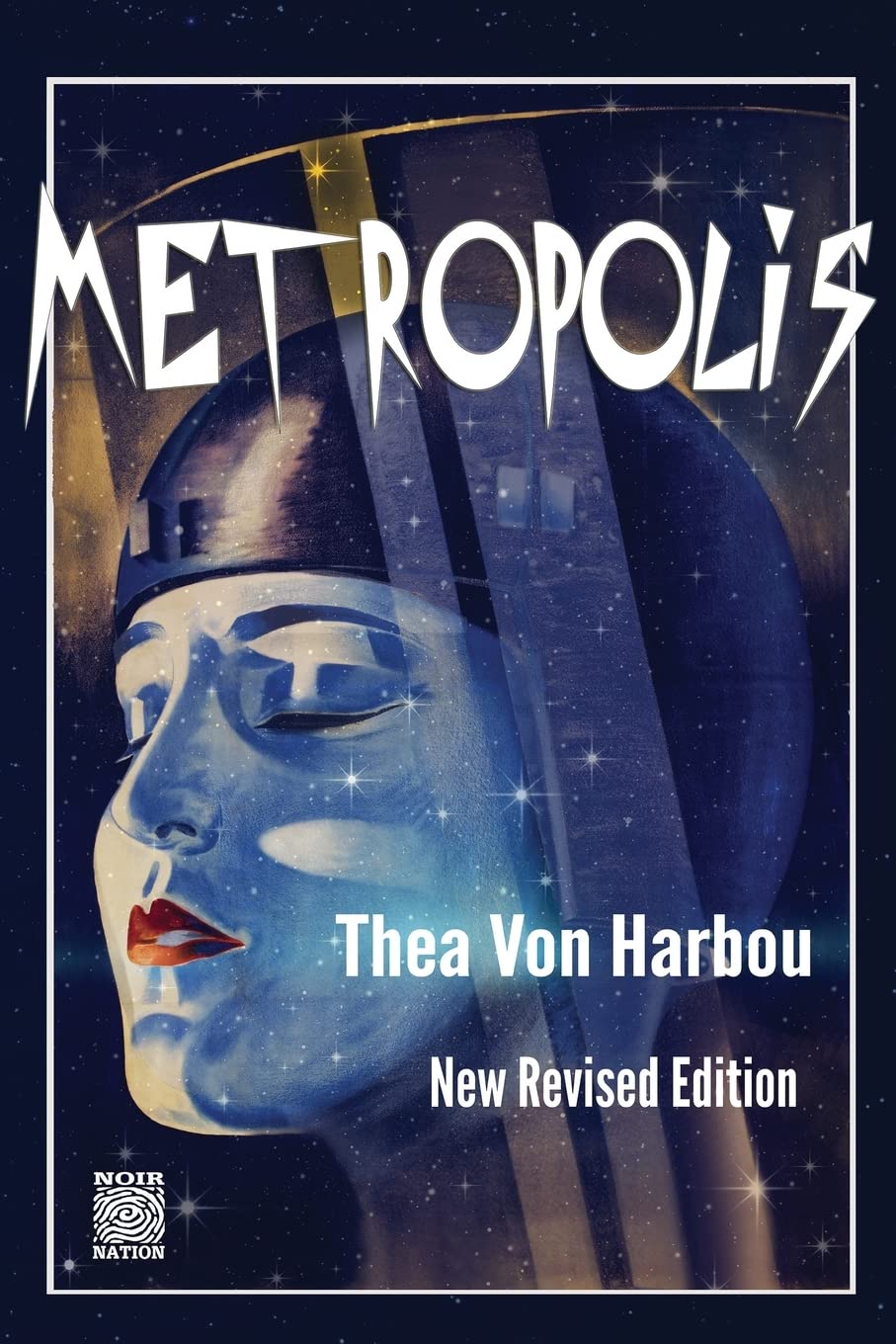
About Metropolis by Thea von Harbou: A City of Wonders Built on Hidden Lives
High above the ground, the people of Metropolis enjoy bright lights, tall buildings, and a life of comfort. Deep below them, workers spend their days keeping the great machines running. The two groups live in the same city, but they hardly know each other.
Freder has always belonged to the world above. His father, Joh Fredersen, controls the city, and Freder has never had to think much about the people who power it. Then he meets Maria. She opens his eyes to the workers’ lives, and the city he thought he knew begins to look very different. As anger grows below ground and powerful people try to keep control, Freder must decide whom he will stand beside.
Metropolis by Thea von Harbou is a classic science fiction novel about machines, power, love, and the people a city depends on. It invites you into a striking future world and leaves you with a simple question: what happens when the people at the top stop seeing the people below?
Step into two sides of one city
At first, Metropolis seems like a dream of the future. Its huge buildings and busy machines show what people can make when they have great skill and big plans. Life above ground moves with ease. There is room for pleasure, beauty, and play.
The workers see another side. They live underground, close to the machines they must run. Their work keeps the city alive, yet the people who enjoy that city rarely see them. This divide gives the story its heart. Every bright scene above ground asks you to remember the effort below it.
The setting makes the book easy to picture. You can imagine the height of the buildings, the movement of the machines, and the long distance between Freder’s life and Maria’s. As Freder travels between these worlds, each place takes on a new meaning. What once looked wonderful to him can also look unfair.
A meeting that changes Freder’s life
Freder is Joh Fredersen’s son. He has grown up close to the man who leads Metropolis, so he has enjoyed its comforts without sharing the workers’ daily strain. When Maria enters his life, she does more than catch his attention. She leads him to ask who keeps the city running and what their work costs them.
Maria cares deeply about the people underground. She gives them hope and asks them to imagine a better way to live. Freder wants to understand what she sees, even when the truth is hard for him to face. His growing care for Maria brings him closer to a world his father would rather keep apart from his own.
That is what makes Freder’s journey worth following. He cannot solve the city’s problems just by feeling sorry for its workers. He must listen, act, and face the power of his father. Each choice draws him further from the easy life he knew.
What will happen when the city’s anger grows?
The workers have good reason to be tired. They give their time and strength to machines that serve other people’s comfort. Above ground, those in power fear what may happen if the workers demand change. As both sides pull further apart, Metropolis becomes a place where one wrong move could hurt many lives.
The novel brings this danger into a story with secrets, strong feelings, and strange inventions. It asks what machines can do, but it also asks what people will do with the power those machines give them. A city may look strong from the outside while trouble grows inside it.
If you like a book that gives you something to think about after the last page, there is plenty here. You may wonder about Joh Fredersen’s choices, Maria’s hopes, and Freder’s place between them. The story lets you feel the pull of a dramatic future world while asking questions that still matter when you close the book.
A different way to experience Metropolis
Thea von Harbou’s novel is closely connected to Fritz Lang’s famous silent film, Metropolis. The book gives readers a way to spend more time with the characters, their thoughts, and the world around them. You can read it before seeing the film, or return to it after watching to explore the story on the page. The novel was published in book form in 1926, and the film followed in 1927. en.wikipedia.org
You do not need to know the film to enjoy the book. Freder’s first view of the workers’ world gives you a clear place to start. From there, the story draws you toward the city’s deeper trouble. Readers who already love the film can enjoy meeting its world through von Harbou’s words.
This also makes Metropolis a thoughtful choice for readers curious about early science fiction. Its future city is full of machines, but the people remain at the centre of the story. Their fear, care, pride, and hope give the grand setting a human side.
Is this the right book for you?
Choose Metropolis if you enjoy stories set in imagined futures and want more than action alone. Its city is exciting to explore, but its biggest question concerns how people treat one another. The book gives you a rich setting, a growing conflict, and a young man who begins to see beyond his own comfortable life.
It may also appeal to readers who like books about class, work, and power. You do not need to study those ideas to follow the story. The difference between life above and below ground makes them plain. Freder sees that difference with you, so each new discovery has a personal cost.
For a film lover, this is a chance to read the novel behind a landmark screen story. For a science fiction reader, it is a chance to visit a memorable city. For a reading group, it offers plenty to talk about: Can people with very different lives understand one another? What should a leader know about the people who work for them? What does it take to change a city?
Made for a comfortable read
A story with a world this vivid deserves pages you will want to keep turning. Bookish Wonderland offers this book with premium eye-soothing cream paper and crystal-clear print, so the words are comfortable to follow. High-quality stitched and glue binding helps the book hold together through repeated reads.
Those details matter when you want to pause, return to a scene, or lend a favourite book to someone close to you. Metropolis has images and ideas that invite a second look. A durable printed copy gives you a simple way to revisit them at your own pace.
It also makes a fitting gift for someone who loves classic books, imagined cities, or the history of film. If a friend has seen Metropolis on screen, the novel gives them another way into its world. If they have never heard of it, the story’s clear divide between the two sides of the city offers an easy point of entry.
Find your copy at Bookish Wonderland
If Metropolis by Thea von Harbou price in Bangladesh is what you are searching for, check the current price on the Bookish Wonderland product page before ordering. You can order for delivery inside or outside Dhaka, with nationwide delivery and cash on delivery available. If you need the book sooner in Dhaka, ask about the fast or urgent delivery option.
Open the pages and follow Freder into the city beneath his own. Maria’s world may change the way he sees Metropolis—and the way you see its towers above.
If you require any customization or have any questions, please inbox us via FB or Insta.
| Primary Specification | |
| Author | Thea von Harbou |
| Narrator | Alfredo Giménez |
| Genre | Science fiction; dystopian fiction |
| ISBN-13/ISSN | 978-0486795676 |
| ISBN-10 | 0486795675 |
| Publisher | Dover Publications |
| Publishing Date | May 20, 2015 |
| Language | English |
| Reading Age | 18+ years |
| Format | Printed book |
| Physical Specification & Quality | |
| Paper Quality | Premium eye-soothing cream paper |
| Binding Quality | High quality stitched and glue binding (for longevity) |
| Print Quality | Crystal-clear print |
| Pages | 224 pages |
| Country | USA |
| Logistics Information | |
| Weight | 243 gm |
| Length | 8.5 inches |
| Width | 5.6 inches |
| Height | 0.39 inch |