

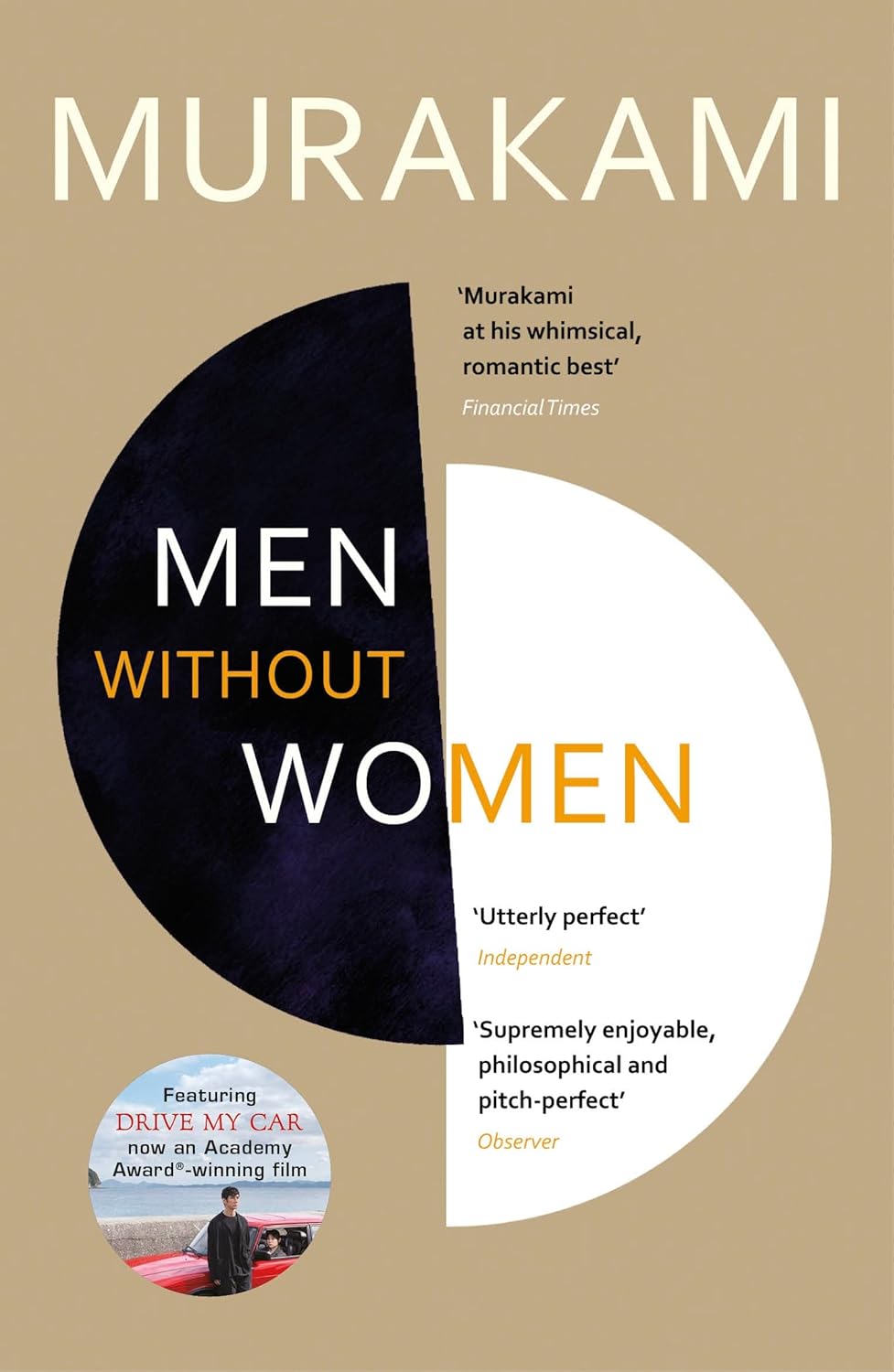
About Men Without Women by Haruki Murakami: Seven Stories About Love, Loss and Being Alone
A driver hears the things her passenger cannot say. A man remembers a friendship that changed long ago. Someone opens a bar and hopes a quiet place will help him leave a painful past behind. In Men Without Women by Haruki Murakami, small moments like these grow into stories that stay in your mind.
This book brings together seven short stories. Each one follows people dealing with love, memory, distance or loss. Some stories feel close to everyday life. Others take a strange turn that makes you look at ordinary things in a new way. They are separate stories, so you can read one at a time, but together they ask a larger question: what happens when someone important is no longer part of your life?
If a long novel feels hard to start, this collection gives you another way into Murakami’s writing. You can finish a story, put the book down and return later. You still get characters to think about and questions that follow you after the last page.
A book for the feelings people leave behind
The title may sound as though the book has only one kind of story to tell. It has more room than that. These men have different lives, habits and ways of speaking. What connects them is the space left by another person. A woman may have gone away, died, become hard to understand or stayed close while still feeling far away.
Murakami does not rush to explain every feeling. His characters drive, talk, remember, listen to music and go about their days. Then a detail makes them stop. A familiar voice can bring back an old question. A quiet room can feel full of things nobody has said. That gentle pace gives you time to notice what each person is carrying.
The result is a collection for readers who like stories with room to think. You do not need to solve every mystery. You can enjoy the scene in front of you, then decide what it means to you. One reader may notice the sadness in a conversation; another may notice its humor. Both can find something worth returning to.
Start with “Drive My Car”
One of the seven stories is “Drive My Car.” It follows Kafuku, an actor, and Misaki, the woman he hires to drive him. Time spent in the car gives them a place to talk, listen and slowly come to understand parts of each other’s lives. Kafuku is also trying to make sense of his marriage and the things he never learned about his wife.
If you know the film Drive My Car, this is a chance to read the story that helped inspire it. The story is part of the collection, so you can also discover six other sides of Murakami’s writing in the same book. You need no knowledge of the film to begin. The car, the conversations and the feelings behind them can stand on their own.
“Drive My Car” is a good first taste of what makes this book appealing. Much of its weight lies in what people share little by little. You may find yourself thinking about a simple question: how well can we ever know someone we love? Murakami leaves space for that question to grow as you read.
Seven stories, seven different doors
A short story collection should give you variety. Men Without Women does that while keeping a clear thread through the book. Its seven stories are “Drive My Car,” “Yesterday,” “An Independent Organ,” “Scheherazade,” “Kino,” “Samsa in Love” and “Men Without Women.” Each can be read on its own.
“Yesterday” looks at young people, friendship and the odd paths a life can take. It has moments that feel playful, even as questions about love and growing up sit beneath them. If you have ever thought back to someone you knew years ago and wondered what became of them, its mood may feel familiar.
“An Independent Organ” turns toward a man whose usual way of handling love stops working for him. It asks what happens when a feeling is bigger than the life a person has carefully arranged. The story is painful in places, and it gives this collection a more serious edge.
“Scheherazade” is built around visits and the stories one person tells another. Part of its pull comes from wanting to hear what will be said next. You may also begin to wonder how much the listener truly knows about the person speaking.
“Kino” follows a man who opens a bar after his marriage breaks down. The bar feels like a place where he might start again, but his past is not so easy to leave outside its door. Readers who enjoy Murakami’s quieter, stranger scenes may be drawn to this one.
“Samsa in Love” takes the collection somewhere more unusual. It offers a fresh way to think about being a person, noticing someone else and reaching toward them. Then the title story closes the book by returning to what it means to be left alone.
There is no need to read all seven in one sitting. You can choose a story for a free evening, pause and come back the next day. You may also find that finishing one makes you curious about how the next will handle the same broad feelings in a different life.
When you want a story that does more than explain itself
Some books give clear answers at every turn. This collection invites you to stay with a question. Why did that person speak now? What does someone remember, and what have they chosen to forget? How can two people spend years together and still miss something important about each other?
Those questions give Men Without Women much of its force. A scene can seem simple while you read it, then come back to you later. You might remember a line of talk, a drive through the city or a room that suddenly feels empty. Murakami makes these moments easy to picture without telling you exactly how to feel about them.
That approach is especially rewarding if you like to talk about books with a friend. Two people can read the same story and focus on very different details. It also makes the collection a good choice for a reading group: you can discuss one story at a time, with no need for everyone to finish a long novel first.
If you have tried to read a large book but kept losing your place, short stories can make reading feel easier to return to. They give you a beginning and an ending in a smaller space. Here, each ending also leaves you with something to consider. The book fits into a busy week without asking you to set aside a whole day.
A welcoming place to begin with Murakami
You do not need to know Murakami’s other books before reading this one. The stories are separate, and this collection gives you a way to meet his writing through several voices and settings. If one story interests you more than another, that is part of the pleasure of a collection: the next one may surprise you.
Murakami often places an unusual detail beside an ordinary day. A person might be having a familiar problem with love or work while the world around them starts to feel a little strange. In Men Without Women, that mix can be gentle, funny, sad or unsettling. It keeps the stories from feeling alike, even though they share an interest in people trying to understand their lives.
The language is clear enough to follow the action, while the feelings underneath can take longer to settle. That makes the book a good choice if you want more from a short read than a quick ending. You can read a story for pleasure first and think about its deeper questions later.
For readers who already enjoy Murakami, the collection offers familiar interests in a compact form: memory, music, chance meetings and people who find it hard to say what they need. For new readers, it offers seven chances to find a story that speaks to them. There is no single right story to like best.
The English collection was translated from Japanese by Philip Gabriel and Ted Goossen. Their work makes these stories available to English readers while keeping Murakami’s quiet shifts in mood at the heart of the reading experience.
Made for the way you like to read
This is a book you can keep beside your bed, take out on a weekend or open when you have time for one complete story. Read “Drive My Car” because you enjoyed the film. Pick “Kino” when you want something moody. Start at the beginning if you want to watch the collection build its picture of people living with absence.
It can also make a thoughtful gift for someone who enjoys stories about relationships without needing every feeling explained. The book speaks to readers who have wondered about an old friend, found a conversation hard to finish or learned that missing someone is rarely a simple feeling. You do not have to share the characters’ lives to recognize a piece of your own experience.
Some stories are sad, and some moments are strange. That variety is part of the appeal. You can laugh at an unexpected detail on one page and sit with a hard thought on another. The book trusts you to notice the shift. It does not make every character easy to understand or every choice easy to judge.
Because the stories are short, you can return to a favorite without rereading the whole collection. A second reading may draw your eye to a detail you passed over the first time. A conversation may sound different once you know where the story ends. That gives this book a place on the shelf after you have finished it.
A comfortable printed copy from Bookish Wonderland
At Bookish Wonderland, a good reading experience includes the book in your hands. This printed copy is made with premium eye-soothing cream paper and crystal-clear print, so the pages are comfortable to follow. Its high-quality stitched and glue binding is made for longevity, including the times you return to a story you want to read again.
Those details matter with a collection you may open often. You can mark where you stopped, revisit a scene or read a favorite story on its own. The paper, print and binding support that simple pleasure: sitting down and giving the words your attention.
Bookish Wonderland offers a large collection of premium, durable English books for readers in Bangladesh. You can order from inside or outside Dhaka, with nationwide delivery and Cash on Delivery available. If you are in Dhaka and need your order sooner, ask about the fast or urgent delivery option.
If you are checking the book price in Bangladesh for Men Without Women by Haruki Murakami, look at the current product price before placing your order. It is an easy way to choose your next read or plan a gift while checking the delivery option that suits you.
Find a story that stays with you
A good short story can make a brief stretch of reading feel full. Men Without Women gives you seven chances to meet a character, enter a life and leave with a new thought. Some stories may make you smile; others may ask you to sit quietly for a moment after they end.
If you want an English book you can read at your own pace, this collection is ready for you. Order Men Without Women by Haruki Murakami from Bookish Wonderland and choose the delivery option that works for your address.
If you require any customization or have any questions, please inbox us via FB or Insta.
| Primary Specification | |
| Author | Haruki Murakami |
| Translator | Philip Gabriel and Ted Goossen |
| Narrator | Kirby Heyborne |
| Editor | Maggie Hinders |
| Genre | Literary Fiction, Short Stories, Magical Realism Google Books |
| ISBN-13/ISSN | 978-1101974520 |
| ISBN-10 | 1101974524 |
| Publisher | Vintage |
| Publishing Date | May 1, 2018 |
| Language | English |
| Reading Age | 16+ years |
| Format | Printed book |
| Physical Specification & Quality | |
| Paper Quality | Premium eye-soothing cream paper |
| Binding Quality | High quality stitched and glue binding (for longevity) |
| Print Quality | Crystal-clear print |
| Pages | 240 pages |
| Country | USA |
| Logistics Information | |
| Weight | 262 gm |
| Length | 8.5 inches |
| Width | 5.6 inches |
| Height | 0.75 inch |