

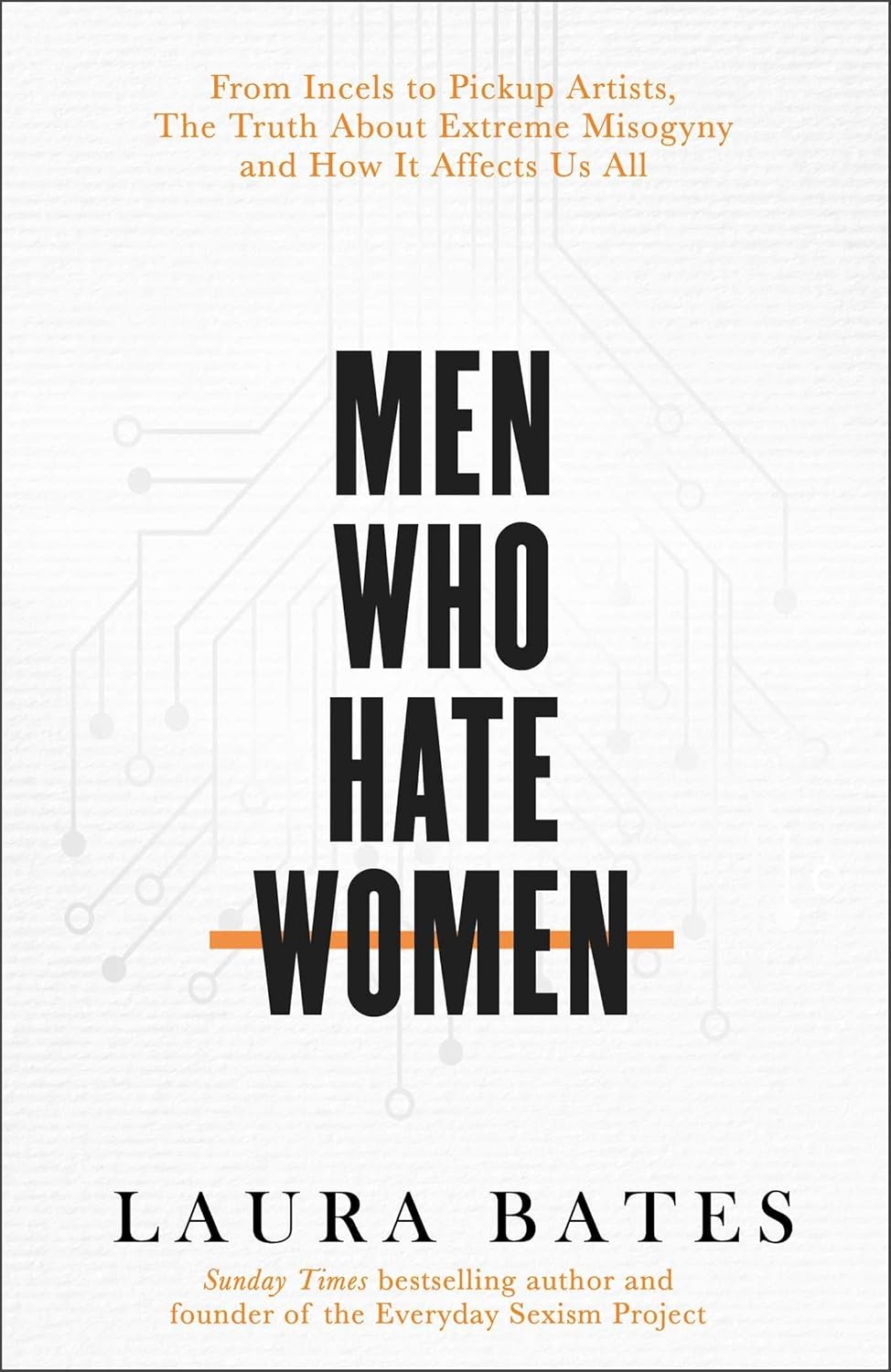
About Men Who Hate Women by Laura Bates: The Online Hate We Need to Understand
What happens when a boy looking for advice finds a group that teaches him to blame women for his problems? What happens when cruel posts are shared as jokes, then repeated until they start to sound normal? In Men Who Hate Women, Laura Bates follows these questions into online groups where anger toward women is encouraged and spread.
Bates is the founder of the Everyday Sexism Project. For this book, she went undercover in online spaces, spoke with people who had left such groups, and drew on the work of experts. She brings that research together in a book for readers who want to understand where this hate comes from, how it reaches people, and what it can mean beyond a screen.
This is a serious read. Some of its subject matter is upsetting. Yet it offers something useful: a clearer view of words and ideas that can be easy to miss until they affect someone close to us.
A Book That Explains a Hidden World
The internet can help people find friends and answers. It can also lead them to groups that give harmful answers to real problems. A person may feel lonely, rejected, or unsure of himself. Then he finds a post that tells him women are to blame. From there, one video or discussion may lead to another.
Men Who Hate Women takes readers inside parts of this online world. Bates looks at groups often called “incels,” pickup artists, and men’s rights activists. These groups do not all say the same things, and their members are not all alike. The book examines the ideas found in these spaces and the ways some of them turn pain or frustration into anger toward women.
You do not need to know these terms before you start. Bates explains what she is investigating and why it matters. That makes the book a useful choice if you have heard these words in the news or online but have never had a clear account of what they mean.
When Online Words Affect Real Life
It is tempting to close a troubling page and think the problem ends there. Bates asks readers to look further. Ideas shared online can shape how people speak at school, how they treat a partner, and what they come to believe about women they have never met.
The book explores how hateful claims can travel through posts, forums, videos, and everyday talk. Some messages are direct. Others are wrapped in humour or presented as advice. That mix can make them harder to spot, especially for someone who is new to a group and wants to belong.
As you read, you may begin to notice questions worth asking when a claim appears on your screen. Who is making it? What are they asking people to believe? Are they helping someone deal with a problem, or giving that person a target to blame? Bates gives readers the background to think about those questions with more care.
Why Laura Bates Wrote This Book
Laura Bates has spent years listening to people describe sexism in their daily lives. Through the Everyday Sexism Project, she created a place where people could share experiences that were often brushed aside. In Men Who Hate Women, she turns her attention to communities that openly build on hostile ideas about women.
Her work here goes beyond reading a few public comments. Bates went undercover to observe online spaces and spoke with people who could help explain them, including former members and researchers. She also writes as someone who has faced online abuse herself. These experiences give the book both its detail and its urgency.
That does not mean every reader must agree with every conclusion. It means readers have a substantial account to consider. Bates shows what she found, connects it to a wider issue, and asks what can happen when hate is allowed to grow.
For Parents Who Want to Start a Conversation
Parents cannot watch every video a child sees or read every message on a phone. They can, however, learn more about the ideas a young person might meet online. This book can help with that first step.
A parent reading Men Who Hate Women may find it easier to ask open questions. What does a child think a certain online joke means? Who do they turn to when they feel rejected? Does a creator seem to be helping them, or making them angrier? Those conversations may be easier to begin when an adult understands the language and the setting.
The book is written for a general adult audience and deals with disturbing views and violence. It is best considered by adults before they decide whether to discuss its contents with a younger reader. Its value for families lies in helping adults approach a difficult subject with more knowledge.
For Teachers, Students, and Book Clubs
If you work with young people, study social issues, or lead a reading group, this book offers plenty to discuss. It connects online behaviour with questions about respect, belonging, and the way people learn to see others. It can open a thoughtful conversation about how a harmful idea becomes familiar through repetition.
For a book club, the reading need not stop at “Do we agree?” You could ask which parts of Bates’s research were most revealing, why certain messages might attract someone who feels alone, and how people can respond when they hear a hateful claim. Those questions give the group room to examine the problem without turning the discussion into an argument about every man or every woman.
Students of media, gender, education, or online culture may also find the book useful as a starting point. It brings several communities and ideas into one readable account, so readers can see connections they might miss when looking at a single post.
What Makes This Read Different?
Many of us have seen a shocking headline about an online group. A headline can tell us that something happened, but it rarely explains how people reached that point. Bates spends time on the messages, communities, and paths that make the subject easier to understand.
The book also looks at several groups rather than treating online hate as one simple movement. Readers meet different claims and methods, from people selling advice about dating to spaces built around resentment. Looking across them helps show how a message can change shape while keeping the same harmful view of women.
Bates includes voices from outside those groups, too. Former members and people studying the issue help put what she found into context. The result is a book that can leave you with better questions as well as new information.
A Difficult Subject, Told in Clear Words
This book does not promise a comfortable reading experience. It discusses extreme views, abuse, and threats of violence. If those subjects are hard for you, it makes sense to read at your own pace and take breaks.
At the same time, the reason to read is clear. When a harmful idea is hard to see, it is also hard to challenge. Bates names and explains the ideas she found so that readers can recognise them when they appear in ordinary online spaces. You can read a section, stop to think, and return when you are ready.
You may come to the book because of something you saw on social media. You may be worried about a student or family member. Or you may simply want to understand a subject that affects public life. Each is a good reason to pick it up.
Why Keep a Printed Copy?
A topic this detailed can be easier to take in away from a stream of alerts and new posts. With a printed copy, you can pause over a passage, mark a question for a friend, or return to a chapter before a discussion. You can give the book your full attention rather than following another link each time something catches your eye.
At Bookish Wonderland, this printed edition is offered with premium eye-soothing cream paper and crystal-clear print for comfortable reading. High-quality stitched and glue binding is made for repeated page turns, so you can come back to the book when a conversation or news story raises a fresh question.
These details matter for a book you may want to share or revisit. It can sit on your shelf as a useful reference after the first read, ready when you want to check an idea or lend it to someone you trust.
A Thoughtful Gift for Someone Who Asks Questions
Some books make a good gift because they offer an escape. This one makes a good gift for someone who wants to understand a hard part of the world. A friend who reads about social issues, a teacher planning discussions, or a parent trying to make sense of an online trend may all find something useful here.
It is also a book to choose for yourself if you have ever wondered how a hurtful comment gains an audience. Bates invites you to follow the path from an individual post to a larger community and then consider its effects on daily life. That journey may change how you hear certain claims.
Because the subject is serious, think about the person before giving it as a gift. Someone who welcomes challenging nonfiction may value it deeply. A short note about why you chose the book can make the gift more personal and open the door to a real conversation once they have read it.
Read It to Understand, Then Talk About It
The value of Men Who Hate Women reaches beyond finishing its last page. Its findings can help you speak more clearly with others. You may find yourself asking a friend what they meant by a phrase they repeated. You may feel better able to explain why an online joke troubles you. Or you may listen more closely when someone describes abuse you have never experienced.
Those are small, real uses for what you learn. A book cannot solve online hate on its own, and you do not need to have every answer before you speak. Understanding the subject gives you a place to begin. Bates offers readers language and context for a conversation many people find difficult to start.
The book is especially suited to readers who want more than a quick reaction to a headline. It rewards the time spent following the research, thinking about the people involved, and considering what the ideas mean in everyday life.
Who Will Get the Most from This Book?
Choose this book if you enjoy nonfiction that investigates a real issue. It is a strong fit for readers interested in online culture, sexism, education, and the ways people find a sense of belonging on the internet. Its focus is specific enough to teach you something new, while its questions reach into many parts of life.
You may also appreciate it if you have struggled to explain why certain online spaces concern you. Bates lays out the groups and their ideas in a way you can refer to. That can make it easier to move from a vague worry to a focused discussion with someone else.
Readers seeking a light read should know that this is a demanding subject. For those ready to engage with it, the book offers a chance to look more closely at a world that is often discussed from a distance.
Get Your Copy from Bookish Wonderland
If you are looking up the Men Who Hate Women by Laura Bates book price in Bangladesh, Bookish Wonderland makes it easy to add this important read to your collection. You can order from Dhaka or elsewhere in Bangladesh, with nationwide delivery and Cash on Delivery available. If you need a book quickly in Dhaka, ask about the fast or urgent delivery option.
A good nonfiction book can stay useful long after you finish it. This one gives you facts and questions to return to whenever online hate becomes part of a conversation at home, in class, or among friends. Its clear focus makes it a thoughtful addition to a shelf of books about people and the world they share.
Order Men Who Hate Women by Laura Bates from Bookish Wonderland when you are ready to read, reflect, and start a better informed conversation.
If you require any customization or have any questions, please inbox us via FB or Insta.
| Primary Specification | |
| Author | Laura Bates |
| Narrator | Tanya Eby |
| Editor | Jillian Rahn |
| Genre | Nonfiction; Social Science; Gender Studies; Feminism; Sociology |
| ISBN-13/ISSN | 978-1728290904 |
| ISBN-10 | 1728290902 |
| Publisher | Sourcebooks |
| Publishing Date | August 1, 2023 |
| Language | English |
| Reading Age | 18+ years |
| Format | Printed book |
| Physical Specification & Quality | |
| Paper Quality | Premium eye-soothing cream paper |
| Binding Quality | High quality stitched and glue binding (for longevity) |
| Print Quality | Crystal-clear print |
| Pages | 464 pages |
| Country | United States |
| Logistics Information | |
| Weight | 485 gm |
| Length | 8.5 inches |
| Width | 5.6 inches |
| Height | 1.16 inch |