

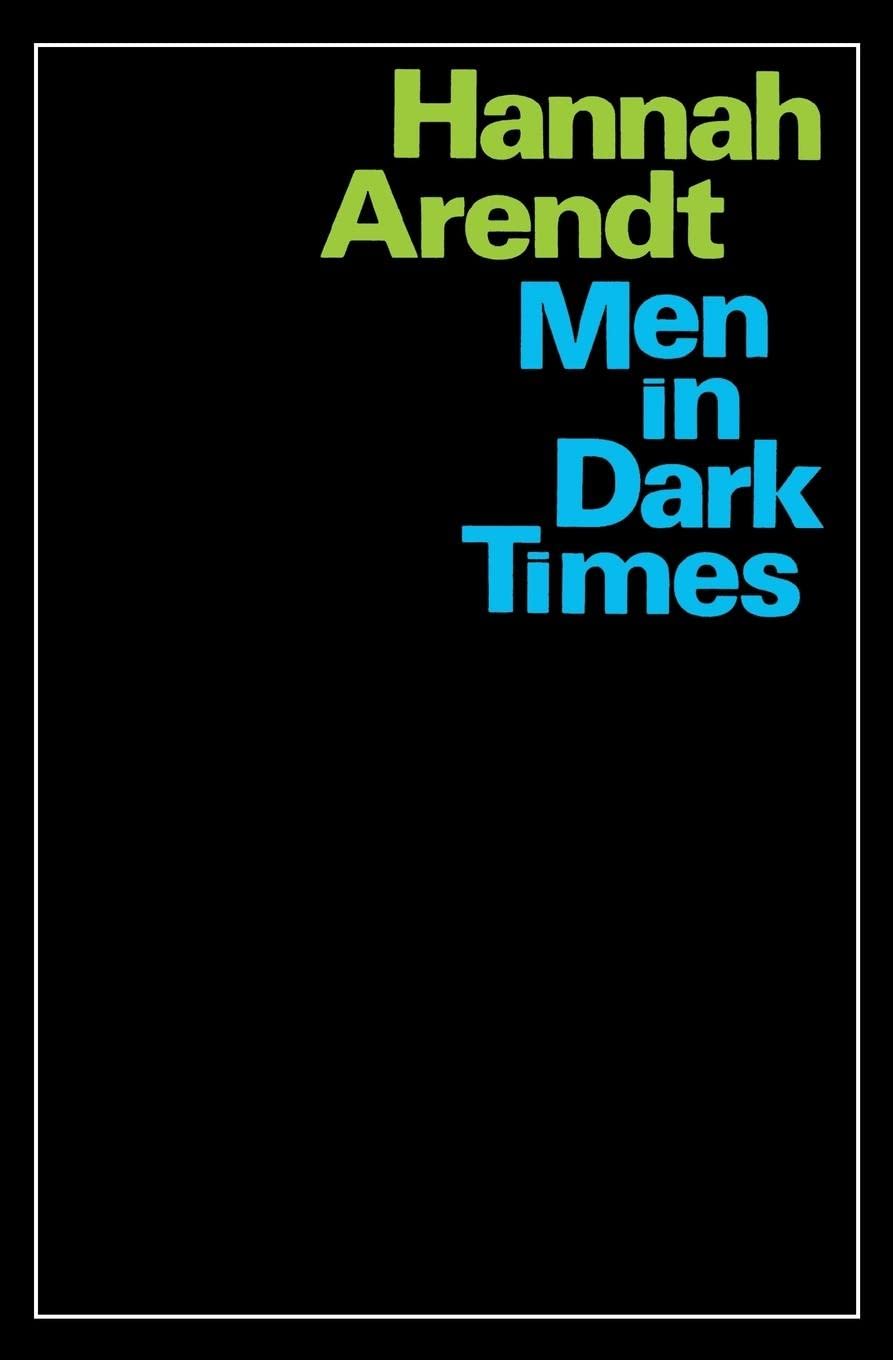
About Men in Dark Times by Hannah Arendt: Lives That Brought Light to Hard Years
What can one person do when the world feels frightening or unfair? In Men in Dark Times, Hannah Arendt looks for an answer in the lives of people who lived through troubled years. She writes about thinkers, writers, poets, and public figures who kept asking questions, making art, and caring about others.
This is a collection of essays, not a novel. Each essay brings a different person into view. Arendt writes about figures including Rosa Luxemburg, Karl Jaspers, Walter Benjamin, Bertolt Brecht, Isak Dinesen, Randall Jarrell, and Pope John XXIII. Their lives were different, but each gives her a way to explore courage, friendship, thought, and the choices people make in difficult times.
The title may sound bleak. The reading experience is more hopeful than that. Arendt takes the darkness seriously, then asks you to notice the people who helped others see through it. If you enjoy books that stay in your mind after you close them, this one gives you much to return to.
Why read about other people in dark times?
News about war, injustice, and public conflict can leave you with a hard question: How should I live when I cannot fix everything around me? A broad answer can feel too far away to help. A real life is easier to look at closely.
That is what makes this book inviting. Arendt does not hand you a short list of rules for being brave. She studies people. She pays attention to what they wrote, what they stood for, how they treated others, and where their choices became difficult. You get to see thought as something people do while living through the world, not just something printed on a page.
These portraits also make history feel less distant. A name you have seen in another book becomes a person with work, relationships, doubts, and a place in time. You may admire one figure and feel unsure about another. That is part of the pleasure of reading Arendt: she gives you room to think for yourself.
What is Men in Dark Times about?
At its heart, Men in Dark Times asks how a human life can offer light during a troubled period. Arendt brings together essays about people whose words or actions helped others understand their world. She is interested in more than fame. She wants to know what made these lives worth remembering.
The people in the book do not all share one job or one belief. Some are known for political ideas. Others are known for stories, poems, or their work with people. This variety gives the book its shape. Turn from one essay to the next, and you meet a new person and a new way of facing the world.
You do not need to agree with every figure to find the essays valuable. Arendt’s close attention is the draw. She asks what a person’s life reveals, including things that a simple label might hide. The result is a book about history and ideas that also feels personal.
It is a good choice when you want to read nonfiction slowly. One chapter can give you enough to think about for an evening. You can pause, look up a name that interests you, or talk about a question with a friend before moving on.
Meet the people behind the ideas
Rosa Luxemburg appears in these pages as a political figure whose life invites questions about conviction and action. Karl Jaspers gives Arendt a chance to write about thought and a person she knew. In essays about writers such as Bertolt Brecht, Walter Benjamin, and Isak Dinesen, she turns to the ways words can help us see people and events more clearly. Pope John XXIII brings a very different life into the collection.
You may come to the book because you already know one of these names. You may also begin without knowing any of them. Either way works. Arendt gives each subject serious attention, so the essays can be a starting point for further reading as well as a book to enjoy on its own.
That range makes Men in Dark Times useful for readers with several interests. If you like political thought, you will find questions about public life. If you like literature, you will find writers and poets. If you like biography, you will find lives seen through the eyes of a sharp observer. The subjects change, while the larger question stays with you: what can a person show us about living through hard times?
A book that asks you to look closer
Many books tell you what happened in history. Arendt asks you to look at the people inside it. She is interested in the small details that can change how you understand a life: a friendship, a piece of writing, a public choice, or a way of speaking about others.
That makes this a rewarding book for a curious reader. You can enter an essay with one view of its subject and leave with a more complicated one. You may find yourself asking how much courage it takes to speak plainly, whether good writing can change public life, or why certain people remain important years after they die.
The book can also change how you read the news. It cannot tell you what to think about every event today. It can, however, encourage a useful habit: slow down, look at the people involved, and ask better questions. When public talk becomes loud and quick, that habit matters.
Arendt’s ideas can take time to absorb. You do not have to understand every point on the first read. Start with a person who interests you, read a few pages, and let the questions grow. The book rewards that kind of patient attention.
Why the essay format works
You do not have to read Men in Dark Times in one long stretch. Its essays give you places to stop and think. This makes it a practical choice if your reading time comes in short pieces: an evening at home, a quiet weekend morning, or a break between study sessions.
Each portrait has its own focus, so you can return to a favourite chapter later. You might read one essay because you want to learn about its subject, then come back months later with a new question. The book has room for both kinds of reading.
That also makes it a thoughtful choice for a reading group. Members can discuss one person at a time without rushing through the whole collection. A good discussion could begin with a simple question: what did Arendt notice about this person that you might have missed?
Who will enjoy this book?
Choose this book if you like to think about people as well as events. It is especially suited to readers of philosophy, history, politics, biography, and literary essays. It may appeal to you if a name such as Rosa Luxemburg or Walter Benjamin has caught your attention and you want to explore it through another thinker’s eyes.
Students can use the essays to begin questions for class discussion or further study. Teachers may find individual portraits useful for a group conversation. A reader who simply enjoys serious nonfiction can take the book one chapter at a time, with no need to turn it into an assignment.
It also makes a thoughtful gift for someone who likes books with ideas they can talk about. If they enjoy writing notes in the margins or sharing a passage with a friend, Arendt offers plenty to consider.
The book is best approached with curiosity. It is not a fast plot with a surprise ending, and it is not a simple guide to making life better. Its reward is the chance to spend time with a writer who looks carefully at how other people lived.
A physical copy made for return visits
A book of essays is often read more than once. You may finish one chapter, put the book aside, and later come back to it with fresh eyes. At Bookish Wonderland, we want the reading copy to feel good during those return visits.
Our printed edition is offered with premium eye-soothing cream paper, crystal-clear print, and high-quality stitched and glue binding. The cream pages make extended reading more comfortable, while the clear text helps you stay with the writing. The binding is chosen for longevity, so the book can remain part of a collection you use and revisit.
If you like keeping meaningful nonfiction on your shelf, those details matter. You want a copy you can pick up when a topic comes back to mind, lend to a careful friend, or open again for one essay. Men in Dark Times is the sort of book that can earn that place.
Find the right moment to read it
There is no single best way to begin. If you already admire one of the people Arendt writes about, start there. If the title itself drew you in, begin at the front and follow her thinking from one life to the next. Keep a notebook nearby if you enjoy recording questions or names you want to explore.
You might read it alongside a history book to see how a large event affected individual lives. You could pair an essay with work by the writer it discusses. Or you could read it without a plan and notice which person makes you want to learn more.
Give yourself time with the difficult parts. A sentence may ask for a second reading. That is normal with a book like this. You are allowed to pause, disagree, and return later. The value is in the thinking it starts.
For readers in Bangladesh looking for a book that brings philosophy and human stories together, this collection offers a distinctive choice. It can add depth to a personal library and give a reading group questions that go beyond a simple review.
Bring this book to your shelf
If Men in Dark Times has made you curious, make space for it in your next reading hour. Follow Hannah Arendt from one life to another, and discover which essay speaks to a question you have been carrying.
To check the Men in Dark Times by Hannah Arendt book price in Bangladesh, visit Bookish Wonderland or message us on Facebook or Instagram. We offer nationwide delivery, including inside and outside Dhaka, Cash on Delivery, and a fast or urgent delivery option in Dhaka. Order your copy and begin with the person who interests you most.
If you require any customization or have any questions, please inbox us via FB or Insta.
| Primary Specification | |
| Author | Hannah Arendt |
| Genre | Political Philosophy, Political Science, Essays, Biography & Autobiography |
| ISBN-13/ISSN | 978-0156588904 |
| ISBN-10 | 0156588900 |
| Publisher | Mariner Books Classics |
| Publishing Date | March 25, 1970 |
| Language | English |
| Reading Age | 18+ years |
| Format | Printed book |
| Physical Specification & Quality | |
| Paper Quality | Premium eye-soothing cream paper |
| Binding Quality | High quality stitched and glue binding (for longevity) |
| Print Quality | Crystal-clear print |
| Pages | 288 pages |
| Country | United States |
| Logistics Information | |
| Weight | 304 gm |
| Length | 8.5 inches |
| Width | 5.6 inches |
| Height | 0.72 inch |