

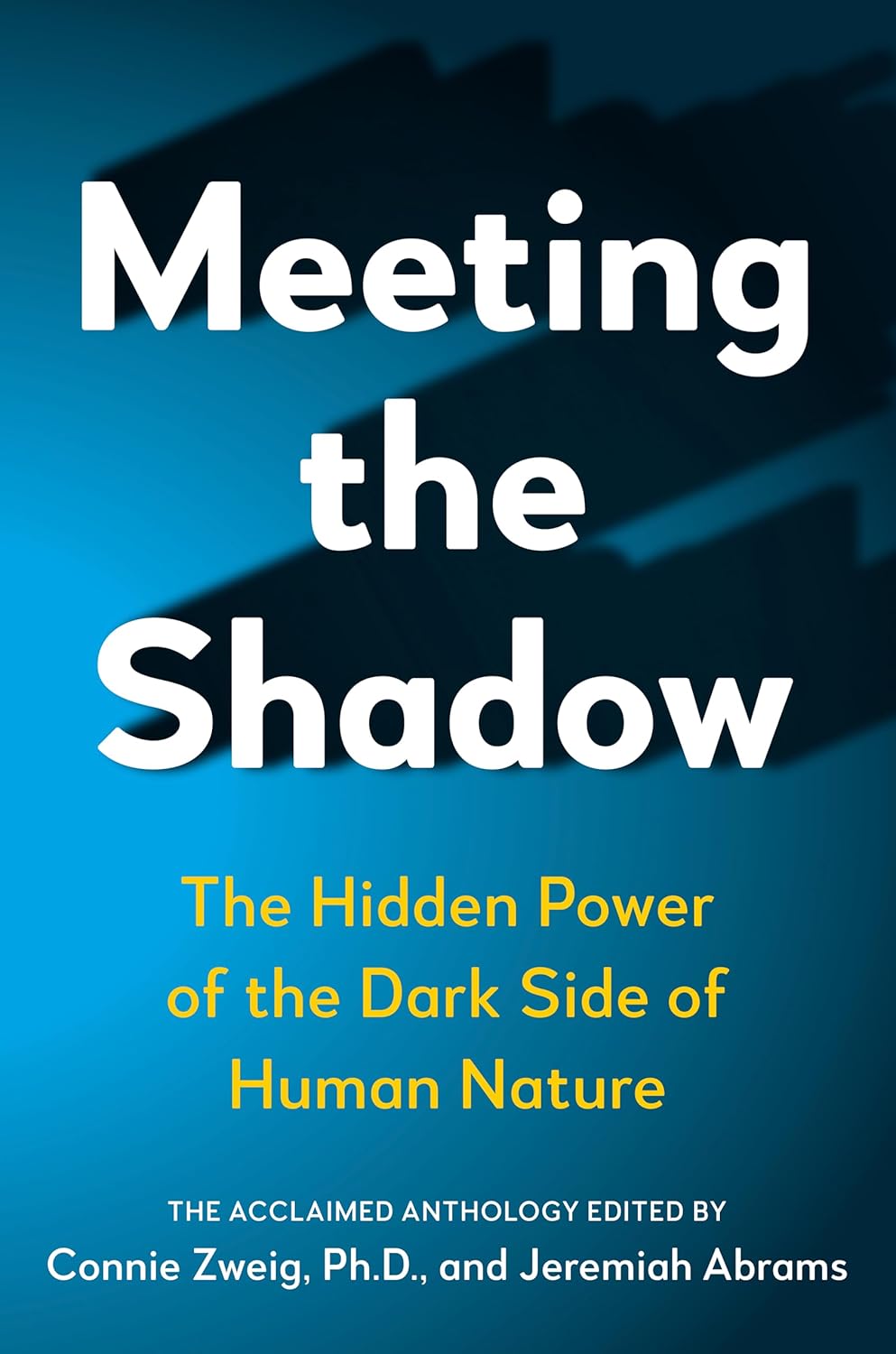
About Meeting the Shadow by Connie Zweig, Ph.D., and Jeremiah Abrams: A Guide to the Parts of Ourselves We Hide
Have you ever said something in anger and wondered, “Where did that come from?” Have you felt jealous of someone you love, then felt ashamed for feeling that way? Meeting the Shadow: The Hidden Power of the Dark Side of Human Nature explores questions like these. Edited by Connie Zweig, Ph.D., and Jeremiah Abrams, it brings together 65 essays about the feelings, wishes, and habits people often try to hide—even from themselves.
The book calls this hidden part the shadow. That may sound frightening, but the idea is simple: we all have parts of ourselves that we find hard to accept. Meeting those parts with honesty can help us understand why we react as we do. It can also help us take more care with our choices and our relationships. This is a thoughtful book for readers who want to know themselves more deeply.
Why do we hide parts of ourselves?
Most people learn early which feelings seem welcome and which do not. A child may be told that anger is bad. An adult may feel they must never look weak. Someone else may think it is wrong to want attention. The feelings do not always go away when we push them aside. They may show up later in an argument, a sharp comment, or a choice we do not understand.
Meeting the Shadow gives readers a way to think about these moments. Its essays look at shame, blame, jealousy, fear, and other difficult experiences. They also ask what can happen when we stop pretending those feelings are absent. The aim is not to excuse hurtful behavior. It is to see it clearly enough to take responsibility for it.
That is what makes this book compelling. It begins with experiences many readers will know, then asks a deeper question: what might a strong reaction tell us about ourselves? If you have ever replayed an argument in your head or wondered why the same problem keeps returning, you may find a useful new way to look at it here.
One subject, many voices
Connie Zweig and Jeremiah Abrams are the editors of this collection. Instead of giving you one author’s view from start to finish, they bring together work by many writers and thinkers. Contributors include Carl Jung, Joseph Campbell, James Hillman, Ken Wilber, Susan Griffin, and Harville Hendrix. The essays explore how the shadow can appear in family life, love, work, faith, therapy, and creative work.
This range gives the book much of its appeal. One essay may help you think about a private feeling. Another may make you notice how people treat each other in a family or a group. Some ideas may feel familiar at once; others may take time to sit with. You can pause after a chapter, think about it, and return when you are ready.
The book is especially rewarding if you enjoy hearing more than one point of view. You do not have to agree with every contributor to get something from the collection. A passage can be valuable simply because it helps you ask a better question about your own life.
What does “shadow work” mean?
In plain words, shadow work means paying attention to the parts of yourself you would rather avoid. You might notice a feeling that keeps coming back. You might ask why another person’s actions upset you so much. You might look at a habit you usually explain away. The first step is to be curious and honest.
Meeting the Shadow explores this idea through essays and approaches to reflection. Its publisher describes tools that can help readers build a more conscious relationship with hidden feelings, ease guilt and shame, and work toward greater self-acceptance. The book also considers what this kind of attention may mean for relationships.
There is no promise that reading a chapter will make a hard feeling disappear. What the book offers is room to understand that feeling. For many readers, that is an inviting reason to open it: the chance to replace a quick judgment with a closer look.
A book for the questions that stay with you
Some books answer a question and then leave your mind. Meeting the Shadow is the kind of book you may return to when life gives an old question a new shape. Why did that small comment hurt so much? Why do I keep having the same fight? Why is it easier to see a fault in someone else than in myself?
The essays do not treat these as silly questions. They take inner life seriously while connecting it to ordinary places: home, work, and close relationships. That makes the subject feel less distant. You can read about an idea, then notice how it relates to a conversation you had yesterday or a pattern you have seen for years.
It can also be a good choice for readers who want to slow down. You do not need to race through 65 essays. Read one, put the book aside, and consider what stayed with you. A few notes in a journal may help you remember an insight or a question you want to explore later.
What will you find inside?
The collection reaches beyond a single kind of shadow. It considers private feelings as well as the ways hidden attitudes can affect our connections with others. Its range is one reason it has remained of interest to readers exploring Jung’s idea of the shadow.
As you read, you can expect to meet ideas about:
- Everyday reactions: feelings such as jealousy, anger, shame, and blame.
- Relationships: how the parts we hide can affect love, family life, and conflict.
- Wider life: the appearance of the shadow in work, spirituality, politics, and creativity.
- Personal reflection: ways to become more aware of feelings and patterns you might usually overlook.
This is a collection of essays, so the reading experience changes from piece to piece. That variety is part of its value. If one approach does not speak to you, another writer may express the idea in a way that does.
Who may enjoy reading it?
Choose Meeting the Shadow if you are interested in psychology, self-understanding, or the work of Carl Jung. It may also appeal to readers who enjoy books about relationships and personal growth. You do not need to be an expert to be curious about the central question: what can we learn from the things we try to keep out of sight?
The book suits readers who like to stop and think while they read. It may be useful for a reading group, too. Different contributors give people plenty to discuss, and the questions often connect to everyday experience. You might talk about an essay’s idea without needing to share anything personal.
If you are buying for someone else, consider the person who enjoys thoughtful nonfiction and is comfortable with challenging questions. This book can make a meaningful gift for a reader who likes to reflect, underline passages, and return to a book over time.
Why read about difficult feelings?
It is easy to wish that jealousy, shame, or anger would simply go away. Yet ignoring a feeling does not always help us understand what to do with it. Reading about these subjects can give us a little space. A page lets us pause before we react. It lets us consider whether a familiar story about ourselves is the whole story.
That is the invitation in Meeting the Shadow. The essays ask readers to look at parts of human nature that are often hidden. They also explore the possibility that looking closely can reveal strengths and insights alongside discomfort. This does not mean every painful feeling is useful, or that every choice is acceptable. It means honest attention may help us make wiser choices next time.
For a reader who has been asking, “Why do I do this?” that invitation can be powerful. The book makes room for the question instead of rushing past it.
A reading experience you can make your own
There is no single right way to read a collection like this. You can start at the beginning and follow the editors’ path. You can also take a slower approach: read a little at a time and give yourself space between essays. The subject can be personal, and some pages may stay with you longer than others.
Keep a note of ideas that surprise you. Mark a question you want to come back to. If an essay challenges you, you can set it down and return later. The goal is not to finish quickly. Much of the pleasure of this book comes from noticing a new thought and seeing where it leads.
Because the collection covers several areas of life, it may speak differently to you at different times. A chapter about relationships could catch your attention today; an essay about work or creativity could feel more relevant months from now. That gives the book a place among the titles you may want to revisit.
An edition made for long reading sessions
At Bookish Wonderland, the physical reading experience matters too. This premium edition is described with eye-soothing cream paper and crystal-clear print, so the pages are comfortable to follow. Its high-quality stitched and glue binding is chosen for longevity, whether you read straight through or return to selected essays over time.
A book that invites notes, pauses, and rereading deserves a form you enjoy holding. If you are comparing options for Meeting the Shadow by Connie Zweig, Ph.D., and Jeremiah Abrams and its book price in Bangladesh, consider the reading experience as well as the title itself.
Bookish Wonderland offers a large collection of premium, durable English books. You can order with nationwide delivery across Bangladesh and Cash on Delivery. Delivery is available inside and outside Dhaka, with a fast or urgent delivery option in Dhaka when available.
Is Meeting the Shadow part of a series?
Meeting the Shadow is presented as a collection of essays under its own title. No numbered series or list of series books was supplied for this product, so there are no other book names to add here.
Ready to look a little deeper?
Some books are easy to finish and forget. Meeting the Shadow asks questions that may stay with you after you close it. Its many voices offer ways to think about hidden feelings, repeated patterns, and the relationships that matter to you. You can read it slowly, return to a passage, and take from it the ideas that help you see more clearly.
If you require any customization or have any questions, please inbox us via FB or Insta.
| Primary Specification | |
| Author | Connie Zweig, Ph.D. and Jeremiah Abrams |
| Editor | Connie Zweig, Jeremiah Abrams |
| Genre | Psychology, Psychoanalysis, Jungian Psychology, Shadow Work |
| ISBN-13/ISSN | 978-0874776188 |
| ISBN-10 | 087477618X |
| Publisher | Tarcher |
| Publishing Date | April 1, 1991 |
| Edition | First |
| Language | English |
| Reading Age | 18+ years |
| Format | Printed book |
| Physical Specification & Quality | |
| Paper Quality | Premium eye-soothing cream paper |
| Binding Quality | High quality stitched and glue binding (for longevity) |
| Print Quality | Crystal-clear print |
| Pages | 335 pages |
| Country | United States |
| Logistics Information | |
| Weight | 355 gm |
| Length | 8.5 inches |
| Width | 5.6 inches |
| Height | 0.94 inch |