

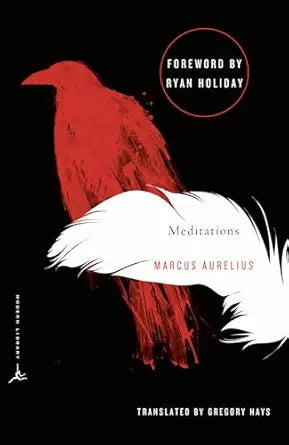
About Meditations by Marcus Aurelius: A Book for Clearer Thinking and Calmer Days
What do you do when someone is rude to you? How do you keep going when a day feels hard? How much of your time should you spend worrying about things you cannot change?
Meditations by Marcus Aurelius asks questions like these. Marcus was a Roman emperor, but he wrote these thoughts for himself. He was trying to be patient, fair, brave, and kind while carrying great responsibility. He did not write a story with a beginning and an ending. He left himself short reminders about how to live.
That is why the book can feel close to everyday life. You do not need to rule an empire to know what it is like to feel angry, tired, afraid, or pulled in too many directions. Marcus faced his own troubles and kept asking: What is the right thing to do now?
At Bookish Wonderland, this is a book for readers who want to slow down, think, and return to a few good ideas when life gets noisy.
A Quick Look Inside the Book
The book begins with Marcus thinking about people who helped shape him. He remembers what he learned from family members, teachers, and friends. Their examples lead him to think about patience, honesty, self-control, and care for others.
The rest of Meditations moves through the thoughts he wanted to remember. He writes about work and duty. He thinks about anger, praise, fear, change, and death. He reminds himself that other people can be difficult, but he still has a choice about how to treat them.
Many passages are only a few lines long. Some return to the same idea from a new angle. This makes sense when you remember that Marcus wrote for his own use. He was not trying to entertain a crowd or build a perfect argument. He was practicing the lessons he hoped to live by.
You can read the book from start to finish. You can also open it, read a short passage, and spend time thinking about it. Either way, the value comes from asking how its ideas fit your own day.
When Your Mind Keeps Going Back to What Went Wrong
A bad conversation can stay with you for hours. You may keep thinking about what someone said or what you wish you had said. Marcus knew that people could be unfair, careless, or unkind. He also knew that anger could take over his own mind if he let it.
In Meditations, he asks himself to pause and look at what he can do next. Can he speak fairly? Can he do his work well? Can he avoid causing more harm? These are small questions, but they can change the way a hard moment unfolds.
The book does not promise that every problem will go away. It offers a way to meet problems with more care. You may still feel upset. You may still need to set a limit or have a difficult talk. Marcus’s point is that your next choice matters, even when you did not choose what happened first.
If you often replay arguments in your head, that idea may give you something useful to hold on to.
What Can You Control?
One of the most helpful ideas in Meditations is simple: put your effort where your choices can make a difference.
You cannot make everyone like you. You cannot make every plan work. You cannot stop all change. But you can pay attention to your words, your actions, and the work in front of you. Marcus comes back to this again and again because he needed the reminder too.
Think of a day when you have studied hard for a test. You can prepare, ask for help, and try your best. You cannot know every question before you see the paper. Worrying all night will not give you that knowledge. The book encourages you to do the part that belongs to you, then meet what comes next as well as you can.
That does not mean a person should stop caring. Marcus cared deeply about doing his duty. His writing asks readers to care enough to act, while making room for the fact that life will not always follow a plan.
A Different Kind of Book from an Emperor
People often remember emperors for power, battles, and big decisions. Meditations lets you see something quieter. Marcus writes to himself about losing his temper, doing his work, and remembering that his life will not last forever.
Those thoughts make him feel human. He had great power, yet he still had to practice patience. He could give orders, yet he still had to decide what kind of person he wanted to be. His position did not spare him from worry or difficult people.
You may find that surprising. You may also find it comforting. Marcus was not writing as someone who had solved every problem. He was reminding himself of what mattered because he could forget it, just as anyone can.
This is one reason readers keep returning to the book. Its questions are old, but they are easy to recognize: Am I doing what matters today? Am I treating people well? Am I letting fear or pride make my choices for me?
What Stoicism Means Here
Meditations is a work of Stoic philosophy. That may sound like a hard subject, but you can begin with a plain idea: try to act with good sense and good character, even when life is difficult.
Marcus asks himself to think before he reacts. He wants to do his duty without looking for applause. He wants to remember that other people have their own troubles. He knows that time is short, so he does not want to waste it on things that make him less fair or less kind.
He does not ask you to pretend that pain is pleasant. He writes about meeting life as it is and choosing your conduct with care. You can agree with some of his thoughts and question others. Reading a book of philosophy does not mean you must accept every sentence.
If this is your first book about Stoicism, take your time. A few lines may feel clear right away. Others may need a second reading. It is fine to stop, think, and come back later.
Why People Read It More Than Once
A novel may leave you wanting to know what happens next. Meditations often makes you ask what you will do next. That is a different kind of reading, and it gives you a reason to return.
A passage about anger might mean little on a peaceful morning. Read it after an argument, and you may notice something new. A thought about time may feel different when you have a hard choice to make. The words stay the same, but your day changes.
Marcus also repeats ideas. In a story, that might slow you down. Here, it shows how often he needed to remind himself. Most of us do not learn patience after hearing about it once. We practice it, forget it, and try again.
You can keep this book near the place where you read or study. Open it when you have a quiet moment. Read one thought and put it in your own words. If it helps, ask yourself how you could use it today. That small habit can make the book feel less like a lesson and more like a conversation.
Who Might Enjoy Meditations?
This book can suit a reader who likes short passages and big questions. It can also suit someone who wants a break from a fast story and a reason to think at a slower pace.
You may enjoy Meditations if you are curious about ancient Rome, philosophy, or the way people make choices under pressure. You may be drawn to it during a busy time, when your thoughts feel scattered. Some readers pick it up because they want to be more patient. Others want to understand why an emperor wrote private notes to guide himself.
It can make a thoughtful gift for someone who likes to reflect on life. A student may read it alongside history or philosophy. A working adult may read a little before the day begins. There is no single right way to approach it.
Keep in mind that it is a collection of reflections, not a step-by-step guide. Some passages may feel strange because they come from a life lived long ago. Give yourself room to think about them. The best part of reading may be the question a passage leaves with you.
Made for Time Spent Reading
A book you return to needs to feel comfortable in your hands. Bookish Wonderland offers this printed copy with premium eye-soothing cream paper, crystal-clear print, and high-quality stitched and glue binding. The pages are made for clear, comfortable reading, while the binding is designed to hold together through many visits to the text.
That matters for Meditations. You may read it in a week, then open it again months later. You may turn back to a passage you remember or start again from the first page. A durable copy makes those returns easier.
The English words you read in Meditations depend on the translation used in a particular edition. If you are looking for a named translator, please check the edition details before ordering. The ideas come from Marcus Aurelius, but the wording can differ between English versions.
A Quiet Moment Can Be Enough
You do not need a long afternoon to begin this book. Read a passage while you have tea. Read a page before work or study. You can also sit with one thought after a difficult day.
Try asking a small question as you read: What is Marcus reminding himself to do? Then ask whether that thought helps you with anything in your own life. You do not have to find an answer every time. Some days, reading and thinking for a few minutes is enough.
The book can be especially useful when you are facing a choice. Perhaps you want to answer an unkind message at once. Perhaps a task feels too large to start. A passage may help you pause, choose your words, or take the first useful step. It cannot make the choice for you. It can give you a little space to think before you act.
Find Your Copy at Bookish Wonderland
If you are checking the Meditations by Marcus Aurelius book price in Bangladesh, look at the current price on the Bookish Wonderland product page before you order. You can choose your copy without guessing at a price that may change.
Bookish Wonderland offers delivery inside and outside Dhaka, with nationwide delivery across Bangladesh and Cash on Delivery available. If you need your book soon, ask about the fast or urgent delivery option in Dhaka.
Meditations will not tell you that every day will be easy. It gives you a chance to sit with questions that still matter: How should I treat people? Where should I put my effort? What kind of person do I want to be today? If those questions speak to you, order your copy from Bookish Wonderland and begin with a page.
If you require any customization or have any questions, please inbox us via FB or Insta.
| Primary Specification | |
| Author | Marcus Aurelius |
| Translator | George Long |
| Genre | Philosophy, Stoicism, Ancient Roman Philosophy |
| ISBN-13/ISSN | 979-8524661159 |
| Publisher | Independently published |
| Publishing Date | June 21, 2021 |
| Edition | 150th Anniversary Collection |
| Language | English |
| Reading Age | 16+ years |
| Format | Printed book |
| Physical Specification & Quality | |
| Paper Quality | Premium eye-soothing cream paper |
| Binding Quality | High quality stitched and glue binding (for longevity) |
| Print Quality | Crystal-clear print |
| Pages | 126 pages |
| Country | USA |
| Logistics Information | |
| Weight | 145 gm |
| Length | 8.5 inches |
| Width | 5.6 inches |
| Height | 0.29 inch |