

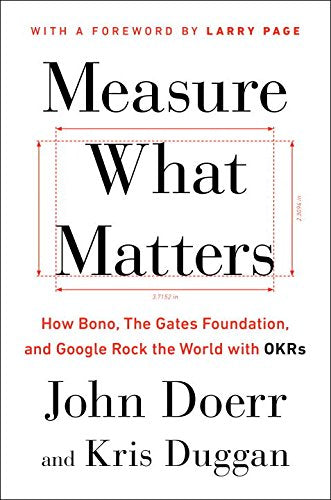
About Measure What Matters by John Doerr: A Clear Way to Set Goals and Make Progress
You can work hard all day and still wonder if you worked on the right things. A busy team can finish task after task while its biggest goal stays out of reach. Measure What Matters by John Doerr speaks to that problem. It shows how to choose a few important goals, agree on what progress looks like, and keep those goals in sight as the work goes on.
The book introduces OKRs, short for Objectives and Key Results. The idea is simple: say what you want to achieve, then name the results that will show whether you are getting there. Doerr explains how this way of working helped teams at Intel and Google, and shares stories from other groups with very different missions.
This is a book for anyone who has ever said, “We have a goal, but what should we do first?” If you lead a business, work with a team, run a project, or want to give your own plans more shape, it offers a useful place to start.
When Everything Feels Important
Picture a team at the start of a busy week. One person wants to find new customers. Another wants to improve the product. Someone else is answering urgent messages. Everyone is working, yet nobody is sure which result matters most right now.
That is where a clear goal can help. In Measure What Matters, Doerr shows readers how to put a name to the result they want. Instead of leaving a plan as “grow the business,” a team can decide what kind of growth it wants to see and how it will check its progress. The goal gives people a shared direction. The results help them see whether their work is moving them toward it.
The book does not ask you to fill your days with more tasks. It asks you to look closely at the tasks you already have. Which ones serve your goal? Which ones take time without moving it forward? Those questions can be uncomfortable, but they can also make the next step much easier to choose.
What Is an OKR?
An objective says what you want to accomplish. It should be clear enough that people can remember it and care about it. A key result tells you how you will know that you made progress. It needs to be specific enough to check.
For example, a small bookshop might set an objective to make online shopping easier for customers. Its key results could track whether more visitors find the books they want, whether fewer people leave before placing an order, and whether customer questions are answered more quickly. Those results do not tell the team every task to do. They tell the team what it is trying to improve.
That difference matters. It is easy to mistake activity for progress. You can post every day, hold many meetings, or send a long list of emails. An OKR asks what changed because of that work. If the result is not improving, you have a reason to pause, learn, and try a better approach.
Doerr uses real stories to make the idea easier to understand. Readers see goals in use across businesses and mission driven organizations, rather than meeting OKRs only as a set of rules on a page.
Big Names, Everyday Questions
Google is one of the best known examples in the book. Doerr explains how he shared OKRs with its founders while the company was still young. The book also draws on his experience with Intel and includes accounts connected to Bono and the Gates Foundation. These stories show people using goals to bring attention to work they believe matters.
You do not need to run a large company to learn from them. A small team also has limited time. A student group, a growing shop, or a new project can also lose its way when people are unsure what to do next. The size of the goal may change, but the questions remain familiar: What are we trying to achieve? How will we know if our work helped?
One reason to read this book is to watch how different people answer those questions. Some stories may give you an idea you can use at once. Others may help you spot a weakness in your current plan. You can take what fits your work and think carefully about what needs to change.
Make Room for the Work That Counts
When you write down a goal, you make a choice. You give one result your attention for a set time. That can be harder than it sounds. New ideas arrive, urgent requests interrupt the day, and familiar tasks feel easier than difficult work.
Measure What Matters encourages readers to choose priorities and make them visible. When people can see the goal, they can ask how their work connects to it. A shared goal can also help a team notice when two people are moving in different directions.
This can be useful for a business owner who handles sales, service, stock, and marketing in the same day. Each job may be necessary. Yet a clear priority helps the owner decide where extra effort will help most this month. It gives the team something more useful than a vague order to “do better.”
The book also gives readers a reason to check their goals as work continues. A result that looked sensible at the start may need attention later. Looking at progress while there is still time to act can help a team learn from what is happening.
Goals Work Better When People Talk
A written goal cannot answer every question. People still need to talk about what is going well, where they are stuck, and what help they need. Doerr discusses CFRs: conversations, feedback, and recognition. They put regular human contact beside the numbers used to track a goal.
That part of the book is valuable if you lead others. A team member may understand the goal but face a problem that no chart shows. A quick conversation can uncover it. Feedback can help someone change course. Recognition tells people that their effort has been seen.
It is valuable for team members, too. A clear result gives you a better way to explain your work and ask for help. Instead of saying only that you have been busy, you can show what has moved forward and where you need support.
Doerr’s approach gives readers a way to think about both sides of progress: the result you can check and the people doing the work. If you have tried goal setting before and found that the plan faded after a few weeks, this part may give you something new to consider.
Who Will Enjoy Reading This Book?
If you own a small business, Measure What Matters can help you think through your next goal with more care. You might want to serve customers faster, improve repeat orders, or make a new service work well. The book gives you questions to ask before your team spends time on a plan.
If you manage people, you may find its examples useful when your team has too many competing requests. A few clear goals can help everyone understand what needs attention. You can then talk about progress using results that the team agreed on together.
If you are building a new company, the stories may feel especially relevant. New businesses often have energy and many ideas, but little time to waste. The book shows why choosing a direction and checking what happens can matter as much as working hard.
Students can read it with their own projects in mind. A group assignment, club event, or personal learning goal can all start with the same two questions: What do I want to achieve, and what would show me I have achieved it? You do not have to wait for a job title to practice setting a clearer goal.
The book may also appeal to readers who enjoy the stories behind well known organizations. You can read it for the examples from Google, Intel, and other groups, then decide which ideas are useful in your own life.
What You Can Take Away
The most useful result of reading this book may be a better question. When someone suggests a new task, you can ask what goal it serves. When a team says a project is going well, you can ask what result shows that. When progress slows, you can look for a way to learn instead of simply adding more work.
You may also come away with a clearer way to share plans. A goal kept in one person’s head is hard for a team to follow. An objective and its key results can give everyone the same starting point. People can still bring their own ideas to the work, but they know what they are trying to move forward.
Doerr also makes room for ambitious goals. A big aim can give people energy when they understand why it matters. The key is to connect that aim to results they can watch along the way. This helps turn hope into a plan that people can discuss and improve.
No book can choose your goals for you. Measure What Matters gives you a method and a collection of examples. You bring the judgment: what matters to your business, your team, or your own work, and what kind of progress would make a real difference.
A Comfortable Copy for Your Working Shelf
This premium edition from Bookish Wonderland is made for readers who may want to return to an idea, mark a useful passage, or review a goal setting example with their team. It features premium eye soothing cream paper, crystal clear print, and high quality stitched and glue binding for longevity.
Those details matter in a book you might read with a pen and notebook nearby. You can take your time with a chapter, stop to draft an objective, and come back when you are ready to check your plan. The clear print helps keep the examples easy to follow, while the durable binding suits a book you expect to use again.
Bookish Wonderland offers a large collection of premium, durable English books. You can order for delivery inside or outside Dhaka, with nationwide delivery across Bangladesh and Cash on Delivery available. If you are in Dhaka and need your order sooner, ask about the fast or urgent delivery option.
A Good Time to Start
You do not need a perfect plan before you open Measure What Matters by John Doerr. You only need a goal you care about and a willingness to ask whether your current work is helping you reach it. Read a story, try writing one objective, and think about the results you would want to see.
If you are checking the book price in Bangladesh for Measure What Matters by John Doerr, view the current listing at Bookish Wonderland. Choose this premium edition, place your order, and start giving your most important goals the attention they deserve.
If you require any customization or have any questions, please inbox us via FB or Insta.
| Primary Specification | |
| Author | John Doerr |
| Narrator | John Doerr, William Davidow, Brett Kopf, Jini Kim, Mike Lee, Atticus Tysen, Patti Stonesifer, Susan Wojcicki, Cristos Goodrow, Julia Collins, Alex Garden, Joseph Suzuki, Various |
| Genre | Business & Economics, Management, Leadership, Organizational Performance |
| ISBN-13/ISSN | 978-0241348482 |
| ISBN-10 | 024134848X |
| Publisher | Portfolio Penguin |
| Publishing Date | January 1, 2018 |
| Language | English |
| Reading Age | 18+ years |
| Format | Printed book |
| Physical Specification & Quality | |
| Paper Quality | Premium eye-soothing cream paper |
| Binding Quality | High quality stitched and glue binding (for longevity) |
| Print Quality | Crystal-clear print |
| Pages | 306 pages |
| Country | United Kingdom |
| Logistics Information | |
| Weight | 327 gm |
| Length | 8.5 inches |
| Width | 5.6 inches |
| Height | 0.98 inch |